1. Introduction to loving kindness meditation

    Comment

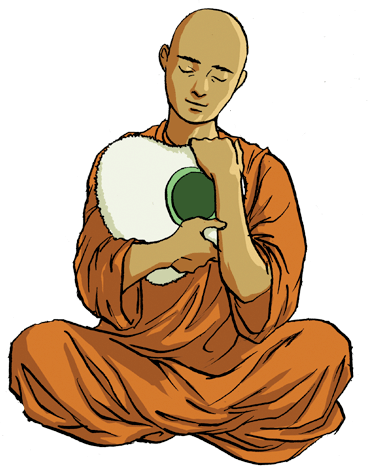
    The Metta Bhavana is a meditation for developing lovingkindness.

    “Bhavana” means “cultivation” or “development,” and “Metta” is a word that means “love,” “friendliness,” or “lovingkindness.” So this is a meditation practice where we actively cultivate some very positive emotional states towards others, as well as to ourselves.

    This meditation practice helps us to bring more harmony into our relationships with others, so that we experience less conflicts, resolve existing difficulties, and deepen our connections with people we already get on with.

    This meditation helps us to overcome anger, resentment, and hurt. Continue reading

  2. Wisdom and Compassion: Two Sides of the Same Coin

    Comment

    The Master views the parts with compassion, because he understands the whole.
    (Tao Te Ching, Chapter 39)

    THE ESSENCE
    Wisdom and compassion are the essence of an enlightened life.

    Wisdom and compassion are inextricably linked. They are two sides of the same coin. They are a unit. Separating them is an artificial, intellectual act.

    When compassion is taken out of the equation, wisdom turns into worthless platitudes, which easily become destructive. Without compassion, wisdom degenerates into an escapist entanglement in concepts, theories and dogmas.

    Wisdom is more than just cleverness plus compassion. It differs in quality to a point where it may seem to have little to do with cleverness. Sometimes, the actions of wise people seem to go against common sense. In fact, wise people often act in ways which are considered foolish by clever people.

    The greatest love seems indifferent, the greatest wisdom seems childish.
    (Tao Te Ching, Chapter 41)

    They would, for example, sacrifice their own interests for the sake of others, or accept defeat, sometimes even their own destruction, when they had every chance of winning or escaping. They would refuse to speak in their own defense when it seems expedient to do so, or they would speak up when it means putting themselves in jeopardy. Often, wise people would ignore what seem like clever strategies, and choose suffering instead. Continue reading

  3. Buddhist Perspective on Time and Space

    Comment

    A dharma talk from the Hsi Lai Temple

    Dear Venerables and Dharma Friends,

    I am very grateful for the guidance of the Buddha which enables us to have such an outstanding cause and condition to listen to the Dharma in this time and space. Today, the topic that I will discuss is “the Buddhist perspective on time and space.”

    Time travels from the past to the present; it spans the past, present, and future. Likewise, space covers hundreds and thousands of realms; it spreads across all ten directions. For most living beings, time and space are just like the act of breathing: we breathe every moment yet are not conscious of this action. Depending on our individual make-up, we all have different understandings about time and space. For example, certain insects live for a day and are contented; humans live to seventy and are still not satisfied. We all confine ourselves to our own limited slice of time and space. From the Buddhist perspective of samsara, the cycles of rebirth, the life span of all sentient beings is limitless. Not only is space without bounds, time is also endless and cannot be measured. If we penetrate the ultimate truth of time and space, we can be liberated from the space defined by the four directions of north, east, south, and west and emerge from the time cocoon of seconds, minutes, days, and months. We then will be in the dimension of total freedom, and we will be able to experience what is described in the saying, “Clear cool water everywhere; Prajna flowers every moment.”

    I will now discuss the Buddhist perspective on time and space in four points.

    I. The Time and Space for All Living Beings

    The term “all living beings” includes not only human beings but also encompasses beings in the other five realms of existence: celestial beings, asuras, animals, hungry ghosts, and beings in the hell realm. What is the time and space for all living beings within the six realms of existence?

    We will first talk about time. Continue reading

  4. Rationality and Emotion

    Comment


    If you love rational thought and are attached to ideas and perceptions, then you tend to despise the emotions. You can notice this tendency if, when you start to feel emotions, you say, ‘I’m going to shut this out. I don’t want to feel those things.’ You don’t like to be feeling anything because you can get into a kind of high from the purity of intelligence and the pleasure of rational thinking. The mind relishes the way it is logical and controllable, the way it makes sense. It is just so clean and neat and precise like mathematics – but the emotions are all over the place aren’t they? They are not precise, they are not neat and they can easily get out of control.

    So the emotional nature is often despised. We are frightened of it. For example, men often feel very frightened of emotions because we are brought up to believe that men do not cry. As a little boy, at least in my generation, we were taught that boys do not cry so we’d try to live up to the standards of what boys are supposed to be. They would say, ‘You are a boy’, and so we’d try to be what our parents said we should be. The ideas of the society affect our minds, and because of that, we find emotions embarrassing. Here in England, people generally find emotions very embarrassing; if you get a little too emotional, they assume that you must be Italian or some other nationality. Continue reading

  5. Wat kiryvongsa Bopharam

    Comment

    This photo was taken by a genius 3-year-old boy.
    I think this 3-year-old photographer did an excellent job!
    Well, I would say this is one of my favorite photos!

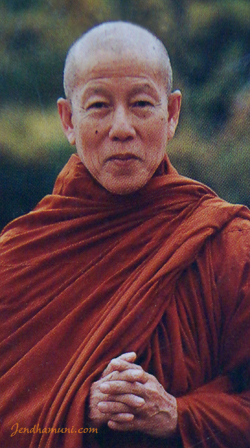
  6. His Holiness Maha Ghosananda

    1

    Wall of Remembrance...Supreme Patriarch of Cambodian Buddhism
    The Gandhi and the Gem of Cambodia
    His whole life for the Khmer Nation, Buddhism and Peace
    (May 23, 1913 – March 12, 2007)

    Our journey for peace
    begins today and every day.
    Each step is a prayer,
    Each step is a meditation,
    Each step will build a bridge.


    H.H. Maha Ghosananda, the Supreme Patriarch of Cambodian Buddhism, became my inspiration ever since I first met him. The world lost one of the true followers of Lord Buddha, a kind, compassionate, and a heroic Buddhist when His Holiness passed away. I will continue to keep the flame burning and remember him forever… Truthfulness, Forbearance and Gratitude is the ultimate teaching His Holiness would like to pass on to all beings. ~Jendhamuni Sos

  7. The Leaves are Falling Down

    Comment

    (to the tune of “The Farmer in the Dell”)

    The leaves are falling down
    The leaves are falling down
    School is here and fall in near
    The leaves are falling down.

    The leaves are falling down
    The leaves are falling down
    Some are red and some are brown
    The leaves are falling down.

    The leaves are falling down
    The leaves are falling down
    They tickle your nose and touch your toes
    The leaves are falling down.

    ~June Haggard

  8. Message from major religious traditions

    Comment

    All major religious traditions carry basically the same message, that is love, compassion and forgiveness the important thing is they should be part of our daily lives. ~Dalai Lama

  9. Provide peace for another

    Comment

    If you wish to experience peace, provide peace for another. If you wish to know that you are safe, cause another to know that they are safe. If you wish to better understand seemingly incomprehensible things, help another to better understand. If you wish to heal your own sadness or anger, seek to heal the sadness or anger of another. ~Dalai Lama

  10. Avoid being narrow-minded

    Comment

    Do not think the knowledge you presently possess is changeless, absolute truth. Avoid being narrow-minded and bound to present views. Learn and practice nonattachment from views in order to be open to receive others’ viewpoints. To me, this is the most essential practice of peace. ~Thich Nhat Hanh

Hermit of Tbeng Mountain

Sachjang Phnom Tbeng សច្ចំ​​ ភ្នំត្បែង is a very long and interesting story written by Mr. Chhea Sokoan, read by Jendhamuni Sos. You can click on the links below to listen. Part 1 | Part 2

List of Khmer songs