
1. Learning how to Smile

    Comment

    Frown and you frown alone, but smile and the whole world smiles with you.

    With 19 variations on the smile, including 16 produced by enjoyable emotions, smiling is an incredibly important part of our lives. Here’s how to develop your grin.

    1. Become comfortable with smiling. If you’re not used to smiling regularly, overcoming your nervousness or cynicism about smiling can take a little practice but like any habit, it’s easy to reform with time. Some things to keep in mind include:

    • A smile always looks good. Feeling nervous about the beauty or appearance of your smile is unnecessary. Trust that your smile makes you look great.
    • A smile is professional. Smiling at work or during other professional occasions is not going to make you seem unprofessional. Quite the opposite, a smile will humanize you and make you appear more approachable. People will appreciate your recognition of their worth and of a job well done when you smile.
    • A smile makes you real. If you’re afraid of appearing vulnerable when you smile, accept that any form of vulnerability suggested by a smile is precisely what makes it such a powerful act. You’re opening yourself up to others and people will respond better to that than to a serious, unmoved demeanor. Moreover, a smile accompanied by an assertive personality will take care of any sense that people will use your smile to walk all over you!

    2. Make your smile genuine. While it is perfectly possible to crack a smile when you feel terrible, angry, annoyed, or you’re up to something nefarious, a genuine smile is much harder to fake; indeed, only around 10 percent of the population can manage that feat.

    • A genuine smile is detectable by others because it is accompanied by a general glow, smiling eyes where the outer corners crinkle and the lower lid tightens, and a reassuring demeanor that helps the viewer to feel more at ease in your presence. A genuine smile comes from being happy, positive, and from drawing your feelings from the heart.
    • Think happy thoughts. The easiest way to a fantastic, genuine smile is to be happy. Think about someone you care about (perhaps the person standing in front of you as you smile), about something that you genuinely love to do, or think of a funny joke that you just find hilarious. Or think about the happiest moments in your life.
    • Be genuine. Draw on your heartfelt feelings, not just rationalizations. When you’re confronted by a person or situation that makes you feel ambivalent and you’re oscillating between giving the cold shoulder or smiling, err on the side of smiling – find one single thing in your heart that is positive about the person or situation before you, and use that to create your smile.
    • Love people and your life. It’s much easier to produce friendly, easygoing, genuine smiles when you love what you do, when you love the people around you, and when you love humanity in general. Be grateful for all that you have and you’ll find smiles come far more naturally.
    • Be playful. Intense times can make us too serious. See life as an adventure, be gentle on yourself and watch children at play. Being playful will bring a smile to your face much more easily.


    3. Smile with your eyes. A wholehearted smile will naturally draw in the eyes (called a Duchenne smile). It is commonplace to hear a person say “her eyes were smiling”, or to say “he didn’t mean it; he was smiling but his eyes weren’t”. The eyes are essential for a genuine, warm smile. Your eyes light up, twinkle, and reflect your happiness. While it’s hard to fake this unless you’re really feeling it, you can try this exercise:

    • To get a feel for how to make your eyes smile, stand in front of a mirror and practice smiling, but concentrate only on your eyes. You may find it helpful to cover the lower part of your face with a piece of paper. Play around with it a bit, and you’ll find that you can make your mouth smile when your eyes aren’t smiling, and you can also smile only with your eyes. When your eyes do smile, remember how it feels, which muscles are working and how. With practice, you may discover how to smile with your eyes at will by relying on your feelings and muscle memory.

    4. Practice your smile. There is no harm in practicing your smile – doing so will increase your smiling confidence, improve your sense of well-being, and help you to learn which of your smiles are your best.

    • Look at photos of yourself smiling, with a closed mouth, open mouth, and from different angles. Which smiles and poses make your face light up the most? Which smile displays your other features to their best possible advantage? Which smile comes across as the most natural, the most “you”?
    • Find that picture and focus on what your face is doing. Then practice in front of a mirror until you get it just right. Keep practicing, and pay attention to how that great smile feels, so that you’ll be able to replicate it without looking in a mirror. Soon it will become second nature, and you’ll likely find that you’ll look more photogenic in your next batch of pictures.
    • If you want to improve your smile, look at pictures of smiles you believe are beautiful. Also, remember that you’re beautiful (inside and out); your smile is bound to look better if you feel good about yourself!
    • Note the difference between a smile and a grin. Grins bare a lot more teeth (think Cheshire Cat) and are not necessarily flattering on all people, although for some people they can make you appear cute. If you’re prone to grinning and it’s not doing your appearance any favors, try showing only your upper teeth when you smile. Showing your lower teeth can make it seem you’re baring your teeth.
    • When showing teeth, pressing the tongue behind the teeth will make small gaps look less noticeable.
    • Practice smiling at random strangers. Make a choice that you’ll do this, make brief eye contact with a person, and smile. As you do so, think happy thoughts (it helps to choose someone attractive to begin with). Don’t choose a person with sunglasses; you need to see their eyes. Not everyone will smile back but note how you feel when they do!

    5. Maintain good oral hygiene. One thing that can cause you to fear smiling is the worry that there is something stuck between your teeth, or that you have bad breath. Eliminate these hygiene sources of worry by taking active steps to keep your mouth fresh and clean.

    • Brush your teeth and tongue regularly, carry floss with you wherever you go so that you can clean up after dining, and have breath freshener on you at all times (natural or commercial).
    • See your dentist regularly for teeth check-ups and cleaning, as well as discussing options for teeth straightening, etc., if this is a concern for you. When you smile people will inevitably look at your mouth, so following these considerations will help you make a better impression, and, more importantly, a healthy mouth will make you feel more confident about smiling.
    • If your teeth are stained, consider your lifestyle habits that bring this about and try to minimize the impacts of such habits as smoking or drinking too much red wine, coffee, soft drinks, etc.
    • Keep your lips in great shape to prevent chapping.
    • Deal with bad breath. If it’s surface, cleaning and fresheners should be adequate. If these do not work, it may be a sign of an underlying health problem, so see your doctor for advice.

    6. Expect smiling to be difficult in some situations. Smiling on demand can be difficult, whether it’s for a photo or for the sake of keeping mom happy when the relatives you can’t stand visit. This is because you are feeling self-conscious or you lack a genuine reason for smiling. In these sorts of cases, smiling needs to come from your memory of good smiles along with a little self-kidding or jokes in the head.

    • For a photo, smile 20 percent more than you think you should.
    • Smile wide and show the top row of teeth.

    7. Enjoy the many benefits of a smile. In order to want to smile, it really helps to know what benefits a smile can bring to your day. The following benefits are bound to make you lean towards sharing a grin with others most of the day:

    • Smiles improve your appearance. Charles Gordy once quipped: “A smile is an inexpensive way to change your looks”. All you need to do is think about how you feel about a person who is frowning and a person who is smiling – who tends to be the better looking?
    • Smiles make things right again and say much more than words can. If you’ve goofed, said something less than complimentary, feel lost or alone, or feel down, a smile can restore the balance. It lets other people know that you’re prepared to be open with them, and that you’re willingly agreeing to make amends where needed.
    • Smiles create trust and rapport. A smile is a great way of establishing mutual feelings of being on the same level as others, whether that is one-to-one or in front of a group giving a presentation. It says “I’m OK, you’re OK, and we’re all going to enjoy one another’s company.”
    • Smiles make you feel good. Even if you’re feeling a little blue, insert happy thoughts into your mind and just add that smile. It will trick your mind into feeling better, as endorphins are released to reduce physical or emotional stress.
    • Smiles make other people feel good. An open-mouthed smile is visible from further away than a frown, offering people reassurance that you’re friendly. And it makes people feel better to see a smile, from afar or close-up.
    • Wrinkles are better when they’re smile lines rather than frown lines. Mark Twain said: “Wrinkles should merely indicate where smiles have been”; viewed this way, smiles are an indication of your overall character, which becomes more and more outwardly telling as you age!
    • Smiling is a good long-term predictor of happier life outcomes. It’s correlated with health, happiness, friends, success, and a longer life.

    Source: wikihow.com

  2. Burned body found in California fires

    10

    The flare-up prompted 18,400 new evacuation notices. San Diego County Sheriff Bill Gore said it was a "reminder to everybody just how volatile this can be."

    Firefighters found a badly burned body in a transient camp in Carlsbad, a north San Diego suburb that was one of the hardest hit areas by this week's fires. The city of Carlsbad said it had no information about the person who died — apparently the first fatality of the fires. Video and full story
    http://leelavadeeflower.blogspot.com/2014/05/flare-up-keeps-san-diego-fire-situation.html

  3. If you truly get in touch with

    44

    If you truly get in touch with a piece of carrot, you get in touch with the soil, the rain, the sunshine. You get in touch with Mother Earth and eating in such a way, you feel in touch with true life, your roots, and that is meditation. If we chew every morsel of our food in that way we become grateful and when you are grateful, you are happy. ~Thich Nhat Hanh

    http://leelavadeeflower.blogspot.com/2014/05/if-you-truly-get-in-touch-with.html

  4. If we had not been wounded

    19

    A pearl is a beautiful thing that is produced by an injured life. It is the tear [that results] from the injury of the oyster. The treasure of our being in this world is also produced by an injured life. If we had not been wounded, if we had not been injured, then we will not produce the pearl. ~ Stephan Hoeller

    http://leelavadeeflower.blogspot.com/2014/05/if-we-had-not-been-wounded.html

  5. San Diego County fire roars to life

    Comment

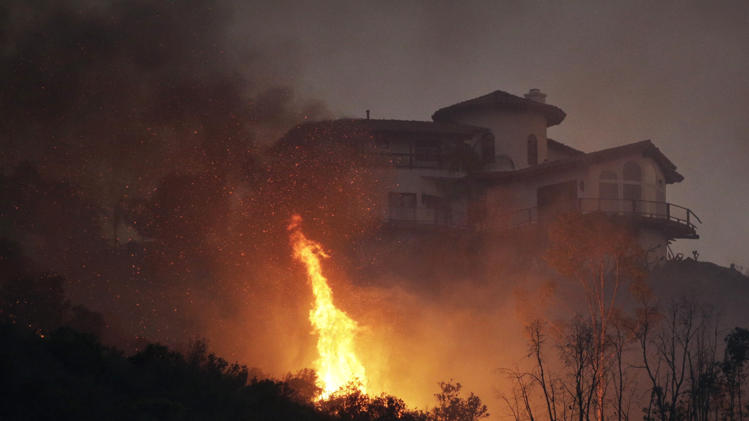
    Caption: A wildfire burns near a home on Wednesday, May 14, 2014, in San Marcos, Calif. Flames engulfed suburban homes and shot up along canyon ridges in one of the worst of several blazes that broke out Wednesday in Southern California during a second day of a sweltering heat wave, taxing fire crews who fear the scattered fires mark only the beginning of a long wildfire season. (AP Photo)

    By ELLIOT SPAGAT and JULIE WATSON
    Associated Press, May 15, 2014

    SAN MARCOS, Calif. (AP) — One of the nine fires burning in San Diego County suddenly flared Thursday afternoon and burned close to homes as new winds arrived.

    The flare-up near the state university city of San Marcos occurred after a half-day lull in winds that firefighters had seized as an opportunity to make progress against flames that have scorched thousands of acres.

    State fire Capt. Kendal Bortisser said the fire was running east along hillsides behind California State University San Marcos.

    The flare-up appeared to involve a change in wind direction. On previous days there was offshore flow — generally from the northeast. But Thursday afternoon, the National Weather Service reported winds out of the northwest.

    Fires began erupting Tuesday amid high heat, extremely low humidity and gusty Santa Ana winds. By Wednesday, nine fires were burning.

    Asked about the possibility of arson, county Sheriff Bill Gore said earlier Thursday that he wouldn’t prejudge the investigations. He noted that sparks from vehicles can easily ignite brush in such dry conditions.

    Emergency officials said a significant number of firefighting aircraft had become available, including four air tankers and 22 military helicopters.

    Ten of the military helicopters were being used to battle a blaze that grew to 9.37 square miles on the Marine Corps’ Camp Pendleton. Despite its growth, the fire was 20 percent contained and was no longer considered a threat to communities.

    Twelve other military helicopters were available to the county, where the biggest concern was a 1.25-square-mile blaze at the city of San Marcos. That fire was 5 percent contained and thousands of people remained evacuated, but officials told a news conference they were beginning to assess repopulating areas.

    The wildfires drove tens of thousands from their homes and shut down schools and amusement parks, including Legoland. The amusement park reopened Thursday.

    Firefighters contended with temperatures approaching 100 degrees and gusty winds as they tried to contain flames fueled by brush and trees left brittle by drought.

    Extremely high temperatures were occurring again Thursday, ranging in the high 90s to 100 in the northwestern area of the county where the fires burned.

    The heat was so intense that records continued to be broken in Southern California and horse racing was canceled at Santa Anita Park in Arcadia, east of Los Angeles.

    Officials said a Carlsbad-area blaze was 60 percent contained and had burned 400 acres. The wildfire destroyed an 18-unit condominium complex and four residences, Carlsbad Mayor Matt Hall said.

    Some evacuation orders were being lifted in Carlsbad, but a major power outage and hotspots were still a concern.

    Efforts were focusing on San Marcos, where hundreds of new evacuation orders were issued early Thursday. More than 20,000 evacuation notices were sent to residents Wednesday, and a California State University campus with nearly 10,000 students in the middle of final exams was shut down. Graduation ceremonies were canceled.

    Tuzo Jerger was one of thousands told to evacuate because of the Carlsbad fire. The 66-year-old real estate broker packed files, a surfboard, golf clubs, clothes and photos and sought solace at a friend’s hilltop house in nearby San Marcos, only to see a wildfire break out there and force thousands from their homes.

    “I thought, ‘Oh my God, it’s going to come this way,'” Jerger said at a San Marcos restaurant where he found relief in a slice of pizza.

    The blaze in the coastal city of Carlsbad, about 30 miles north of San Diego, was the most destructive of the fires so far.

    Many schools across the county were closed Thursday. Officials expected some wouldn’t reopen until next week.

    Gov. Jerry Brown declared a state of emergency for San Diego County, which would free up special resources and funding for the firefight, and state fire officials were creating a central command center for the blazes.

    Drought conditions have made fire danger extremely high throughout much of California. Officials have encouraged residents in fire-prone areas to prepare evacuation plans and clear brush from near their homes.

    Carlsbad’s fire chief said the blazes were unprecedented in his 27-year firefighting career because they are so early in the year.

    “This is May, this is unbelievable. This is something we should see in October,” Chief Michael Davis said. “I haven’t seen it this hot, this dry, this long in May.”

    ____

    Watson reported from San Diego.

    Link to this story

  6. A special place…

    Comment

    I have given some marvelous
    persons a special place in my heart.
    And you happen to be the one among
    them topping the list.
     Source: sms4smile 
  7. Elephant Seals Survive Deep Dives with ‘Smokers’ Blood’

    Comment
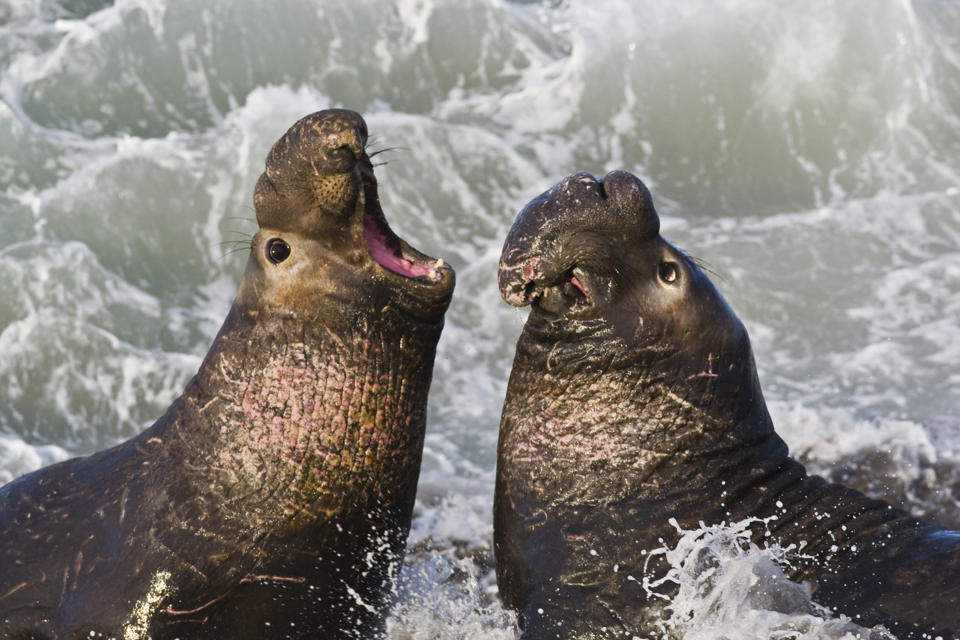
    Northern Elephant Seals. (Getty Images/FlickrRF)

    LiveScience.com, by Denise Chow, Sci-Tech Editor
    May 14, 2014

    Elephant seals have surprisingly high levels of naturally produced carbon monoxide — a noxious gas that is deadly at high concentrations — in their blood, a new study finds. In fact, the amount of carbon monoxide found in the blood of these large mammals is roughly the same as that in people who smoke 40 or more cigarettes each day, researchers say.

    Carbon monoxide is an odorless and colorless gas that is naturally produced in small quantities in humans and animals. The scientists are unsure why elephant seals have such unexpectedly high levels of the gas in their blood, but the researchers suggest it could protect the animals from injury when they dive to extreme depths in search of food.

    In humans and animals, carbon monoxide is a byproduct of the breakdown of hemoglobin, which carries oxygen in red blood cells throughout the body, said study leader Michael Tift, a comparative physiologist at the Scripps Institution of Oceanography at the University of California, San Diego.

    Carbon monoxide binds to hemoglobin, effectively suffocating the protein and preventing it from transporting oxygen. In healthy adult humans, about 1 percent of hemoglobin is bound to carbon monoxide. But the amount of hemoglobin incapacitated by carbon monoxide can reach as high as 10 percent in elephant seals and chronic, heavy cigarette smokers (who are exposed to carbon monoxide from burning and inhaling tobacco), the researchers said.
    “Elephant seals are known to have the highest blood volume of any mammal, so we knew there was the potential for producing a lot of carbon monoxide,” Tift told Live Science. “When we looked into the levels of carbon monoxide in the blood, we suspected there could be a lot.”

    Yet, while elephant seals appear to have elevated levels of carbon monoxide in their bloodstreams, the concentration of the gas is not so high as to cause harm, the researchers said.

    “The levels in elephant seals are not high enough to inhibit oxygen transport or lead to carbon monoxide poisoning,” Tift said.

    Carbon monoxide’s colorless and odorless properties have earned it a reputation as a “silent killer.” When the gas invades up to 20 percent of hemoglobin stores, humans typically begin to suffer the effects of carbon monoxide poisoning — lightheadedness, headaches and other flu-like symptoms. The gas typically becomes deadly when it incapacitates more than 50 percent of hemoglobin stores, Tift said.

    The researcher and his colleagues sampled 24 elephant seals, ranging in age from pups to juveniles to adults, at the Año Nuevo State Reserve near Santa Cruz, California.

    The researchers are not sure why elephant seals naturally produce higher levels of carbon monoxide, but suspect it may have something to do with the animal’s prolific diving abilities. The mammals can dive more than 5,000 feet (1,500 meters) beneath the surface of the sea, holding their breath and conserving oxygen for impressively long periods of time.

    “Elephant seals will shut off blood to specific organs and tissues as they are diving,” Tift said. “Recently, we found that low levels of carbon monoxide can be therapeutic in treating certain conditions where blood has been shut off to muscles.”

    As such, carbon monoxide could protect elephant seals from reperfusion injuries, which occur when blood returns to tissue after sustained periods of oxygen deprivation.

    “We can’t say for sure that the carbon monoxide is therapeutic for elephant seals, but it definitely has the potential,” Tift said. “If they didn’t have this high level of carbon monoxide, there’s a chance we would see injuries from reperfusion.”

    The researchers are testing this hypothesis by studying other diving and non-diving animals, including sea lions, penguins and terrestrial birds.

    “We want to know, is high carbon monoxide found in all marine mammals? Is it found in deep divers, or both divers and non-divers?” Tift said.

    The results of the new study were published online today (May 14) in the Journal of Experimental Biology.

    Link to this story

  8. Tornado spotted near Miami, flights disrupted

    Comment

    Associated Press, May 15, 2014

    MIAMI (AP) — Severe weather in Miami has spawned one confirmed tornado and is disrupting air travel.

    The U.S. National Weather Service reported a tornado briefly touched ground Thursday afternoon one mile (1.6 kilometer) west of Miami International Airport.

    A second funnel cloud was spotted about 20 minutes later. There were no immediate reports of damage.

    Authorities have canceled all tornado warnings, but no planes were taking off or landing at Miami International Airport due to poor visibility.

    Airport spokeswoman Maria Levrant says dozens of flights have been delayed and at least four have been canceled.

    Link to this story

Hermit of Tbeng Mountain

Sachjang Phnom Tbeng សច្ចំ​​ ភ្នំត្បែង is a very long and interesting story written by Mr. Chhea Sokoan, read by Jendhamuni Sos. You can click on the links below to listen. Part 1 | Part 2

List of Khmer songs