
1. 7 Cool Facts about Sulcata Tortoise – Pet Reptiles

    Comment

    The African Spur Thigh Tortoise, or the Sulcata tortoise as it’s also known, is one of the largest tortoise species on the planet. These are long-lived creatures. Tortoises, of course, are different from turtles. Tortoises you’ll find on land. Look at those big diggers he’s got in the front there. He digs tremendously large holes in his native Saharan habitat. He comes from the southern rim of the Saharan desert in Africa. And he is the third largest tortoise species on the planet. Very, very important creature in the environment that he lives.

    You could imagine that type of, not the Saharan desert where you see the big sand dunes, this is the scrub vegetation area, where there’s not much but haze and grasses and cactus. And it gets hot, as you can imagine, in the middle of the summer, 120, 140, not unusual.

    So, the Sulcata tortoise has developed a method of survival. You know we’ve learned that creatures that come out at night are nocturnal. Creatures that come out during the day are diurnal. But a new word for your vocabulary is corpuscular. This guy comes out when the temperature’s right. He comes out during the dawn hours and during the dusk hours. And the rest of the time at night and during the day, he stays in a burrow that he digs with those amazing claws.

    You won’t see turtles with claws like that, because turtles are predominantly water animals. But tortoises live in the forests of the rain forest and woodlands and in deserts. So, in the desert habitat he comes from, he is extremely important because, number one, he’s one of the few animals that has the capacity to dig those big holes. And what lives in those burrows? Everything else that lives in the desert. They can’t get out of the heat so they use the tortoise’s burrows. They work together and they live in the bottom of these burrows, or along the passageways to the bottom and some of them get 50, 60 feet.

    What happens at the bottom? The temperature is perfectly suited for them. It’s going to be 60, 70 degrees at the bottom of those burrows, even though it’s 120 at the top. And the tortoise spends the hot days and the cold nights in that burrow.

    But, more importantly than that, this guy lives for 150 or more years in that really terrible environment of the Sahara desert. It’s all nothing but cactus and grass and things like that. So, how does he do it? He’s a straight herbivore. How does he make his food? Where does he get it from? Well, we all know the story about the tortoise and the hare that slow and steady wins the race. And the Sulcata tortoise certainly is one of those types.

    He nibbles on his food. He chews a little bit of this, a little bit of that. He eats it and then he walks tremendous distances in the course of the day. And if you ever kept one in captivity, you know an animal that eats grass and hay and cactus goes to the bathroom quite a lot. He poops like you can’t believe. And what he does in the desert is eat the whole plant.

    The plant goes through his digestive system that comes out now in manure. And that manure’s got moisture to it. And the seeds can germinate after they go through his digestive system. And the animal literally makes a garden around the burrow that he lives.

    It is so perfect of an ecosystem that when the tortoise moves out of that system, everything else collapses and the system dies off. What’s happening in that area of the world? Of course, people are eating tortoises. People are collecting tortoises for the pet trade and, little by little, tortoises like this are disappearing from the wild. So, we have to really do something about that because this is one of nature’s treasures, for sure. The Sulcata or African Spur thigh Tortoise. what other animal can live 150 years in a climate like that? Do a good job, boy.


  2. Every person that crosses our path…

    Comment

    If we could all love each and every person that crosses
    our path a little bit more, we could attain inner peace
    with the knowledge that many people on this planet
    would be hurting a whole lot less.

    ~Molly Friedenfeld

  3. Sheep and Elephant are Best Friends

    Comment

    The tale of an amazing friendship between a baby elephant, and a very special sheep.
    At first the sheep did not want to be friends with a baby elephant.

  4. A person who holds God and man in one thought

    36

    A religious man is a person who holds God and man in one thought at one time, at all times, who suffers harm done to others, whose greatest passion is compassion, whose greatest strength is love and defiance of despair.  ~Abraham J. Heschel

  5. The changes that come your way

    Comment

    Try not to resist the changes that come your way. Instead let life live through you. And do not worry that your life is turning upside down. How do you know that the side you are used to is better than the one to come? ― Rumi

  6. Florida wildlife regulators clamp down on invasive lionfish

    Comment

    By Zachary Fagenson, Reuters
    September 10, 2014

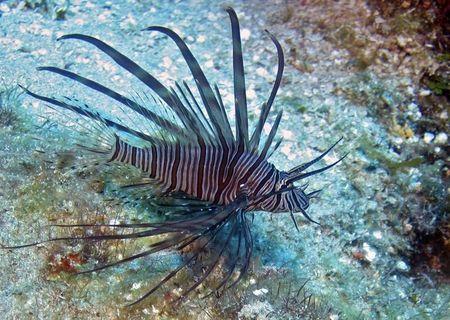
    MIAMI (Reuters) – Florida wildlife regulators on Wednesday banned lionfish breeding as part of a struggle to control the invasive species that devours other fish and threatens coastal ecosystems.

    The state prohibited the possession of lionfish eggs and larvae as well, after Florida last month became the first state in United States to outlaw importation of the barbed fish.

    Bringing lionfish into Florida is now punishable by up to a year in prison and a $1,000 fine.

    “Every change that encourages removal is a step toward successfully limiting the negative impacts lionfish have on native fish and wildlife,” said Florida Fish and Wildlife Conservation Commission Executive Director Nick Wiley in a statement.

    Florida also has loosened fishing rules for recreational divers and fishing enthusiasts to catch lionfish and encouraged hobbyists and chefs to pull them out of the water and into the kitchen.

    Scientists fear the voracious lionfish, which can grow to over a foot (30 cm) in length, will decimate other species in Florida waters. The lionfish has few known predators and can feed on anything from shrimp to other fish.

    With zebra-like stripes of red, brown and cream, lionfish are native to the tropical waters of the Indian and Pacific oceans.

    Since their first sighting off Florida’s Atlantic coast 25 years ago, the banded lionfish population has increased rapidly, wildlife experts say.

    It is unknown how the first release into U.S. waters occurred, but the Florida wildlife commission said it was likely an aquarium release of some kind.

    Popular aquarium fish, they have spread in the wild from Florida to North Carolina and to the Bahamas.

    A lionfish database operated by the United States Geological Survey includes more than 4,000 sightings since 1985, although estimates of the total lionfish population are not available.

    (Editing by Letitia Stein, Ellen Wulfhorst and Sandra Maler)

  7. When you plan to get even

    106

    When you plan to get even
    with someone,
    you are only letting that person
    continue to hurt you.

    ~Unknown

  8. Dolphin gives Birth

    Comment

    Dolphin birth captured underwater on video. Giving birth to baby dolphin.
    Birth lasted 1 hour and 10 minutes.

  9. I love smiles

    Comment

    I love smiles, and my wish is to see more smiles, real smiles, for there are many kinds—sarcastic, artificial, or diplomatic. Some smiles don’t arouse any satisfaction, and some even engender suspicion or fear. An authentic smile, though, arouses an authentic feeling of freshness, and I think the smile belongs only to human beings. If we want those smiles, we must create the reasons that make them appear. ~Dailai Lama

  10. Young ragpickers

    Comment

    Young ragpickers collect clothes, coins, wooden materials and other usable items cluttered at the bank of the Jawahar Lal Nehru lake after the immersion of Lord Ganesh idols to mark the end of the Ganesh festival, in Bhopal, India, September 9, 2014. Despite of the warning of the district administration not to immerse idols in the lake to protect the environment, hundreds of idols have been immersed by devotees, resulting in a huge pollution of the lakes in India. (EPA/SANHEEV GUPTA)

Hermit of Tbeng Mountain

Sachjang Phnom Tbeng សច្ចំ​​ ភ្នំត្បែង is a very long and interesting story written by Mr. Chhea Sokoan, read by Jendhamuni Sos. You can click on the links below to listen. Part 1 | Part 2

List of Khmer songs