
1. Man floating in bubble rescued by Coast Guard

    Comment

    AP, October 4, 2014

    ORLANDO, Florida (AP) — A longtime endurance runner and peace activist whose latest goal was to reach Bermuda in a homemade floating “Hydro Pod” was rescued by the U.S. Coast Guard on Saturday after he began suffering from fatigue.

    Coast Guard air crew were able to safely pick up Reza Baluchi and the bubble Saturday morning, Coast Guard spokeswoman Marilyn Fajardo said in a statement. He was transported to a nearby Coast Guard station and found to be uninjured, Fajardo said.

    A statement on Baluchi’s website said the Iranian exile had planned to make the 1,033-mile (1,660-kilometer) trip in his self-designed bubble to raise money “for children in need” and “to … inspire those that have lost hope for a better future.”

    Baluchi has made headlines many times before with previous efforts to break long-distance running and cycling records , including one six-month journey in which he ran around the perimeter of the United States, and a seven-year bike trip that he said brought him across 55 countries on six continents. His self-professed mission is to promote world peace and unity. His perimeter run was to raise money for a children’s hospital, according to his website.

    Baluchi was granted asylum in the United States in 2003 after being arrested in Iran for so-called pro-Western and anti-Islamic activities, including eating during the holy month of Ramadan, according to his lawyer at the time, Suzannah Maclay. Baluchi served 1 1/2 years in jail for associating with “counterrevolutionaries” and was hung from a tree by handcuffs for carrying a prohibited movie, Maclay said. The Coast Guard described him as a U.S. Citizen.

    Caption: In this Oct. 1, 2014, photo provided by the U.S. Coast Guard, the Coast Guard arrives on scene off the coast of Miami to respond to a report of a man aboard an inflatable hydro bubble who was disoriented. Coast Guard air crew were able to safely pick up Reza Baluchi and the bubble Saturday, Oct. 4, Coast Guard spokeswoman Marilyn Fajardo said in a statement. (AP Photo/U.S. Coast Guard)

    The “Hydro Pod” is a large bubble made of 3-mm- (0.11-inch)-thick plastic, Baluchi’s website, “Run With Reza” says. The bubble, which he propelled forward by running inside and pushing it with his arms, was housed in a large aluminum-type frame studded at intervals with inflated soccer balls. A man who appears on a video during the bubble’s construction compares it to a hamster wheel.
    According to the site, Baluchi planned to run in the bubble in the mornings, cool off in the sea while leashed to the floating sphere, and sleep in a hammock inside it at night. In addition to the protein bars the Coast Guard said it found in his bubble, he planned to catch and eat fish, the site said.

    Officials originally received a report of Baluchi floating in the bubble on Wednesday. The Coast Guard arrived on the scene about 70 nautical miles east of St. Augustine to find him disoriented and inquiring how to get to Bermuda. Crew members conveyed the dangers of the proposed trip and asked Baluchi to end it.

    He refused, but activated his locator beacon Saturday because of fatigue, Fajardo said.
  2. Searchers find 4 more victims on Japanese volcano

    Comment

    AP, October 4, 2014

    TOKYO (AP) — Rescuers on Saturday retrieved four more bodies near the summit of a Japanese volcano that erupted last weekend, raising the death toll to 51, authorities said.

    More than 900 rescue workers resumed searching the slopes after rain had halted their activity the previous day, Nagano prefecture said in a statement.

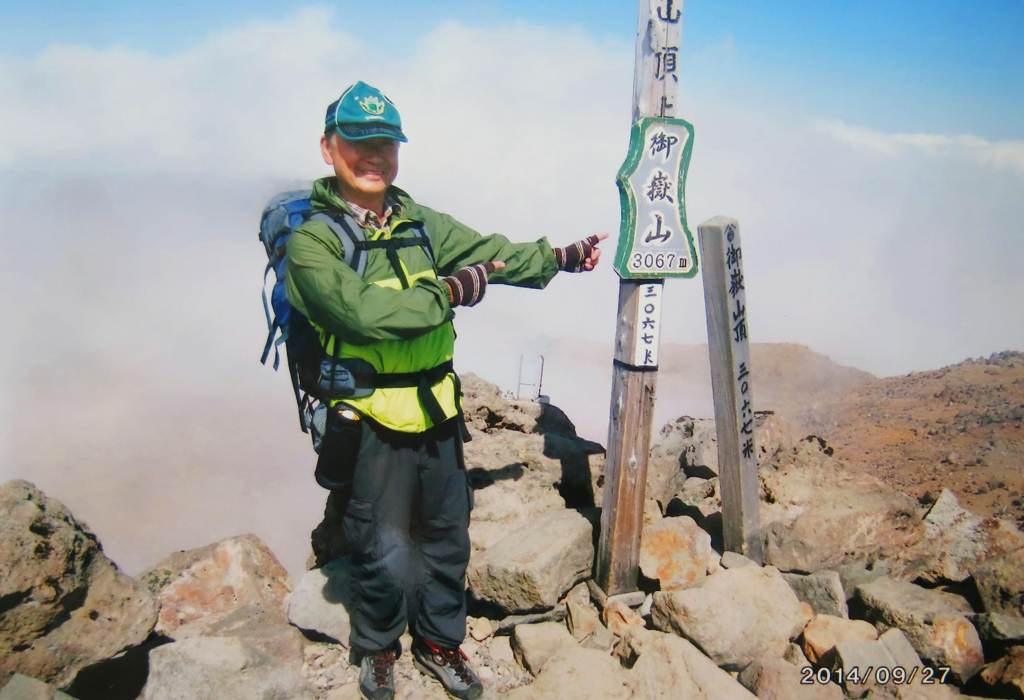
    The four bodies were near the ash-covered summit area of 3,067-meter (about 10,000-foot) Mount Ontake in central Japan.

    Many hikers had been resting or having lunch in the summit area when the surprise eruption threw out large rocks, ash and fumes a week ago.

    It was not immediately known if the four were among the 16 people that authorities said are believed still missing.

    Most of those who died and many of the nearly 70 injured were hit by boulders or rocks that flew out of the crater.

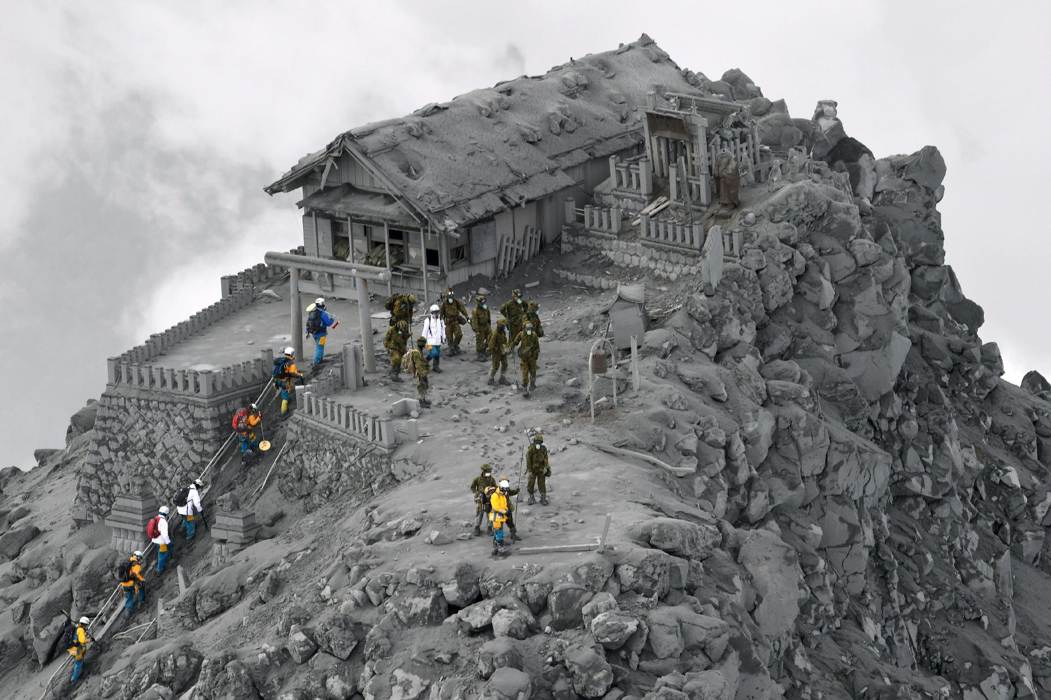
    Caption: Japan Ground Self-Defense Force personnel and other rescuers
    arrive to conduct search operations at the ash-covered Ontake Shrine
    near the summit of Mount Ontake in central Japan, Saturday, Oct. 4,
    2014. Rescuers on Saturday retrieved four more bodies near the summit of
    the Japanese volcano that erupted last weekend, raising the death toll
    to 51, authorities said. (AP Photo/Kyodo News)

    In this Satuday, Sept. 27, 2014 photo found in a camera possessed by 59-year-old hiker Izumi Noguchi who fell victim to the eruption of Mount Ontake, and was offered to Kyodo News by his wife, Hiromi, Friday, Oct. 3, Noguchi poses on the summit of Mount Ontake shortly before the eruption of the volcanic mountain in central Japan. (AP Photo/Kyodo News)

  3. Noguchi poses on the summit of Mount Ontake before the eruption of the volcanic mountain

    11

    In this Satuday, Sept. 27, 2014 photo found in a camera possessed by 59-year-old hiker Izumi Noguchi who fell victim to the eruption of Mount Ontake, and was offered to Kyodo News by his wife, Hiromi, Friday, Oct. 3, Noguchi poses on the summit of Mount Ontake shortly before the eruption of the volcanic mountain in central Japan. (AP Photo/Kyodo News)

    http://leelavadeeflower.blogspot.com/2014/10/searchers-find-4-more-victims-on.html


    +84 This post has been reshared 0 times on Google+

    Check this out on Google+

  4. No More Than 80,000 Giraffe Left in Africa

    Comment
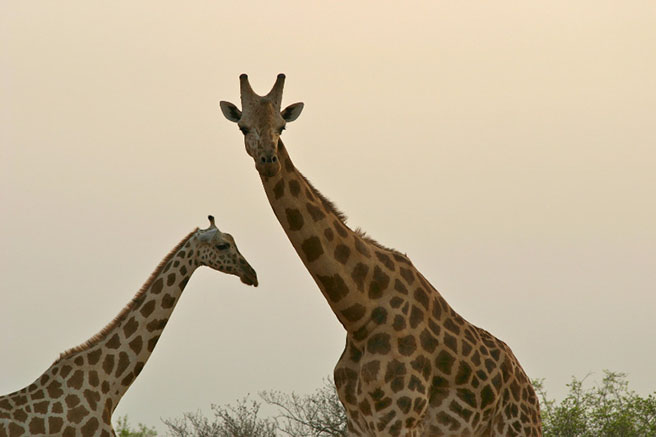
    Only about 400 individuals remain of the West African Giraffe, which is solely found in Niger. Photo by John Butler

    Nairobi, Kenya, June 20, 2014 
    African Wildlife Foundation

    As the first-ever annual World Giraffe Day on June 21 approaches, world’s tallest land mammal threatened by conflict with humans, habitat loss, war, and disease

    The overall giraffe population in Africa has fallen by 40 percent in the past decade in a half and, at 80,000 individuals, is currently one-fifth the size of the African elephant population. This year conservationists are raising awareness about the plight of this African icon on the first-ever annual World Giraffe Day, June 21, when the world’s tallest land mammal with the longest neck is celebrated on the longest day of the year. World Giraffe Day offers a rare chance to spotlight the giraffe, which, alongside elephants, rhinos, and other African megafauna, is being threatened by a number of human activities, including poaching, disease, habitat loss, war, and conflict with humans over scarce resources. 

    “Giraffes are one of Africa’s most beloved animals and always seem to be a part of the traditional African backdrop,” says Dr. Philip Muruthi, African Wildlife Foundation’s (AWF’s) senior director of conservation science.


    Though listed as “least concern” on the IUCN Red List of Threatened Species, giraffe camelopardalis does include two subspecies, the West African giraffe and the Rothschild’s giraffe that are now categorized as endangered. The small population of West African giraffe, located in Niger, comprises an estimated 400 individuals, while the Rothschild’s giraffe, found only in Kenya and Uganda, numbers about 1,100.

    “Because there is a lack of data about local populations as well as the continental giraffe population, it’s important for the scientific community to undertake giraffe research. This will give us a clearer picture of the situation on the ground and help focus resources and protection efforts,” explains Muruthi. 

    Over the past few years, AWF has worked with partners and local communities for the past few years in Niger to better understand and protect the West African giraffe.

    “The West African giraffe lives only in Niger, mainly on community lands and farms. This coexistence with humans has led to reduced and degraded habitat for giraffe, as well as incidents of human–giraffe conflict,” says Theo Way Nana, a conservation management trainee for African Wildlife Foundation who is currently engaged in the organization’s giraffe and elephant conservation work in Niger, Burkina Faso, and Benin. To that end, AWF has supported periodic giraffe censuses, engaged local communities to mitigate human–giraffe conflict, and worked with residents to restore giraffe habitat.

    World Giraffe Day was established by the Giraffe Conservation Foundation (GCF), the only charitable organization focused solely on conservation of the African giraffe. AWF consulted with GCF on its West African giraffe work in Niger, and GCF is currently compiling data on the status of all giraffe populations in Africa into a Giraffe Conservation Status Report, which will help guide their IUCN Red List assessment and conservation management into the future. The Giraffe Conservation Status Report is expected to be available in early 2015.

    “Much attention has been focused on elephants and rhinos lately—as well it should. We cannot, however, forget about Africa’s giraffes, whose populations have plummeted in a very short period of time. If we are not careful, while we are working to save some of Africa’s megafauna, Africa could end up losing one of the most iconic African megafauna—the giraffe—altogether,” says Dr. Julian Fennessy, executive director and conservation scientist of the Giraffe Conservation Foundation.

    Link source

  5. Rapid loss of giraffe – No More Than 80,000 Giraffe Left in Africa

    17

    Only about 400 individuals remain of the West African Giraffe, which is solely found in Niger.
    The overall giraffe population in Africa has fallen by 40 percent in the past decade in a half and, at 80,000 individuals, is currently one-fifth the size of the African elephant population.

    “Giraffes are one of Africa’s most beloved animals and always seem to be a part of the traditional African backdrop,” says Dr. Philip Muruthi, African Wildlife Foundation’s (AWF’s) senior director of conservation science.

    “The West African giraffe lives only in Niger, mainly on community lands and farms. This coexistence with humans has led to reduced and degraded habitat for giraffe, as well as incidents of human–giraffe conflict,” says Theo Way Nana, a conservation management trainee for African Wildlife Foundation who is currently engaged in the organization’s giraffe and elephant conservation work in Niger, Burkina Faso, and Benin. To that end, AWF has supported periodic giraffe censuses, engaged local communities to mitigate human–giraffe conflict, and worked with residents to restore giraffe habitat.

    Video and full story
    http://leelavadeeflower.blogspot.com/2014/10/no-more-than-80000-giraffe-left-in.html

    Source: Nairobi, Kenya, African Wildlife Foundation; Photo by John Butler


    +125 This post has been reshared 1 times on Google+

    Check this out on Google+

Hermit of Tbeng Mountain

Sachjang Phnom Tbeng សច្ចំ​​ ភ្នំត្បែង is a very long and interesting story written by Mr. Chhea Sokoan, read by Jendhamuni Sos. You can click on the links below to listen. Part 1 | Part 2

List of Khmer songs