1. Avoid Evil

    Comment

    Neither for the sake of oneself nor for the sake of another should one do wrong, not even for the sake of acquiring wealth, kingdom or children, should one do wrong. Such a one is indeed virtuous, wise and righteous.

    ~Sayings of the Buddha, Ven. Dr. K. Sri Dhammananda

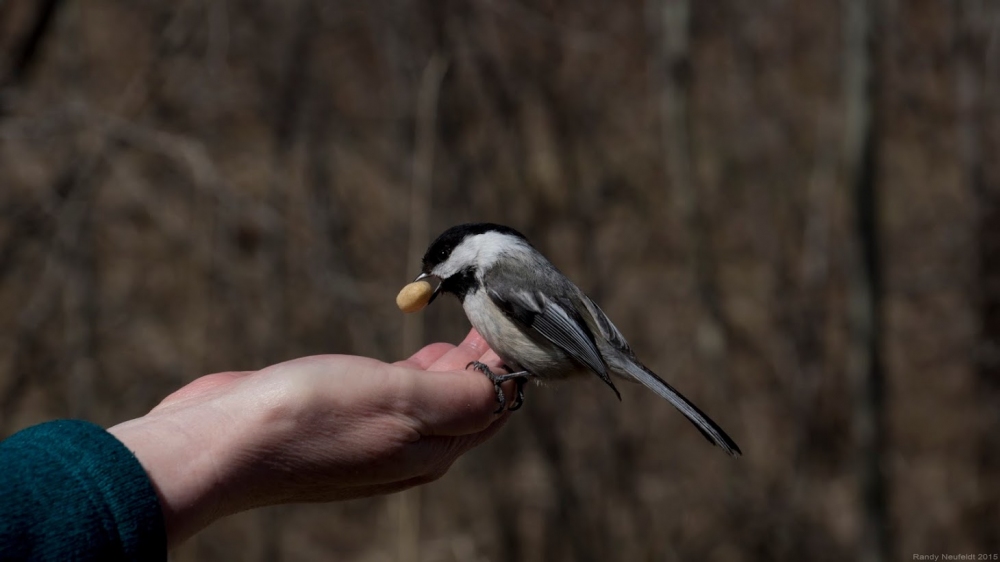
    Black Headed Chickadee. Photo credit: Randy Neufeldt

    Black Headed Chickadee. Photo credit: Randy Neufeldt

  2. Life is dear to all

    Comment

    All tremble at the rod. All fear death. Feeling for others as for oneself, one should neither kill nor cause to kill.
    ~Sayings of the Buddha, Ven. Dr. K. Sri Dhammananda

    WPb

    Photo credit: School of Vice, KI Media


  3. Kitty and a rabbit

    Comment

    A cat and a rabbit really can be friends. A cat who lives with a house rabbit might still stalk and chase a rabbit he met outdoors. The environmental cues would set the instinct in motion. In fact, he might even pursue his own rabbit-friend if they encountered each other outdoors. There are two lessons here. The first is to make sure you set up a situation where Felix is unlikely to feel predatory. The second is that even if Daphne has a feline friend, she could still be terrorized by an unfamiliar cat. Source: House Rabbit Society

  4. Things might not always be easy going

    Comment

    So what if everything blew up in your face, at least you were trying something new to see what would happen. Those that stick to what they know and don’t try new things or attempt new goals are living a very limited experience. If things are getting tough it’s likely because you’re venturing into new areas and getting out of your comfort zone. This is a good place to be and will help you get the most out of life. Keep making those experiments. Things might not always be easy going, and you it might sometimes look like a disaster, but on one attempt you’ll get it right. Tinker, tinker. Source: Bright Drops

  5. When things aren’t going as you planned

    Comment

    If you’ve been worried about how the future will turn out because things aren’t going as you planned, this is a good life lesson: you can create the future you want, which immediately helps you stop worrying about it. By creating your future rather than fearing it you regain the element of control and stop looking at yourself as the victim of things that are happening to you. They say the future is unknown, and largely it is, but you can do things today that will influence your tomorrows, and that makes today a very powerful thing indeed. Source: Bright Drops

  6. Kitty is too sleepy to play with baby chicks

    Comment

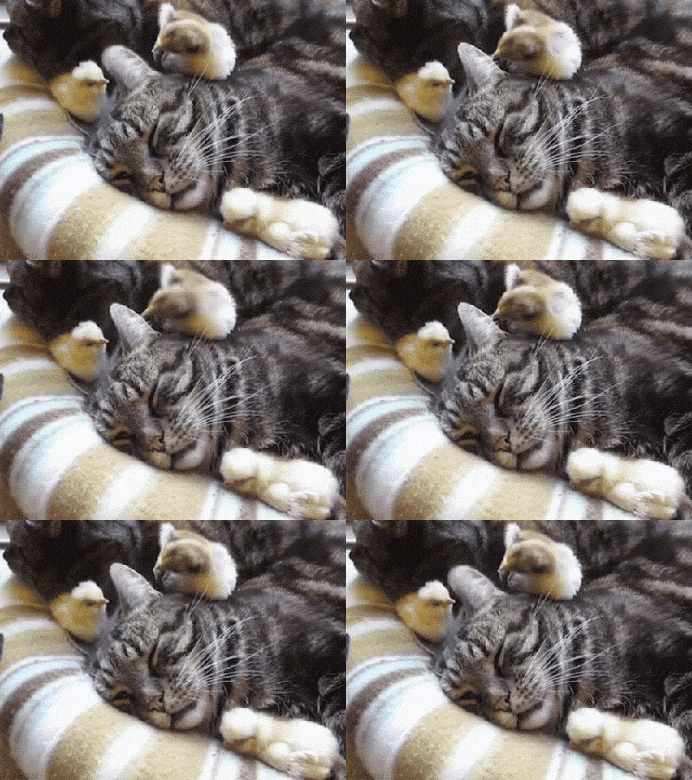
    Chickens have full-color vision—no color-blindness here! Who likes to sunbathe? Apparently everyone—humans, cats, dogs, and chickens too! You can’t blame them, and they don’t even need sunscreen. Chickens know who’s boss—they form complex social structures known as “pecking orders,” and every chicken knows his or her place on the social ladder. Source: Peta

  7. When we sit in meditation

    Comment

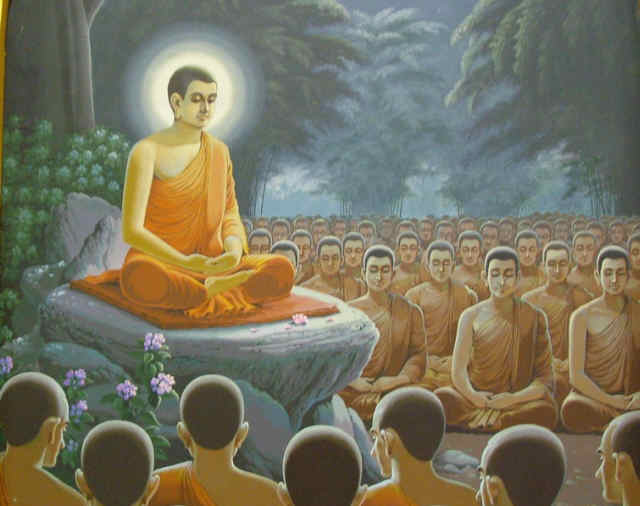
    When we sit in meditation we want the mind to become peaceful, but it’s not peaceful. Why is this? We don’t want to think but we think. It’s like a person who goes to sit on an ants’ nest: the ants just keep on biting him. When the mind is the world then even sitting still with our eyes closed, all we see is the world. Pleasure, sorrow, anxiety, confusion – it all arises. Why is this? It’s because we still haven’t realized Dhamma. If the mind is like this the meditator can’t endure the worldly dhammas, he doesn’t investigate. It’s just the same as if he were sitting on an ants’ nest. The ants are going to bite because he’s right on their home! So what should he do? He should look for some poison or use fire to drive them out.

    But most Dhamma practitioners don’t see it like that. If they feel content they just follow contentment, feeling discontent they just follow that. Following the worldly dhammas the mind becomes the world. Sometimes we may think, ”Oh, I can’t do it, it’s beyond me,”… so we don’t even try. This is because the mind is full of defilements, the worldly dhammas prevent the path from arising. We can’t endure in the development of morality, concentration and wisdom. It’s just like that man sitting on the ants’ nest. He can’t do anything, the ants are biting and crawling all over him, he’s immersed in confusion and agitation. He can’t rid his sitting place of the danger, so he just sits there, suffering. ~Ajahn Chah


  8. Opening the Dhamma Eye

    Comment

    sunandwater

     A Dhammatalk by Ajahn Chah

    Some of us start to practise, and even after a year or two, still don’t know what’s what. We are still unsure of the practice. When we’re still unsure, we don’t see that every thing around us is purely Dhamma, and so we turn to teachings from the Ajahns. But actually, when we know our own mind, when there is sati to look closely at the mind, there is wisdom. All times and all places become occasions for us to hear the Dhamma.

    We can learn Dhamma from nature, from trees for example. A tree is born due to causes and it grows following the course of nature. Right here the tree is teaching us Dhamma, but we don’t understand this. In due course, it grows and grows until it buds, flowers and fruit appear. All we see is the appearance of the flowers and fruit; we’re unable to bring this within and contemplate it. Thus we don’t know that the tree is teaching us Dhamma. The fruit appears and we merely eat it without investigating: sweet, sour or salty, it’s the nature of the fruit. And this is Dhamma, the teaching of the fruit. Following on, the leaves grow old. They wither, die and then fall from the tree. All we see is that the leaves have fallen down. We step on them, we sweep them up, that’s all. We don’t investigate thoroughly, so we don’t know that nature is teaching us. Later on the new leaves sprout, and we merely see that, without taking it further. We don’t bring these things into our minds to contemplate.

    If we can bring all this inwards and investigate it, we will see that the birth of a tree and our own birth are no different. This body of ours is born and exists dependent on conditions, on the elements of earth, water, wind and fire. It has its food, it grows and grows. Every part of the body changes and flows according to its nature. It’s no different from the tree; hair, nails, teeth and skin – all change. If we know the things of nature, then we will know ourselves.

    People are born. In the end they die. Having died they are born again. Nails, teeth and skin are constantly dying and re-growing. If we understand the practice then we can see that a tree is no different from ourselves. If we understand the teaching of the Ajahns, then we realize that the outside and the inside are comparable. Things which have consciousness and those without consciousness do not differ. They are the same. And if we understand this sameness, then when we see the nature of a tree, for example, we will know that it’s no different from our own five ‘khandhas2’ – body, feeling, memory, thinking and consciousness. If we have this understanding then we understand Dhamma. If we understand Dhamma we understand the five ‘khandhas’, how they constantly shift and change, never stopping.

    So whether standing, walking, sitting or lying we should have sati to watch over and look after the mind. When we see external things it’s like seeing internals. When we see internals it’s the same as seeing externals. If we understand this then we can hear the teaching of the Buddha. If we understand this, then we can say that Buddha-nature, the ‘one who knows’, has been established. It knows the external. It knows the internal. It understands all things which arise.

    Understanding like this, then sitting at the foot of a tree we hear the Buddha’s teaching. Standing, walking, sitting or lying, we hear the Buddha’s teaching. Seeing, hearing, smelling, tasting, touching and thinking, we hear the Buddha’s teaching. The Buddha is just this ‘one who knows’ within this very mind. It knows the Dhamma, it investigates the Dhamma. It’s not that the Buddha who lived so long ago comes to talk to us, but this Buddha-nature, the ‘one who knows’ arises. The mind becomes illumined. Continue reading

  9. Little dog wants to play

    Comment

    Dogs have 13 blood types, horses have 8, cows have 9 while Humans only have 4. A coyote crossed with a dog is called a “coydog”. A dog’s nose is the equivalent of a human fingerprint: each has a unique pattern. Source: Factslides


  10. Baby polar bears with mommy

    Comment

    Polar bears appear to be white, but their hair is actually transparent; the white results from light being refracted through the clear hair strands, according to the Animal Diversity Web (ADW), a database maintained by the Museum of Zoology at the University of Michigan. The bears can also be yellowish in the summer due to oxidation, or may even appear brown or gray, depending on the season and light conditions. Polar bear skin is black; it absorbs the heat of the sun to keep the animals warm. Source: livescience

Hermit of Tbeng Mountain

Sachjang Phnom Tbeng សច្ចំ​​ ភ្នំត្បែង is a very long and interesting story written by Mr. Chhea Sokoan, read by Jendhamuni Sos. You can click on the links below to listen. Part 1 | Part 2

List of Khmer songs