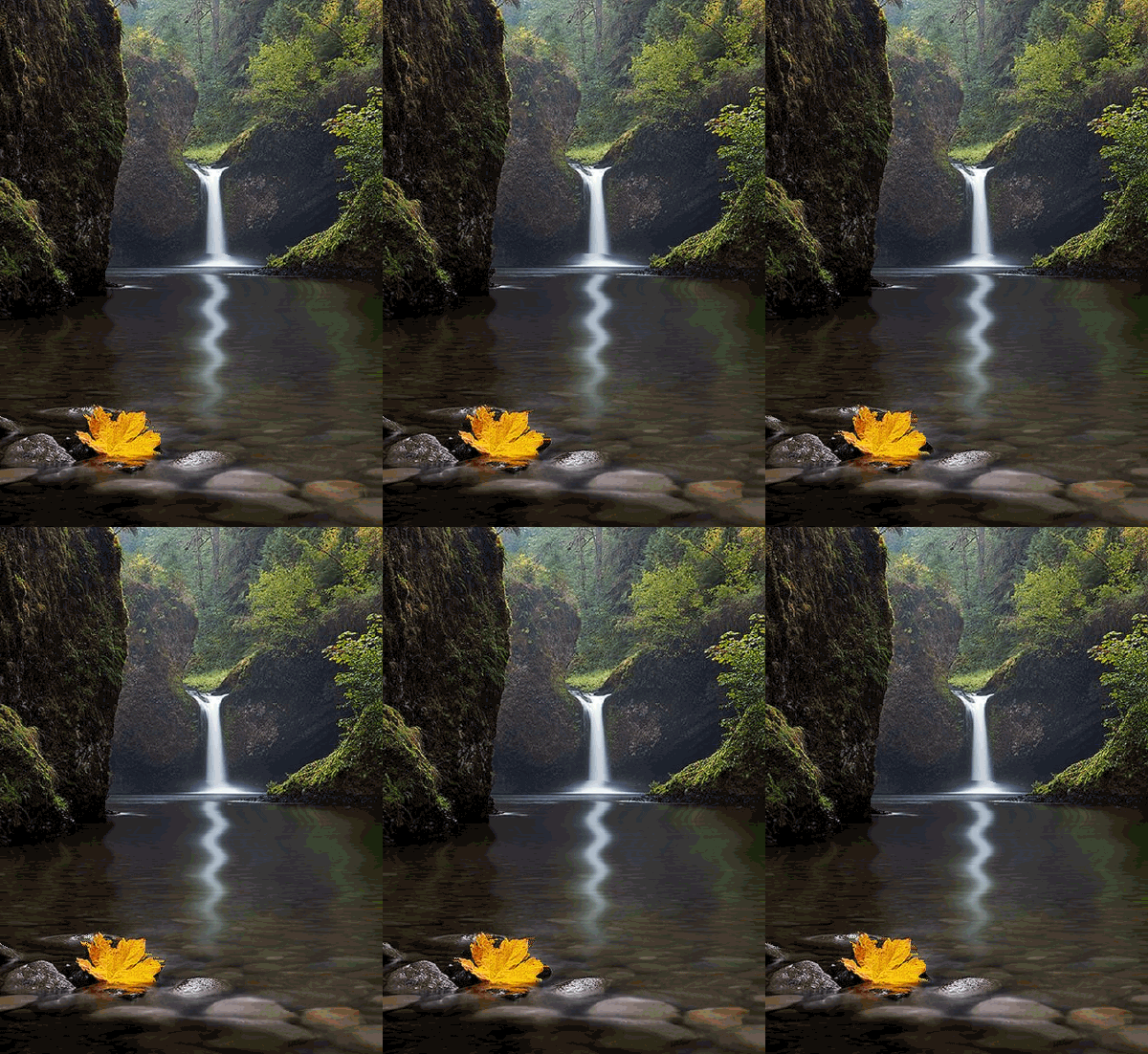
Our heart, when it’s at normalcy, is like rainwater. It’s clean water, clear, pure, and normal. If we put green coloring in the water, yellow coloring in the water, the color of the water turns to green, turns to yellow.
The same with our mind: When it meets with an object it likes, it’s happy. When it meets with an object it doesn’t like, it gets murky and uncomfortable — just like water that turns green when you add green coloring to it, or yellow when you add yellow coloring. It keeps on changing its color.
“…The Dhamma is just like this, talking in similes, because the Dhamma doesn’t have anything. It isn’t round, doesn’t have any corners. There’s no way to get acquainted with it except through comparisons like this. If you understand this, you understand the Dhamma.
“Don’t think that the Dhamma lies far away from you. It lies right with you; it’s about you. Take a look. One minute happy, the next minute sad, satisfied, then angry at this person, hating that person: It’s all Dhamma…”
~by Ajahn Chah, translated from the Thai by Thanissaro Bhikkhu

When suffering arises, you have to see that it’s suffering, and to see what this suffering arises from. Will you see anything? If we look at things in an ordinary way, there’s no suffering. For example, while we’re sitting here, we’re at ease. But at another moment we want this spittoon, so we lift it up. Now things are different. They’re different from when we hadn’t yet lifted up the spittoon. When we lift the spittoon, we sense that we’re more weighed down. There’s a reason for it. Why do we feel weighed down if it’s not from having lifted the spittoon? If we don’t lift it, there’s nothing. If we don’t lift it, we feel light. So what’s the cause and what’s the result? All you have to do is observe just this much and you know. You don’t have to go off studying anywhere else. When we grasp onto something, that’s the cause of suffering. When we let go there’s no suffering. ~by Ajahn Chah, translated from the Thai by Thanissaro Bhikkhu

It’s as if you leave home and lose your wallet. It fell out of your pocket onto the road away back there, but as long as you don’t realize what happened you’re at ease — at ease because you don’t yet know what this ease is for. It’s for the sake of dis-ease at a later time. When you eventually see that you’ve really lost your money: That’s when you feel dis-ease — when it’s right in your face.
The same holds true with our bad and good actions. The Buddha taught us to acquaint ourselves with these things. If we aren’t acquainted with these things, we’ll have no sense of right or wrong, good or bad.
by Ajahn Chah, translated from the Thai by Thanissaro Bhikkhu

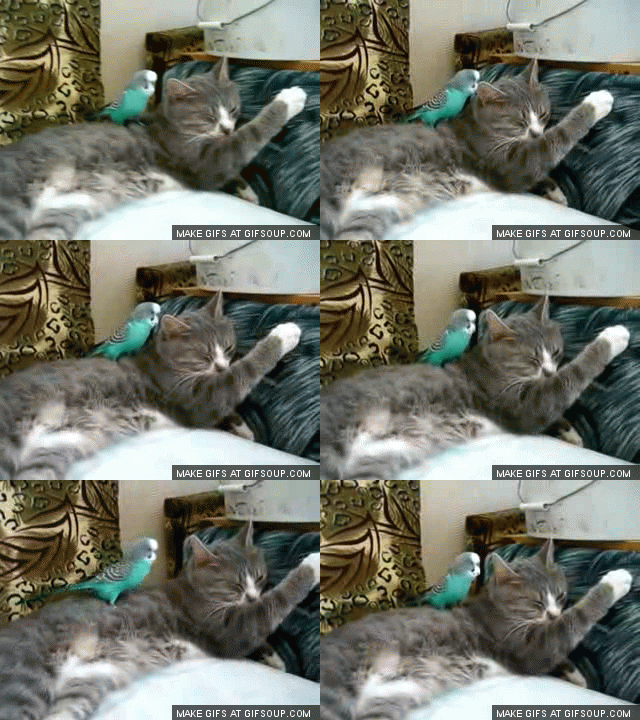
When your cat licks you, she’s paying you a huge compliment. Kittens groom each other, and older cats who aren’t related but get along well also spend time grooming one another. Often they’ll get the spots that are hard for a cat to reach by themselves, such as the top of the head and inside the ears. Exchanging scents through grooming also increases the bond between a pair of cats. Source: Catster