
1. Verses before meals

    Comment

    boy050915

    by Bhikshuni Thubten Chodron on Apr 16, 2010 in Recitations During the Day

    Usually we dive into a plate of food with great attachment, little mindfulness, and even less real enjoyment. Instead, we can pause before eating and reflect on our motivation. Here we think that we are not eating for temporary pleasure or to make our body attractive. Rather, we eat to keep our body healthy so that we can practice the Dharma and benefit all beings. Reflecting on the kindness of those who planted, harvested, transported, and packaged our food, we feel interconnected with them and want to repay their kindness by using the occasion of eating to create merit for their benefit. For this reason, we offer the food.

    Five contemplations before meals

    1. I contemplate all the causes and conditions and the kindness of others by which I received this food.
    2. I contemplate my own practice, constantly trying to improve it.
    3. I contemplate my mind, cautiously guarding it from wrongdoing, greed, and other defilements.
    4. I contemplate this food, treating it as wondrous medicine to nourish my body.
    5. I contemplate the aim of Buddhahood, accepting and consuming this food in order to accomplish it.

    Offering verses before eating

    Great compassionate Protector,
    All-knowing Teacher,
    Field of merit and good qualities vast as an ocean—
    To the Tathagata, I bow.

    Through purity, freeing from attachment,
    Through virtue, freeing from the lower realms,
    Unique, supreme ultimate reality—
    To the Dharma that is peace, I bow.

    Having freed themselves, showing the path to freedom too,
    Well established in the trainings,
    The holy field endowed with good qualities—
    To the Sangha, I bow.

    To the supreme teacher, the precious Buddha,
    To the supreme refuge, the holy precious Dharma,
    To the supreme guides, the precious Sangha,
    To all the objects of refuge we make this offering.

    May we and all those around us never be separated from the Triple Gem in any of our lives. May we always have the opportunity to make offerings to them. And may we continually receive their blessings and inspiration to progress along the path.

    By seeing this food as medicine, I will consume it without attachment or hatred, not to increase my arrogance, strength, or good looks, but solely to sustain my life.

    Link to this article

  2. Deer and dog love kitty

    Comment

    Deer are part of the Cervidae family that include moose, reindeer, elk and other species.A male deer is usually called a ‘buck’. A large male deer is often called ‘stag’. A female deer is usually called a ‘doe’. A young deer is usually called a ‘fawn’. A group of deer is known as a ‘herd’. Deer have long legs typically suited to the environments they live in. They can jump high and swim well. Most deer are born with white spots but lose them within a year. Deer take their first steps within half an hour of their birth. Young deer will usually stay with their mother for around a year. Source: Animal Facts

  3. The commonality

    Comment

    The point of marriage is not to create a quick commonality by tearing down all boundaries; on the contrary, a good marriage is one in which each partner appoints the other to be the guardian of his solitude, and thus they show each other the greatest possible trust. A merging of two people is an impossibility, and where it seems to exist, it is a hemming-in, a mutual consent that robs one party or both parties of their fullest freedom and development. But once the realization is accepted that even between the closest people infinite distances exist, a marvelous living side-by-side can grow up for them, if they succeed in loving the expanse between them, which gives them the possibility of always seeing each other as a whole and before an immense sky. — Rainer Maria Rilke

  4. Mother’s Love

    Comment

    The Koala is small, fuzzy, and cute. It has gray to brown colored fur with a white underbelly. It lazily makes it way through the tree branches to eat, sleep, and nurse its young. Spending most of its lifecycle in the trees, it only descends to the ground if necessary. Koalas are adored by many for their small size and cartoon-like features. The Koala is a marsupial.

    The Koala is small, fuzzy, and cute. It has gray to brown colored fur with a white underbelly. It lazily makes it way through the tree branches to eat, sleep, and nurse its young. Spending most of its lifecycle in the trees, it only descends to the ground if necessary. Koalas are adored by many for their small size and cartoon-like features. The Koala is a marsupial. Source: BearLife

  5. True love is just like rain, it touches us all

    Comment

    Real love, proves beauty isn’t always an outward appearance.

    If you are willing to trust in a person when all others tell you to go against it, if you are willing to risk getting your heart broken because you believe in that other person, Then that is true love. ~Source Unknown

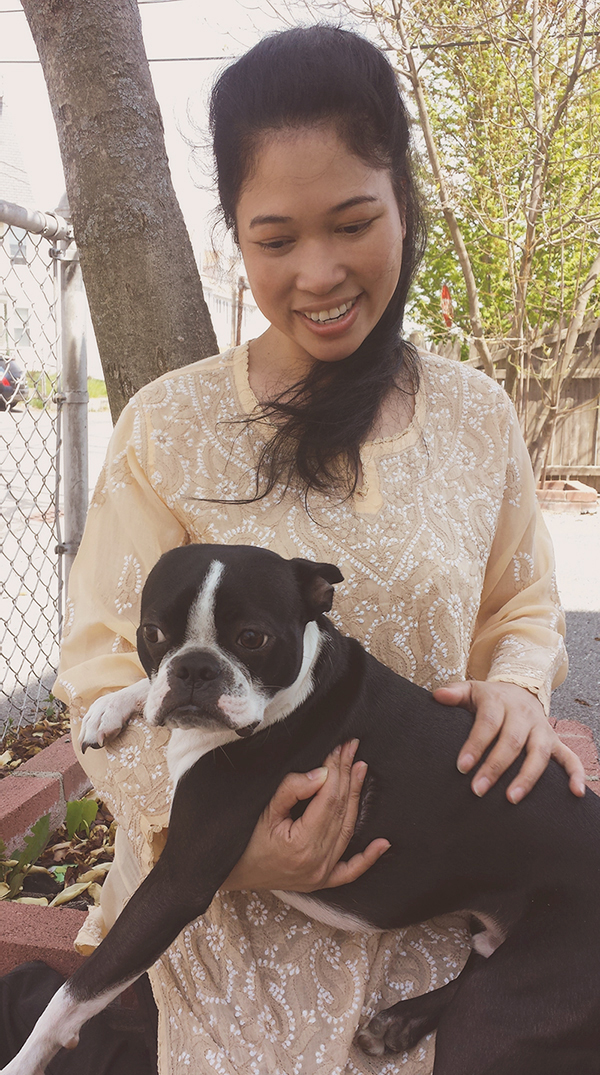
    Jendhamuni and Max -- May 9, 2015.

    Jendhamuni and Max — May 9, 2015.

  6. I live my life…

    Comment

    I live my life in widening circles that reach out across the world.
    — Rainer Maria Rilke

  7. Mutual understanding

    Comment

    Your responsibilities for mutual understanding: Remember that whatever happens, you cannot feel hurt if you know how to maintain a balanced frame of mind. You are hurt only by the mental attitude that you adopt towards yourself and towards others. If you show a loving attitude towards others, you will likewise receive a loving attitude. If you show hate, you will undoubtedly receive hate in return. An angry man breathes out poison, and he hurts himself more than he would hurt others. An angry man who shouts at others will be unable to see things in proper perspective as if smoke got into his eyes. Anyone who is wise not to be angered cannot be hurt. Always remember that no one can hurt you unless you pave the way for others to do so. If you follow the Dhamma (righteous way of life), that Dhamma will protect you.

    The Buddha says: ‘Whoever harms a harmless person, one who is pure and guiltless, upon that very fool the evil recoils like fine dust thrown against the wind.’ Dh. If you arouse the anger of others you are responsible for the reaction it produces. By showing your aggressive attitude, you will only fulfil the wishes of your enemies. by Venerable Dr. K. Sri Dhammananda

    moving flowers

  8. Whenever any problem arises

    Comment

    buddha

    by Venerable Dr. K. Sri Dhammananda

    The uncultured man always blames others; the semi-cultured man blames himself and the fully-cultured man blames neither.’

    Whenever any problem arises, we as understanding people should try to find out ourselves where the mistake lies without blaming anybody. If each person could try to correct himself, there would not be any trouble or conflict in this world. But people just do not make the effort to improve their understanding by acting unbiasedly. They prefer to find scapegoats. They look outside of themselves for the source of their troubles because they are reluctant to admit their own weaknesses. Man’s mind is given to so much self-deceit that he will try to find some excuse to justify his action so as to create an illusion that he is blameless.

    The Buddha says: ‘Easily seen are other’s faults; hard indeed it is to see one’s own faults.’ Dh. To hide their weaknesses with disclaimers for mistakes, many people adopt an aggressive attitude towards others thinking that by so doing, they can avoid the shameful situation or the cause of the complaint against them. They do not realise that such an attitude would only create more problems for themselves besides giving rise to an unhealthy atmosphere all around. You must admit when you are wrong. Do not follow the ways of the uncultured who always blame others.

    The Buddha further says: ‘The fool who does not admit he is a fool, is a real fool. And the fool who admits he is a fool is wise to that extent.’ (Dhammapada) You are responsible for the sorrow that comes to you. When you allow even minor incidents to irk and overturn your mind, that in itself will give rise to your sorrow. You must understand that it is not that something is wrong with the world, but that something is wrong with all of us.


  9. Calmness is not weakness

    Comment

    Calmness is not weakness. A calm attitude at all times shows a man of culture. It is not too hard for one to be calm when things are favourable, but to be composed when things are wrong is hard indeed. It is this difficult quality that is worth achieving, for by exercing such calm and control, a man builds strength of character. ~Venerable Dr. K. Sri Dhammananda

    Photo credit: Randy Neufeldt

    Photo credit: Randy Neufeldt


  10. Spiritual enlightenment

    Comment

    Mothers are the Mothers of all Buddhas, and all Mothers live Prajna Paramita.

    Of course, raising kids is rewarding in many ways, and spiritual enlightenment is found through this process, too. But this enlightenment is found when there is no option but to push through the exhaustion, pain, fear and anger that comes with the responsibility of a child.

    Buddhas-Mother

Hermit of Tbeng Mountain

Sachjang Phnom Tbeng សច្ចំ​​ ភ្នំត្បែង is a very long and interesting story written by Mr. Chhea Sokoan, read by Jendhamuni Sos. You can click on the links below to listen. Part 1 | Part 2

List of Khmer songs