1. Whether travelling or living in one place

    Comment

    Ajahn Chah asks “What is Peacefulness Like?”
    Ajahn Chah Answers; “What is Confusion? Well Peacefulness is the End of Confusion”.

    Know what is Good and Bad, whether Travelling or Living in One Place. You can not find Peace on a Mountain, or in a Cave. You can even go to where the Buddha Attained Enlightenment, without getting Closer to the Truth. Looking Outside the Self, is to Compare and to Discriminate. You will not find Happiness that Way. Nor will You find Peace if You spend Your Time looking for the Perfect Person, or Teacher. The Buddha taught Us to Look at the Dhamma, the Truth, and not to look at other People. ~Ajahn Chah

    Buddha


  2. Not a battle to be fought

    Comment

    Dealing with our overweight – or with any of our life’s difficulties, for that matter – is not a battle to be fought. Instead, we must learn how to make friends with our hardships and challenges. They are there to help us; they are natural opportunities for deeper understanding and transformation, brining us more joy and peace as we learn to work with them. ~ Thich Nhat Hanh

    Photo credit: School of Vice, KI Media

    Photo credit: School of Vice, KI Media

  3. The forest is peaceful

    1

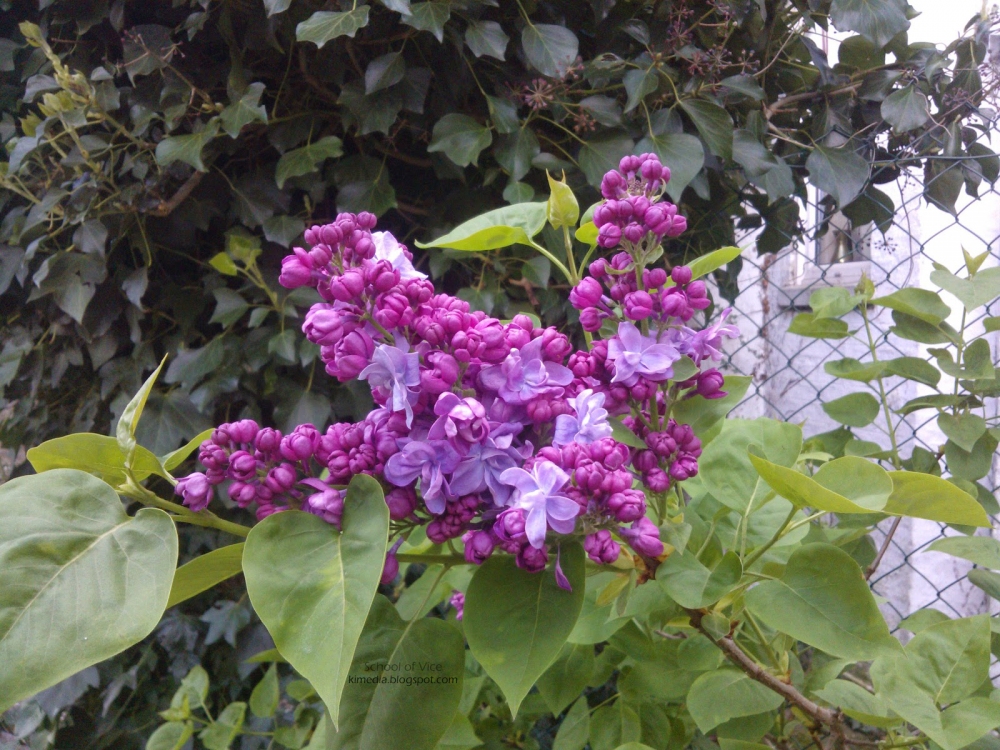
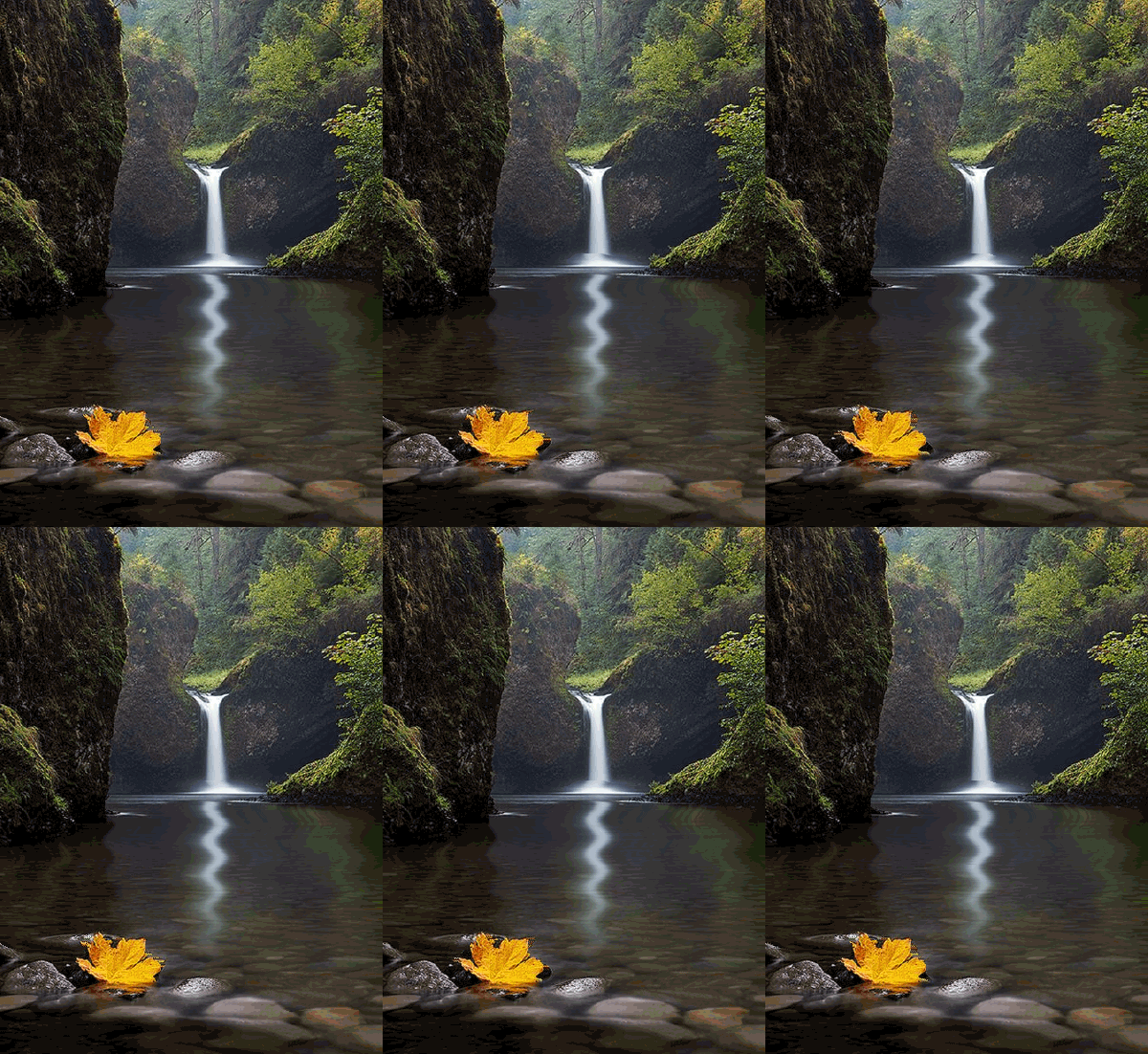
    The forest is peaceful, why aren’t you? You hold on to things causing your confusion. Let nature teach you. Hear the bird’s song then let go. If you know nature, you’ll know Dhamma. If you know Dhamma, you’ll know nature. ~Ajahn Chah

    nature peaceful

  4. A proud beetle in a lump of cow dung

    Comment

    skymoving

    There once was a beetle which came upon a lump of cow dung. He worked himself into it and liking what he saw, he invited his friends to join him in building a city in it. After working feverishly for a few days they built a magnificent `city´ in the dung and feeling very proud of their achievement they decided to elect the first beetle as their king. Now to honour their new `king´ they organised a grand parade through their `city´.

    While these impressive proceedings were taking place, An elephant happened to pass by and seeing the lump of cow dung he lifted his foot to avoid stepping on it. The king beetle saw the elephant and angrily shouted at the huge beast. `Hey you! Don´t you have any respect for royalty? Don´t you know it is rude to lift your leg over my majestic head? Apologies at once or I´ll have you punished.´ The elephant looked down and said, `Your most gracious majesty, I humbly crave your pardon.´ Thus saying he knelt down on the lump of cow dung and crushed king, city, citizens and pride in one act of obeisance.

    ~Ven. Dr. K Sri Dhammananda


  5. Kitty is not happy

    Comment

    An angry cat is probably fairly obvious to many a cat owner but it is important to know how to distinguish between a cat that is afraid and one that has become angry. A cat that is angry will puff out his fur, arch his back and spit, while a cat that is afraid will not puff up his fur or attack. Be aware that a cat can turn from being calm to afraid or angry in a matter of seconds. Know what play-fighting looks like. If you have more than one cat in the home, it’s important to be able to tell the difference between real aggression and mock fighting. Cats that are play-fighting may look violent but it’s all posture. Look closely (within reason); play-fighting cats don’t have their claws out and their bites are small and harmless. Source: wikihow

  6. Hold on to them…

    Comment

    “Stay with friends who will keep you on a straight path. Those who remind you
    when you forget and correct you when you err. Hold on to them.”
    ~Mufti Ismail Menk

    “A best friend is one who won’t leave you at any point in life, no matter
    how hard or what it takes to be there.”  ~Anurag Prakash Ray

  7. Everyone needs a person

    Comment

    Everyone needs a person to whom you can actually tell the truth
    when he/she asks ‘How are you?.’ ~Tinku Razoria

  8. The way we live our lives

    Comment

    From the Buddhist point of view—and not just Buddhist point of view—nature does not pollute itself. If it is polluted, it is because people are polluting it. Obviously, we have polluted the air and the global environment which is why we have created the problem. I feel if we human beings have done something wrong to make it so bad, it is up to human beings to correct it, since it affects all sentient beings. This is the karma of the situation from the Buddhist point of view. Whatever kind of action we take, we will have to experience a corresponding kind of result. The climate issue is a very clear case of this. We can create a very bad, negative situation for ourselves or we can create a very pleasant situation for ourselves. Whether it is the planet, society, the local environment or relationships between people – this is how actions and reactions affect each other. The phenomenon comes precisely from our incorrect way of doing things, which is to say, without considering the effect of our actions. If we want to enjoy the world around us, for our lifetime and for future generations, we must do something to improve it. Continue reading

  9. For the sake of the world

    Comment

    Ananda

    ‘Greed is also ignorance…We lose the overall view. We almost stop thinking we are part of anything at all’

    There is a Sanskrit verse:
    For the sake of the world you should sacrifice your country.
    For the sake of the country you should sacrifice your village.
    For the sake of your village you should sacrifice your family.
    For the sake of your family you should sacrifice yourself.

    Well, it appears the opposite attitude is prevalent nowadays:
    For the sake of your country you sacrifice the world.
    For the sake of your village you sacrifice your country.
    For the sake of your family you sacrifice your village.
    For the sake of yourself you sacrifice your family.
    When that kind of situation has come about, we think “If I feel it is somehow beneficial for me, or if I get more money for a certain time, I do not care if the planet is going to the dogs or not.” That is a root problem; basically it is ignorance. We think our own welfare is assured because we get money or power or whatever. Yet we live in this world and actually if the world is gone, where will we use our ‘profit’?

    by Ringu Tulku Rinpoche
    Source: Ecological Buddhism


  10. “Not Sure!” – The Standard of the Noble Ones

    Comment
    Photo credit: Randy Neufeldt

    Photo credit: Randy Neufeldt


    A Dhammatalk by Ajahn Chah

    There was once a Western monk, a student of mine. Whenever he saw Thai monks and novices disrobing he would say, ”Oh, what a shame! Why do they do that? Why do so many of the Thai monks and novices disrobe?” He was shocked. He would get saddened at the disrobing of the Thai monks and novices, because he had only just come into contact with Buddhism. He was inspired, he was resolute. Going forth as a monk was the only thing to do, he thought he’d never disrobe. Whoever disrobed was a fool. He’d see the Thais taking on the robes at the beginning of the Rains Retreat as monks and novices and then disrobing at the end of it… ”Oh, how sad! I feel so sorry for those Thai monks and novices. How could they do such a thing?”

    Well, as time went by some of the Western monks began to disrobe, so he came to see it as something not so important after all. At first, when he had just begun to practice, he was excited about it. He thought that it was a really important thing, to become a monk. He thought it would be easy.

    When people are inspired it all seems to be so right and good. There’s nothing there to gauge their feelings by, so they go ahead and decide for themselves. But they don’t really know what practice is. Those who do know will have a thoroughly firm foundation within their hearts – but even so they don’t need to advertise it.

    As for myself, when I was first ordained I didn’t actually do much practice, but I had a lot of faith. I don’t know why, maybe it was there from birth. The monks and novices who went forth together with me, come the end of the Rains, all disrobed. I thought to myself, ”Eh? What is it with these people?” However, I didn’t dare say anything to them because I wasn’t yet sure of my own feelings, I was too stirred up. But within me I felt that they were all foolish. ”It’s difficult to go forth, easy to disrobe. These guys don’t have much merit, they think that the way of the world is more useful than the way of Dhamma.” I thought like this but I didn’t say anything, I just watched my own mind.

    I’d see the monks who’d gone forth with me disrobing one after the other. Sometimes they’d dress up and come back to the monastery to show off. I’d see them and think they were crazy, but they thought they looked snappy. When you disrobe you have to do this and that… I’d think to myself that that way of thinking was wrong. I wouldn’t say it, though, because I myself was still an uncertain quantity. I still wasn’t sure how long my faith would last.

    When my friends had all disrobed I dropped all concern, there was nobody left to concern myself with. I picked up the pātimokkha2 and got stuck into learning that. There was nobody left to distract me and waste my time, so I put my heart into the practice. Still I didn’t say anything because I felt that to practice all one’s life, maybe seventy, eighty or even ninety years, and to keep up a persistent effort, without slackening up or losing one’s resolve, seemed like an extremely difficult thing to do.

    Those who went forth would go forth, those who disrobed would disrobe. I’d just watch it all. I didn’t concern myself whether they stayed or went. I’d watch my friends leave, but the feeling I had within me was that these people didn’t see clearly. That Western monk probably thought like that. He’d see people become monks for only one Rains Retreat, and get upset.

    Later on he reached a stage we call… bored; bored with the Holy Life. He let go of the practice and eventually disrobed.

    ”Why are you disrobing? Before, when you saw the Thai monks disrobing you’d say, ‘Oh, what a shame! How sad, how pitiful.’ Now, when you yourself want to disrobe, why don’t you feel sorry now?”

    He didn’t answer. He just grinned sheepishly. Continue reading

Hermit of Tbeng Mountain

Sachjang Phnom Tbeng សច្ចំ​​ ភ្នំត្បែង is a very long and interesting story written by Mr. Chhea Sokoan, read by Jendhamuni Sos. You can click on the links below to listen. Part 1 | Part 2

List of Khmer songs