1. Dendrobium spectible – the Alien Orchid

    Comment

    The flowers of Dendrobium spectabile defy description. The bizarre 3-inch blossoms have sepals and petals that are extremely twisted — sometimes wrapping around each other and keeping the buds from opening. The colors are a blend of yellow, burgundy and white but give the impression of a washed-out tan. The throat has a “hinged” mechanism that bounces with air movement, attracting a specific pollinator in the wild. The grower can simulate this bounce by gently shaking the flower. The blooming duration is about six weeks, and older plants can easily produce 100 blossoms or more.

    Fragrance is a highly coveted trait in orchids, though few genera offer it. This Aussie Dendrobium’s semi-sweet aroma is strong from across the room, day or night. Even Oncidium Sharry Baby, the famous chocolate-scented Dancing Lady, cannot compete with the intensity.

    Source: Richmond Times-Dispatch, by Arthur Chadwick

    Alien Orchid. Photo credit: Randy Neufeldt

    Alien Orchid. Photo credit: Randy Neufeldt


  2. From across the street

    Comment

    Suppose one morning you’re walking to work and a man yells abuse and insults at you from across the street. As soon as you hear this abuse your mind changes from its usual state. You don’t feel so good, you feel angry and hurt. That man walks around abusing you night and day. Whenever you hear the abuse, you get angry, and even when you return home you’re still angry because you feel vindictive, you want to get even.

    A few days later another man comes to your house and calls out, ”Hey! That man who abused you the other day, he’s mad, he’s crazy! Has been for years! He abuses everybody like that. Nobody takes any notice of anything he says.” As soon as you hear this you are suddenly relieved. That anger and hurt that you’ve pent up within you all these days melts away completely. Why? Because you know the truth of the matter now. Before, you didn’t know, you thought that man was normal, so you were angry at him. Understanding like that caused you to suffer. As soon as you find out the truth, everything changes: ”Oh, he’s mad! That explains everything!”

    When you understand this you feel fine, because you know for yourself. Having known, then you can let go. If you don’t know the truth you cling right there. When you thought that man who abused you was normal you could have killed him. But when you find out the truth, that he’s mad, you feel much better. This is knowledge of the truth.

    ~Ajahn Chah

    nature moving 090915


  3. Pleasure and sadness

    Comment

    These words ‘the Middle Way’ do not refer to our body and speech, they refer to the mind. When a mental impression which we don’t like arises, it affects the mind and there is confusion. When the mind is confused, when it’s ‘shaken up’, this is not the right way. When a mental impression arises which we like, the mind goes to indulgence in pleasure – that’s not the way either.

    We people don’t want suffering, we want happiness. But in fact happiness is just a refined form of suffering. Suffering itself is the coarse form. You can compare them to a snake. The head of the snake is unhappiness, the tail of the snake is happiness. The head of the snake is really dangerous, it has the poisonous fangs. If you touch it, the snake will bite straight away. But never mind the head, even if you go and hold onto the tail, it will turn around and bite you just the same, because both the head and the tail belong to the one snake.

    In the same way, both happiness and unhappiness, or pleasure and sadness, arise from the same parent – wanting. So when you’re happy the mind isn’t peaceful. It really isn’t! For instance, when we get the things we like, such as wealth, prestige, praise or happiness, we become pleased as a result. But the mind still harbours some uneasiness because we’re afraid of losing it. That very fear isn’t a peaceful state. Later on we may actually lose that thing and then we really suffer. ~Ajahn Chah

    Jendhamuni and little brother


  4. The Middle Way Within

    Comment

    Buddha dhamma talk

    A Dhammatalk by Ajahn Chah

    The teaching of Buddhism is about giving up evil and practising good. Then, when evil is given up and goodness is established, we must let go of both good and evil. We have already heard enough about wholesome and unwholesome conditions to understand something about them, so I would like to talk about the Middle Way, that is, the path to transcend both of those things.

    All the Dhamma talks and teachings of the Buddha have one aim – to show the way out of suffering to those who have not yet escaped. The teachings are for the purpose of giving us the right understanding. If we don’t understand rightly, then we can’t arrive at peace.

    When all the Buddhas became enlightened and gave their first teachings, they declared these two extremes – indulgence in pleasure and indulgence in pain2. These two ways are the ways of infatuation, they are the ways between which those who indulge in sense pleasures must fluctuate, never arriving at peace. They are the paths which spin around in samsāra.

    The Enlightened One observed that all beings are stuck in these two extremes, never seeing the Middle Way of Dhamma, so he pointed them out in order to show the penalty involved in both. Because we are still stuck, because we are still wanting, we live repeatedly under their sway. The Buddha declared that these two ways are the ways of intoxication, they are not the ways of a meditator, not the ways to peace. These ways are indulgence in pleasure and indulgence in pain, or, to put it simply, the way of slackness and the way of tension.

    If you investigate within, moment by moment, you will see that the tense way is anger, the way of sorrow. Going this way there is only difficulty and distress. Indulgence in Pleasure – if you’ve transcended this, it means you’ve transcended happiness. These ways, both happiness and unhappiness, are not peaceful states. The Buddha taught to let go of both of them. This is right practice. This is the Middle Way.

    These words ‘the Middle Way’ do not refer to our body and speech, they refer to the mind. When a mental impression which we don’t like arises, it affects the mind and there is confusion. When the mind is confused, when it’s ‘shaken up’, this is not the right way. When a mental impression arises which we like, the mind goes to indulgence in pleasure – that’s not the way either.

    We people don’t want suffering, we want happiness. But in fact happiness is just a refined form of suffering. Suffering itself is the coarse form. You can compare them to a snake. The head of the snake is unhappiness, the tail of the snake is happiness. The head of the snake is really dangerous, it has the poisonous fangs. If you touch it, the snake will bite straight away. But never mind the head, even if you go and hold onto the tail, it will turn around and bite you just the same, because both the head and the tail belong to the one snake.

    In the same way, both happiness and unhappiness, or pleasure and sadness, arise from the same parent – wanting. So when you’re happy the mind isn’t peaceful. It really isn’t! For instance, when we get the things we like, such as wealth, prestige, praise or happiness, we become pleased as a result. But the mind still harbours some uneasiness because we’re afraid of losing it. That very fear isn’t a peaceful state. Later on we may actually lose that thing and then we really suffer. Continue reading

  5. The Story of Thera Tissa

    Comment

    Meditation class - Ariyamagga

    While residing at the Jetavana monastery in Savatthi, the Buddha uttered Verses (3) and (4) of this book, with reference to Thera Tissa.

    Tissa, son of the Buddha’s maternal aunt, was at one time staying with the Buddha. He had become a bhikkhu only in his old age, but he posed as a senior bhikkhu and was very pleased when visiting bhikkhus asked his permission to do some service for him. On the other hand, he failed to perform the duties expected of junior bhikkhus; besides, he often quarrelled with the younger bhikkhus. Should anyone rebuke him on account of his behaviour he would go complaining to the Buddha, weeping, very much dissatisfied and very upset. The others also followed him to the presence of the Buddha. The Buddha told them not to harbour thoughts of enmity, for enmity could only be appeased by not harbouring enmity.

    Then the Buddha spoke in verse as follows:

    Verse 3: “He abused me, he ill-treated me, he got the better of me, he stole my belongings;”… the enmity of those harbouring such thoughts cannot be appeased.

    Verse 4: “He abused me, he ill-treated me, he got the better of me, he stole my belongings;”… the enmity of those not harbouring such thoughts can be appeased.

    At the end of the discourse, one hundred thousand bhikkhus attained Sotapatti Fruition.

    Dhammapada Verses 3 and 4
    Tissatthera Vatthu

    Akkocchi mam avadhi mam
    ajini mam ahasi me
    ye ca tam upanayhanti
    veram tesam na sammati.

    Akkocchi mam avadhi mam
    ajini mam ahasi me
    ye ca tam nupanayhanti
    veram tesupasammati.

    Source: Tipitaka


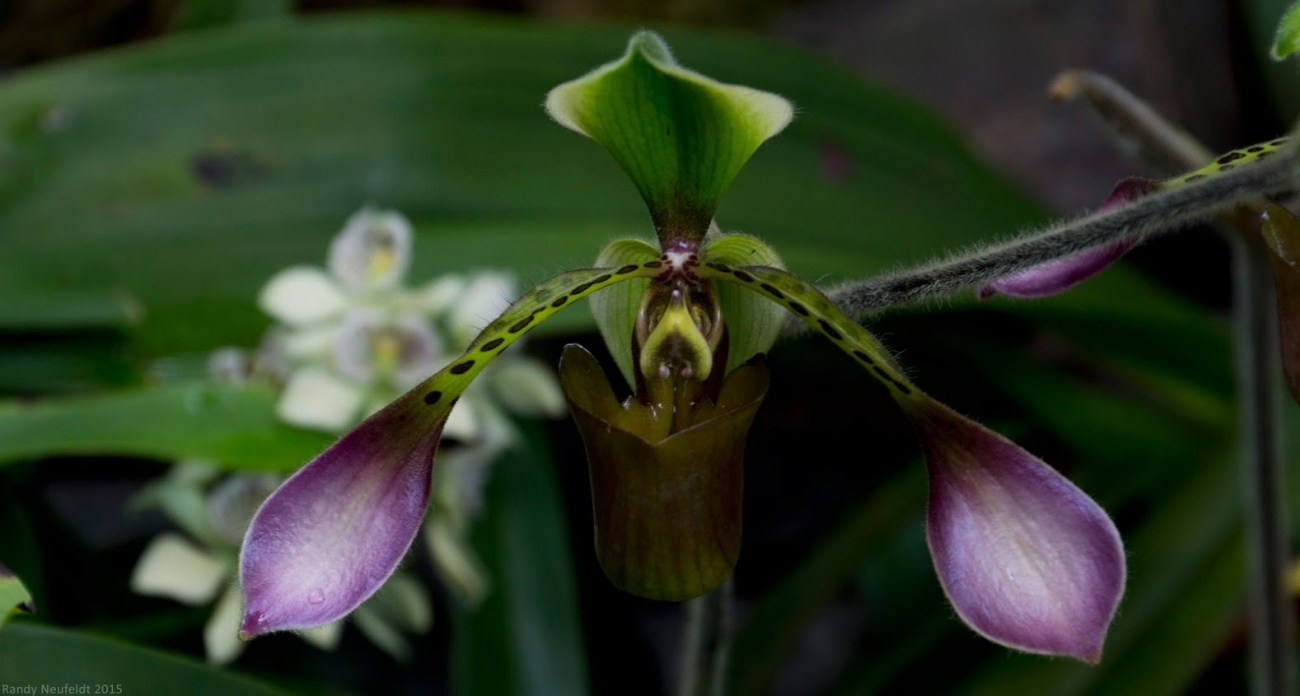
  6. Lady Slipper Orchid

    Comment
    Pitcher Orchid. Photo credit: Randy Neufeldt

    Pitcher Orchid. Photo credit: Randy Neufeldt


    Cypripedium species are members of the orchid family. Most are native across much of North America and some parts of Europe. Also referred to as lady slippers, these interesting plants have only two leaves branching out from the center. The flower itself resembles a slipper or moccasin, which is what spawned its name. These dainty blooms (ranging from white, yellow and deep pink to nearly purple) remain tightly closed with exception to the small opening in the front.

    Many of these plants are considered to be endangered in some areas due to over collecting from the wild. According to Indian lore, these plants were thought to induce dreams and were once used as a sedative. Unfortunately, they also happen to be a favorite food source for many insects and deer.

    Collecting and transplanting from the wild is strongly discouraged both because of its rarity and low survival rate. However, various species are grown commercially and can be obtained for gardening purposes so growing a lady slipper wildflower in your own garden is possible.

    Lady slippers prefer to grow within their natural environments – shady woodland areas. Interestingly enough, lady slippers require the aid of fungus in spreading their seeds, and a single plant can live up to 20 years or more if left alone.

    By Nikki Phipps
    Source: Planting Flower Bulbs


  7. Hungry puppy

    Comment

    A puppy does not begin trying to walk until as early as 2 weeks and as late as 5 weeks old – They do not automatically know how to walk, they stumble and fall down just like toddlers do. Out of the 5 senses: touch, taste, smell, hearing and seeing, a puppy first experiences touch. At about 6 weeks old, a dam will start encouraging her pups to venture out and slowly become more independent. Source: The dog fact information center

  8. Virtue and comfort

    Comment

    The superior man thinks always of virtue; the common man thinks of comfort. ~Skipper Young

Hermit of Tbeng Mountain

Sachjang Phnom Tbeng សច្ចំ​​ ភ្នំត្បែង is a very long and interesting story written by Mr. Chhea Sokoan, read by Jendhamuni Sos. You can click on the links below to listen. Part 1 | Part 2

List of Khmer songs