1. Puppy and Kitty

    Comment

    Puppies require five small meals a day. Puppies’ teeth begin to grow when they begin chewing, just like human babies. At one-year-old, a puppy is no longer considered a puppy — it’s considered an adult. In one-year-old puppy is the equivalent of a 15-year-old human. Touch is the first sense a puppy begins to use. Source: IB Times

  2. Love is like a flower

    Comment

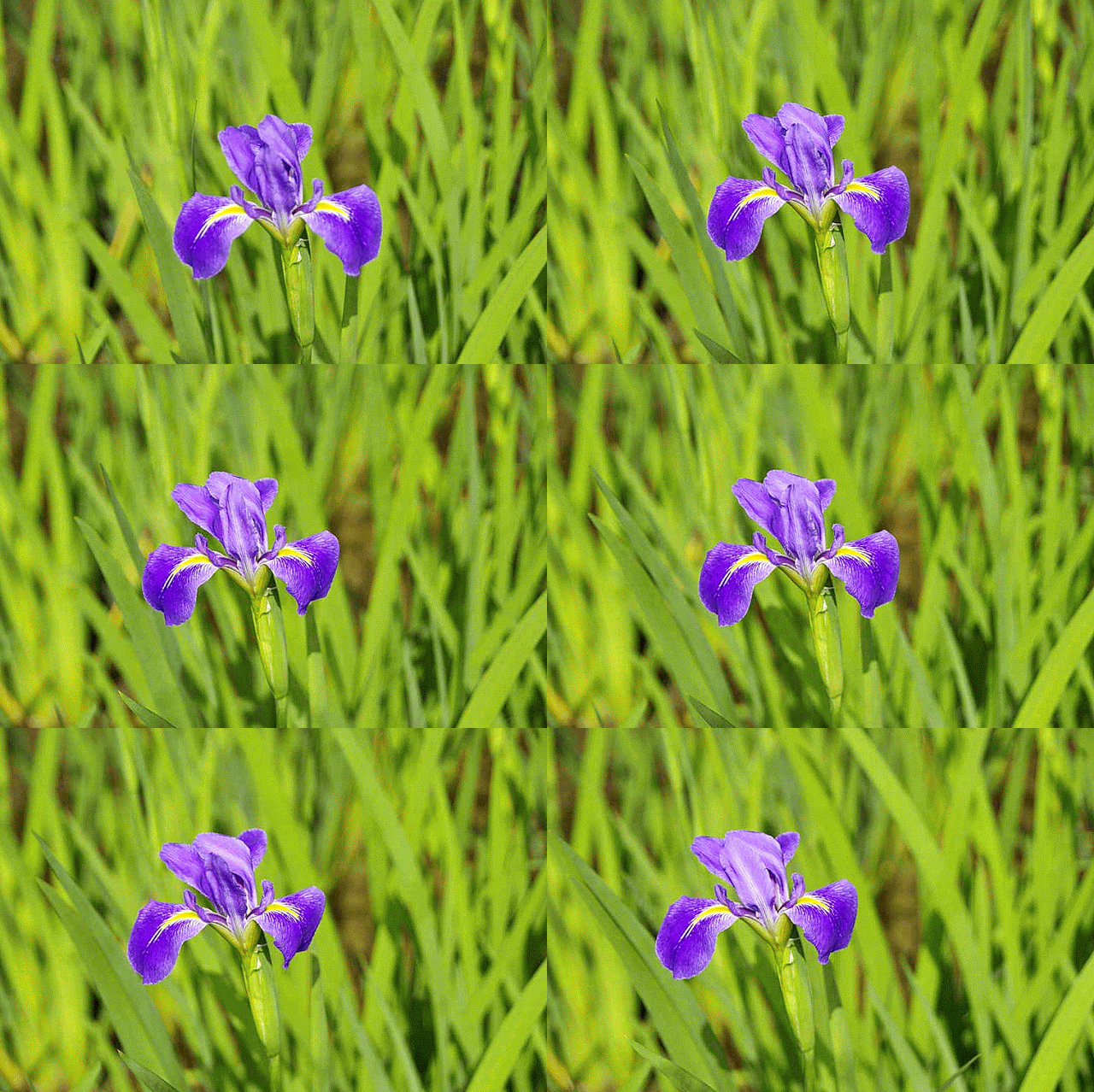
    Love is like a flower, needs a lot of attention, sustenance and love. Without these, like the very flower; it wilts and dies. ~Unknown

  3. It’s the time that you spent on your rose

    Comment

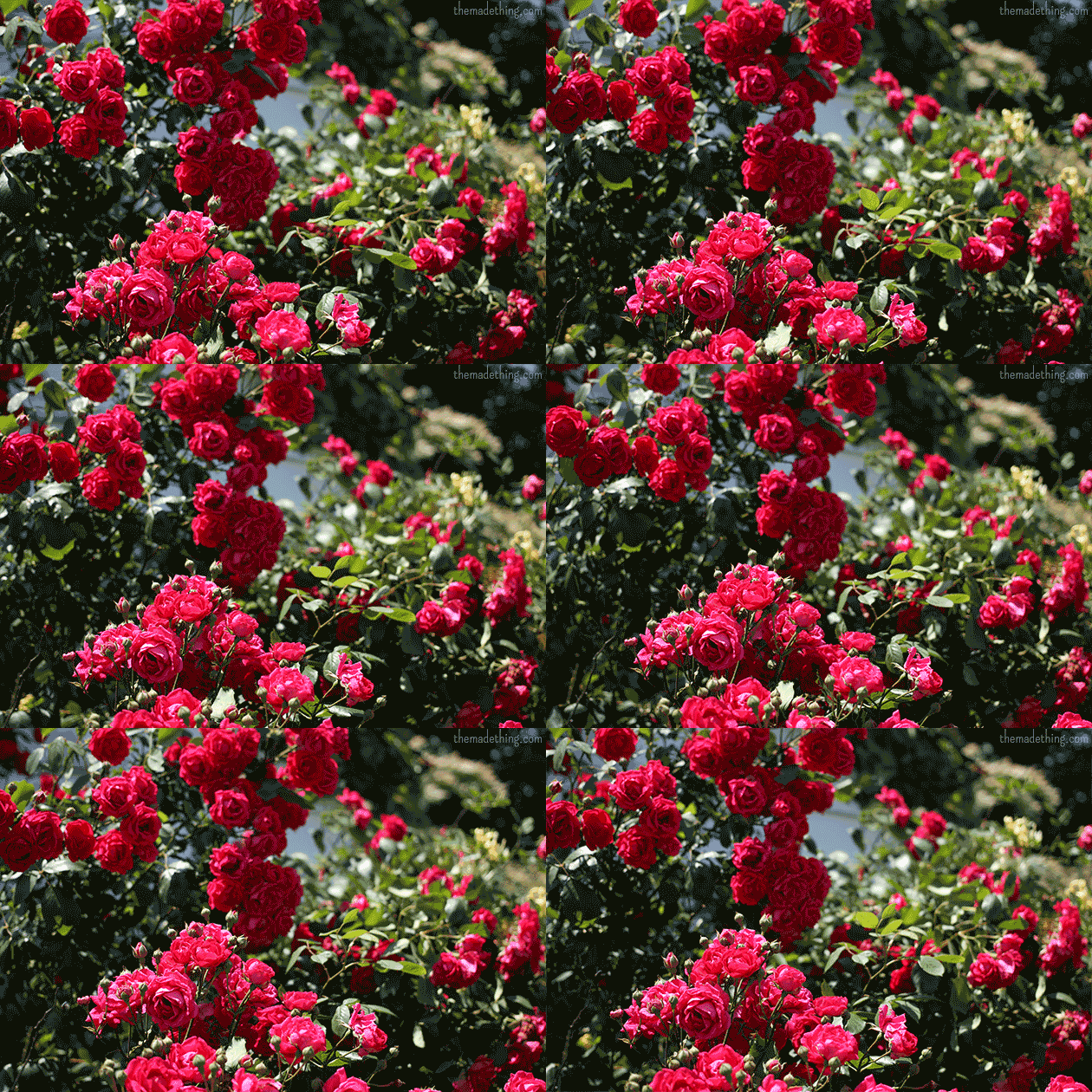
    It’s the time that you spent on your rose that makes your rose so important…People have forgotten this truth, but you mustn’t forget it. You become responsible forever for what you’ve tamed. You’re responsible for your rose. – Antoine de Saint-Exupéry

  4. Baby duck running

    Comment

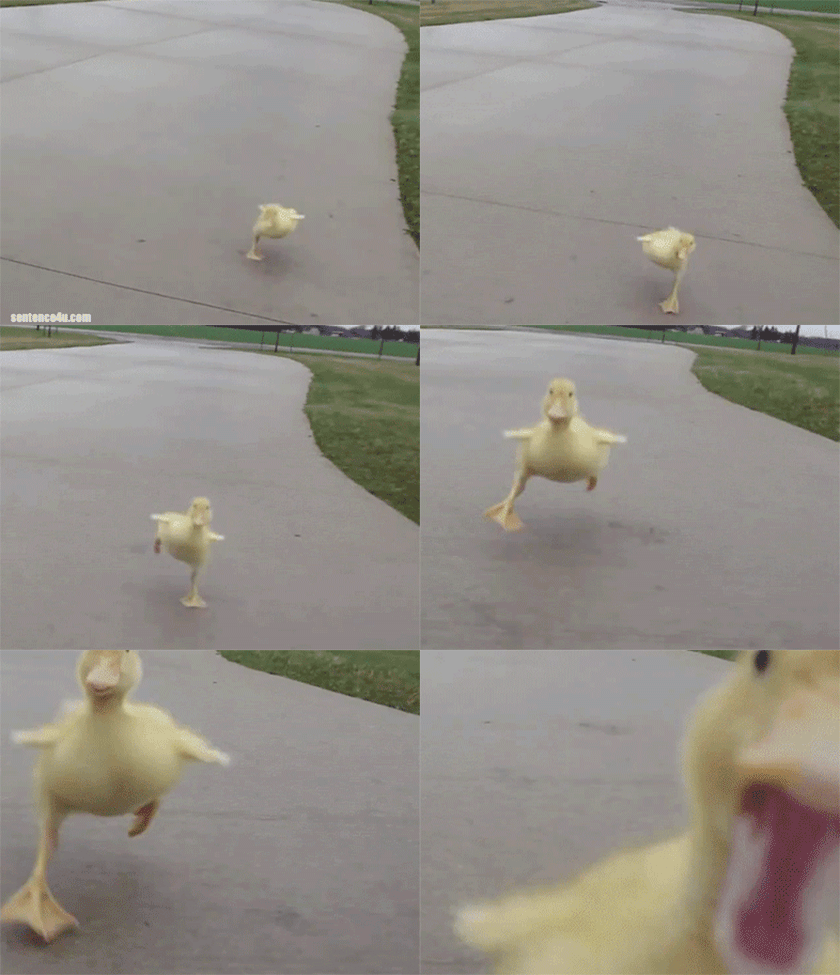
    The duck’s mouth is called a “bill”. Normally, it is broad and flat and has rows of fine notches along the edge called “lamellae”. The lamellae helps the duck to grip its food so that it will not slip off. However, ducks bills come in different shapes and sizes. The shape of the bill and body features will determine how the duck hunt for its food. Ducks which have broad beaks, sift their food for insects, snails and seeds from the mud. These are called the shovelers. The Northern Shoveler is an example.

    Some ducks have long and narrow beaks. The narrow beaks are also covered will with saw-like edges which help them to grab fish. Sea ducks usually have this kind of beak. Sea ducks are also divers. Examples are the Mergansers, Eiders, Harlequins, Goldeneyes and Buffleheads. Soruce: KiddyHouse

  5. The Story of Matthakundali

    Comment

    1. Sukham/sukha: in this context, happiness, satifactoriness, fortune, etc., and rebirth in the three upper planes of happy existence.

    The Story of Matthakundali

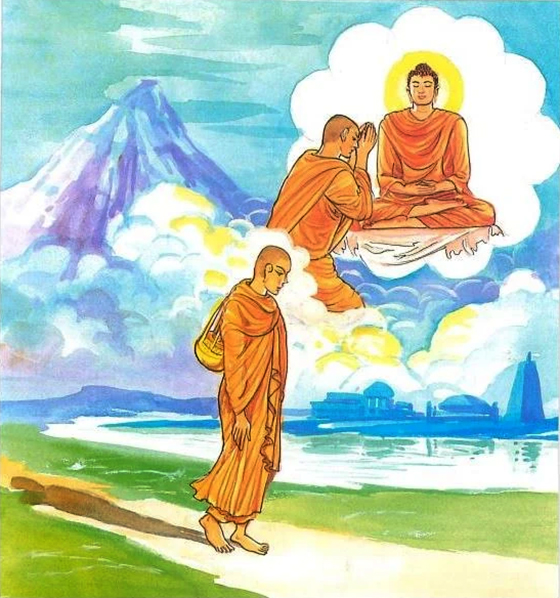
    While residing at the Jetavana monastery in Savatthi, the Buddha uttered Verse (2) of this book, with reference to Matthakundali, a young Brahmin. Matthakundali was a young brahmin, whose father, Adinnapubbaka, was very stingy and never gave anything in charity. Even the gold ornaments for his only son were made by himself to save payment for workmanship. When his son fell ill, no physician was consulted, until it was too late. When he realized that his son was dying, he had the youth carried outside on to the verandah, so that people coming to his house would not see his possessions.

    On that morning, the Buddha arising early from his deep meditation of compassion saw, in his Net of Knowledge, Matthakundali lying on the verandah. So when entering Savatthi for alms-food with his disciples, the Buddha stood near the door of the brahmin Adinnapubbaka. The Buddha sent forth a ray of light to attract the attention of the youth, who was facing the interior of the house. The youth saw the Buddha; and as he was very weak he could only profess his faith mentally. But that was enough. When he passed away with his heart in devotion to the Buddha he was reborn in the Tavatimsa celestial world. Continue reading

  6. Stay humble

    Comment

    Appreciation and compliments can make you feel good about yourself. Stay humble by simply thanking people for their kind words. But each time you receive a compliment or praise do not absorb it or dwell too much in it because all these may go to your head and you may lose interest in improving yourself as a leader.  ~Dr Anil Kumar Sinha

  7. Experiences

    Comment

    To live as equals with others requires a wide range of experience. The wise have much experience and fools have little. To gain experience, you need to go through good and bad times. How can you grow if your experiences are always the same? Anything that happens, good or bad, can be constructive in the end — as long as you learn something useful from it. So when you face difficulties, don’t feel too bad! ~ 17th Karmapa

    white blossoms090415


  8. The Buddha-Dhamma

    Comment

    The Buddha-Dhamma is not a fiction to be read and forgotten. It deals with life — with real life, the life that you and I lead every day, the value and worth of which is greatly enhanced when the Dhamma is translated into action and built into our character by constant effort and practice.

    The ultimate aim of the Buddha-Dhamma is Nibbana — emancipation from suffering. The immediate objective is to help us to understand and solve the problems that confront us in our daily life, to make us well-rounded, happy, and balanced men and women, able to live in harmony with our environment and our fellow beings. Balance, however, though it is an aim worth striving for, is not easily struck in the contemporary world, with its false ideologies and illusory values.

    In contrast to the relative, often false values of our age, the Buddha’s teaching is a revelation of true and absolute values. Its truth can be tested and tried in one’s own experience. Buddhism teaches clear thinking, self-control, and mental culture as means to these ends. One who builds his daily life upon this firm foundation of appropriate knowledge and clear-sighted ideals is assured of progress and success even as a layman. ~Robert Bogoda

    Buddha looking at woman072715


  9. A well-balanced Buddhist

    Comment

    A well-balanced Buddhist, therefore, must make up his own mind, form his own opinions, and arrive at his own conclusions in facing life’s difficulties according to Buddhist principles. He must not be a moral and intellectual coward. He must be prepared to stand alone, to go his own way irrespective of what others think or say. Of course he will take advice — it is no interference with one’s freedom to seek advice from a more experienced and knowledgeable person — but the decision should be his own.

    Seeing the relationship between craving and suffering, we must maintain a certain degree of detachment from worldly things and, in addition, regulate our lives by strictly observing the Five Precepts. Thereby we preserve the well-being of our whole personality, both here and in the hereafter, by living in harmony with the universal laws governing our mental and moral life. The development of moral and ethical character (sila) is a prerequisite for mind-control and for obtaining the wisdom needed to attain Nibbana. ~Robert Bogoda

Hermit of Tbeng Mountain

Sachjang Phnom Tbeng សច្ចំ​​ ភ្នំត្បែង is a very long and interesting story written by Mr. Chhea Sokoan, read by Jendhamuni Sos. You can click on the links below to listen. Part 1 | Part 2

List of Khmer songs