1. Impermanence is everywhere

    Comment

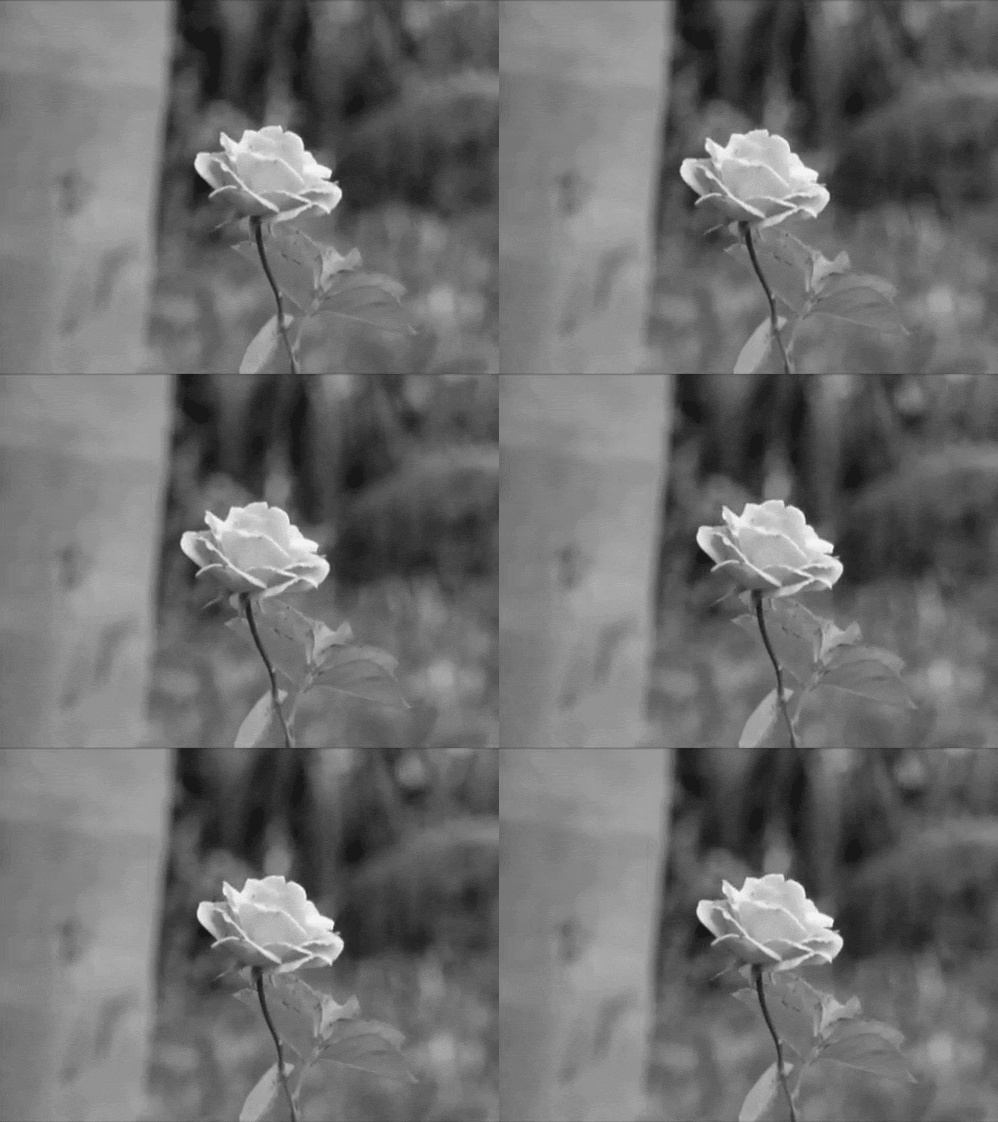
    Impermanence is everywhere, yet I still think things will last.
    I have reached the gates of old age, yet I still pretend I am young.
    Bless me and misguided beings like me,
    That we may truly understand impermanence. ~ Patrul Rinpoche

  2. The Story of a Rich Householder

    Comment

    Verse 212: Affection begets sorrow, affection begets fear. For him who is free from affection there is no sorrow; how can there be fear for him?

    The Story of a Rich Householder

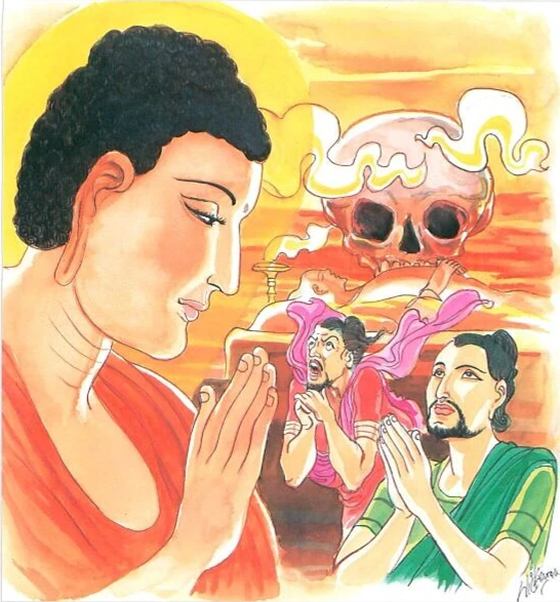
    While residing at the Jetavana monastery, the Buddha uttered Verse (212) of this book, with reference to a rich householder who had lost his son.

    Once, a householder was feeling very distressed over the death of his son. He often went to the cemetery and wept there. Early one morning, the Buddha saw the rich householder in his vision. So, taking a bhikkhu along with him, the Buddha went to the house of that man. There, he asked the man why he was feeling so unhappy. Then, the man related to the Buddha about the death of his son and about the pain and sorrow he was suffering. To him the Buddha said, “My disciple, death does not occur only in one place. All beings that are born must die one day; indeed, life ends in death. You must ever be mindful of the fact that life ends in death. Do not imagine that only your beloved son is subject to death. Do not be so distressed or be so shaken. Sorrow and fear arise out of affection.” Continue reading

  3. The Ultimate Six Perfections

    Comment


    Giving up all defilements is generosity;
    Being free from mental effort is discipline;
    Being free from defining characteristics is patience;
    Not making distinctions is diligence;
    Nonabiding is meditation;
    Being free from mental fabrication is insight. ~ Maitripa

  4. Observe your mind all the time with vigilance and lucidity

    Comment

    Whatever you do — walking, eating, sitting, and so forth — abandon laziness, indolence, apathy, negligence, and distraction. Master the habitual patterns that make you resist any change in your body, speech, and mind, even in the most insignificant activities. Once you have embarked on the path of liberation, it is inappropriate to behave in an ordinary way: observe your mind all the time with vigilance and lucidity. If you have committed a negative act, regret it and promise never to do it again. Be glad if you have committed none. ~ 4th Shechen Gyaltsab

  5. The Story of Three Ascetics

    Comment

    Verse 209: He who does what should not be done and fails to do what should be done, who forsakes the noble aim of life (i.e., Morality, Concentration and Insight) and grasps at sensual pleasure, covets the benefits gained by those who exert themselves (in meditation).

    Verse 210: Do not associate with those who are dear, and never with those who are not dear to you; not seeing the dear ones is painful, and seeing those who are not dear to you is also painful.

    Verse 211: Therefore, one should hold nothing dear; separation from the loved ones is painful; there are no fetters for those who do not love or hate.

    The Story of Three Ascetics

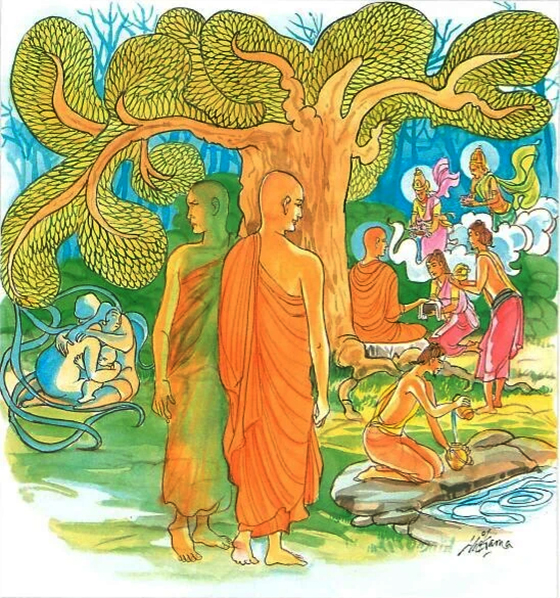
    While residing at the Jetavana monastery, the Buddha uttered Verses (209), (210) and (211) of this book, with reference to a trio, consisting of a father, a mother and a son.

    Once in Savatthi, the only son of a family first became a bhikkhu; the father followed suit and finally, the mother also became a bhikkhuni. They were so attached to one another that they rarely stayed apart. The family stayed in the monastery as if they were in their own house, talking and eating together, thus making themselves a nuisance to others. Other bhikkhus reported their behaviour to the Buddha and he called them to his presence, and said to them, “Once you have joined the Order, you should no longer stay together like a family. Not seeing those who are dear, and seeing those who are not dear to one, are both painful; so you should not hold any being or anything dear to you”. Continue reading

  6. As you grow older, you will discover…

    2

    At my sister’s garden on December 6, 2025

    As you grow older, you will discover that you have two hands: one for helping yourself, the other for helping others. ~ Sam Levenson

Hermit of Tbeng Mountain

Sachjang Phnom Tbeng សច្ចំ​​ ភ្នំត្បែង is a very long and interesting story written by Mr. Chhea Sokoan, read by Jendhamuni Sos. You can click on the links below to listen. Part 1 | Part 2

List of Khmer songs