1. Love…

    Comment

    Ananda practicing

    When your mind becomes motionless
    and the brilliant eyes of the peaceful mind
    take a straight look down into the depth of your heart
    you will see the life-force pulsating and thriving
    in the warmth of pure love.

    As you experience this pure love
    what we all call “heart”
    beams of light will begin to radiate from the center of it
    for heaven is there in eternity.

    If you can release this radiance of love
    and allow it to flow through you,
    your heart will become light.
    The spirit will get liberated into the air
    and then, from a place of inner stillness
    you will know what it would be like
    to be an eagle and soar in the evening skies.

    And most of all,
    you would understand
    what it would be like
    to be perfectly sane.

    ~ By Bhante Wimala

     

  2. A Law of the Universe

    31

    It is a law of the universe that retaliation, hatred, and revenge only continue the cycle and never stop it. Reconciliation does not mean that we surrender rights and conditions, but rather that we use love in our negotiations. It means that we see ourselves in the opponent — for what is the opponent but a being in ignorance, and we ourselves are also ignorant of many things. Therefore, only compassion and mindfulness can free us. ~Maha Ghosananda

  3. What is wrong with you?

    14

    We almost always see only what’s wrong with other people and not what’s wrong with us. ~Joyce Meyer

  4. Forgive…

    Comment

    The noblest revenge is to forgive. ~Thomas Fuller

    red rose animation

  5. Dona, the professor, distributing the sacred relics of the Buddha to the rulers of eight states

    Comment
    Dona, the professor, distributing the sacred relics of the Buddha to the rulers of eight states

    Dona, the professor, distributing the sacred relics of the Buddha to the rulers of eight states

    53. Dona, the professor, distributing the sacred relics of the Buddha to the rulers of eight states

    Just before the Buddha passed away, he made a resolute wish that, “the bones of my body may be left over as relics in small bits” so that posterity may reverence them. Ajattasattu and other rulers heard of the Buddha’s death and came out with their own armies to fight for the possession of the sacred relies of the Buddha, if they should fail to get them by peaceful means. Dona the Brahmin was a virtuous professor who happened to have been a teacher of those rulers.

    There was a great excitement and disorder amongst the crowds present who were preparing to loot the relics. Now Professor Dona got up on an eminence and shouted at the crowd in an authoritative tone, when the din was silenced. Then he spoke to the crowd beginning with the words, “Listen to me, your teacher. Our Lord, the Buddha, used to preach on forbearance”. Then as agreed by the rulers of the eight states, the Professor distributed the sacred relics to them. They took the relies away and placed them inside pagodas and shrines and revered them as objects of worship.

    THE ILLUSTRATED HISTORY OF BUDDHISM
    by ASHIN JANAKA BHIVAMSA (Aggamahapandita)
    Artist: U Ba Kyi | Link to this post

  6. Stop killing!

    Comment

    Buddha statues

    For countless years the bitter stew of hate goes boiling on.
    Its vengeful broth is ocean deep, impossible to calm.
    To learn the cause of all this conflict,
    Terror, bombs and war,
    Listen to the cries at midnight by the butcher’s door.

    ~Chan Master Cloud of Vows (Song Dynasty)

  7. Happiness…

    Comment

    swaying meadow animation

    Happiness is not to be found with many efforts or will, but is here, nearby, in your relaxing and surrendering.
    Don’t worry, there is nothing to be done.
    Everything that comes up to your mind has no importance because it has no reality.
    Don’t conceive any attachment for it.
    Don’t judge yourself.
    Let it be.
    Let it come up and down without changing a thing.
    It all vanishes and begins again, endlessly.
    Nothing but the quest for happiness prevents us from seeing it.
    It is like a rainbow that one is always chasing without ever reaching it.
    It is because it has no existence.
    It has always been here and goes with you all the time.
    Don’t believe in the reality of experiences, good or bad.
    They are like rainbows.
    Because we want to grasp what is not to be grasped,
    We exhaust our strength in vain.
    As soon as we relinquish our hold, space is here, open, welcoming & comfortable.
    So, do enjoy it.
    Everything is yours already.
    Stop searching.
    Don’t go into the jungle to look for the elephant that is quietly waiting for you at home.
    There is nothing to do.
    There is nothing to force.
    There is nothing to desire.
    And all comes by itself.

    by Lama Gendun Rimpoche


  8. Meditate daily

    Comment

    Meditate daily, and soon your inner strength and mind power will grow.~Remez Sasson

    Ananda

  9. Lucky or Unlucky

    Comment

    It is our custom to say that someone is “lucky” or “unlucky” if they meet with fortunate or unfortunate circumstances, respectively.  It is however, too simplistic to think in terms of random “luck.”  Even from a scientific point of view, this is not a sufficient explanation.  Should something unfortunate happen, we immediately think, “Oh, how unlucky!”  And yet this is not sufficient to explain what happened- there must be a cause.  We seem to call “luck” that factor which overrides external conditions to bring about a positive situation.  But that too is a cause; it is an inner cause, which we call “merit.” ~Dalai Lama


Live & Die for Buddhism

candle

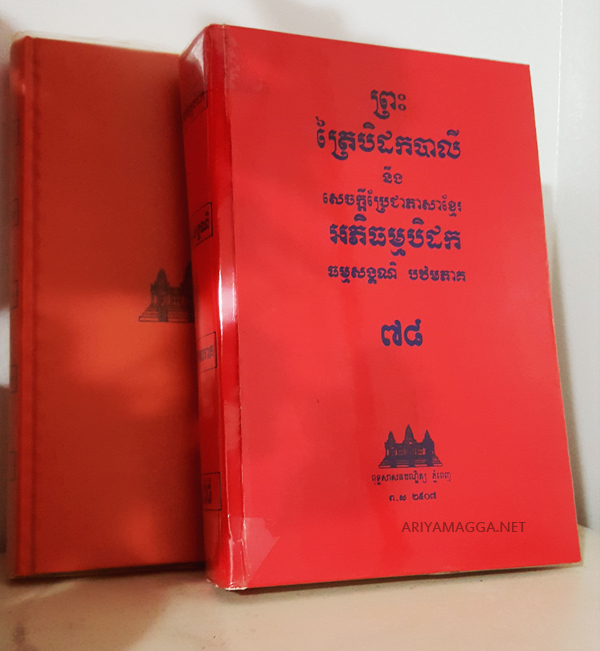
Khmer Tipitaka 1 – 110

 ព្រះត្រៃបិដក

ព្រះត្រៃបិដក ប្រែថា កញ្រ្ចែង ឬ ល្អី​ ៣ សម្រាប់ដាក់ផ្ទុកពាក្យពេចន៍នៃព្រះសម្មាសម្ពុទ្ធ

The Tipitaka or Pali canon, is the collection of primary Pali language texts which form the doctrinal foundation of Theravada Buddhism. The three divisions of the Tipitaka are: Vinaya Pitaka, Sutta Pitaka, Abhidhamma Pitaka.

Maha Ghosananda

Maha Ghosananda

Supreme Patriarch of Cambodian Buddhism (5/23/1913 - 3/12/07). Forever in my heart...

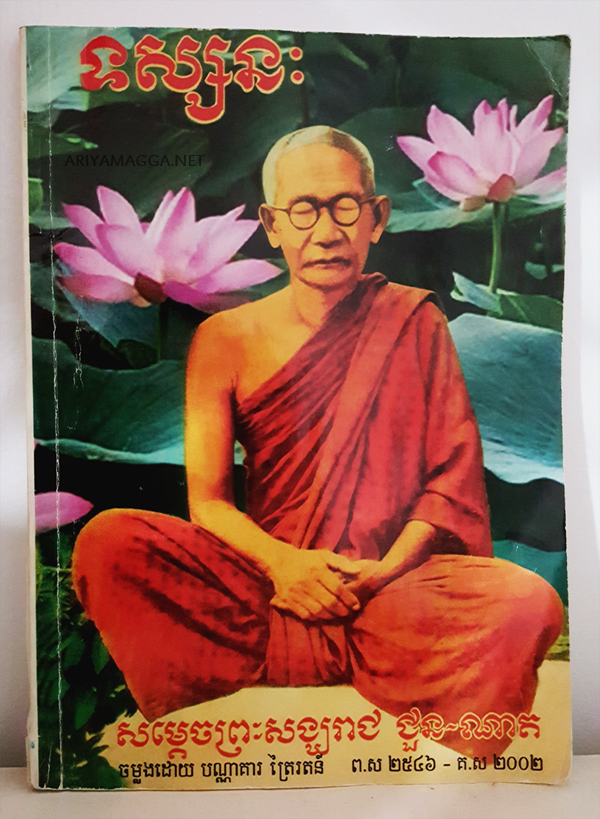
Samdech Chuon Nath

My reflection

វចនានុក្រមសម្តេចសង្ឃ ជួន ណាត
Desktop version

Listen to Khmer literature and Dhamma talk by His Holiness Jotannano Chuon Nath, Supreme Patriarch of Cambodia Buddhism.

Shantidevas’ Bodhisattva vows

My reflection

Should anyone wish to ridicule me and make me an object of jest and scorn why should I possibly care if I have dedicated myself to others?

Let them do as they wish with me so long as it does not harm them. May no one who encounters me ever have an insignificant contact.

Regardless whether those whom I meet respond towards me with anger or faith, may the mere fact of our meeting contribute to the fulfilment of their wishes.

May the slander, harm and all forms of abuse that anyone should direct towards me act as a cause of their enlightenment.

As a solid rock is not shaken by the wind, so the wise are not shaken by blame and praise. As a deep lake is clear and calm, so the wise become tranquil after they listened to the truth…

Good people walk on regardless of what happens to them. Good people do not babble on about their desires. Whether touched by happiness or by sorrow, the wise never appear elated or depressed. ~The Dhammapada

Hermit of Tbeng Mountain

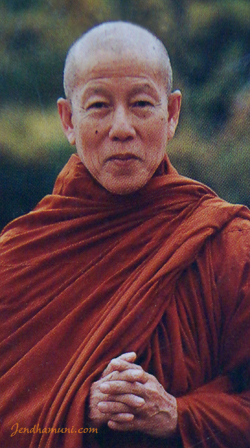
Sachjang Phnom Tbeng សច្ចំ​​ ភ្នំត្បែង is a very long and interesting story written by Mr. Chhea Sokoan, read by Jendhamuni Sos. You can click on the links below to listen. Part 1 | Part 2

Beauty in nature

A beautiful object has no intrinsic quality that is good for the mind, nor an ugly object any intrinsic power to harm it. Beautiful and ugly are just projections of the mind. The ability to cause happiness or suffering is not a property of the outer object itself. For example, the sight of a particular individual can cause happiness to one person and suffering to another. It is the mind that attributes such qualities to the perceived object. — Dilgo Khyentse Rinpoche

Nature is loved by what is best in us. The sky, the mountain, the tree, the animal, give us a delight in and for themselves. — Ralph Waldo Emerson


Our journey for peace
begins today and every day.
Each step is a prayer,
Each step is a meditation,
Each step will build a bridge.

—​​​ Maha Ghosananda