1. Search throughout the entire universe

    Comment

    You can search throughout the entire universe for someone who is more deserving of your love and affection than you are yourself, and that person is not to be found anywhere. You yourself, as much as anybody in the entire universe deserve your love and affection. — Buddha

    animated-garden

  2. The concurrence of causes and conditions

    Comment

    All things appear and disappear because of the concurrence of causes and conditions. Nothing ever exists entirely alone; everything is in relation to everything else. ~Buddha

    frog lake

  3. Conversion by the Buddha of Angulimala

    Comment

    Conversion by the Buddha of Angulimala, a robber of the forest

    38. Conversion by the Buddha of Angulimala, a robber of the forest

    Angulimala was the son of the Kings Chaplain of the Savatthi City, and a student of the Taxila University. The teacher and his wife were very fond of him, as he was a brilliant, clever and faithful pupil. Unfortunately his associated grew jealous of him, made up a false story and succeeded in setting the teacher against him. The enraged teacher, suspecting him to have had an affair with his wife contrived to put an end to his life by ordering him to fetch a thousand fingers as a present in return for the education he received. In obedience to the teacher, he took to the forest of Savatthi and started killing people to collect fingers for the necessary offering. Later he wore a garland of these fingers to ascertain the number—hence the name Angulimala. When he had collected 999 fingers, and was ready to complete the number he chased his own mother who came out to ask him to desist from killing.

    The Buddha saw this in advance and appeared on the scene to prevent him from killing his mother. He chased the Buddha to kill Him, but could not overtake Him on account of His supernatural power. He was eventually converted to the noble Doctrine of the Buddha and was admitted into the Order.
    THE ILLUSTRATED HISTORY OF BUDDHISM
    by ASHIN JANAKA BHIVAMSA (Aggamahapandita)
    Artist: U Ba Kyi | Link to this post

  4. The truth beyond words

    Comment

    Suttas are not meant to be ‘sacred scriptures’ that tell us what to believe. One should read them, listen to them, think about them, contemplate them, and investigate the present reality, the present experience with them. Then, and only then, can one insightfully know the truth beyond words. ~Ajahn Sumedho

  5. The goal lies away from the sensual world

    Comment

    The goal lies away from the sensual world. It is not a rejection of the sensual world, but understanding it so well that we no longer seek it as an end in itself. We no longer expect the sensory world to satisfy us. We no longer demand that sensory consciousness be anything other than an existing condition that we can use skillfully according to time and place. ~Ajahn Sumedho


  6. A new day is here

    Comment

    A new day is here. Yesterday is a memory. Tomorrow is unknown. Now is the knowing. ~Ajahn Sumedho

    houses

  7. Buddha and the Venerable Ananda, washing a monk

    Comment

    The Buddha and the Venerable Ananda, washing a monk suffering from dysentery

    37. The Buddha and the Venerable Ananda, washing a monk suffering from dysentery

    One monk was suffering from dysentery. As he did not wait upon others, there was no one to wait upon him. The Buddha, accompanied by the Venerable Ananda, went round inspecting the buildings of the monastery and saw the ailing monk sleeping in filth. Immediately the Blessed One sent the Venerable Ananda to fetch water and Himself poured water while the Venerable Ananda scrubbed and cleaned him. The Buddha and the Venerable Ananda thus did their duty of ministering to the sick. Having washed and cleaned the monk, the Blessed One held him by the head, while the Venerable Ananda took hold of his feet and placed him on a couch. The Buddha had the monks assembled and exhorted them thus:—”You have no parents nearby to wait upon you, and if you do not wait upon one another, who will do so?” And then the Blessed One admonished them as follows:— “Whosoever, Brethren, would wait upon me, he should wait upon the sick”.

    THE ILLUSTRATED HISTORY OF BUDDHISM
    by ASHIN JANAKA BHIVAMSA (Aggamahapandita)
    Artist: U Ba Kyi | Link to this post
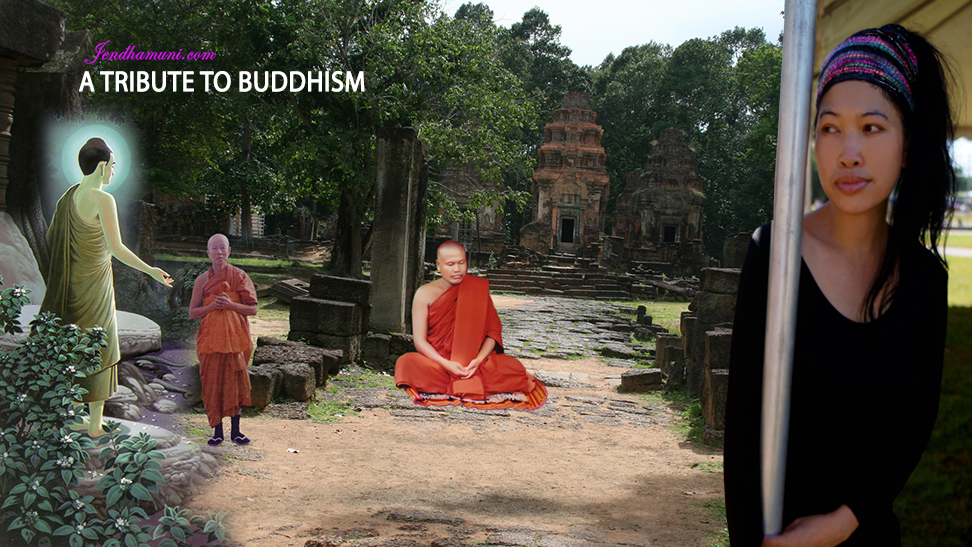

Live & Die for Buddhism

candle

Khmer Tipitaka 1 – 110

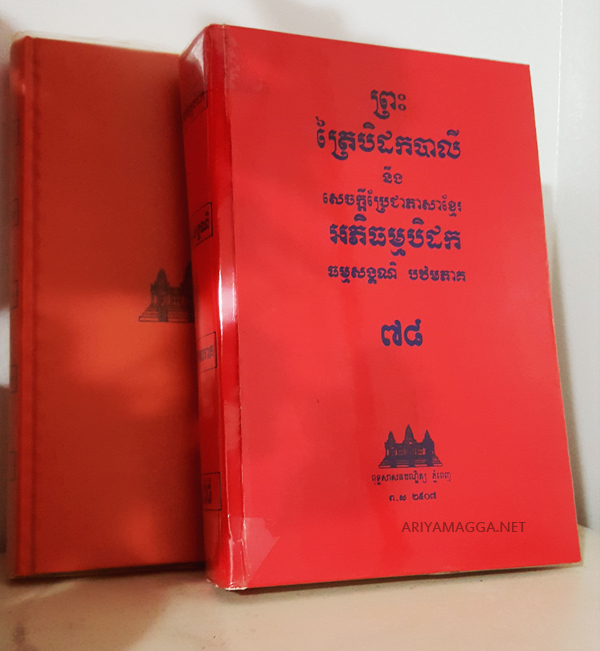
 ព្រះត្រៃបិដក

ព្រះត្រៃបិដក ប្រែថា កញ្រ្ចែង ឬ ល្អី​ ៣ សម្រាប់ដាក់ផ្ទុកពាក្យពេចន៍នៃព្រះសម្មាសម្ពុទ្ធ

The Tipitaka or Pali canon, is the collection of primary Pali language texts which form the doctrinal foundation of Theravada Buddhism. The three divisions of the Tipitaka are: Vinaya Pitaka, Sutta Pitaka, Abhidhamma Pitaka.

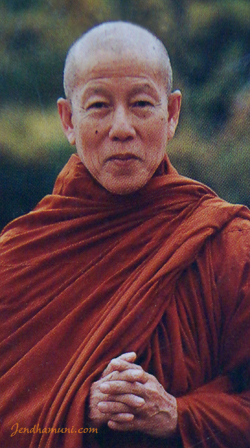
Maha Ghosananda

Maha Ghosananda

Supreme Patriarch of Cambodian Buddhism (5/23/1913 - 3/12/07). Forever in my heart...

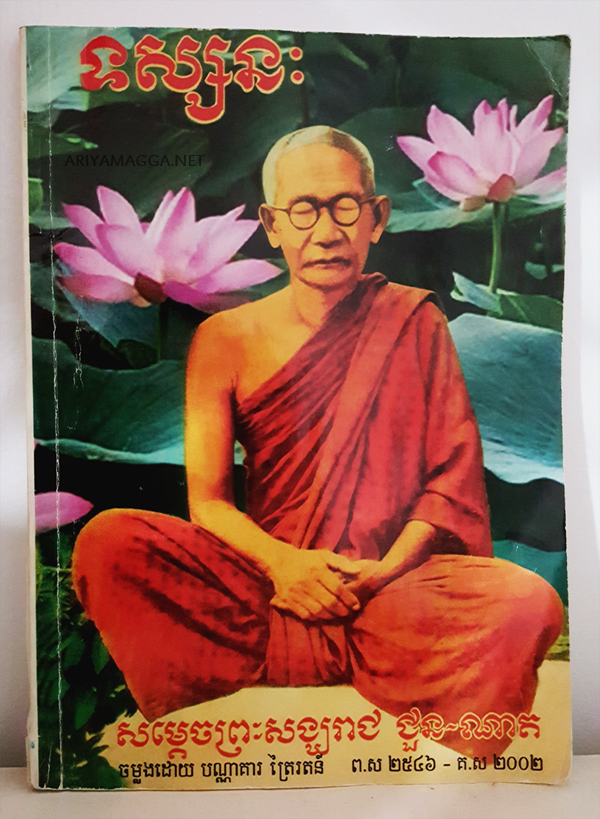
Samdech Chuon Nath

My reflection

វចនានុក្រមសម្តេចសង្ឃ ជួន ណាត
Desktop version

Listen to Khmer literature and Dhamma talk by His Holiness Jotannano Chuon Nath, Supreme Patriarch of Cambodia Buddhism.

Shantidevas’ Bodhisattva vows

My reflection

Should anyone wish to ridicule me and make me an object of jest and scorn why should I possibly care if I have dedicated myself to others?

Let them do as they wish with me so long as it does not harm them. May no one who encounters me ever have an insignificant contact.

Regardless whether those whom I meet respond towards me with anger or faith, may the mere fact of our meeting contribute to the fulfilment of their wishes.

May the slander, harm and all forms of abuse that anyone should direct towards me act as a cause of their enlightenment.

As a solid rock is not shaken by the wind, so the wise are not shaken by blame and praise. As a deep lake is clear and calm, so the wise become tranquil after they listened to the truth…

Good people walk on regardless of what happens to them. Good people do not babble on about their desires. Whether touched by happiness or by sorrow, the wise never appear elated or depressed. ~The Dhammapada

Hermit of Tbeng Mountain

Sachjang Phnom Tbeng សច្ចំ​​ ភ្នំត្បែង is a very long and interesting story written by Mr. Chhea Sokoan, read by Jendhamuni Sos. You can click on the links below to listen. Part 1 | Part 2

Beauty in nature

A beautiful object has no intrinsic quality that is good for the mind, nor an ugly object any intrinsic power to harm it. Beautiful and ugly are just projections of the mind. The ability to cause happiness or suffering is not a property of the outer object itself. For example, the sight of a particular individual can cause happiness to one person and suffering to another. It is the mind that attributes such qualities to the perceived object. — Dilgo Khyentse Rinpoche

Nature is loved by what is best in us. The sky, the mountain, the tree, the animal, give us a delight in and for themselves. — Ralph Waldo Emerson


Our journey for peace
begins today and every day.
Each step is a prayer,
Each step is a meditation,
Each step will build a bridge.

—​​​ Maha Ghosananda