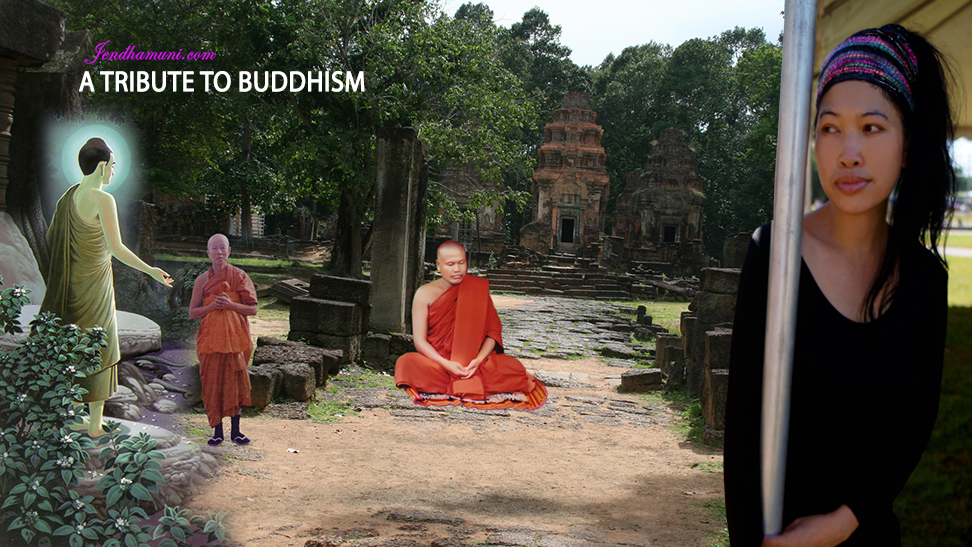
Peace walk…
Comment
May 3, 2016
Meditation students in master Toum Vachana’s class

Meditation students in master Toum Vachana’s class
Meditation Master Toum Vachana with Khmer children


In my whole life, I do not want anything from anyone, but a pure smile. ~Jendhamuni


Mara, the evil one, persuading the future Buddha to turn back on the point of his departure from the city
8. Mara, the evil one, persuading the future Buddha to turn back on the point of his departure from the city
Coming away from Yasodhara’s chamber, the Future Buddha descended from the palace and rode on the mighty steed, Kanthaka, already saddled and bridled for the journey, with Channa holding on by the tail. He issued forth on the Great Renunciation and arrived at midnight at the great gate of the city. At this moment came Mara, the Evil One, with the intention of persuading the Future Buddha to turn back; and standing in the air, he said, “Sir, go not forth! On the seventh day from now the Wheel Treasure will appear to you. Sir, turn back!”
The Future Buddha replied as follows: “Mara, I know that the Wheel Treasure was on the point of appearing to me ; but I do not wish for sovereignty. My sole desire is to become a Buddha and save the world of gods and men”. He then departed from the city in great splendor surrounded by higher and lower deities on all sides, the divinity that guarded the city-gate having opened it for them.
THE ILLUSTRATED HISTORY OF BUDDHISM
by ASHIN JANAKA BHIVAMSA (Aggamahapandita)
Artist: U Ba Kyi | Link to this post
Great compassion makes a peaceful heart. A peaceful heart makes a peaceful person. A peaceful person makes a peaceful family. A peaceful family makes a peaceful community. A peaceful community makes a peaceful nation. A peaceful nation makes a peaceful world. ― Maha Ghosananda


លោកយាយ រីណា អាយុ៧៩ឆ្នាំ រស់នៅភូមិព្រែកតាច្រែង ឃុំព្រែកនរិន្ទ ស្រុកឯកភ្នំ ខេត្តបាត់ដំបង. Source: Seangmeng Kpt
One is not called noble who harms living beings. By not harming living beings one is called noble. ~The Buddha, Dhammapada


History Of Buddhism
7. Just before his great renunciation, the future Buddha went to the chamber of Princess Yasodhara to see his son
When the Future Buddha was 29 years of age he went to the park and saw the Four Signs, namely, an old man, a sick man, a dead man and a monk, whom the higher gods had fashioned. He was afraid to continue to live a worldly life and his mind turned ardently to retiring from the world. He said to himself, “It behooves me to go forth on the Great Renunciation this very day”. At that very moment he received a message that a son had been born to him.
He then returned to the palace and lying on his couch, fell into a brief slumber. When he awoke he saw the female musicians sleeping round him in disgusting condition. The spectacle seemed like a cemetery, and filled with loathing for his worldly life, he made up his mind to renounce the world at once. He ordered his courtier Channa to saddle his horse Kanthaka. He then walked to the chamber of Yasodhara to look at his son for the first time.
THE ILLUSTRATED HISTORY OF BUDDHISM
by ASHIN JANAKA BHIVAMSA (Aggamahapandita)
Artist: U Ba Kyi | Link to this post
There is no fear for one whose mind is not filled with desires. ~The Buddha, Dhammapada

Meditation master Toum Vachana



ព្រះត្រៃបិដក ប្រែថា កញ្រ្ចែង ឬ ល្អី ៣ សម្រាប់ដាក់ផ្ទុកពាក្យពេចន៍នៃព្រះសម្មាសម្ពុទ្ធ
The Tipitaka or Pali canon, is the collection of primary Pali language texts which form the doctrinal foundation of Theravada Buddhism. The three divisions of the Tipitaka are: Vinaya Pitaka, Sutta Pitaka, Abhidhamma Pitaka.
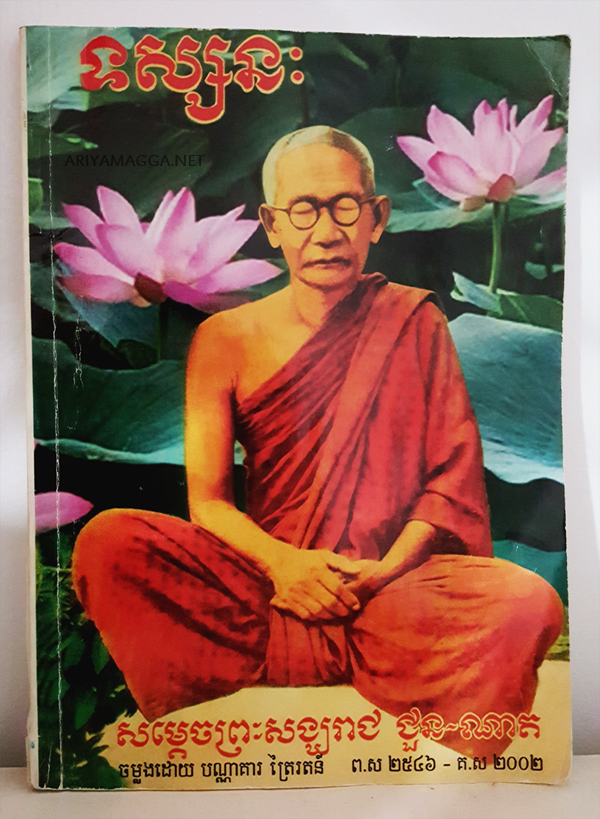
វចនានុក្រមសម្តេចសង្ឃ ជួន ណាត
Desktop version
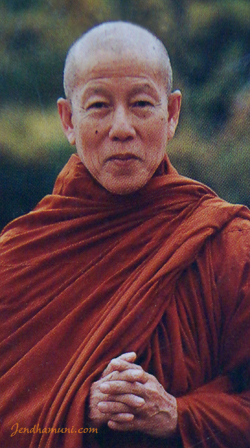
Listen to Khmer literature and Dhamma talk by His Holiness Jotannano Chuon Nath, Supreme Patriarch of Cambodia Buddhism.
Should anyone wish to ridicule me and make me an object of jest and scorn why should I possibly care if I have dedicated myself to others?
Let them do as they wish with me so long as it does not harm them. May no one who encounters me ever have an insignificant contact.
Regardless whether those whom I meet respond towards me with anger or faith, may the mere fact of our meeting contribute to the fulfilment of their wishes.
May the slander, harm and all forms of abuse that anyone should direct towards me act as a cause of their enlightenment.

As a solid rock is not shaken by the wind, so the wise are not shaken by blame and praise. As a deep lake is clear and calm, so the wise become tranquil after they listened to the truth…
Good people walk on regardless of what happens to them. Good people do not babble on about their desires. Whether touched by happiness or by sorrow, the wise never appear elated or depressed. ~The Dhammapada