1. A smile of encouragement

    Comment

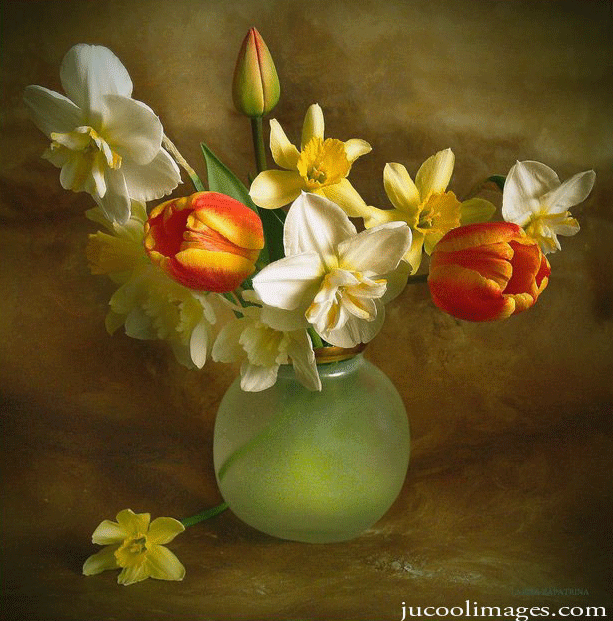
    A smile of encouragement at the right moment may act like sunlight on a closed-up flower; it may be the turning point for a struggling life. ~Unknown


  2. Before your own door

    Comment

    Sweep first before your own door, before you sweep the doorsteps of your neighbors. ~Swedish Proverb

  3. Welcome the new day

    Comment

    “You & I”
    Welcome the new day with smile
    Embrace the joy and happiness
    enjoy our day to fullest! ~sms

  4. You worry about a trouble…

    Comment

    You worry about a trouble it becomes double but when you smile at it disappear like bubble so always smile at your problem. ~sms


  5. New light rays will appear

    Comment

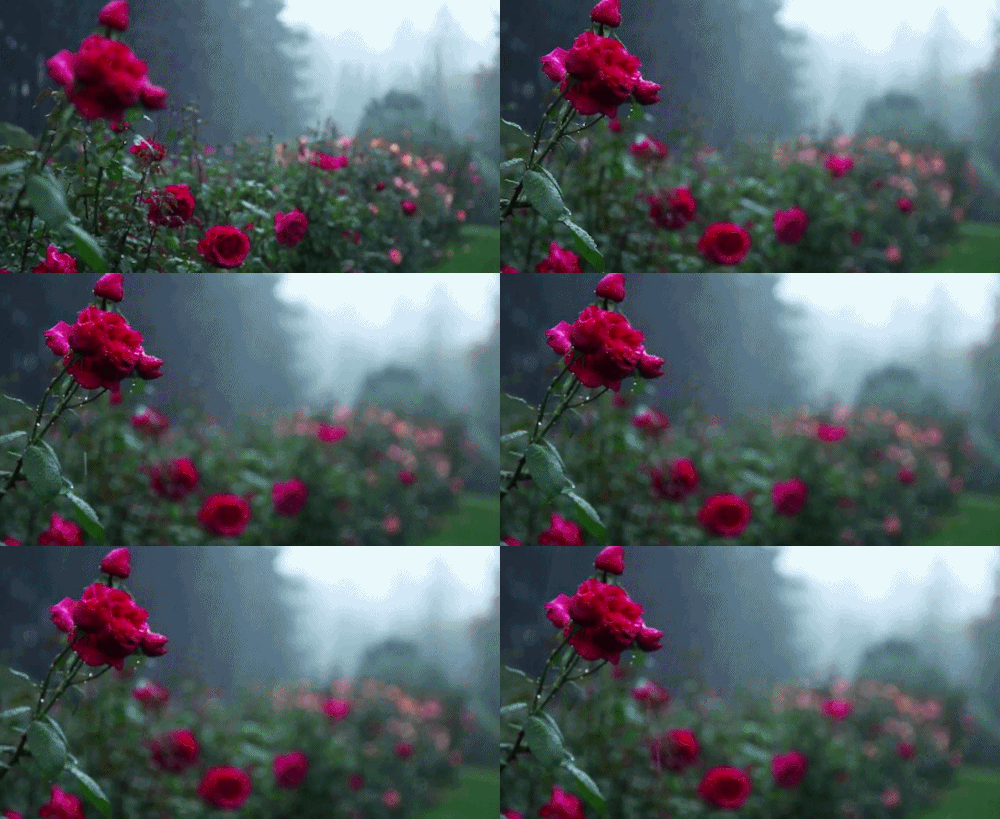
    Above the dark horizon soon new light rays will appear. They signify to all the world a fresh new day is here. ~sms

    natureandlight070215

  6. An inspirational life

    Comment

    The greatest inspiration you can ever get is to know that you are an inspiration to others. Wake up and start living an inspirational life today. ~sms

  7. The Story of Chattapani, a Lay Disciple

    Comment
    Ven. Toum Vachana

    Ven. Toum Vachana

    Verse 51: Just as a beautiful flower, lacking in scent, cannot give the wearer the benefit of its scent, so also, the well-preached words of the Buddha cannot benefit one who does not practise the Dhamma.

    Verse 52: Just as a flower, beautiful as well as fragrant, will give the wearer the benefit of its scent, so also, the well-preached words of the Buddha will benefit one who practises the Dhamma.

    The Story of Chattapani, a Lay Disciple

    While residing at the Jetavana monastery, the Buddha uttered Verses (51) and (52) of this book, with reference to the lay disciple Chattapani and the two queens of King Pasenadi of Kosala.

    A lay disciple named Chattapani who was an anagami* lived in Savatthi. On one occasion, Chattapani was with the Buddha at the Jetavana monastery respectfully and attentively listening to a religious discourse, when King Pasenadi also came to the Buddha. Chattapani did not stand up because he thought that by standing up, it might mean that he was paying respect to the king, but not paying due respect to the Buddha. The king took that as an insult and was very much offended. The Buddha knew exactly how the king was feeling; so he spoke in praise of Chattapani, who was well-versed in the Dhamma and had also attained the Anagami Fruition. On hearing this, the king was impressed and favourably inclined towards Chattapani.

    When the king next met Chattapani he said, “You are so learned; could you please come to the palace and give lessons of the Dhamma to my two queens?” Chattapani declined but he suggested that the king should request the Buddha to assign a bhikkhu for this purpose. So, the king approached the Buddha in connection with this, and the Buddha directed the Venerable Ananda to go regularly to the palace and teach the Dhamma to Queen Mallika and Queen Vasabhakhattiya. After some time, the Buddha asked the Venerable Ananda about the progress of the two queens. The Venerable Ananda answered that although Mallika was learning the Dhamma seriously, Vasabhakhattiya was not paying proper attention. On hearing this the Buddha said that the Dhamma could be of benefit only to those who learn it seriously with due respect and proper attention and then practise diligently what was taught.

    Then the Buddha spoke in verse as follows:

    Verse 51: Just as a beautiful flower, lacking in scent, cannot give the wearer the benefit of its scent, so also, the well-preached words of the Buddha cannot benefit one who does not practise the Dhamma.

    Verse 52: Just as a flower, beautiful as well as fragrant, will give the wearer the benefit of its scent, so also, the well-pre

    Dhammapada Verses 51 and 52
    Chattapani upasaka Vatthu

    Yathapi ruciram puppham
    vannavantam agandhakam
    evam subhasita vaca
    aphala hoti akubbato.

    Yathapi ruciram puppham
    vannavantam sagandhakam
    evam subhasita vaca
    saphala hoti kubbato.

    Source: Tipitaka

     

  8. Due to great compassion, we become fearless

    Comment

    Some people say that meditating on compassion brings them more suffering and pain, and so it’s difficult to meditate on it. Actually, this is not the case. Due to great compassion, we become fearless. It is only when we do not understand how to meditate on compassion properly that we will have pain. It is also extremely important to realize that we are not meditating on suffering, but on the people who are suffering. This is a key distinction.

    Lamp for the path to enlightenment  – teachings by the Gyalwang Karmapa: Day three
    Link to this article

    boat and moon


Live & Die for Buddhism

candle

Khmer Tipitaka 1 – 110

 ព្រះត្រៃបិដក

ព្រះត្រៃបិដក ប្រែថា កញ្រ្ចែង ឬ ល្អី​ ៣ សម្រាប់ដាក់ផ្ទុកពាក្យពេចន៍នៃព្រះសម្មាសម្ពុទ្ធ

The Tipitaka or Pali canon, is the collection of primary Pali language texts which form the doctrinal foundation of Theravada Buddhism. The three divisions of the Tipitaka are: Vinaya Pitaka, Sutta Pitaka, Abhidhamma Pitaka.

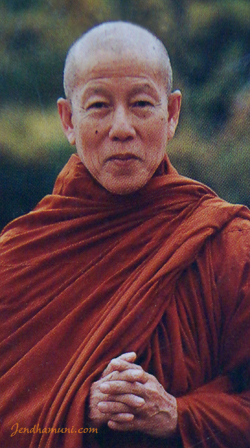
Maha Ghosananda

Maha Ghosananda

Supreme Patriarch of Cambodian Buddhism (5/23/1913 - 3/12/07). Forever in my heart...

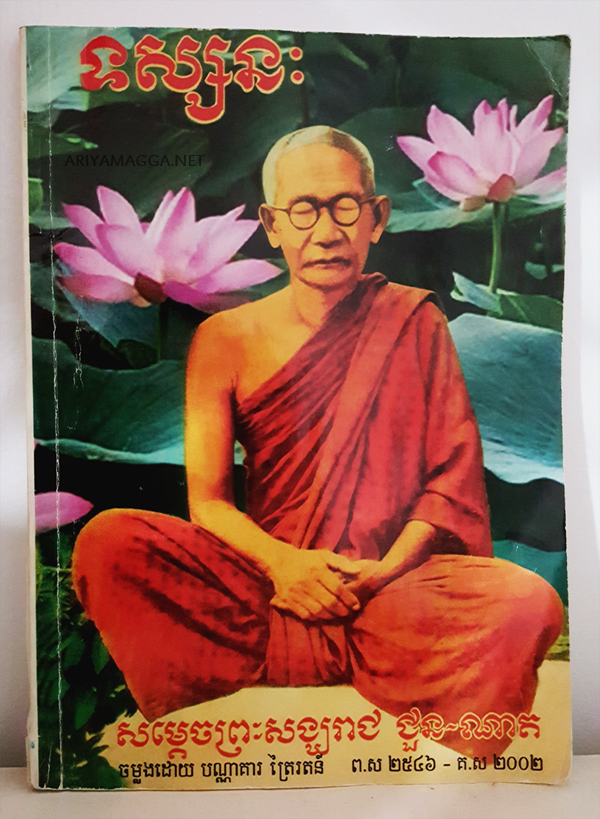
Samdech Chuon Nath

My reflection

វចនានុក្រមសម្តេចសង្ឃ ជួន ណាត
Desktop version

Listen to Khmer literature and Dhamma talk by His Holiness Jotannano Chuon Nath, Supreme Patriarch of Cambodia Buddhism.

Shantidevas’ Bodhisattva vows

My reflection

Should anyone wish to ridicule me and make me an object of jest and scorn why should I possibly care if I have dedicated myself to others?

Let them do as they wish with me so long as it does not harm them. May no one who encounters me ever have an insignificant contact.

Regardless whether those whom I meet respond towards me with anger or faith, may the mere fact of our meeting contribute to the fulfilment of their wishes.

May the slander, harm and all forms of abuse that anyone should direct towards me act as a cause of their enlightenment.

As a solid rock is not shaken by the wind, so the wise are not shaken by blame and praise. As a deep lake is clear and calm, so the wise become tranquil after they listened to the truth…

Good people walk on regardless of what happens to them. Good people do not babble on about their desires. Whether touched by happiness or by sorrow, the wise never appear elated or depressed. ~The Dhammapada

Hermit of Tbeng Mountain

Sachjang Phnom Tbeng សច្ចំ​​ ភ្នំត្បែង is a very long and interesting story written by Mr. Chhea Sokoan, read by Jendhamuni Sos. You can click on the links below to listen. Part 1 | Part 2

Beauty in nature

A beautiful object has no intrinsic quality that is good for the mind, nor an ugly object any intrinsic power to harm it. Beautiful and ugly are just projections of the mind. The ability to cause happiness or suffering is not a property of the outer object itself. For example, the sight of a particular individual can cause happiness to one person and suffering to another. It is the mind that attributes such qualities to the perceived object. — Dilgo Khyentse Rinpoche

Nature is loved by what is best in us. The sky, the mountain, the tree, the animal, give us a delight in and for themselves. — Ralph Waldo Emerson


Our journey for peace
begins today and every day.
Each step is a prayer,
Each step is a meditation,
Each step will build a bridge.

—​​​ Maha Ghosananda