1. I Save All My Smiles For You

    69

    I will send you my smile
    to help you go that extra mile
    when you feel lonely and blue
    I’ll be sure to send two
    everytime your having a bad day
    I’ll make sure to send three your way
    if you are feeling mad or sad
    I’ll send four to help you feel glad
    Happy I always want you to be
    cause your smile means so much to me
    I will send all of mine to you
    so you can smile too.

    ~Written by Rebecca Hyer

  2. We Need to Learn

    45

    Looking, listening and loving…
    are skills we all need to learn;
    if we wish to live to the fullest,
    and help others by showing concern.

    Looking for ways to encourage:
    listening, for ‘unspoken’ needs.
    Loving all people, through critical times,
    strengthening them with prayer and kind deeds.

    Opening our eyes to the promise…
    of what’s possible when we believe.
    Eager to serve with a purpose,
    we are blessed as we trust and achieve.

    Our looking, listening and loving…
    calm the fears of a most troubled mind.
    Christ loves us, as sister and brother:
    be like Him, strive to heal humankind!

    Poem title: Looking, Listening and Loving
    by Roslyn (Ros) Mansell


  3. Sunset Reminder

    89

    A nice sunset can always
    remind you that life is good
    and that you lived another amazing day.

    Source: Motivation One Day At A Time

  4. Prayer of the Stages of the Path

    Comment

    The path begins with strong reliance
    On my kind Teacher, source of all good;
    O Bless me with this understanding
    To follow him with great devotion.

    This human life with all its freedoms,
    Extremely rare, with so much meaning;
    O Bless me with this understanding
    All day and night to seize its essence.

    My body, like a water bubble,
    Decays and dies so very quickly;
    After death come results of karma,
    Just like the shadow of a body.

    With this firm knowledge and remembrance
    Bless me to be extremely cautious,
    Always avoiding harmful actions
    And gathering abundant virtue.

    Samsara’s pleasures are deceptive,
    Give no contentment, only torment;
    So please bless me to strive sincerely
    To gain the bliss of perfect freedom.

    O Bless me so that from this pure thought
    Come mindfulness and greatest caution,
    To keep as my essential practice
    The doctrine’s root, the Pratimoksha. Continue reading

  5. Sowing seeds of kindness 

    44

    Sowing seeds of kindness always reaps a crop of heavenly blessings. ~Rebecca Barlow Jordan

  6. The Story of Five Hundred Bhikkhus

    Comment

    Buddha and young monks

    (Realising that this body is (fragile) like an earthen pot and establishing this mind firm like a fortress, let him fight Mara with the weapon of knowledge, keep up his conquest and be free from attachment.)

    The Master while residing at Savatthi gave this religious discourse beginning with “Kumbhupamam” in connection with the Bhikkhus who were exerting for the attainment of spritual insight.

    It is said that, at Savatthi, five hundred Bhikkhus having obtained from the Master a subject of meditation (leading) to Arahatship and with the idea of carrying out the practices of a Bhikkhu, travelled a distance of about a hundred leagues and went to a large village. People saw them and arranged and offered seats and having served them with delicious rice gruel and other eatables, they enquired of them as to where they were going. When told that they were going to a suitable place, they requested them saying, “Venerable Sirs, may you reside even here during these three months. We too will take recourse to the Three Refuges and will observe the precepts under your guidance.” When they knew of their acceptance, they said: “Venerable Sirs, not far from here there is a big forest-grove. May you please reside there.” They conducted them to that place and there the Bhikkhus took up their residence.

    The gods who were inhabiting in that grove thought thus: “The virtuous Bhikkhus have come to this grove, and they are residing here, it is improper for us to live with our families on the trees”, and coming down (from the trees), sat on the ground with the thought that the Venerable ones would be stopping there only for one night and they would surely go away the next day. However on the following day the Bhikkhus entered the village for alms-food and returned to the same grove. The gods thought to themselves: “The Bhikkhus might have been invited by some one for the following day, so they have come back again. To-day they are not moving out, but it seems they will be going away tomorrow.” In this way they remained on the ground for a fortnight. They then discussed among themselves thus: “It appears that the Venerable ones will reside at this very place for these three months and while they are living here it will not be proper for us to live on the trees with our families. To live for there months with the family on the ground is difficult. Something should be done to make these Bhikkhus run away from here. The gods then started showing the bodiless heads and headless trunks, and also make them hear ghostly sounds at various places wherever the Bhikkhus used to spend the day or the night and also at the corners of the cloister walk. It so happened that the Bhikkhus suffered from ailments like sneezing, coughing and so on. On enquiring from each other as to the ailment they were suffering from the Bhikkhus came to know that some one was suffering from sneezing, some one from coughing and so on. Further, they learnt that some one had seen a bodiless head at the end of the cloister walk and some other had seen a headless trunk at the place where he spent the night, while others again had heard ghostly sounds at the places where they were spending the day. They decided that that place should be abandoned because it was ill-suited to their convenience and to go to the Master. Accordingly they left the place, went to the Master, paid obeisance, and took their seats on one side. The Master asked them, “Bhikkus, is it not possible for you to live in that place?” “No, Lord, people living there used to witness such dreadful visions and experienced such inconveniences. Therefore we have decided that that place should be abandoned and accordingly we have left that place and come to you?’ “Bhikkhus, you ought to go back to the same place”. “It is impossible, Lord.” “Bhikkhus, previously you had gone there without any weapons. Now you take them and go.” “What may be the weapons, Lord?” The Master, saying “I shall give you the weapons, take them and go”, taught them the entire Metta Sutta (Sermon on Loving Kindness) beginning with. Continue reading

  7. The Trap of the Senses

    Comment

    Buddha power

    By Ajahn Chah

    The Buddha talked about desire and the six things by which desire is gratified: sights, sounds, smells, tastes, touch and mind-objects. Desire and lust for happiness, for suffering, for good, for evil and so on, pervade everything!

    Sights…there isn’t any sight that’s quite the same as that of a woman. Isn’t that so? Doesn’t a really attractive woman make you want to look? One with a really attractive figure comes walking along, “sak, sek, sak, sek, sak, sek,” — you can’t help but stare! How about sounds? There’s no sound that grips you more than that of a woman. It pierces your heart! Smell is the same; a woman’s fragrance is the most alluring of all. There’s no other smell that’s quite the same. Taste — even the taste of the most delicious food cannot compare with that of a woman. Touch is similar; when you caress a woman you are stunned, intoxicated and sent pinning all around.

    There was once a famous master of magical spells from Taxila in ancient India. He taught his disciple all his knowledge of charms and incantations. When the disciple was well-versed and ready to fare on his own, he left with this final instruction from his teacher, “I have taught you all that I know of spells, incantations and protective verses. Creatures with sharp teeth, antlers or horns, and even big tusks, you have no need to fear. You will be guarded from all of these, I can guarantee that. However, there is only one thing that I cannot ensure protection against, and that is the charms of a woman.[4] I can not help you here. There’s no spell for protection against this one, you’ll have to look after yourself.”

    Mental objects arise in the mind. They are born out of desire: desire for valuable possessions, desire to be rich, and just restless seeking after things in general. This type of greed isn’t all that deep or strong, it isn’t enough to make you faint or lose control. However, when sexual desire arises, you’re thrown off balance and lose your control. You would even forget those raised and brought you up — your own parents!

    The Buddha taught that the objects of our senses are a trap — a trap of Mara’s.[5] Mara should be understood as something which harms us. The trap is something which binds us, the same as a snare. It’s a trap of Mara’s, a hunter’s snare, and the hunter is Mara. Continue reading

  8. Like flowers and fruit in the wind

    Comment

    Like flowers and fruit in the wind they, too, fall in different stages of life. Some people die while still in the womb, others within only a few days after birth. Some people live for a few years then die, never having reached maturity. Men and women die in their youth. Still others reach a ripe old age before they die. When reflecting upon people, consider the nature of fruit in the wind: both are very uncertain. ~Ajahn Chah

    moving blossoms


  9. Wholehearted Training

    Comment

    Jendhamuni with toy

    A Dhammatalk by Ajahn Chah

    In every home and every community, whether we live in the city, the countryside, the forests or the mountains, we are the same in experiencing happiness and suffering. So many of us lack a place of refuge, a field or garden where we can cultivate positive qualities of heart. We experience this spiritual poverty because we don’t really have commitment; we don’t have clear understanding of what this life is all about and what we ought to be doing. From childhood and youth until adulthood, we only learn to seek enjoyment and take delight in the things of the senses. We never think that danger will threaten us as we go about our lives, making a family and so on.

    If we don’t have land to till and a home to live in, we are without an external refuge and our lives are filled with difficulty and distress. Beyond that, there is the inner lack of not having sīla and Dhamma in our lives, of not going to hear teachings and practice Dhamma. As a result there is little wisdom in our lives and everything regresses and degenerates. The Buddha, our supreme teacher, had mettā (loving-kindness) for beings. He led sons and daughters of good family to be ordained, to practice and realize the truth, to establish and spread the Dhamma to show people how to live in happiness in their daily lives. He taught the proper ways to earn a livelihood, to be moderate and thrifty in managing finances, to act without carelessness in all affairs.

    But when we are lacking in both ways, externally in the material supports for life and internally in spiritual supports as well, then as time goes by and the number of people grows, the delusion and poverty and difficulty become causes for us to grow further and further estranged from Dhamma. We aren’t interested in seeking the Dhamma because of our difficult circumstances. Even if there is a monastery nearby, we don’t feel much like going to listen to teachings because we are obsessed with our poverty and troubles and the difficulty of merely supporting our lives. But the Lord Buddha taught that no matter how poor we may be, we should not let it impoverish our hearts and starve our wisdom. Even if there are floods inundating our fields, our villages and our homes to the point where it is beyond our capability to do anything, the Buddha taught us not to let it flood and overcome the heart. Flooding the heart means that we lose sight of and have no knowledge of the Dhamma.

    There is the ogha (flood) of sensuality, the flood of becoming, the flood of views and the flood of ignorance. These four obscure and envelop the hearts of beings. They are worse than water that floods our fields, our villages or our towns. Even if water floods our fields again and again over the years, or fire burns down our homes, we still have our minds. If our minds have sıla and Dhamma we can use our wisdom and find ways to earn a living and support ourselves. We can acquire land again and make a new start. Continue reading

  10. Practice of Concentration Training

    Comment

    The training in concentration is practice to make the mind firm and steady. This brings about peacefulness of mind. Usually our untrained minds are moving and restless, hard to control and manage. Mind follows sense distractions wildly just like water flowing this way and that, seeking the lowest level. Agriculturists and engineers, though, know how to control water so that it is of greater use to mankind. Men are clever, they know how to dam water, make large reservoirs and canals — all of this merely to channel water and make it more useable. In addition the water stored becomes a source of electrical power and light, further benefits from controlling its flow so that it doesn’t run wild and eventually settle into a few low spots, its usefulness wasted.

    So too, the mind which is dammed and controlled, trained constantly, will be of immeasurable benefit. The Buddha Himself taught, “The mind that has been controlled brings true happiness, so train you minds well for the highest of benefits.” Similarly, the animals we see around us — elephants, horses, cattle, buffalo, etc., must be trained before they can be useful for work. Only after they have been trained is their strength of benefit to us. ~Ajahn Chah

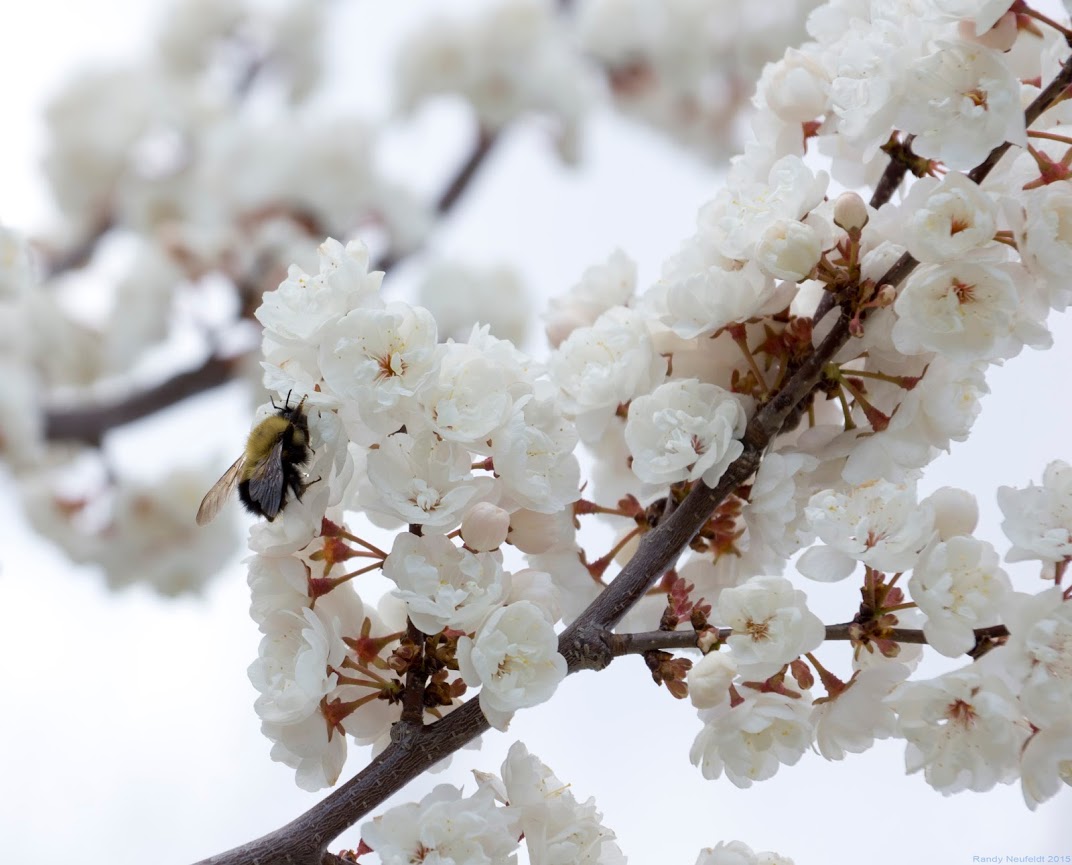
    Photo credit: Randy Neufeldt


Live & Die for Buddhism

candle

Khmer Tipitaka 1 – 110

 ព្រះត្រៃបិដក

ព្រះត្រៃបិដក ប្រែថា កញ្រ្ចែង ឬ ល្អី​ ៣ សម្រាប់ដាក់ផ្ទុកពាក្យពេចន៍នៃព្រះសម្មាសម្ពុទ្ធ

The Tipitaka or Pali canon, is the collection of primary Pali language texts which form the doctrinal foundation of Theravada Buddhism. The three divisions of the Tipitaka are: Vinaya Pitaka, Sutta Pitaka, Abhidhamma Pitaka.

Maha Ghosananda

Maha Ghosananda

Supreme Patriarch of Cambodian Buddhism (5/23/1913 - 3/12/07). Forever in my heart...

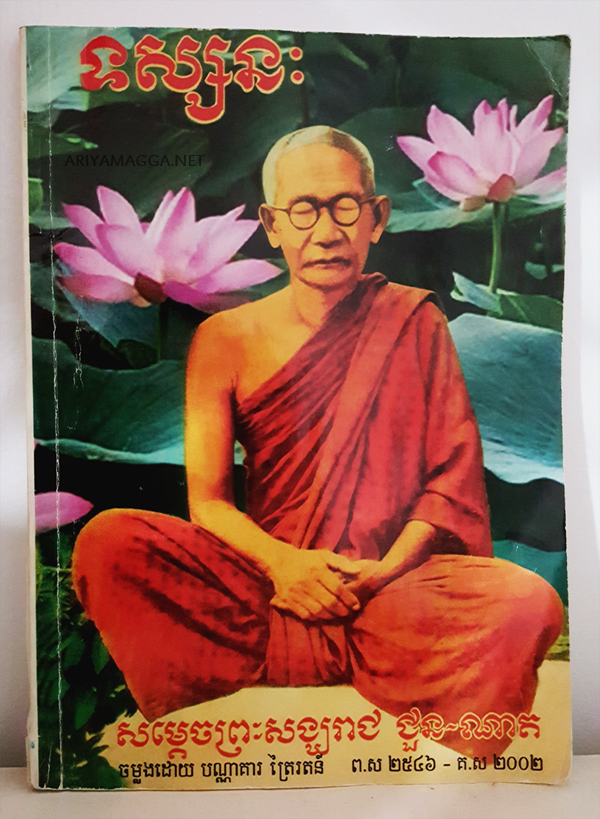
Samdech Chuon Nath

My reflection

វចនានុក្រមសម្តេចសង្ឃ ជួន ណាត
Desktop version

Listen to Khmer literature and Dhamma talk by His Holiness Jotannano Chuon Nath, Supreme Patriarch of Cambodia Buddhism.

Shantidevas’ Bodhisattva vows

My reflection

Should anyone wish to ridicule me and make me an object of jest and scorn why should I possibly care if I have dedicated myself to others?

Let them do as they wish with me so long as it does not harm them. May no one who encounters me ever have an insignificant contact.

Regardless whether those whom I meet respond towards me with anger or faith, may the mere fact of our meeting contribute to the fulfilment of their wishes.

May the slander, harm and all forms of abuse that anyone should direct towards me act as a cause of their enlightenment.

As a solid rock is not shaken by the wind, so the wise are not shaken by blame and praise. As a deep lake is clear and calm, so the wise become tranquil after they listened to the truth…

Good people walk on regardless of what happens to them. Good people do not babble on about their desires. Whether touched by happiness or by sorrow, the wise never appear elated or depressed. ~The Dhammapada

Hermit of Tbeng Mountain

Sachjang Phnom Tbeng សច្ចំ​​ ភ្នំត្បែង is a very long and interesting story written by Mr. Chhea Sokoan, read by Jendhamuni Sos. You can click on the links below to listen. Part 1 | Part 2

Beauty in nature

A beautiful object has no intrinsic quality that is good for the mind, nor an ugly object any intrinsic power to harm it. Beautiful and ugly are just projections of the mind. The ability to cause happiness or suffering is not a property of the outer object itself. For example, the sight of a particular individual can cause happiness to one person and suffering to another. It is the mind that attributes such qualities to the perceived object. — Dilgo Khyentse Rinpoche

Nature is loved by what is best in us. The sky, the mountain, the tree, the animal, give us a delight in and for themselves. — Ralph Waldo Emerson


Our journey for peace
begins today and every day.
Each step is a prayer,
Each step is a meditation,
Each step will build a bridge.

—​​​ Maha Ghosananda