Who has the cutest smile ever
Comment
January 19, 2016
You wanna know who is amazing & has the cutest smile ever? Read the first word again. ~Coolnsmart


You wanna know who is amazing & has the cutest smile ever? Read the first word again. ~Coolnsmart
We don’t need everything to enjoy life. We already have ‘Life’ to enjoy everything. ~Santabanta
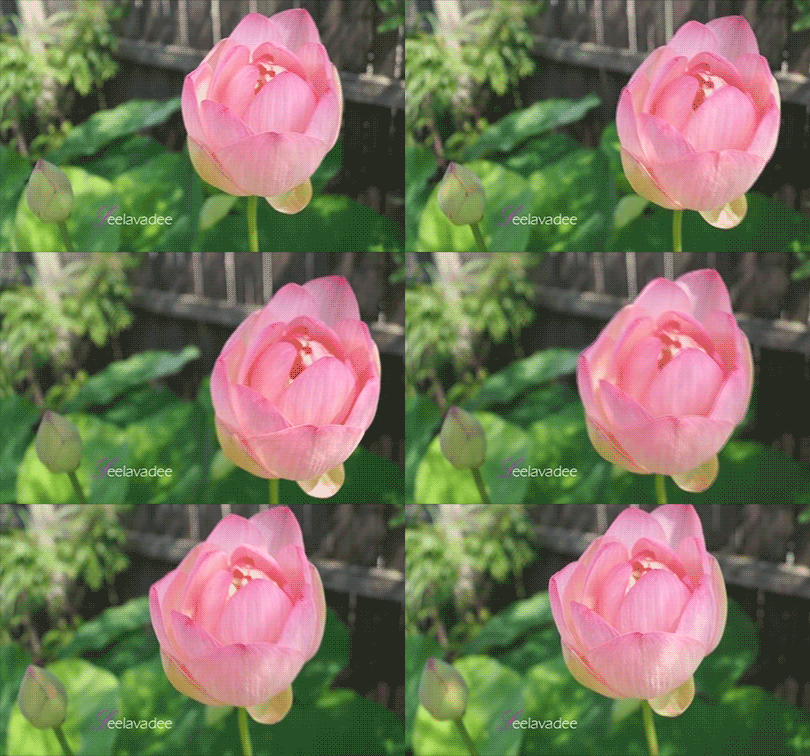
If you have good thoughts, they will shine out of your face like sunbeams and you will always look lovely. ~Santabanta

Photo credit: Randy Neufeldt
The richest wealth is wisdom;
The strongest weapon is patience;
The best security is faith;
And the most effective tonic is laughter.
~SantaBanta

Wrap a rainbow of joy in your heart,
Let the sun paint a smile on your face,
Remove all clouds of doubt & fear
And receive god’s gift of life. ~sms

Question: Could you explain a little more about karma?
Answer: Karma is action. Karma is clinging. Body, speech, and mind all make karma when we cling. We make habits. These can make us suffer in the future. This is the fruit of our clinging, of our past defilement. All attachment leads to making karma. Suppose you were a thief before you became a monk. You stole, made others unhappy, made your parents unhappy. Now you are a monk, but when you remember how you made others unhappy, you feel bad and suffer yourself even today. Remember, not only body, but speech and mental action can make conditions for future results. If you did some act of kindness in the past and remember it today, you will be happy. This happy state of mind is the result of past karma. All things are conditioned by cause–both long term and, when examined, moment to moment. But you need not bother to think about past, or present, or future. Merely watch the body and mind. You must figure karma out for yourself. Watch your mind. Practise and you will see clearly. Make sure, however, that you leave the karma of others to them. Don’t cling to and don’t watch others. If I take a poison, I suffer. No need for you to share it with me! Take what is good that your teacher offers. Then you can become peaceful, your mind will become like that of your teacher. If you will examine it, you will see. Even if now you don’t understand, when you practise, it will become clear. You will know by yourself. This is called practising the Dhamma. When we were young, our parents used to discipline us and get angry. Really they wanted to help us. You must see it over the long term. Parents and teachers criticize us and we get upset. Later on we see why. After long practise you will know. Those who are too clever leave after a short time. They never learn. You must get rid of your cleverness. If you think yourself better than others, you will only suffer. What a pity. No need to get upset. Just watch. ~Ajahn Chah

Answer: They are both. The defilements we call lust or greed, or anger or delusion, these are just outward names, appearances. Just as we call a bowl large, small, pretty, or whatever. This is not reality. It is the concept we create from craving. If we want a big bowl, we call this one small. Craving causes us to discriminate. The truth, though, is merely what is. Look at it this way. Are you a man? You can say ‘yes’. This is the appearance of things. But really you are only a combination of elements or a group of changing aggregates. If the mind is free, it does not discriminate. No big and small, no you and me. There is nothing: Anatta, we say, or non-self. Really, in the end there is neither atta nor anatta. ~Ajahn Chah

My late little sister Alanthara bought me this shirt in 2004. She knew I love old fashioned things very much. I only wore it once when she was alive because I love it so much. I didn’t want the shirt to get old. Alanthara could read my mind. Always gave me the right thing. I could see her laughing, making fun of me in a good way whenever I think of her.
Death leaves a heartache no one can heal, love leaves a memory no one can steal. ~From an Irish headstone

Answer: You must use loving-kindness. When angry states of mind arise in meditation, balance them by developing feelings of loving-kindness. If someone does something bad or gets angry, don’t get angry yourself. If you do, you are being more ignorant than they. Be wise. Keep in mind compassion, for that person is suffering. Fill your mind with loving-kindness as if he were a dear brother. Concentrate on the feeling of loving-kindness as a meditation subject. Spread it to all beings in the world. Only through loving-kindness is hatred overcome. Sometimes you may see other monks behaving badly. You may get annoyed. This is suffering unnecessarily. It is not yet our Dhamma. You may think like this: “He is not as strict as I am. They are not serious meditators like us. Those monks are not good monks.”; This is a great defilement on your part. Do not make comparisons. Do not discriminate. Let go of your opinion as watch your opinions and watch yourself. This is our Dhamma. You can’t possibly make everyone act as you wish or be like you. This wish will only make you suffer. It is a common mistake for meditators to make, but watching other people won’t develop wisdom. Simply examine yourself,your feelings. This is how you will understand. ~Ajahn Chah

RFA/Morm Moniroth
Rules to be happy in life:
1. Never hate
2. Don’t worry,
3. Live simple
4. Expect little
5. Give a lot
6. Always smile
7. And keep in touch with GOD.
~Unknown



ព្រះត្រៃបិដក ប្រែថា កញ្រ្ចែង ឬ ល្អី ៣ សម្រាប់ដាក់ផ្ទុកពាក្យពេចន៍នៃព្រះសម្មាសម្ពុទ្ធ
The Tipitaka or Pali canon, is the collection of primary Pali language texts which form the doctrinal foundation of Theravada Buddhism. The three divisions of the Tipitaka are: Vinaya Pitaka, Sutta Pitaka, Abhidhamma Pitaka.
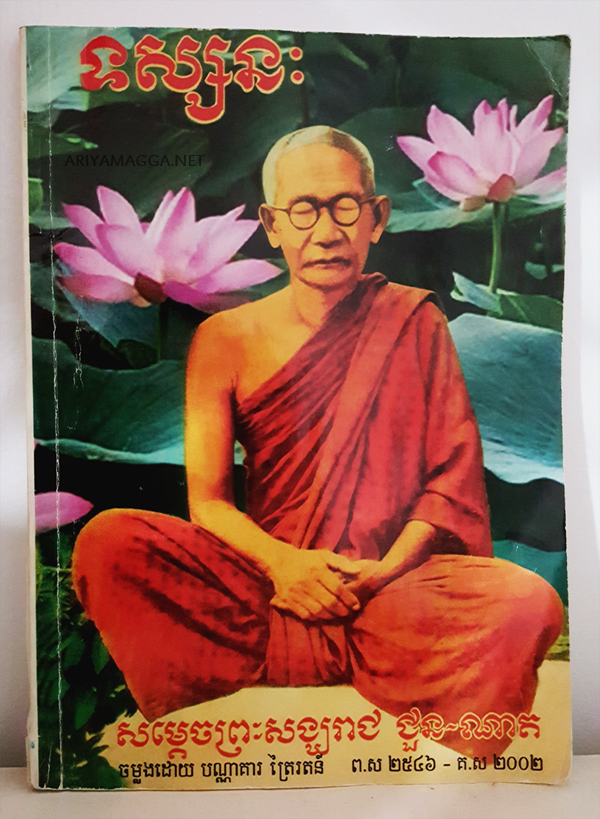
វចនានុក្រមសម្តេចសង្ឃ ជួន ណាត
Desktop version
Listen to Khmer literature and Dhamma talk by His Holiness Jotannano Chuon Nath, Supreme Patriarch of Cambodia Buddhism.
Should anyone wish to ridicule me and make me an object of jest and scorn why should I possibly care if I have dedicated myself to others?
Let them do as they wish with me so long as it does not harm them. May no one who encounters me ever have an insignificant contact.
Regardless whether those whom I meet respond towards me with anger or faith, may the mere fact of our meeting contribute to the fulfilment of their wishes.
May the slander, harm and all forms of abuse that anyone should direct towards me act as a cause of their enlightenment.

As a solid rock is not shaken by the wind, so the wise are not shaken by blame and praise. As a deep lake is clear and calm, so the wise become tranquil after they listened to the truth…
Good people walk on regardless of what happens to them. Good people do not babble on about their desires. Whether touched by happiness or by sorrow, the wise never appear elated or depressed. ~The Dhammapada