1. Everything is Changeable

    Comment

    By Ven. Dr. K. Sri Dhammananda Maha Thera

    What exists is changeable and what is not changeable does not exist.

    Looking at life, we notice how it changes and how it continually moves between extremes and contrasts. We notice rise and fall, success and failure, loss and gain; we experience honor and contempt, praise and blame; and we feel how our hearts respond to all that happiness and sorrow, delight and despair, disappointment and satisfaction, fear and hope. These mighty waves of emotion carry us up, fling us down, and no sooner we find some rest, then we are carried by the power of a new wave again. How can we expect a footing on the crest of the waves? Where shall we erect the building of our life in the midst of this ever-restless ocean of existence?

    This is a world where any little joy that is allotted to beings is secured only after many disappointments, failures and defeats. This is a world where scanty joy grows amidst sickness, desperation and death. This is a world where beings who a short while ago were connected with us by sympathetic joy are at the next moment in want of our compassion. Such a world as this needs equanimity. This is the nature of the world where we live with our intimate friends and the next day they become our enemies to harm us.

    The Buddha described the world as an unending flux of becoming. All is changeable, continuous transformation, ceaseless mutation, and a moving stream. Everything exists from moment to moment. Everything is a recurring rotation of coming into being and then passing out of existence. Everything is moving from birth to death. The matter or material forms in which life does or does not express itself, are also a continuous movement or change towards decay. This teaching of the impermanent nature of everything is one of the main pivots of Buddhism. Nothing on earth partakes of the character of absolute reality. That there will be no death of what is born is impossible. Whatever is subject to origination is subject also to destruction. Change is the very constituent of reality.

    In accepting the law of impermanence or change, the Buddha denies the existence of eternal substance. Matter and spirit are false abstractions that, in reality, are only changing factors (Dhamma) which are connected and which arise in functional dependence on each other.

    Today, scientists have accepted the law of change that was discovered by the Buddha. Scientists postulate that there is nothing substantial, solid and tangible in the world. Everything is a vortex of energy, never remaining the same for two consecutive moments. The whole wide world is caught up in this whirl and vortex of change. One of the theories postulated by scientists is the prospect of the ultimate coldness following upon the death or destruction of the sun. Buddhists are not dismayed by this prospect. The Buddha taught that universes or world cycles arise and pass away in endless succession, just as the lives of individuals do. Our world will most certainly come to an end. It has happened before with previous worlds and it will happen again.

    ‘The world is a passing phenomenon. We all belong to the world of time. Every written word, every carved stone, every painted picture, the structure of civilization, every generation of man, vanishes away like the leaves and flowers of forgotten summers. What exists is changeable and what is not changeable does not exist.’

    Thus all gods and human beings and animals and material forms — everything in this universe — is subject to the law of impermanence. Buddhism teaches us:

    ‘The body like a lump of foam;
    The feelings like a water bubble;
    Perception like a mirage;
    Volitional activities like a plantain tree;
    And Consciousness like jugglery.’ (Samyutta Nikaya)

  2. When we try to understand it

    Comment

    Love is an untamed force. When we try to control it, it destroys us. When we try to imprison it, it enslaves us. When we try to understand it, it leaves us feeling lost and confused. ~Paulo Coelho


  3. When we see beyond self

    Comment

    When we see beyond self, we no longer cling to happiness. And when we stop clinging, we can begin to be happy. ~ Ajahn Chah

    yellow rose water reflection

  4. What you’re missing

    61

    Instead of thinking about what you’re missing, try thinking about what you have that everyone else is missing. ~Unknown


  5. Warmheartedness and Compassion

    35

    Scientists are discovering that while anger and hatred eat into our immune system, warmheartedness and compassion are good for our health. ~Dalai Lama


  6. Wider Heart and Mind

    43

    Having a wider heart and mind is more important than having a larger house. ~Venerable Cheng Yen


  7. One Human Family

    9

    …Whether we like it or not, we have all been born on this earth as part of one great human family. Rich or poor, educated or uneducated, belonging to one nation or another, to one religion or another, adhering to this ideology or that, ultimately each of us is just a human being like everyone else: we all desire happiness and do not want suffering. Furthermore, each of us has an equal right to pursue these goals…

    This has been the most painful period in human history, a time when, because of the vast increase in the destructive power of weapons, more people have suffered from and died by violence than ever before. Furthermore, we have also witnessed an almost terminal competition between the fundamental ideologies that have always torn the human community: force and raw power on the one hand, and freedom, pluralism, individual rights and democracy on the other. I believe that the results of this great competition are now clear. Though the good human spirit of peace, freedom and democracy still faces many forms of tyranny and evil, it is nevertheless an unmistakable fact that the vast majority of people everywhere want it to triumph. Thus the tragedies of our time have not been entirely without benefit, and have in many cases been the very means by which the human mind has been opened. The collapse of communism demonstrates this. ~Dalai Lama


  8. Global Peace 

    27

    Our planet is blessed with vast natural treasures. If we use them properly, beginning with elimination of militarism and war, truly, every human being will be able to live a wealthy, well-cared-for life.

    Naturally, global peace cannot occur all at once. Since conditions around the world are varied, its spread will have to be incremental. But there is no reason why it cannot begin in one region and then spread gradually from one continent to another… ~Dalai Lama


Live & Die for Buddhism

candle

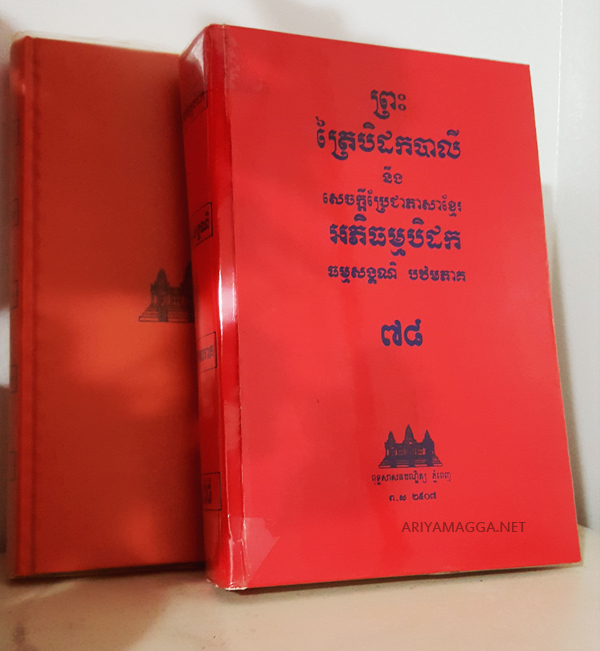
Khmer Tipitaka 1 – 110

 ព្រះត្រៃបិដក

ព្រះត្រៃបិដក ប្រែថា កញ្រ្ចែង ឬ ល្អី​ ៣ សម្រាប់ដាក់ផ្ទុកពាក្យពេចន៍នៃព្រះសម្មាសម្ពុទ្ធ

The Tipitaka or Pali canon, is the collection of primary Pali language texts which form the doctrinal foundation of Theravada Buddhism. The three divisions of the Tipitaka are: Vinaya Pitaka, Sutta Pitaka, Abhidhamma Pitaka.

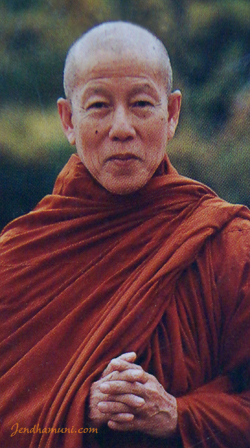
Maha Ghosananda

Maha Ghosananda

Supreme Patriarch of Cambodian Buddhism (5/23/1913 - 3/12/07). Forever in my heart...

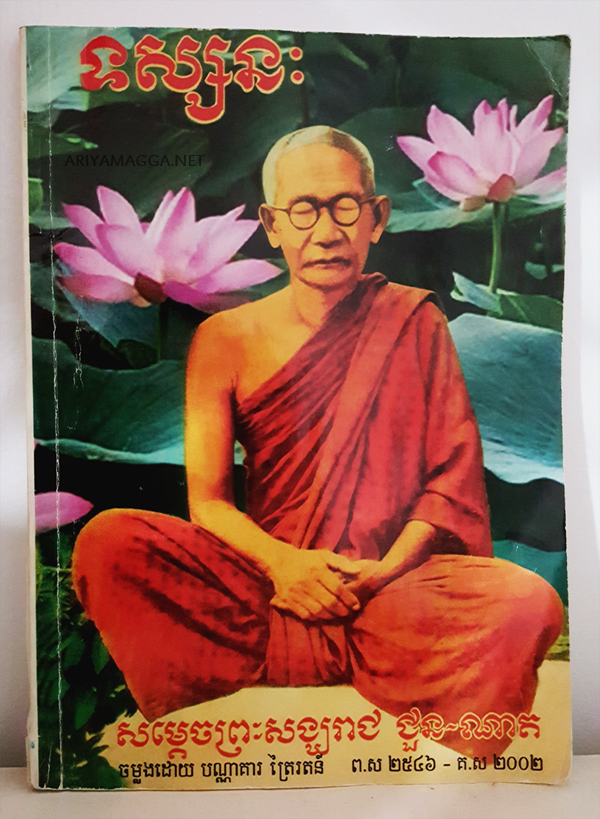
Samdech Chuon Nath

My reflection

វចនានុក្រមសម្តេចសង្ឃ ជួន ណាត
Desktop version

Listen to Khmer literature and Dhamma talk by His Holiness Jotannano Chuon Nath, Supreme Patriarch of Cambodia Buddhism.

Shantidevas’ Bodhisattva vows

My reflection

Should anyone wish to ridicule me and make me an object of jest and scorn why should I possibly care if I have dedicated myself to others?

Let them do as they wish with me so long as it does not harm them. May no one who encounters me ever have an insignificant contact.

Regardless whether those whom I meet respond towards me with anger or faith, may the mere fact of our meeting contribute to the fulfilment of their wishes.

May the slander, harm and all forms of abuse that anyone should direct towards me act as a cause of their enlightenment.

As a solid rock is not shaken by the wind, so the wise are not shaken by blame and praise. As a deep lake is clear and calm, so the wise become tranquil after they listened to the truth…

Good people walk on regardless of what happens to them. Good people do not babble on about their desires. Whether touched by happiness or by sorrow, the wise never appear elated or depressed. ~The Dhammapada

Hermit of Tbeng Mountain

Sachjang Phnom Tbeng សច្ចំ​​ ភ្នំត្បែង is a very long and interesting story written by Mr. Chhea Sokoan, read by Jendhamuni Sos. You can click on the links below to listen. Part 1 | Part 2

Beauty in nature

A beautiful object has no intrinsic quality that is good for the mind, nor an ugly object any intrinsic power to harm it. Beautiful and ugly are just projections of the mind. The ability to cause happiness or suffering is not a property of the outer object itself. For example, the sight of a particular individual can cause happiness to one person and suffering to another. It is the mind that attributes such qualities to the perceived object. — Dilgo Khyentse Rinpoche

Nature is loved by what is best in us. The sky, the mountain, the tree, the animal, give us a delight in and for themselves. — Ralph Waldo Emerson


Our journey for peace
begins today and every day.
Each step is a prayer,
Each step is a meditation,
Each step will build a bridge.

—​​​ Maha Ghosananda