1. The kindness you give

    310

    The kindness you give isn’t always the same thing you get in return… sometimes it’s more, sometimes it’s less, worst, sometimes you get none at all… but remember , GOD said: the one who willingly gives is always more blessed than the one who receives. ~Ritu Ghatourey

  2. The Anger-eating Demon

    Comment

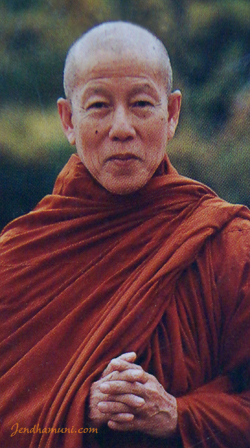
    Jendhamuni in the wood

    Retold from an ancient Buddhist Story by Nyanaponika Thera

    Once there lived a demon who had a peculiar diet: he fed on the anger of others. And as his feeding ground was the human world, there was no lack of food for him. He found it quite easy to provoke a family quarrel, or national and racial hatred. Even to stir up a war was not very difficult for him. And whenever he succeeded in causing a war, he could properly gorge himself without much further effort; because once a war starts, hate multiplies by its own momentum and affects even normally friendly people. So the demon’s food supply became so rich that he sometimes had to restrain himself from over-eating, being content with nibbling just a small piece of resentment found close-by.

    But as it often happens with successful people, he became rather overbearing and one day when feeling bored he thought: “Shouldn’t I try it with the gods?” On reflection he chose the Heaven of the Thirty-three Deities, ruled by Sakka, Lord of Gods. He knew that only a few of these gods had entirely eliminated the fetters of ill-will and aversion, though they were far above petty and selfish quarrels. So by magic power he transferred himself to that heavenly realm and was lucky enough to come at a time when Sakka the Divine King was absent. There was none in the large audience hall and without much ado the demon seated himself on Sakka’s empty throne, waiting quietly for things to happen, which he hoped would bring him a good feed. Soon some of the gods came to the hall and first they could hardly believe their own divine eyes when they saw that ugly demon sitting on the throne, squat and grinning. Having recovered from their shock, they started to shout and lament: “Oh you ugly demon, how can you dare to sit on the throne of our Lord? What utter cheekiness! What a crime! you should be thrown headlong into the hell and straight into a boiling cauldron! You should be quartered alive! Begone! Begone!”

    But while the gods were growing more and more angry, the demon was quite pleased because from moment to moment he grew in size, in strength and in power. The anger he absorbed into his system started to ooze from his body as a smoky red-glowing mist. This evil aura kept the gods at a distance and their radiance was dimmed.

    Suddenly a bright glow appeared at the other end of the hall and it grew into a dazzling light from which Sakka emerged, the King of Gods. He who had firmly entered the undeflectible Stream that leads Nibbana-wards, was unshaken by what he saw. The smoke-screen created by the gods’ anger parted when he slowly and politely approached the usurper of his throne. “Welcome, friend! Please remain seated. I can take another chair. May I offer you the drink of hospitality? Our Amrita is not bad this year. Or do you prefer a stronger brew, the vedic Soma?”

    While Sakka spoke these friendly words, the demon rapidly shrank to a diminutive size and finally disappeared, trailing behind a whiff of malodorous smoke which likewise soon dissolved.

    The gist of this story dates back to the discourses of the Buddha. But even now, over 2500 years later, our world looks as if large hordes of Anger-eating Demons were haunting it and were kept well nourished by millions slaving for them all over the earth. Fires of hate and wide-traveling waves of violence threaten to engulf mankind. Also the grass roots of society are poisoned by conflict and discord, manifesting in angry thoughts and words and in violent deeds. Is it not time to end this self-destructive slavery of man to his impulses of hate and aggression which only serve the demoniac forces? Our story tells how these demons of hate can be exorcised by the power of gentleness and love. If this power of love can be tested and proven, at grass-root level, in the widely spread net of personal relationships, society at large, the world at large, will not remain unaffected by it.

    — Based on Samyutta Nikaya, Sakka Samyutta, No. 22

    Link source

     

  3. Learn to detach

    Comment

    Learn to detach…Don’t cling to things, because everything is impermanent… But detachment doesn’t mean you don’t let the experience penetrate you. On the contrary, you let it penetrate fully. That’s how you are able to leave it… Take any emotion–love for a woman, or grief for a loved one, or what I’m going through, fear and pain from a deadly illness. If you hold back on the emotions–if you don’t allow yourself to go all the way through them–you can never get to being detached, you’re too busy being afraid. You’re afraid of the pain, you’re afraid of the grief. You’re afraid of the vulnerability that love entails. But by throwing yourself into these emotions, by allowing yourself to dive in, all the way, over your head even, you experience them fully and completely. You know what pain is. You know what love is. You know what grief is. And only then can you say, ‘All right. I have experienced that emotion. I recognize that emotion. Now I need to detach from that emotion for a moment. ~ Mitch Albom

    yellow flower


  4. The Story of Devadatta [reborn in Avici Niraya]

    Comment

    Devadatta

    Verse 17: Here he is tormented, hereafter he is tormented; the evil-doer is tormented in both existences. He is tormented, and he laments: “Evil have I done.” He is even more tormented when he is reborn in one of the lower worlds (Apaya).

    1. duggatim/duggati: unhappy destinations, the four lower worlds (apaya). In the case of Devadatta, avici niraya, the lowest niraya, (placement of torment).

    While residing at the Jetavana monastery in Savatthi, the Buddha uttered Verse (17) of this book, with reference to Devadatta.

    Devadatta was at one time residing with the Buddha in Kosambi. While staying there he realized that the Buddha was receiving much respect and honour as well as offerings. He envied the Buddha and aspired to head the Order of the bhikkhus. One day, while the Buddha was preaching at the Veluvana monastery in Rajagaha, he approached the Buddha and on the ground that the Buddha was getting old, he suggested that the Order be entrusted to his care. The Buddha rejected his offer and rebuked him, saying that he was a swallower of other people’s spittle. The Buddha next asked the Samgha to carry out an act of proclamation (Pakasaniya kamma*) regarding Devadatta.

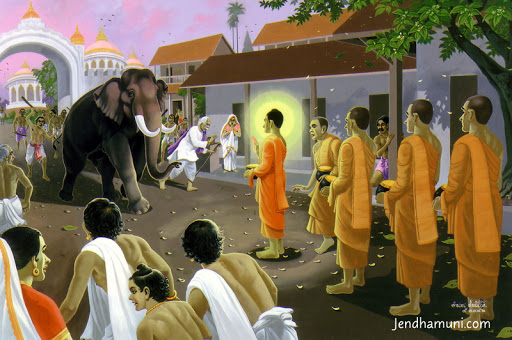
    Devadatta felt aggrieved and vowed vengeance against the Buddha. Three times, he attempted to kill the Buddha: first, by employing some archers; secondly, by climbing up the Gijjhakuta hill and rolling down a big piece of rock on to the Buddha; and thirdly, by causing the elephant Nalagiri to attack the Buddha. The hired assassins returned after being established in Sotapatti Fruition, without harming the Buddha. The big piece of rock rolled down by Devadatta hurt the big toe of the Buddha just a little, and when the Nalagiri elephant rushed at the Buddha, it was made docile by the Buddha. Thus Devadatta failed to kill the Buddha, and he tried another tactic. He tried to break up the Order of the bhikkhus by taking away some newly admitted bhikkhus with him to Gayasisa; however, most of them were brought back by Thera Sariputta and Thera Maha Moggallana.

    Later, Devadatta fell ill. He had been ill for nine months when he asked his pupils to take him to the Buddha, and subsequently made the trip to the Jetavana monastery. Hearing that Devadatta was coming, the Buddha told his disciples that Devadatta would never get the opportunity to see him. Continue reading

  5. The True Meaning of Love

    55

    Love is available to all
    Love is steady, unshakable, and does not fall.
    Love is unconditional and is easy to obtain
    Love covers and eschew all sickness and pain.
    Love abides deep within the heart
    Love is a substance and it never should depart.
    Love is caring for others and taking them as your own
    Love is taking time to call old friends on the telephone.
    Love carries and brings peace, humility and joy
    Love spreads through the soul of every girl and boy.
    Love never lies and keeps secrets inside
    Love helps your conscience and soul collide.
    Get some love and keep it forever
    You will need it when going through the stormy weather.
    Love is your weapon for all evil and hate
    Love is like a two-edged sword; to help or to hurt
    Love is silent and never screams nor blurt.

    © Carl McKever


  6. Sensuality…

    Comment

    Not even if it rained gold coins
    would we have our fill
    of sensual pleasures.
    ‘Stressful,
    they give little enjoyment’ —
    knowing this, the wise one
    finds no delight
    even in heavenly sensual pleasures.
    He is one who delights
    in the ending of craving,
    a disciple of the Rightly
    Self-Awakened One.

    ~Dhammapada 186 Link source

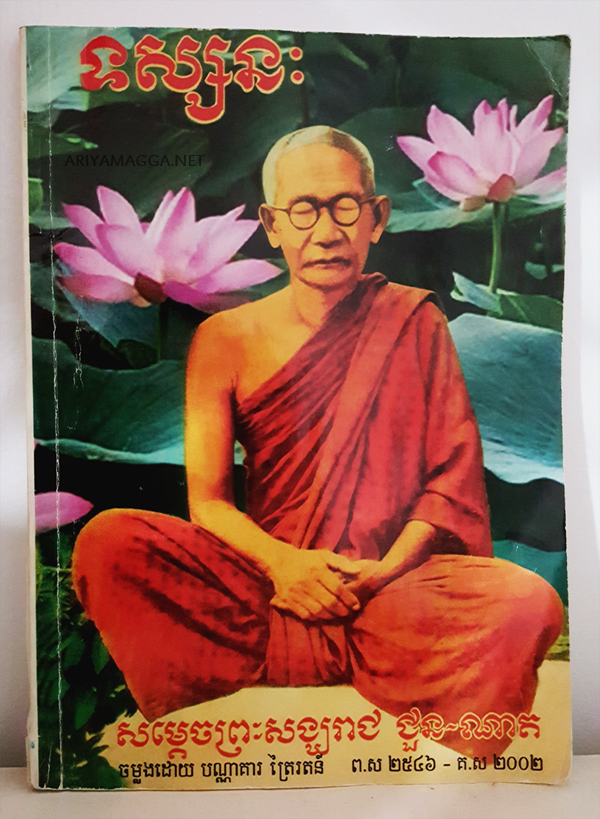
    Buddha meditating-Ariyamagga

  7. An angry person

    Comment

    Four Sights

    An angry person is ugly & sleeps poorly.
    Gaining a profit, he turns it into a loss,
    having done damage with word & deed.
    A person overwhelmed with anger
    destroys his wealth.
    Maddened with anger,
    he destroys his status.
    Relatives, friends, & colleagues avoid him.
    Anger brings loss.
    Anger inflames the mind.
    He doesn’t realize
    that his danger is born from within.
    An angry person doesn’t know his own benefit.
    An angry person doesn’t see the Dhamma.
    A man conquered by anger is in a mass of darkness.
    He takes pleasure in bad deeds as if they were good,
    but later, when his anger is gone,
    he suffers as if burned with fire.
    He is spoiled, blotted out,
    like fire enveloped in smoke.

    Anguttara Nikaya VII.60

    Link source


  8. Praying in Buddhism

    37

    Why We take Refuge in the Buddha

    Buddhists do not take refuge in the Buddha with the belief that He is a god or son of god. The Buddha never claimed any divinity. He was the Enlightened One, the most Compassionate, Wise, and Holy One who ever lived in this world. Therefore, people take refuge in the Buddha as a Teacher or Master who has shown the real path of emancipation. They pay homage to Him to show their gratitude and respect, but they do not ask for material favors. Buddhists do not pray to the Buddha thinking that He is a god who will reward them or punish or curse them. They recite verses or some sutras not in the sense of supplication but as a means of recalling His great virtues and good qualities to get more inspiration and guidance for themselves and to develop the confidence to follow His Teachings. There are critics who condemn this attitude of taking refuge in the Buddha. They do not know the true meaning of the concept of taking refuge in and paying homage to a great religious Teacher. They have learned only about praying which is the only thing that some people do in the name of religion. When Buddhists seek refuge it means they accept the Buddha, Dhamma and the Sangha as the means by which they can eradicate all the causes of their fear and other mental disturbances. Many people, especially those with animistic beliefs, seek protection in certain objects around them which they believe are inhabited by spirits.

    ~By Venerable K. Sri Dhammananda

  9. As beautiful as a flower garden…

    Comment

    A family is a place where minds come in contact with one another. If these minds love one another the home will be as beautiful as a flower garden. But if these minds get out of harmony with one another it is like a storm that plays havoc with the garden.

    The secret of health for both mind and body is not to mourn for the past, worry about the future, or anticipate troubles but to live in the present moment wisely and earnestly. ~Buddha

    Jendhamuni with pink lotus

  10. Watch the thought and its ways with care

    Comment

    The thought manifests as the word. The word manifests as the deed. The deed develops into habit. And the habit hardens into character. So watch the thought and its ways with care. And let it spring from love, born out of concern for all beings. ~Buddha

    Buddha


Live & Die for Buddhism

candle

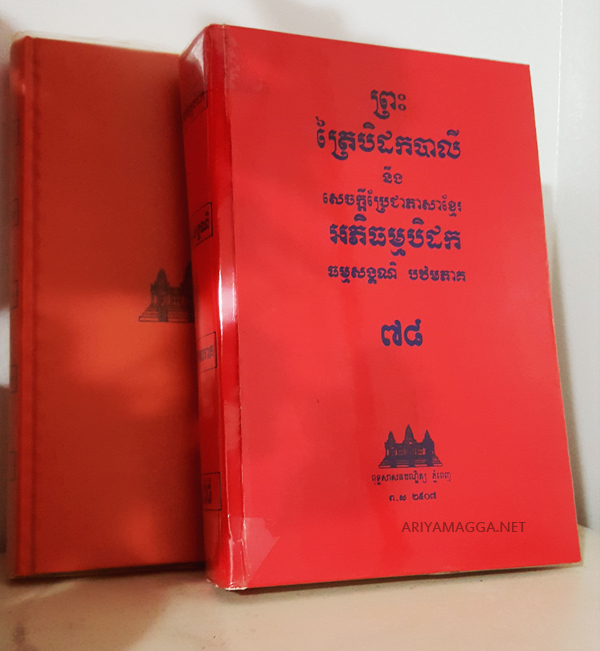
Khmer Tipitaka 1 – 110

 ព្រះត្រៃបិដក

ព្រះត្រៃបិដក ប្រែថា កញ្រ្ចែង ឬ ល្អី​ ៣ សម្រាប់ដាក់ផ្ទុកពាក្យពេចន៍នៃព្រះសម្មាសម្ពុទ្ធ

The Tipitaka or Pali canon, is the collection of primary Pali language texts which form the doctrinal foundation of Theravada Buddhism. The three divisions of the Tipitaka are: Vinaya Pitaka, Sutta Pitaka, Abhidhamma Pitaka.

Maha Ghosananda

Maha Ghosananda

Supreme Patriarch of Cambodian Buddhism (5/23/1913 - 3/12/07). Forever in my heart...

Samdech Chuon Nath

My reflection

វចនានុក្រមសម្តេចសង្ឃ ជួន ណាត
Desktop version

Listen to Khmer literature and Dhamma talk by His Holiness Jotannano Chuon Nath, Supreme Patriarch of Cambodia Buddhism.

Shantidevas’ Bodhisattva vows

My reflection

Should anyone wish to ridicule me and make me an object of jest and scorn why should I possibly care if I have dedicated myself to others?

Let them do as they wish with me so long as it does not harm them. May no one who encounters me ever have an insignificant contact.

Regardless whether those whom I meet respond towards me with anger or faith, may the mere fact of our meeting contribute to the fulfilment of their wishes.

May the slander, harm and all forms of abuse that anyone should direct towards me act as a cause of their enlightenment.

As a solid rock is not shaken by the wind, so the wise are not shaken by blame and praise. As a deep lake is clear and calm, so the wise become tranquil after they listened to the truth…

Good people walk on regardless of what happens to them. Good people do not babble on about their desires. Whether touched by happiness or by sorrow, the wise never appear elated or depressed. ~The Dhammapada

Hermit of Tbeng Mountain

Sachjang Phnom Tbeng សច្ចំ​​ ភ្នំត្បែង is a very long and interesting story written by Mr. Chhea Sokoan, read by Jendhamuni Sos. You can click on the links below to listen. Part 1 | Part 2

Beauty in nature

A beautiful object has no intrinsic quality that is good for the mind, nor an ugly object any intrinsic power to harm it. Beautiful and ugly are just projections of the mind. The ability to cause happiness or suffering is not a property of the outer object itself. For example, the sight of a particular individual can cause happiness to one person and suffering to another. It is the mind that attributes such qualities to the perceived object. — Dilgo Khyentse Rinpoche

Nature is loved by what is best in us. The sky, the mountain, the tree, the animal, give us a delight in and for themselves. — Ralph Waldo Emerson


Our journey for peace
begins today and every day.
Each step is a prayer,
Each step is a meditation,
Each step will build a bridge.

—​​​ Maha Ghosananda