A disciplined mind
Comment
November 11, 2015
There is nothing so disobedient as an undisciplined mind, and there is nothing so obedient as a disciplined mind. ~Buddha


There is nothing so disobedient as an undisciplined mind, and there is nothing so obedient as a disciplined mind. ~Buddha
Meditation brings wisdom; lack of mediation leaves ignorance. Know well what leads you forward and what holds you back, and choose the path that leads to wisdom. ~Buddha

Ven. Munindathero Maha Nhor Tepmony
The Sun challenges us to Shine, the Clouds remind us to Move,
the Birds tell us we too can Fly and the Sky tells us that there
is no limit to our Dreams and Goals. ~RVM, India

Prayer is only another name for good, clean, direct thinking. When you pray, think well what you are saying, and make your thoughts into things that are solid. In that manner, your prayer will have strength, and that strength shall become part of you, mind, body, and spirit. ~Richard Llewellyn
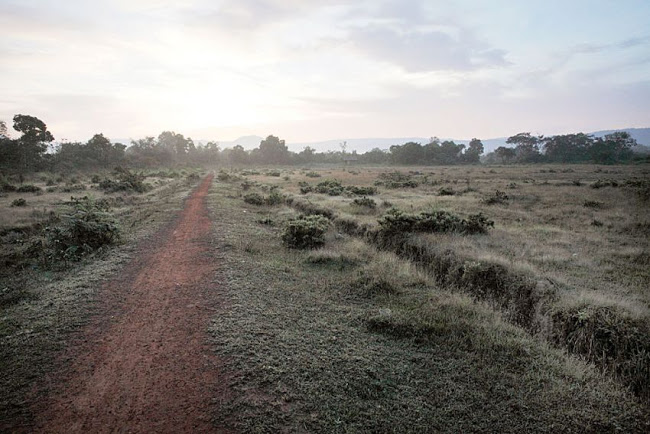
The Areng Valley in Koh Kong province. Environmental impact assessments on a dam project there are pushing ahead. International Rivers
Kathina Ceremony at Buddhist Meditation Center, Wat Kirivongsa Bopharam in Leverett, Massachusetts, U.S.A on November 7, 2015.
River had never lost his cool, not since I’d known him. That was the thing about River. He was calm. Calm as a summer’s day. Calm as a gentle nap in the sun. Even when girls were fainting and men were slitting their throats in front of you. ~April Genevieve Tucholke

As gold purified in a furnace loses its impurities and achieves its own true nature, the mind gets rid of the impurities of the attributes of delusion, attachment and purity through meditation and attains Reality. ~Adi Shankara


RFA/Chin Chetha
Verse 19: Though he recites much the Sacred Texts (Tipitaka), but is negligent and does not practise according to the Dhamma, like a cowherd who counts the cattle of others, he has no share in the benefits of the life of a bhikkhu (i.e., Magga-phala).
Verse 20: Though he recites only a little of the Sacred Texts (Tipitaka), but practises according to the Dhamma, eradicating passion, ill will and ignorance, clearly comprehending the Dhamma, with his mind freed from moral defilements and no longer clinging to this world or to the next, he shares the benefits of the life of a bhikkhu (i.e., Magga-phala).
1. suvimuttacitto: Mind freed from moral defilements; this has been achieved through perfect practice and clear comprehension of the Dhamma.
2. sa bhagava samannassa hoti: lit., shares the benefits of the life of a samana (a bhikkhu). According to the Commentary, in this context, it means, “Shares the benefits of Magga-phala.”
While residing at the Jetavana monastery, the Buddha uttered Verses (19) and (20) of this book, with reference to two bhikkhus who were friends.
Once there were two friends of noble family, two bhikkhus from Savatthi. One of them learned the Tipitaka and was very proficient in reciting and preaching the sacred texts. He taught five hundred bhikkhus and became the instructor of eighteen groups of bhikkhus. The other bhikkhu striving diligently and ardently in the course of Insight Meditation attained arahatship together with Analytical Insight.
On one occasion, when the second bhikkhu came to pay homage to the Buddha, at the Jetavana monastery, the two bhikkhus met. The master of the Tipitaka did not realize that the other had already become an arahat. He looked down on the other, thinking that this old bhikkhu knew very little of the sacred texts, not even one out of the five Nikayas or one out of the three Pitakas. So he thought of putting questions to the other, and thus embarass him. The Buddha knew about his unkind intention and he also knew that as a result of giving trouble to such a noble disciple of his, the learned bhikkhu would be reborn in a lower world.
So, out of compassion, the Buddha visited the two bhikkhus to prevent the scholar from questioning the other bhikkhu. The Buddha himself did the questioning. He put questions on jhanas and maggas to the master of the Tipitaka; but he could not answer them because he had not practised what he had taught. The other bhikkhu, having practised the Dhamma and having attained arahatship, could answer all the questions. The Buddha praised the one who practised the Dhamma (i.e., a vipassaka), but not a single word of praise was spoken for the learned scholar (i.e., a ganthika).
The resident disciples could not understand why the Buddha had words of praise for the old bhikkhu and not for their learned teacher. So, the Buddha explained the matter to them. The scholar who knows a great deal but does not practise in accordance with the Dhamma is like a cowherd, who looks after the cows for wages, while the one who practises in accordance with the Dhamrna is like the owner who enjoys the five kinds of produce of the cows*. Thus, the scholar enjoys only the services rendered to him by his pupils but not the benefits of Magga-phala. The other bhikkhu, though he knows little and recites only a little of the sacred texts, having clearly comprehended the essence of the Dhamma and having practised diligently and strenuously, is an ‘anudhammacari’**, who has eradicated passion, ill will and ignorance. His mind being totally freed from moral delilements and from all attachments to this world as well as to the next, he truly shares the benefits of Magga-phala.
Then the Buddha spoke in verse as follows:
Verse 19: Though he recites much the Sacred Texts (Tipitaka), but is negligent and does not practise according to the Dhamma, like a cowherd who counts the cattle of others, he has no share in the benefits of the life of a bhikkhu (i.e., Magga-phala).
Verse 20: Though he recites only a little of the Sacred Texts (Tipitaka), but practises according to the Dhamma, eradicating passion, ill will and ignorance, clearly comprehending the Dhamma, with his mind freed from moral defilements and no longer clinging to this world or to the next, he shares the benefits of the life of a bhikkhu (i.e., Magga-phala). Continue reading
If you want to conquer the anxiety of life, live in the moment, live in the breath. ~Amit Ray

Don’t fill your time with worry – fix what you can and let the rest take care of itself.
~Unknown

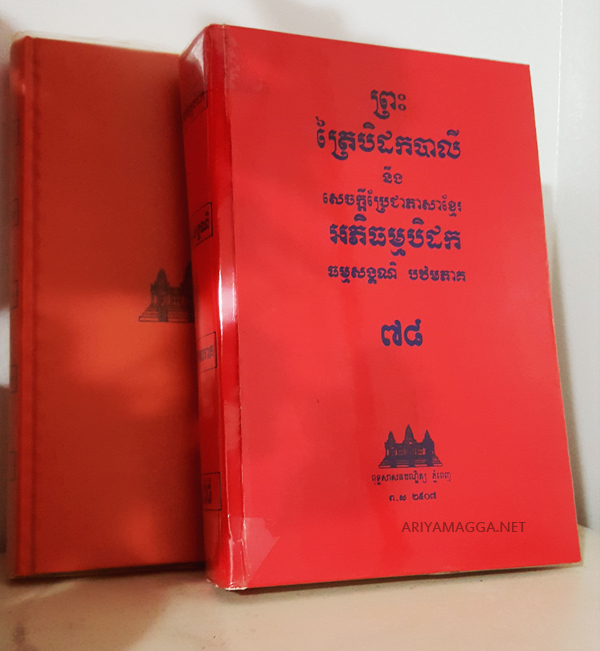
ព្រះត្រៃបិដក ប្រែថា កញ្រ្ចែង ឬ ល្អី ៣ សម្រាប់ដាក់ផ្ទុកពាក្យពេចន៍នៃព្រះសម្មាសម្ពុទ្ធ
The Tipitaka or Pali canon, is the collection of primary Pali language texts which form the doctrinal foundation of Theravada Buddhism. The three divisions of the Tipitaka are: Vinaya Pitaka, Sutta Pitaka, Abhidhamma Pitaka.
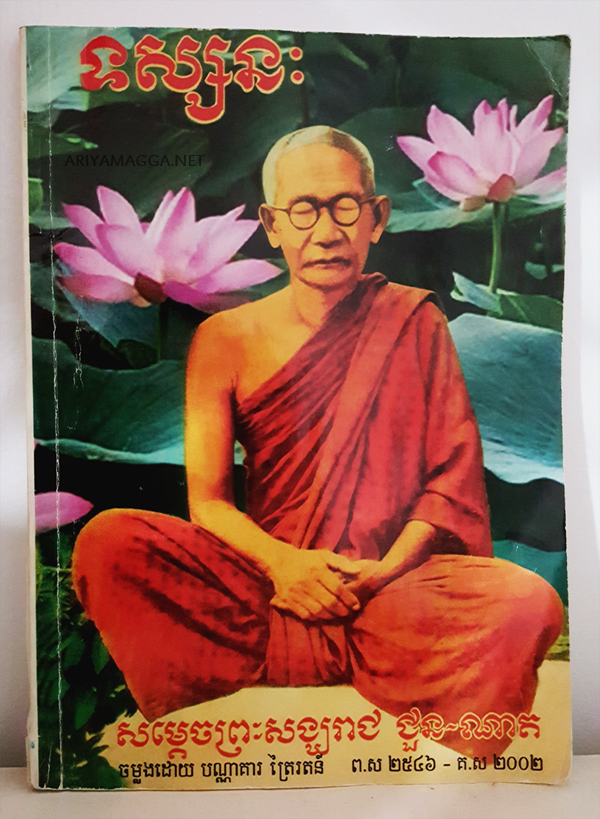
វចនានុក្រមសម្តេចសង្ឃ ជួន ណាត
Desktop version
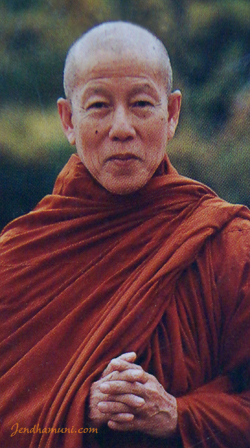
Listen to Khmer literature and Dhamma talk by His Holiness Jotannano Chuon Nath, Supreme Patriarch of Cambodia Buddhism.
Should anyone wish to ridicule me and make me an object of jest and scorn why should I possibly care if I have dedicated myself to others?
Let them do as they wish with me so long as it does not harm them. May no one who encounters me ever have an insignificant contact.
Regardless whether those whom I meet respond towards me with anger or faith, may the mere fact of our meeting contribute to the fulfilment of their wishes.
May the slander, harm and all forms of abuse that anyone should direct towards me act as a cause of their enlightenment.

As a solid rock is not shaken by the wind, so the wise are not shaken by blame and praise. As a deep lake is clear and calm, so the wise become tranquil after they listened to the truth…
Good people walk on regardless of what happens to them. Good people do not babble on about their desires. Whether touched by happiness or by sorrow, the wise never appear elated or depressed. ~The Dhammapada