Students of the month
Comment
October 2, 2015
Being different is one of the most beautiful things on earth. ~Unknown


Being different is one of the most beautiful things on earth. ~Unknown
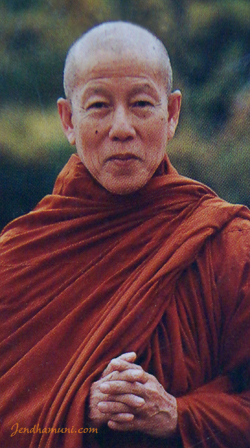
I do not like to think, but smiling only. One breath at a time is way more than enough. In his world, nothing is permanent. After all, meditation is my only belonging… ~Jendhamuni

The best instructor in the world…

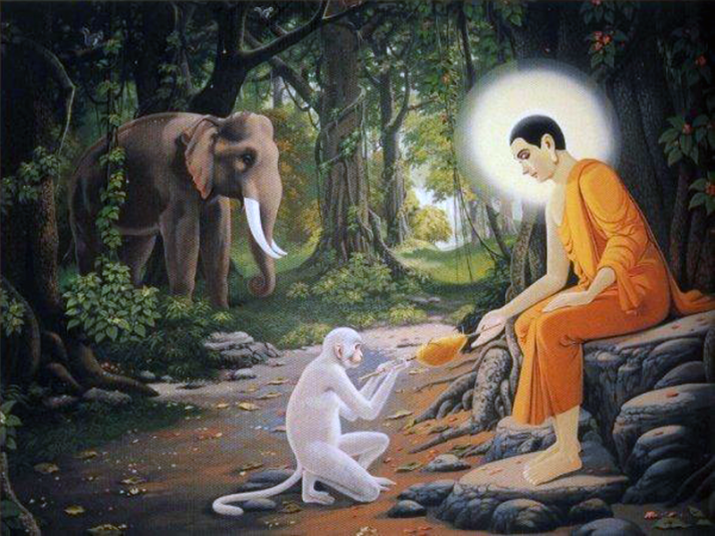
A Dhammatalk by Ajahn Chah
At the time of the Buddha, there lived a monk who yearned to find the true way to enlightenment. He wanted to know for certain what was the correct way and what was the incorrect way to train his mind in meditation. Having decided that living in a monastery with a large group of monks was confusing and distracting, he went off wandering looking for quiet places to meditate on his own. Living alone, he practised continuously, sometimes experiencing periods of calm when his mind gathered itself in concentration (samādhi), at other times not finding much calm at all. There was still no real certainty in his meditation. Sometimes he was very diligent and put forth great effort, sometimes he was lazy. In the end, he became caught up in doubt and scepticism due to his lack of success in trying to find the right way to practise.
During that time in India there were many different meditation teachers, and the monk happened to hear about one famous teacher, ”Ajahn A”, who was very popular and had a reputation for being skilled in meditation instruction. The monk sat down and thought it through, and decided that just in case this famous teacher really knew the correct way to enlightenment, he would set off to go and find him and train under his guidance. Having received teachings, the monk returned to meditate on his own again and found that while some of the new teachings were in line with his own views, some were different. He found that he was still constantly getting caught into doubt and uncertainty. After a while he heard of another famous monk, ”Ajahn B”, who also was again reputed to be fully enlightened and skilled in teaching meditation; this news simply fuelled further doubts and questions in his mind. Eventually his speculation drove him to go off in search of the new teacher. Having received fresh teachings, the monk left and went away to practise in solitude once more. He compared all the teachings he had absorbed from this latest teacher with those from the first teacher, and found that they weren’t the same. He compared the different styles and characters of each teacher, and found that they were also quite different. He compared everything he had learnt with his own views about meditation and found that nothing seemed to fit together at all! The more he compared, the more he doubted. Continue reading
Don’t worry about the past or the future. The past has already ceased. Whatever occurred in the past has already taken place and is over and done with; it’s finished. Whatever is going to arise in the future is also going to end in the future – let go of that too. Why get worried about it? Observe the phenomena (dhamma) arising in the present moment and notice how they are changing and unreliable. ~Ajahn Chah


Verse 7: He who keeps his mind on pleasant objects, who is uncontrolled in his senses, immoderate in his food, and is lazy and lacking in energy, will certainly be overwhelmed by Mara,3 just as stormy winds uproot a weak tree.
Verse 8: He who keeps his mind on the impurities (of the body), who is well-controlled in his senses and is full of faith and energy, will certainly be not overwhelmed by Mara, just as stormy winds cannot shake a mountain of rock.
1. Maro/Mara: in this context kilesamara, the defilements hindering the realization of Nibbana.
2. saddham/saddha: According to the Commentary,
(a) unwavering (unshakable) faith in the Buddha, the Dhamma (the Doctrine) and the Samgha (the Buddhist Religious Order) and
(b) faith or belief in kamma (action) and its results.
3. Refer to 1.
While residing in the neighbourhood of the town of Setabya, the Buddha uttered Verses (7) and (8) of this book, with reference to Mahakala and his brother Culakala. Mahakala and Culakala were two merchant brothers from the town of Setabya. While travelling about with their merchandise on one occasion, they had a chance to listen to a religious discourse given by the Buddha. After hearing the discourse Mahakala asked the Buddha for admission to the Order of the bhikkhus. Culakala also joined the Order but with the intention of coming out of the Order and to bring out his brother along with him.
Mahakala was serious in his ascetic practice at the cemetery (Sosanika dhutinga) and diligently meditated on decay and impermanence. He finally gained Insight and attained arahatship.
Later, the Buddha and his disciples, including the brothers, happened to be staying in the forest of Simsapa, near Setabya. While staying there, the former wives of Culakala invited the Buddha and his disciples to their house. Culakala himself went ahead to prepare seating arrangements for the Buddha and his disciples. Once there, the former wives of Culakala made him change into lay clothes.
The next day, the wives of Mahakala invited the Buddha and his disciples to their house hoping to do the same with Mahakala as the wives of Culakala had done to Culakala. After the meal they requested the Buddha to let Mahakala remain to “express appreciation” (anumodana). So the Buddha and the other disciples left.
Arriving at the village gate the bhikkhus expressed their dissatisfaction and apprehension. They were dissatisfied because Mahakala was permitted to stay behind and they were afraid that, like Culakala, his brother, Mahakala, too, would be made to leave the Order by his former wives. To this, the Buddha replied that the two brothers were not alike. Culakala indulged in sensual pleasures and was lazy and weak; he was just like a weak tree. Mahakala, on the other hand, was diligent, steadfast and strong in his faith of the Buddha, the Dhamma and the Samgha; he was like a mountain of rock.
Then the Buddha spoke in verse as follows:
Verse 7: He who keeps his mind on pleasant objects, who is uncontrolled in his senses, immoderate in his food, and is lazy and lacking in energy, will certainly be overwhelmed by Mara, just as stormy winds uproot a weak tree.
Verse 8: He who keeps his mind on the impurities (of the body), who is well-controlled in his senses and is full of faith and energy, will certainly be not overwhelmed by Mara, just as stormy winds cannot shake a mountain of rock.
Meanwhile, the former wives of Mahakala surrounded him and tried to remove his yellow robes. The thera, sensing their attitude, stood up and rising up into the air by his supernormal powers passed through the roof of the house into the sky. He landed at the feet of the Buddha at the very moment the Master was coming to the end of his utterance of the above two stanzas. At the same time, all the bhikkhus assembled there were established in Sotapatti Fruition.
Dhammapada Verses 7 and 8
Mahakalatthera Vatthu
Subhanupassim viharantam
indriyesu asamvutam
bhojanamhi camattannum
kusitam hinaviriyam
tam ve pasahati Maro1
vato rukkhamva dubbalam.
Asubhanupassim viharantam
indriyesu susamvutam
bhojanamhi ca mattannum
saddham2 araddhaviriyam
tam ve nappasahati Maro
vato selamva pabbatam.
Source: Tipitaka
The best part about growing up with no money is that you know how to have fun without it. Riches without faith are the greatest poverty. ~Unknown
ADHOC Photo
A bond from birth: As each little puppy makes its entrance, its mother carefully tends to its first needs — licking and cleaning her newborn to stimulate breathing and to encourage nursing. As her newborn puppies knead and suckle, she curls her body around them for protection and warmth – hearts beating in unison. Every lick, which is a doggie kiss, reinforces the mother-puppy bond.
Care and protect: A mother dog whines to alert her humans if she’s separated from her puppies. She paces nervously back and forth between a tiny still-unseeing puppy that scoots to the other side of the room and the rest of her litter. When necessary, a mother dog will put herself between her puppies and danger. She won’t let strange dogs approach, and if she senses that a human might harm her little ones, she issues a warning growl. Source: The Nest

Clever is getting out of a sticky situation, wise is not getting into a sticky situation, you may not always be clever enough. ~Unknown

We can only be successful when we stop chasing money, not everyone with money is successful. ~Tshepo Motini


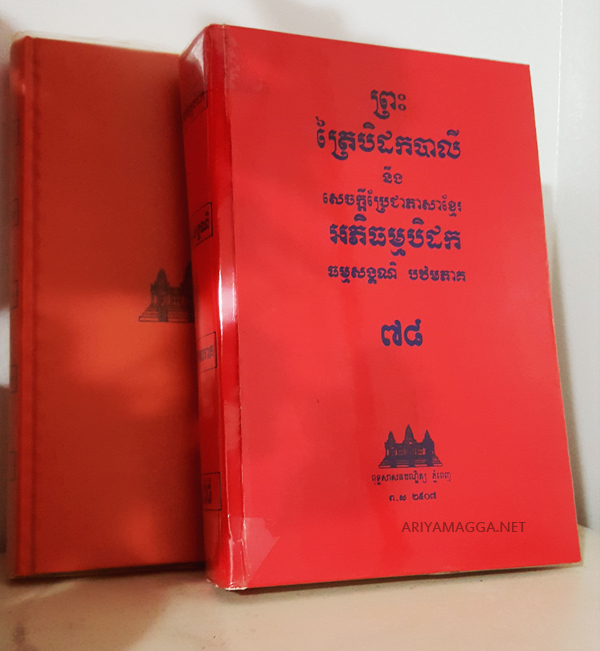
ព្រះត្រៃបិដក ប្រែថា កញ្រ្ចែង ឬ ល្អី ៣ សម្រាប់ដាក់ផ្ទុកពាក្យពេចន៍នៃព្រះសម្មាសម្ពុទ្ធ
The Tipitaka or Pali canon, is the collection of primary Pali language texts which form the doctrinal foundation of Theravada Buddhism. The three divisions of the Tipitaka are: Vinaya Pitaka, Sutta Pitaka, Abhidhamma Pitaka.
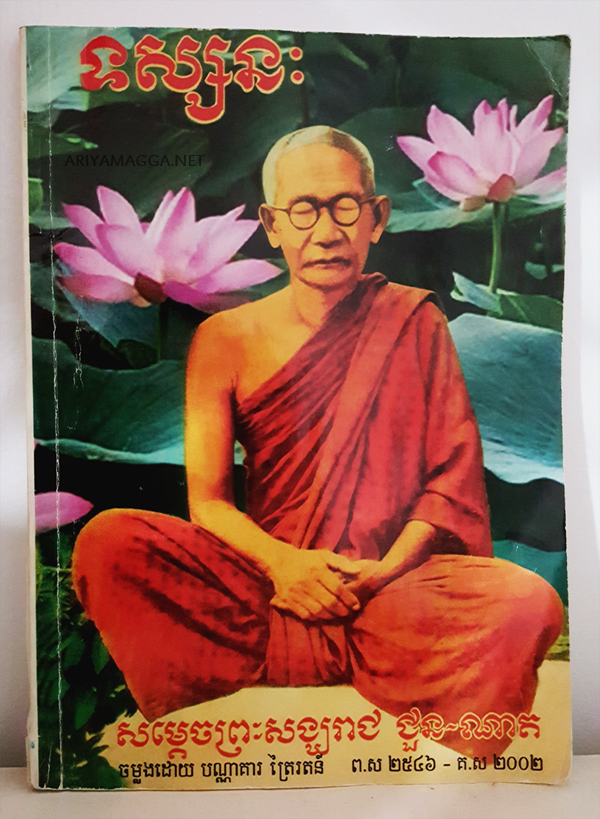
វចនានុក្រមសម្តេចសង្ឃ ជួន ណាត
Desktop version
Listen to Khmer literature and Dhamma talk by His Holiness Jotannano Chuon Nath, Supreme Patriarch of Cambodia Buddhism.
Should anyone wish to ridicule me and make me an object of jest and scorn why should I possibly care if I have dedicated myself to others?
Let them do as they wish with me so long as it does not harm them. May no one who encounters me ever have an insignificant contact.
Regardless whether those whom I meet respond towards me with anger or faith, may the mere fact of our meeting contribute to the fulfilment of their wishes.
May the slander, harm and all forms of abuse that anyone should direct towards me act as a cause of their enlightenment.
As a solid rock is not shaken by the wind, so the wise are not shaken by blame and praise. As a deep lake is clear and calm, so the wise become tranquil after they listened to the truth…
Good people walk on regardless of what happens to them. Good people do not babble on about their desires. Whether touched by happiness or by sorrow, the wise never appear elated or depressed. ~The Dhammapada