1. Tomato ‘Margherita’

    Comment

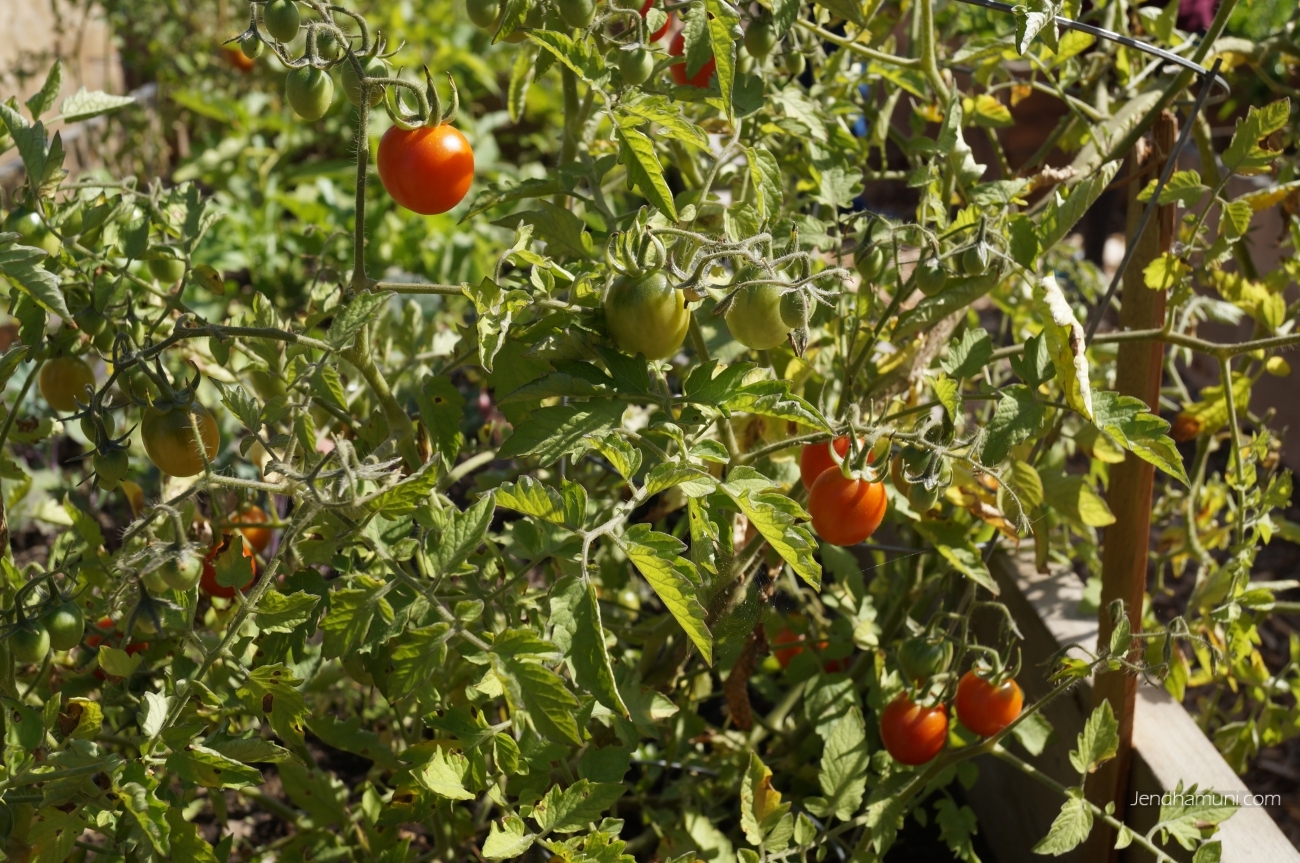
    The best saladette tomato for cooking, Tomato Margherita offers plentiful tomatoes 5 to 6 inches long, thin-skinned and packed with meaty flavor. The plant is quite disease-resistant, for heavy yields all at once — ideal for canning and juicing. Delicious fresh but indescribably good when roasted, Margherita is made for cooking. The fruit ripens uniformly and is quite attractive, with dark red color and vitamin-packed flesh.

    Source: Folia | Link source


  2. Life is a canvas

    Comment

    Life is a Canvas. Every action of ours is a stroke of paint and at the end, how beautiful our painting is will depend upon all our strokes, all our Actions. ~Unknown

  3. 5 reasons to eat more tomatoes

    Comment

    1. Load up on lycopene

    The antioxidant properties of lycopene may protect our immune cells from destructive free radicals, molecules that can harm cells and damage DNA. The best way to get lycopene—which is in the skin, and gives red tomatoes their rich colour—is through cooked or processed tomatoes (juice, sauce and paste). Cook tomatoes with a little healthy oil (e.g., olive or canola), which helps carry the lycopene into the bloodstream.

    2. Care for your heart

    Tomatoes are rich in vitamin C, which, like lycopene, is linked to reducing the risk of heart disease. Most of the vitamin C is concentrated in the jelly-like substance that encases the seeds. Tomatoes are also high in salicylates, which have an anti-clotting effect on the blood, and may be partially responsible for tomatoes’ protective effect against heart disease. Many recipes advise removing the seeds to prevent a bitter flavour. But to conserve nutrients, use plum tomatoes, which have less-bitter seeds.

    3. Help control asthma

    A new Australian study found that adequate intake of lycopene and vitamin A helped reduce exercise-induced asthma symptoms.

    4. Feed your bones

    Tomatoes contain vitamin K, which plays a key role in clotting blood and maintaining strong bones. And, research from Boston University found that vitamin K deficiency is linked to a higher prevalence of hand and knee osteoarthritis.

    5. Add vitamin A

    Vitamin A helps maintain healthy skin, hair, mucous membrances, bones and teeth. One cup (250 mL) of chopped tomatoes provides over half of the recommended daily amount of vitamin A for women.

    Source: Best Health
    Link source


  4. Time has always taught us a lesson

    Comment

    Value those friends who gave you good memories. Don’t ever change them for any material things in this world. Time has always taught us a lesson. Once you have disappointed them, you will hardly find a way to call an old friend when the time comes that will you need them. ~Unknown


  5. Memory and love of our lost ones

    Comment

    A wounded heart will heal in time, and when it does, the memory and love of our lost ones is sealed inside to comfort us. ~Unknown

    ADHOC photo


  6. The Story of Kosambi Bhikkhus

    Comment

    buddha and monks - AriyamaggaVerse 6: People, other than the wise, do not realize, “We in this world must all die,” (and, not realizing it, continue their quarrels). The wise realize it and thereby their quarrels cease.

    1. Pare ca na vijananti: ‘Pare’ means ‘others’; in this context, people other than the wise. These people do not realize that they must die, and behave as if they were never going to die and keep on quarrelling. Therefore, they are sometimes referred to as the ignorant or the foolish, or those who are not worthy of love and respect.

    2. mayamettha yamamase: lit., “We here must die,” meaning we, of this world, must die; or all men are mortal.

    3. ye ca tattha vijananti: in the case of those who understand, meaning the wise. The wise understand (or realize) that all men are mortal.

    While residing at the Jetavana monastery in Savatthi, the Buddha uttered Verse (6) of this book, with reference to the bhikkhus of Kosambi.

    The bhikkhus of Kosambi had formed into two groups. One group followed the master of Vinaya and the other followed the teacher of the Dhamma and they were often quarrelling among themselves. Even the Buddha could not stop them from quarrelling; so he left them and spent the vassa, residence period of the rains, all alone in Rakkhita Grove near Palileyyaka forest. There, the elephant Palileyya waited upon the Buddha.

    The lay disciples of Kosambi, on learning the reason for the departure of the Buddha, refused to make offerings to the remaining bhikkhus. This made them realize their mistake and reconciliation took place among themselves. Still, the lay disciples would not treat them as respectfully as before, until they owned up their fault to the Buddha. But the Buddha was away and it was in the middle of the vassa; so the bhikkhus of Kosambi spent the vassa in misery and hardship.

    At the end of the vassa, the Venerable Ananda and five hundred bhikkhus approached the Buddha and gave the message from Annathapindika and other lay disciples imploring him to return. In due course the Buddha returned to the Jetavana monastery in Savatthi. The bhikkhus followed him there, fell down at his feet, and owned up their fault. The Buddha rebuked them for disobeying him. He told them to remember that they must all die some day and therefore, they must stop their quarrels and must not act as if they would never die.

    Then the Buddha spoke in verse as follows:

    Verse 6: People, other than the wise, do not realize, “We in this world must all die,” (and, not realizing it, continue their quarrels). The wise realize it and thereby their quarrels cease.

    At the end of the discourse, all the assembled bhikkhus were established in Sotapatti Fruition.

    Dhammapada Verse 6
    Kosambaka Vatthu

    Pare ca na vijananti1
    mayamettha yamamase2
    ye ca tattha vijananti3
    tato sammanti medhaga.

    Source: Tipitaka

     

  7. You only lose what you cling to

    Comment

    Learning to let go should be learned before learning to get. Life should be touched, not strangled. You’ve got to relax, let it happen at times, and at others move forward with it. ~Ray Bradbury

    “You only lose what you cling to.” ~Buddha

    Red rose for Ariyamagga


  8. If we look according to reality

    Comment

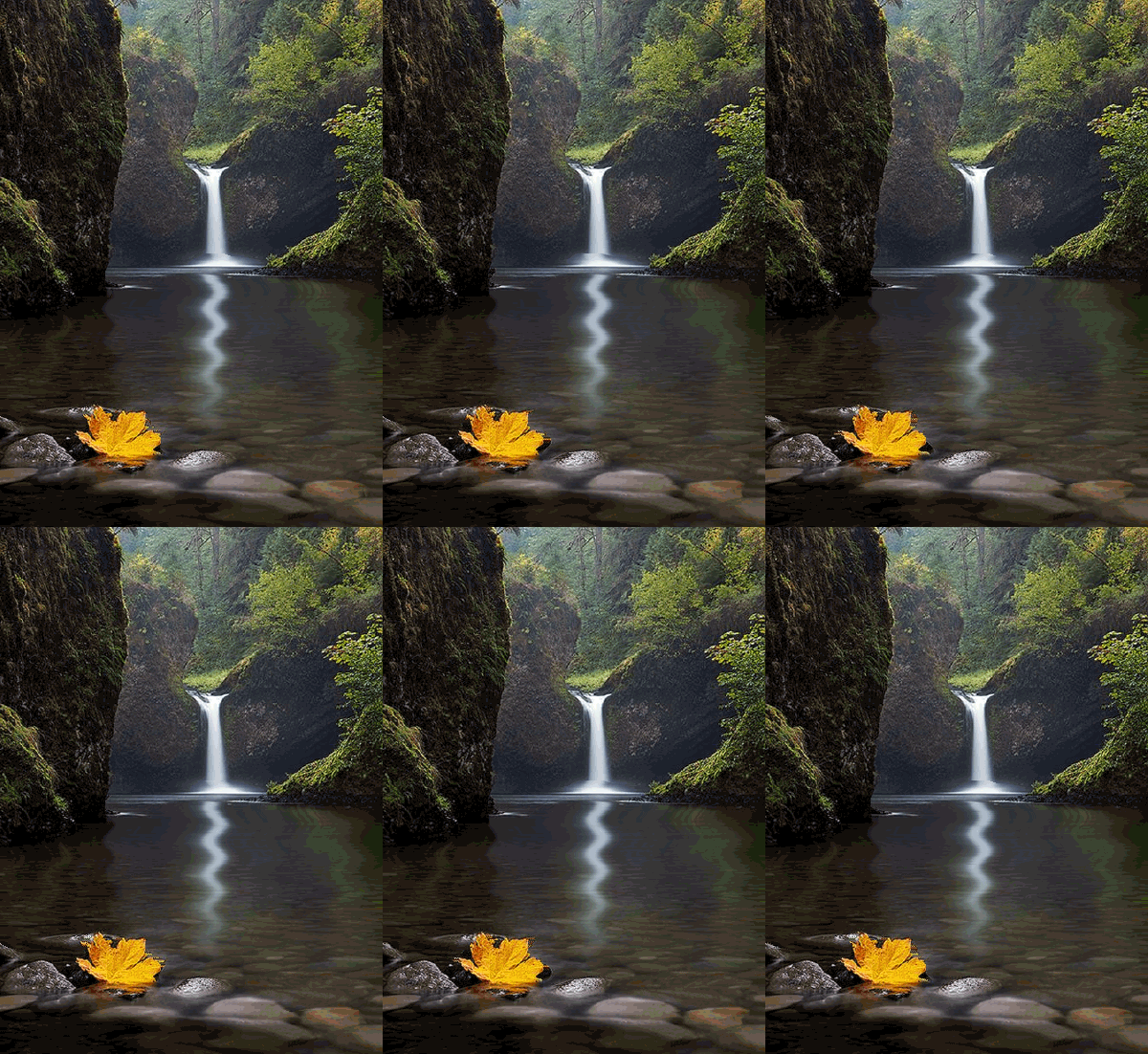
    nature scene 092615

    If we look according to reality, without trying to sugar things over, we’ll see that it’s really pitiful and wearisome. Dispassion will arise. This feeling of ‘disinterest’ is not that we feel aversion for the world or anything; it’s simply our mind clearing up, our mind letting go. We see things as not substantial or dependable, but that all things are naturally established just as they are. However we want them to be, they just go their own way regardless. Whether we laugh or cry, they simply are the way they are. Things which are unstable are unstable; things which are not beautiful are not beautiful.

    So the Buddha said that when we experience sights, sounds, tastes, smells, bodily feelings or mental states, we should release them. When the ear hears sounds, let them go. When the nose smells an odour, let it go…just leave it at the nose! When bodily feelings arise, let go of the like or dislike that follow, let them go back to their birth-place. The same for mental states. All these things, just let them go their way. This is knowing. Whether it’s happiness or unhappiness, it’s all the same. This is called meditation.

    Meditation means to make the mind peaceful in order to let wisdom arise. This requires that we practise with body and mind in order to see and know the sense impressions of form, sound, taste, smell, touch and mental formations. To put it shortly, it’s just a matter of happiness and unhappiness. Happiness is pleasant feeling in the mind, unhappiness is just unpleasant feeling. The Buddha taught to separate this happiness and unhappiness from the mind. The mind is that which knows. Feeling2 is the characteristic of happiness or unhappiness, like or dislike. When the mind indulges in these things we say that it clings to or takes that happiness and unhappiness to be worthy of holding. That clinging is an action of mind, that happiness or unhappiness is feeling.

    When we say the Buddha told us to separate the mind from the feeling, he didn’t literally mean to throw them to different places. He meant that the mind must know happiness and know unhappiness. When sitting in samādhi, for example, and peace fills the mind, then happiness comes but it doesn’t reach us, unhappiness comes but doesn’t reach us. This is to separate the feeling from the mind. We can compare it to oil and water in a bottle. They don’t combine. Even if you try to mix them, the oil remains oil and the water remains water, because they are of different density. ~Ajahn Chah


  9. Stay a child while you can be a child

    Comment

    All of us have moments in out lives that test our courage. Taking children into a house. ~Erma Bobeck
    “Stay a child while you can be a child.” ~ Stephen Sondheim

    Children at school


Live & Die for Buddhism

candle

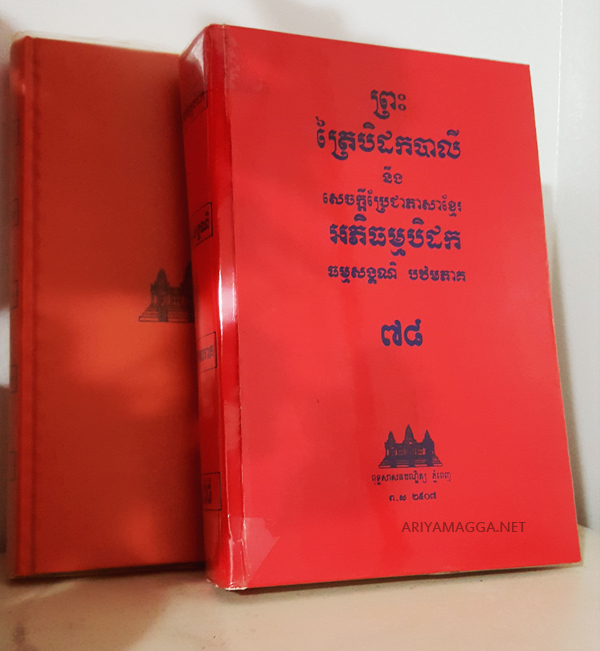
Khmer Tipitaka 1 – 110

 ព្រះត្រៃបិដក

ព្រះត្រៃបិដក ប្រែថា កញ្រ្ចែង ឬ ល្អី​ ៣ សម្រាប់ដាក់ផ្ទុកពាក្យពេចន៍នៃព្រះសម្មាសម្ពុទ្ធ

The Tipitaka or Pali canon, is the collection of primary Pali language texts which form the doctrinal foundation of Theravada Buddhism. The three divisions of the Tipitaka are: Vinaya Pitaka, Sutta Pitaka, Abhidhamma Pitaka.

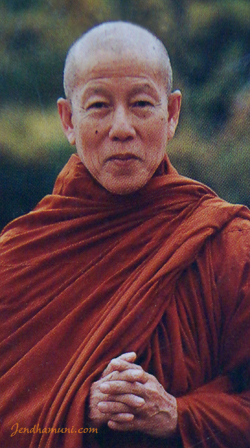
Maha Ghosananda

Maha Ghosananda

Supreme Patriarch of Cambodian Buddhism (5/23/1913 - 3/12/07). Forever in my heart...

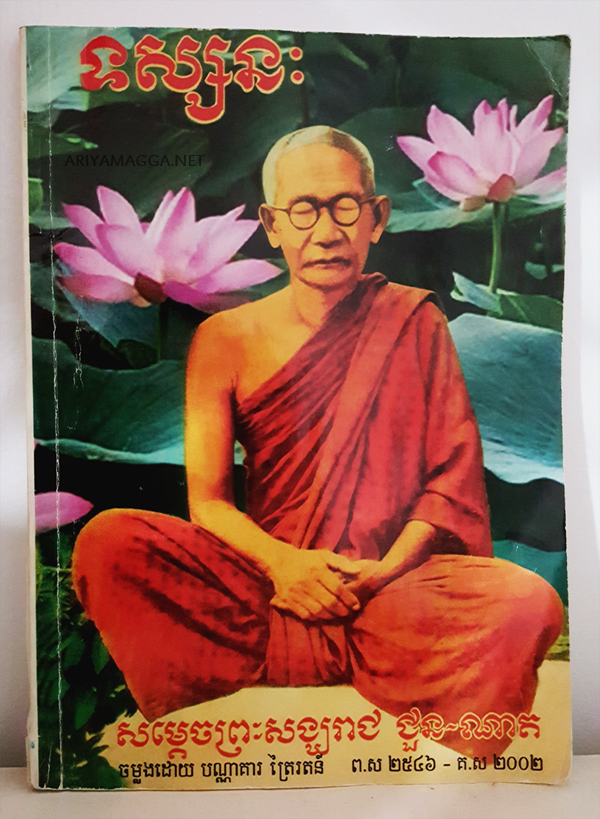
Samdech Chuon Nath

My reflection

វចនានុក្រមសម្តេចសង្ឃ ជួន ណាត
Desktop version

Listen to Khmer literature and Dhamma talk by His Holiness Jotannano Chuon Nath, Supreme Patriarch of Cambodia Buddhism.

Shantidevas’ Bodhisattva vows

My reflection

Should anyone wish to ridicule me and make me an object of jest and scorn why should I possibly care if I have dedicated myself to others?

Let them do as they wish with me so long as it does not harm them. May no one who encounters me ever have an insignificant contact.

Regardless whether those whom I meet respond towards me with anger or faith, may the mere fact of our meeting contribute to the fulfilment of their wishes.

May the slander, harm and all forms of abuse that anyone should direct towards me act as a cause of their enlightenment.

As a solid rock is not shaken by the wind, so the wise are not shaken by blame and praise. As a deep lake is clear and calm, so the wise become tranquil after they listened to the truth…

Good people walk on regardless of what happens to them. Good people do not babble on about their desires. Whether touched by happiness or by sorrow, the wise never appear elated or depressed. ~The Dhammapada

Hermit of Tbeng Mountain

Sachjang Phnom Tbeng សច្ចំ​​ ភ្នំត្បែង is a very long and interesting story written by Mr. Chhea Sokoan, read by Jendhamuni Sos. You can click on the links below to listen. Part 1 | Part 2

Beauty in nature

A beautiful object has no intrinsic quality that is good for the mind, nor an ugly object any intrinsic power to harm it. Beautiful and ugly are just projections of the mind. The ability to cause happiness or suffering is not a property of the outer object itself. For example, the sight of a particular individual can cause happiness to one person and suffering to another. It is the mind that attributes such qualities to the perceived object. — Dilgo Khyentse Rinpoche

Nature is loved by what is best in us. The sky, the mountain, the tree, the animal, give us a delight in and for themselves. — Ralph Waldo Emerson


Our journey for peace
begins today and every day.
Each step is a prayer,
Each step is a meditation,
Each step will build a bridge.

—​​​ Maha Ghosananda