1. What metta is

    Comment
    Flood in Camobdia. RFA photo

    Flood in Camobdia. RFA photo


    Metta is an attitude of recognizing that all sentient beings (that is, all beings that are capable of feeling), can feel good or feel bad, and that all, given the choice, will choose the former over the latter.

    Metta is a recognition of the most basic solidarity that we have with others, this sharing of a common aspiration to find fulfillment and escape suffering.

    Metta is empathy. It’s the willingness to see the world from another’s point of view: to walk a mile in another person’s shoes.

    Metta is the desire that all sentient beings be well, or at least the ones we’re currently thinking about or in contact with. It’s wishing others well.

    Metta is friendliness, consideration, kindness, generosity.
    Metta is an attitude rather than just a feeling. It’s an attitude of friendliness.

    Metta is the basis for compassion. When our Metta meets another’s suffering, then our Metta transforms into compassion.
    Metta is the basis for shared joy. When our Metta meets with another’s happiness or good fortune, then it transmutes into an empathetic joyfulness.

    Metta is boundless. We can feel Metta for any sentient being, regardless of gender, race, or nationality.

    Metta is the most fulfilling emotional state that we can know. It’s the fulfillment of the emotional development of every being.
    It’s our inherent potential. To wish another well is to wish that they be in a state of experiencing Metta.

    Metta is the answer to almost every problem the world faces today. Money won’t do it. Technology won’t do it. Metta will.


    Source: http://www.wildmind.org


  2. Human nature being what it is

    Comment
    RFA photo/Sireymuny

    RFA photo/Sireymuny


    By Ven. Dr K. Sri Dhammananda Nayaka Maha Thera

    Human nature being what it is, all of us are inclined to put the blame on others for our own shortcomings or misfortunes. Do you ever give a thought for a moment that you yourself can be responsible for your own problems? Your sorrows and miseries are not caused by a family curse that is handed down from one generation to the next. Nor are they caused by the original sin of some ancestor who has returned from beyond the grave to haunt you. Nor are your sorrow and miseries created by a god or by a devil. Your sorrow is caused by yourself. Your sorrow is your own making. You are your own liberator.

    You must learn to shoulder the responsibilities of your life and to admit your own weakness without blaming or disturbing others. Remember the old saying :

    “The uncultured man always blames others; the semi cultured man blames himself and the fully-cultured man blames neither.”

    As a cultured being, you must learn to solve your own problems without blaming others. If each person would try to correct himself, there would not be any trouble in this world. But many people do not make any effort to realize that they themselves are responsible for many misfortunes that befall them. They prefer to find scapegoats.They look outside themselves for the source of their troubles because they are reluctant to admit their own weaknesses.

    Man’s mind is given to so much self-deceit that he does not want to admit his own weakness. He will try to find some excuse to justify his action and to create an illusion that he is blameless. If a man really wants to be free, he must have the courage to admit his own weakness.

    whiteflower

    The Buddha says: “Easily seen are others’ faults; hard indeed it is to see one’s own fault.”

    You must develop the courage to admit when you have fallen victim to your weakness. You must admit when you are in the wrong. Do not follow the uncultured who always blames others. Do not use other people as your scapegoat – this is most despicable. Remember that you may fool some of the people some of the time, but not all the people all of the time.

    The Buddha says: “The fool who does not admit he is a fool, is a real fool. And the fool who admits he is a fool is wise to that extent.”

    Admit your own weakness. Do not blame others. You must realize that you are responsible for the miseries and the difficulties that come to you. You must understand that your way of thinking also creates the conditions that give rise to your difficulties. You must appreciate that at all times, you are responsible for whatever comes to you.

    “It is not that something is wrong with the world, but something is wrong with us.”

    You Are responsible For Your Relationship With Others

    Remember that whatever happens to you cannot feel hurt if you know how to keep a balanced mind. You are hurt only by the mental attitude that you adopt towards yourself and towards others. If you show a loving attitude towards others, you will receive a loving attitude in return. If you show hatred, you will undoubtedly never receive love in return. An angry man breathes out poison and he hurts himself more than others. Anyone who is wise not to be angered by anger will not be hurt. Remember that no one can hurt you unless you allow others to hurt you. Of another person blames or scolds you, but you follow the Dhamma (truth), then that Dhamma will protect you from unjust attacks.

    The Buddha says: “Whoever harms a harmless person, one pure and guiltless, upon that very fool the evil recoils like fine dust thrown against the wind.”

    If you allow others to fulfill their wishes in hurting you, you are responsible.

    Blame Not Others – Accept Responsible

    Source: buddhistbugs.blogspot.com

     

  3. Right Speech

    Comment

    By Thanissaro Bhikkhu

    For many of us, right speech is the most difficult of the precepts to honor. Yet practicing right speech is fundamental both to helping us become trustworthy individuals and to helping us gain mastery over the mind. So choose your words – and your motives for speaking – with care. An essay by Thanissaro Bhikkhu.

    Right speech, explained in negative terms, means avoiding four types of harmful speech: lies (words spoken with the intent of misrepresenting the truth); divisive speech (spoken with the intent of creating rifts between people); harsh speech (spoken with the intent of hurting another person’s feelings); and idle chatter (spoken with no purposeful intent at all).

    Notice the focus on intent: this is where the practice of right speech intersects with the training of the mind. Before you speak, you focus on why you want to speak. This helps get you in touch with all the machinations taking place in the committee of voices running your mind. If you see any unskillful motives lurking behind the committee’s decisions, you veto them. As a result, you become more aware of yourself, more honest with yourself, more firm with yourself. You also save yourself from saying things that you’ll later regret. In this way you strengthen qualities of mind that will be helpful in meditation, at the same time avoiding any potentially painful memories that would get in the way of being attentive to the present moment when the time comes to meditate.

    In positive terms, right speech means speaking in ways that are trustworthy, harmonious, comforting, and worth taking to heart. When you make a practice of these positive forms of right speech, your words become a gift to others. In response, other people will start listening more to what you say, and will be more likely to respond in kind. This gives you a sense of the power of your actions: the way you act in the present moment does shape the world of your experience. You don’t need to be a victim of past events.

    For many of us, the most difficult part of practicing right speech lies in how we express our sense of humor. Especially here in America, we’re used to getting laughs with exaggeration, sarcasm, group stereotypes, and pure silliness — all classic examples of wrong speech. If people get used to these sorts of careless humor, they stop listening carefully to what we say. In this way, we cheapen our own discourse. Actually, there’s enough irony in the state of the world that we don’t need to exaggerate or be sarcastic. The greatest humorists are the ones who simply make us look directly at the way things are.

    Expressing our humor in ways that are truthful, useful, and wise may require thought and effort, but when we master this sort of wit we find that the effort is well spent. We’ve sharpened our own minds and have improved our verbal environment. In this way, even our jokes become part of our practice: an opportunity to develop positive qualities of mind and to offer something of intelligent value to the people around us.

    So pay close attention to what you say — and to why you say it. When you do, you’ll discover that an open mouth doesn’t have to be a mistake.

    Source: http://www.esolibris.com


  4. Smile — the key that fits the lock of everybody’s heart

    Comment
    At the train station...

    At the train station…


    A smile doesn’t exactly show how happy you are,
    but indeed a smile on your face shows how strong enough
    you are in fighting back your problems in life.
    ~Manna Chisim Sangma

    ♥´¨)
    ​¸.•´¸.•*´¨) ¸.•*¨)
    (¸.•´ (¸.•`​ (̅_̅_̅_̅S❤S_̅_̅_̅̅()​ ​💕💕💕


  5. Today is one of it’s kind

    Comment

    Today is one of it’s kind; it won’t come again. Bring joy to someone, speak good words and use them to heal, encourage others and learn to care. ~Mufti Ismail Menk

    Jendhamuni with flowers 091815

  6. Life is not lived in the past

    Comment

    Life is not lived in the past, neither is it lived wandering in future. Life is for today, and it is today. Live it, love it, see it, and show how capable you are of everything you wish to achieve. ~Unknown

  7. Spread your cheer, joy and love

    Comment

    Go out and spread your cheer, joy and love to all those around. Fulfill this day with their smiles and your satisfaction.  ~Unknown

  8. The Story of Kalayakkhini

    Comment

    Buddha dhamma talk


    Verse 5: Hatred is, indeed, never appeased by hatred in this world. It is appeased only by loving-kindness. This is an ancient law.

    1. esa dhammo sanantano: This is the same as “poranako dhammo,” the doctrine followed by the Budhha and his disciples. The exhortation is not to return hatred for hatred but to conquer it by loving-kindness (absence of hatred).

    While residing at the Jetavana monastery in Savatthi, the Buddha uttered Verse (5) of this book, with reference to a certain woman who was barren, and her rival.

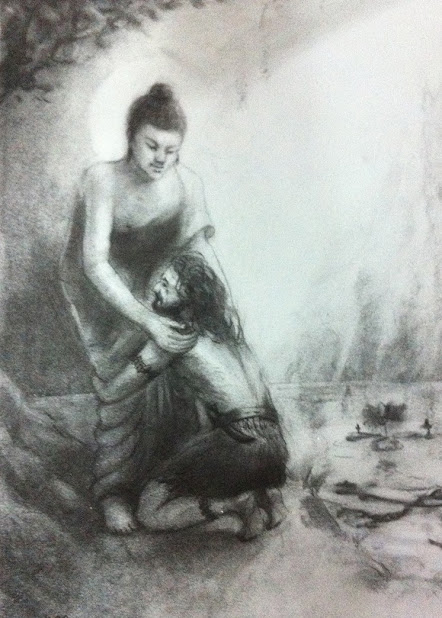
    Once there lived a householder, whose wife was barren; later he took another wife. The feud started when the elder wife caused abortion of the other one, who eventually died in child birth. In later existences the two were reborn as a hen and a cat; a doe and a leopardess; and finally as the daughter of a nobleman in Savatthi and an ogress named Kali. The ogress (Kalayakkhini) was in hot pursuit of the lady with the baby, when the latter learned that the Buddha was nearby, giving a religious discourse at the Jetavana monastery. She fled to him and placed her son at his feet for protection. The ogress was stopped at the door by the guardian spirit of the monastery and was refused admission. She was later called in and both the lady and the ogress were reprimanded by the Buddha. The Buddha told them about their past feuds as rival wives of a common husband, as a cat and a hen, and as a doe and a leopardess. They were made to see that hatred could only cause more hatred, and that it could only cease through friendship, understanding and goodwill.

    Then the Buddha spoke in verse as follows:

    Verse 5: Hatred is, indeed, never appeased by hatred in this world. It is appeased only by loving-kindness. This is an ancient law.
    At the end of the discourse, the ogress was established in Sotapatti Fruition and the long-standing feud came to an end.

    Dhammapada Verse 5
    Kalayakkhini Vatthu

    Na hi verena verani
    sammantidha kudacanam
    averena ca sammanti
    esa dhammo sanantano.

    Source: Tipitaka


  9. A special heart that listens

    Comment

    To be kind is more important than to be right. Many times, what people need is not a brilliant mind that speaks but a special heart that listens. ~Unknown

    white flowers 090815


  10. You won’t get hurt

    Comment

    Sometimes the people you’re trying hard to help end up being the first to blame you when something goes wrong. But you won’t get hurt if you’re doing it for God’s sake. ~Terry Mark

    yellow flower and wind 090815


Live & Die for Buddhism

candle

Khmer Tipitaka 1 – 110

 ព្រះត្រៃបិដក

ព្រះត្រៃបិដក ប្រែថា កញ្រ្ចែង ឬ ល្អី​ ៣ សម្រាប់ដាក់ផ្ទុកពាក្យពេចន៍នៃព្រះសម្មាសម្ពុទ្ធ

The Tipitaka or Pali canon, is the collection of primary Pali language texts which form the doctrinal foundation of Theravada Buddhism. The three divisions of the Tipitaka are: Vinaya Pitaka, Sutta Pitaka, Abhidhamma Pitaka.

Maha Ghosananda

Maha Ghosananda

Supreme Patriarch of Cambodian Buddhism (5/23/1913 - 3/12/07). Forever in my heart...

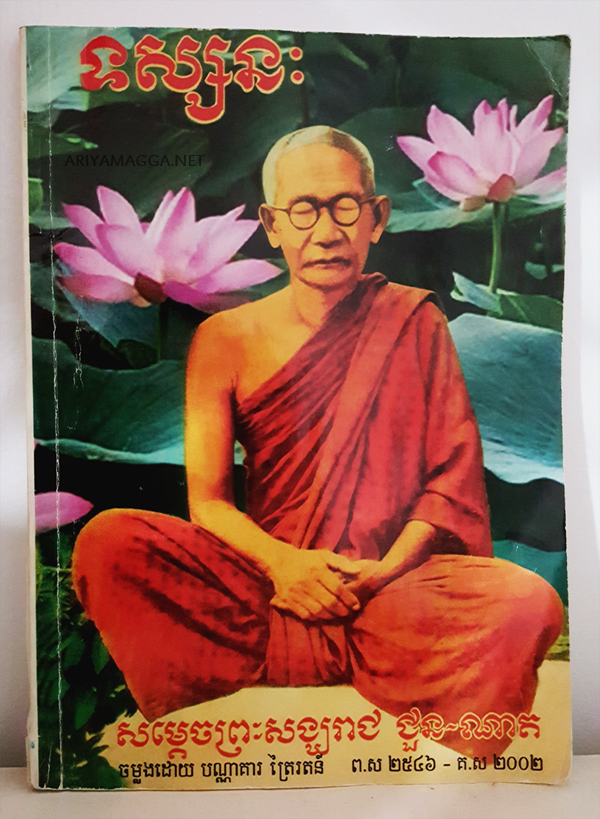
Samdech Chuon Nath

My reflection

វចនានុក្រមសម្តេចសង្ឃ ជួន ណាត
Desktop version

Listen to Khmer literature and Dhamma talk by His Holiness Jotannano Chuon Nath, Supreme Patriarch of Cambodia Buddhism.

Shantidevas’ Bodhisattva vows

My reflection

Should anyone wish to ridicule me and make me an object of jest and scorn why should I possibly care if I have dedicated myself to others?

Let them do as they wish with me so long as it does not harm them. May no one who encounters me ever have an insignificant contact.

Regardless whether those whom I meet respond towards me with anger or faith, may the mere fact of our meeting contribute to the fulfilment of their wishes.

May the slander, harm and all forms of abuse that anyone should direct towards me act as a cause of their enlightenment.

As a solid rock is not shaken by the wind, so the wise are not shaken by blame and praise. As a deep lake is clear and calm, so the wise become tranquil after they listened to the truth…

Good people walk on regardless of what happens to them. Good people do not babble on about their desires. Whether touched by happiness or by sorrow, the wise never appear elated or depressed. ~The Dhammapada

Hermit of Tbeng Mountain

Sachjang Phnom Tbeng សច្ចំ​​ ភ្នំត្បែង is a very long and interesting story written by Mr. Chhea Sokoan, read by Jendhamuni Sos. You can click on the links below to listen. Part 1 | Part 2

Beauty in nature

A beautiful object has no intrinsic quality that is good for the mind, nor an ugly object any intrinsic power to harm it. Beautiful and ugly are just projections of the mind. The ability to cause happiness or suffering is not a property of the outer object itself. For example, the sight of a particular individual can cause happiness to one person and suffering to another. It is the mind that attributes such qualities to the perceived object. — Dilgo Khyentse Rinpoche

Nature is loved by what is best in us. The sky, the mountain, the tree, the animal, give us a delight in and for themselves. — Ralph Waldo Emerson


Our journey for peace
begins today and every day.
Each step is a prayer,
Each step is a meditation,
Each step will build a bridge.

—​​​ Maha Ghosananda