1. Buddhist Culture, The Cultured Buddhist
    Comment

    buddhateaching

    By Robert Bogoda

    BUDDHIST CULTURE

    For over twenty-five centuries, Buddhist ideas and ideals have guided and influenced the lives and thoughts of countless human beings in many parts of the world. As lay Buddhists, our own experiences and discoveries in life are not enough to give a true perspective on life. To bring ourselves closer to the ideal of a well-balanced man or woman, we need to acquire, at least in outline, what is called a cultural grounding in the Buddha-Dhamma.

    Culture reveals to ourselves and others what we are. It gives expression to our nature in our manner of living and of thinking, in art, religion, ethical aspirations, and knowledge. Broadly speaking, it represents our ends in contrast to means.

    A cultured man has grown, for culture comes from a word meaning “to grow.” In Buddhism the arahant is the perfect embodiment of culture. He has grown to the apex, to the highest possible limit, of human evolution. He has emptied himself of all selfishness — all greed, hatred, and delusion — and embodies flawless purity and selfless compassionate service. Things of the world do not tempt him, for he is free from the bondage of selfishness and passions. He makes no compromises for the sake of power, individual or collective.

    In this world some are born great while others have greatness thrust on them. But in the Buddha-Dhamma one becomes great only to the extent that one has progressed in ethical discipline and mental culture, and thereby freed the mind of self and all that it implies. True greatness, then, is proportional to one’s success in unfolding the perfection dormant in human nature. Continue reading


  2. Our ego-fixation

    Comment

    Teaching What is Really Useful
    Parents do seek to create a wonderful world for their children, but even more splendid is to give them explanations that increase their intelligence and ability to discriminate right from wrong. In Buddhism, we speak of what is to be given up and what is to be taken up. According to the Dharma, what is most difficult to give up, even if we try very hard, is our ego-fixation, this grasping on to “I”. Therefore, we are guiding our children in the wrong direction if we encourage their self-centeredness. We should teach them what is really useful. ~ 17th Karmapa

    butterflies and red roses 090415


  3. What no one does

    Comment

    If you want to be average, do what others do. If you want to be awesome, do what no one does. ~Alexander Den Heijer

  4. No one can see

    Comment

    A clever person solves a problem no one can solve. A genius solves a problem no one can see. ~Alexander Den Heijer

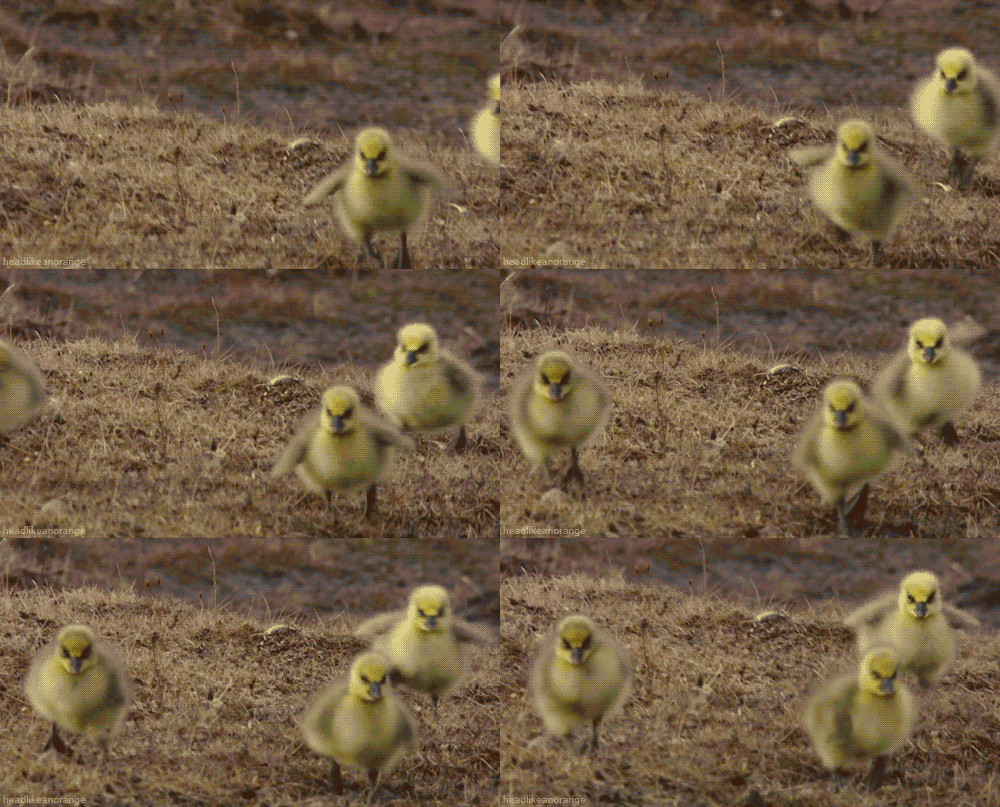
  5. Baby ducks running

    Comment

    All ducks have highly waterproof feathers as a result of an intricate feather structure and a waxy coating that is spread on each feather while preening. A duck’s feathers are so waterproof that even when the duck dives underwater, its downy underlayer of feathers will stay completely dry.

    Ducks are precocial, which means that ducklings are covered with down and able to walk and leave the nest just a few hours after hatching.

    A hen will lead her ducklings up to a half mile or more over land after hatching in order to find a suitable water source for swimming and feeding.

    By Melissa Mayntz, Birding/Wild Birds Expert

  6. Forgive and let go peacefully

    Comment

    Forgive and let go peacefully. And, all your worries will disappear gracefully. Never feel so let down on yourself… ~Unknown


  7. A beautiful life

    Comment

    A beautiful life does not just happen. It is built daily with humility, kindness, sacrifice, forgiveness and unconditional love. ~Unknown

  8. The Sacred Lotus

    Comment

    The Sacred Lotus flower grows in the deep mud, far away from the sun. But, sooner or later, it reaches the light becoming the most beautiful flower ever. The Sacred Lotus flower is regarded in many different cultures, especially in eastern religions, as a symbol of purity, enlightenment, self-regeneration and rebirth. Its characteristics are a perfect analogy for the human condition: even when its roots are in the dirtiest waters, the Lotus produces the most beautiful flower.

    Lotus and Jendhamuni

  9. Dog and duck

    Comment

    In fact, dogs who were wrongly accused of snack-snatching often looked more guilty than dogs who had really eaten the treat. Source: LiveScience


Live & Die for Buddhism

candle

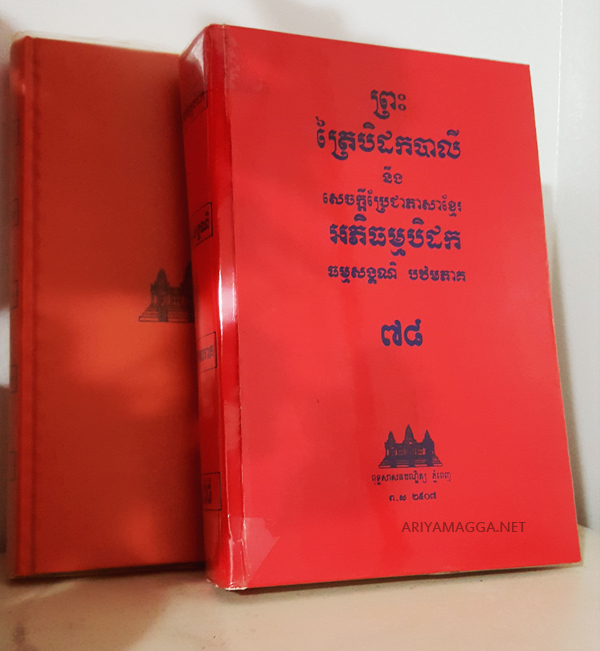
Khmer Tipitaka 1 – 110

 ព្រះត្រៃបិដក

ព្រះត្រៃបិដក ប្រែថា កញ្រ្ចែង ឬ ល្អី​ ៣ សម្រាប់ដាក់ផ្ទុកពាក្យពេចន៍នៃព្រះសម្មាសម្ពុទ្ធ

The Tipitaka or Pali canon, is the collection of primary Pali language texts which form the doctrinal foundation of Theravada Buddhism. The three divisions of the Tipitaka are: Vinaya Pitaka, Sutta Pitaka, Abhidhamma Pitaka.

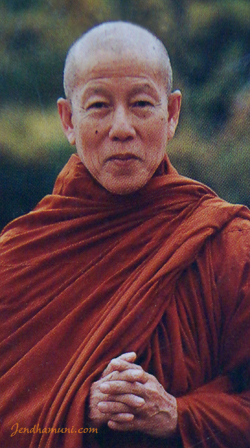
Maha Ghosananda

Maha Ghosananda

Supreme Patriarch of Cambodian Buddhism (5/23/1913 - 3/12/07). Forever in my heart...

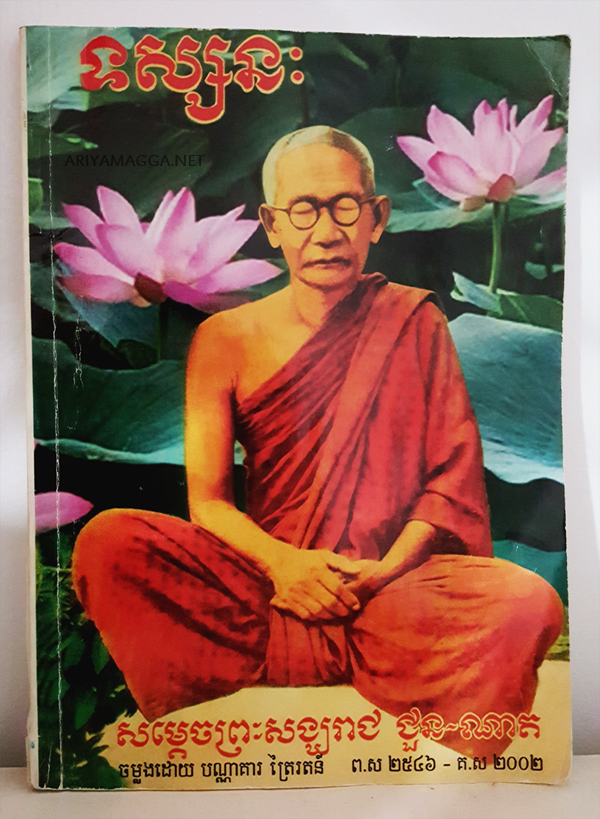
Samdech Chuon Nath

My reflection

វចនានុក្រមសម្តេចសង្ឃ ជួន ណាត
Desktop version

Listen to Khmer literature and Dhamma talk by His Holiness Jotannano Chuon Nath, Supreme Patriarch of Cambodia Buddhism.

Shantidevas’ Bodhisattva vows

My reflection

Should anyone wish to ridicule me and make me an object of jest and scorn why should I possibly care if I have dedicated myself to others?

Let them do as they wish with me so long as it does not harm them. May no one who encounters me ever have an insignificant contact.

Regardless whether those whom I meet respond towards me with anger or faith, may the mere fact of our meeting contribute to the fulfilment of their wishes.

May the slander, harm and all forms of abuse that anyone should direct towards me act as a cause of their enlightenment.

As a solid rock is not shaken by the wind, so the wise are not shaken by blame and praise. As a deep lake is clear and calm, so the wise become tranquil after they listened to the truth…

Good people walk on regardless of what happens to them. Good people do not babble on about their desires. Whether touched by happiness or by sorrow, the wise never appear elated or depressed. ~The Dhammapada

Hermit of Tbeng Mountain

Sachjang Phnom Tbeng សច្ចំ​​ ភ្នំត្បែង is a very long and interesting story written by Mr. Chhea Sokoan, read by Jendhamuni Sos. You can click on the links below to listen. Part 1 | Part 2

Beauty in nature

A beautiful object has no intrinsic quality that is good for the mind, nor an ugly object any intrinsic power to harm it. Beautiful and ugly are just projections of the mind. The ability to cause happiness or suffering is not a property of the outer object itself. For example, the sight of a particular individual can cause happiness to one person and suffering to another. It is the mind that attributes such qualities to the perceived object. — Dilgo Khyentse Rinpoche

Nature is loved by what is best in us. The sky, the mountain, the tree, the animal, give us a delight in and for themselves. — Ralph Waldo Emerson


Our journey for peace
begins today and every day.
Each step is a prayer,
Each step is a meditation,
Each step will build a bridge.

—​​​ Maha Ghosananda