The best time to take a deep breath
Realize that not all movement is progress. When stress and tension and chaos surround you, pause for a moment and relax. The best time to take a deep breath is when you don’t have time for it. ~Melchor Lim

Realize that not all movement is progress. When stress and tension and chaos surround you, pause for a moment and relax. The best time to take a deep breath is when you don’t have time for it. ~Melchor Lim

What am I going to do?
From now on, what am I going to do? Instead of cherishing myself I’m going to cherish only other sentient beings and with my three doors of body, speech, and mind I am going to work to bring the greatest benefit to other sentient beings. Decide that this is what you are going to do this year, this month, and especially today. ~ Lama Zopa Rinpoche
Worrying and being depressed won’t take you anywhere far; it simply adds weights on your shoulder. ~Wazim Shaw

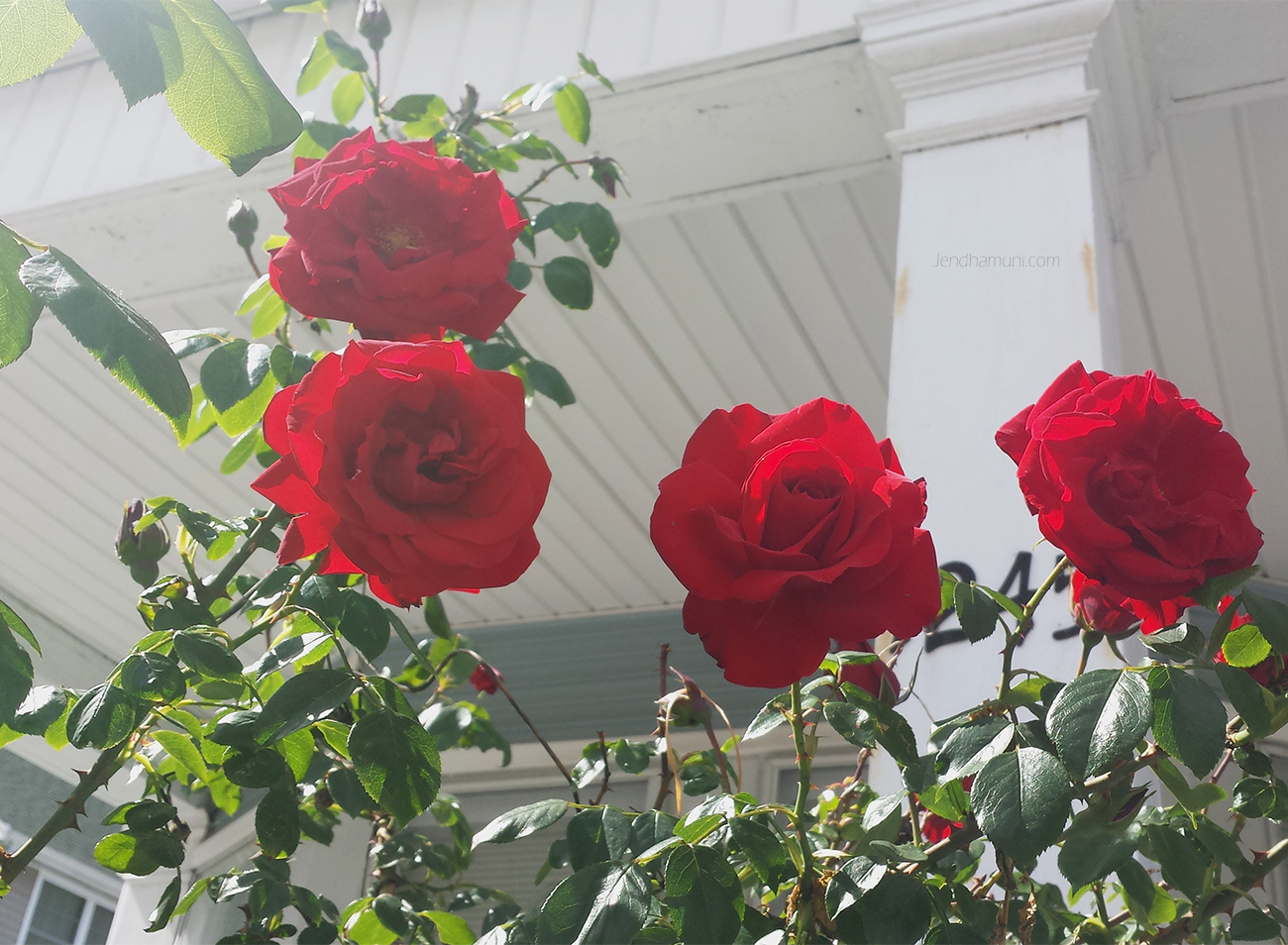
Medicinal Uses of Rose Flower
The medicinal uses and health benefits of a rose (gulab flower) are many.
♥ Rose water is an effective astringent that reduces swelling of capillaries beneath the skin.
♥ Rose petal tea is efficient in cleansing the gall bladder and liver, and it helps improve bile secretion. Rose petals are dried and crushed to make tea.
♥ Rose tea also helps in alleviating mild sore throats and bronchial infections. The tea cools the body and reduces fever-related rashes.
♥ Rose petals are an important ingredient in eye washes as well, as it is antiseptic in nature.
♥ Rose water benefits include nourishing the scalp and improving hair growth. It is medicinally used as an antibacterial, antiseptic, and anti-inflammatory product. It is also used to treat dry scaly skin, dermatitis, and eczema.
♥ Rose essential oil is used along with carrier oils such as almond or grape fruit to treat various illnesses like hemorrhage, liver problems, nausea, fatigue, ulcers, asthma, dehydration, and bacterial infections of the stomach, colon, and urinary tract.
♥ Rose leaves are used in preparing rose water from the Persian variety. Rose water prepared from rose leaves brings relief from constipation, clears blood, and soothes the mind. In addition, it is used on the treatment of measles and chicken pox.
There are no known side effects related to the use of rose water or rose oil; nevertheless, it is best to consult when using any product as a means of treatment.
Source: Diet Health Club
Link source

■ The iron, calcium and other minerals in eggplant supply the essential nutrients required by the body. All this, while relishing a highly flavorful veggie, is a good deal, indeed! Stuff, grill, bake, roast, stew your eggplants—they’re delicious in most avatars!
■ Eggplants contain certain essential phyto nutrients which improve blood circulation and nourish the brain. But remember—these nutrients are concentrated in the skin of the eggplant, so don’t char and throw it away.
■ They provide fiber, which protects the digestive tract. In fact, regular intake of eggplants can protect you from colon cancer.
■ Eggplant is low in calories, with just 35 per cup. It contains no fat and its high fiber content can help you feel full.
■ For centuries, eggplants have been used for controlling and managing diabetes. Modern research validates this role, thanks to the high fiber and low soluble carbohydrate content of the eggplant.
■ Eggplants have a role in heart care, too. Research studies show they can lower ‘bad’ cholesterol. But you must cook them the right way to get these benefits. Fried eggplant soaks up a lot of fat, making it harmful and heavy. Instead, bake it at 400 degrees, which brings out glorious flavor and gives you all the goodness an eggplant holds!
■ The heart-healthy benefits of eggplant don’t end with limiting cholesterol. Eggplants are high in bioflavonoids, which are known to control high blood pressure and relieve stress.
■ Regular consumption of eggplant helps prevent blood clots—thanks again to Vitamin K and bioflavonoids, which strengthen capillaries.
Source: Care2
Link source
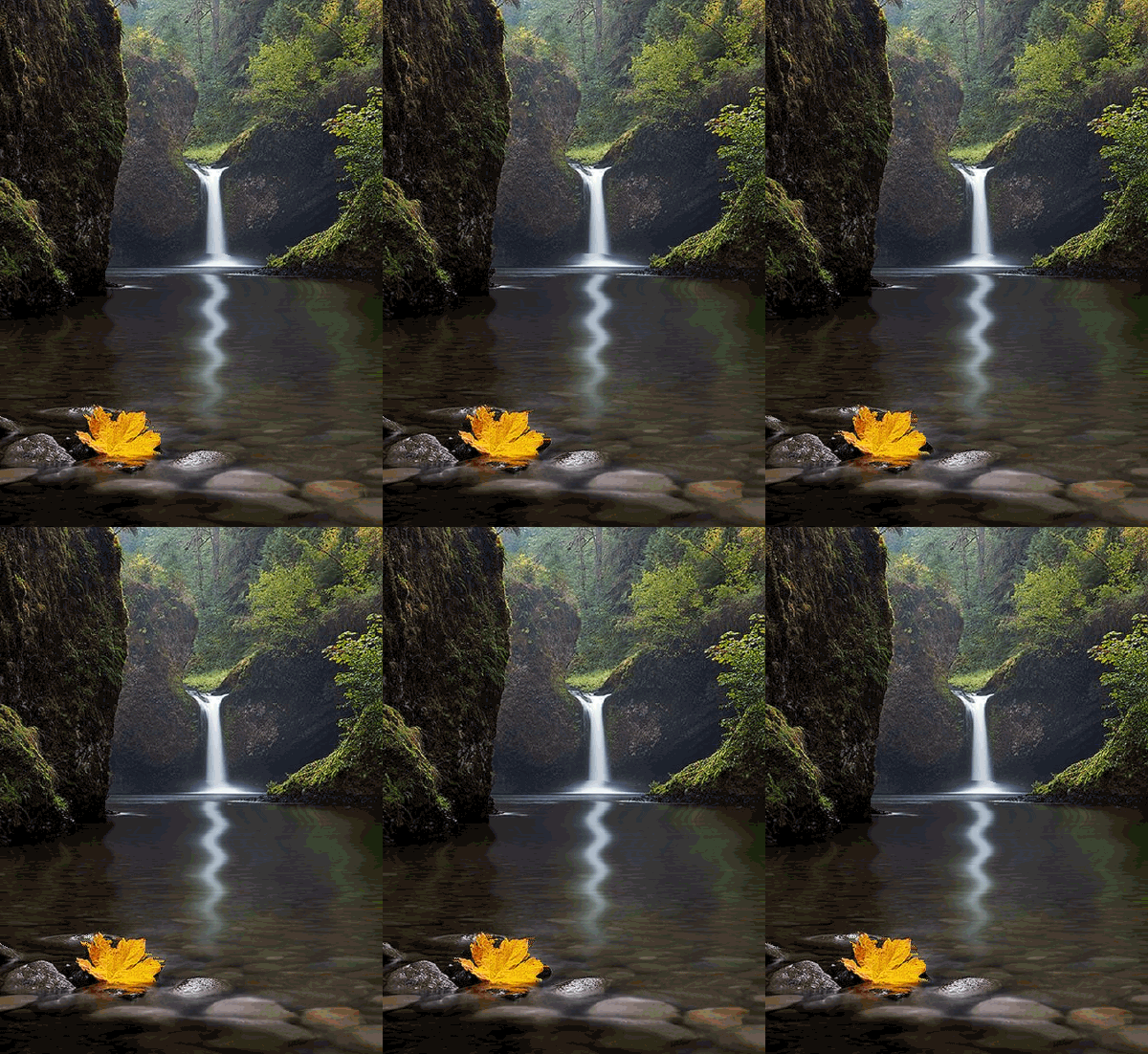
Have you ever seen flowing water? Have you ever seen still water? If your mind is peaceful, it’s like still, flowing water. Have you ever seen still, flowing water? There! You’ve only seen flowing water and still water. You’ve never seen still, flowing water. Right there, right where your thinking can’t take you: where the mind is still but can develop discernment. When you look at your mind, it’ll be like flowing water, and yet still. It looks like it’s still, it looks like it’s flowing, so it’s called still, flowing water. That’s what it’s like. That’s where discernment can arise. ~Ajahn Chah
Whatever there is in the mind: If our reasons aren’t yet good enough, we can’t let it go. In other words, there are two sides: this side here and that side there. People tend to walk along this side or along that side. There’s hardly anybody who walks along the middle. It’s a lonely path. When there’s love, we walk along the path of love. When there’s hatred, we walk along the path of hatred. If we try to walk by letting go of love and hatred, it’s a lonely path. We aren’t willing to follow it. ~Ajahn Chah
I will greet this day with love in my heart. And how will I do this? Henceforth will I look on all things with love and I will be born again. I will love the sun for it warms my bones; yet I will love the rain for it cleanses my spirit. I will love the light for it shows me the way; yet I will love the darkness for it shows me the stars. I will welcome happiness for it enlarges my heart; yet I will endure sadness for it opens my soul. I will acknowledge rewards for they are my due; yet I will welcome obstacles for they are my challenge. ~Og Mandino
We as Buddhists believe that benefiting others is an act of kindness, and the first thing that comes to our mind, as act of kindness, is giving alms to the poor. That’s not the only way, there are many ways to be kind. Taking care of the environment and nature is also a very important act of kindness that can benefit many humans and animals alike in the future. ~17th Karmapa