1. Impermanence is everywhere

    Comment

    Impermanence is everywhere, yet I still think things will last.
    I have reached the gates of old age, yet I still pretend I am young.
    Bless me and misguided beings like me,
    That we may truly understand impermanence. ~ Patrul Rinpoche

  2. The Story of a Rich Householder

    Comment

    Verse 212: Affection begets sorrow, affection begets fear. For him who is free from affection there is no sorrow; how can there be fear for him?

    The Story of a Rich Householder

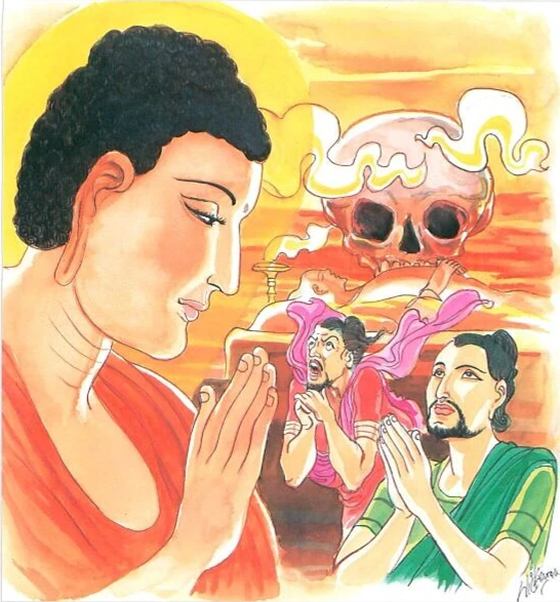
    While residing at the Jetavana monastery, the Buddha uttered Verse (212) of this book, with reference to a rich householder who had lost his son.

    Once, a householder was feeling very distressed over the death of his son. He often went to the cemetery and wept there. Early one morning, the Buddha saw the rich householder in his vision. So, taking a bhikkhu along with him, the Buddha went to the house of that man. There, he asked the man why he was feeling so unhappy. Then, the man related to the Buddha about the death of his son and about the pain and sorrow he was suffering. To him the Buddha said, “My disciple, death does not occur only in one place. All beings that are born must die one day; indeed, life ends in death. You must ever be mindful of the fact that life ends in death. Do not imagine that only your beloved son is subject to death. Do not be so distressed or be so shaken. Sorrow and fear arise out of affection.” Continue reading

  3. The Ultimate Six Perfections

    Comment


    Giving up all defilements is generosity;
    Being free from mental effort is discipline;
    Being free from defining characteristics is patience;
    Not making distinctions is diligence;
    Nonabiding is meditation;
    Being free from mental fabrication is insight. ~ Maitripa

  4. Observe your mind all the time with vigilance and lucidity

    Comment

    Whatever you do — walking, eating, sitting, and so forth — abandon laziness, indolence, apathy, negligence, and distraction. Master the habitual patterns that make you resist any change in your body, speech, and mind, even in the most insignificant activities. Once you have embarked on the path of liberation, it is inappropriate to behave in an ordinary way: observe your mind all the time with vigilance and lucidity. If you have committed a negative act, regret it and promise never to do it again. Be glad if you have committed none. ~ 4th Shechen Gyaltsab

  5. The Story of Three Ascetics

    Comment

    Verse 209: He who does what should not be done and fails to do what should be done, who forsakes the noble aim of life (i.e., Morality, Concentration and Insight) and grasps at sensual pleasure, covets the benefits gained by those who exert themselves (in meditation).

    Verse 210: Do not associate with those who are dear, and never with those who are not dear to you; not seeing the dear ones is painful, and seeing those who are not dear to you is also painful.

    Verse 211: Therefore, one should hold nothing dear; separation from the loved ones is painful; there are no fetters for those who do not love or hate.

    The Story of Three Ascetics

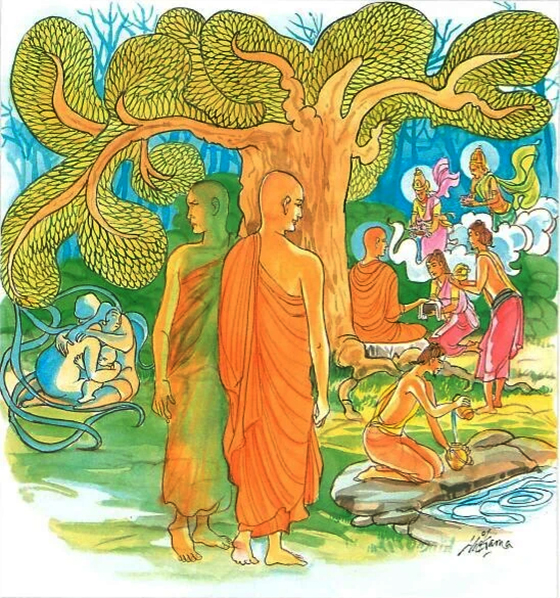
    While residing at the Jetavana monastery, the Buddha uttered Verses (209), (210) and (211) of this book, with reference to a trio, consisting of a father, a mother and a son.

    Once in Savatthi, the only son of a family first became a bhikkhu; the father followed suit and finally, the mother also became a bhikkhuni. They were so attached to one another that they rarely stayed apart. The family stayed in the monastery as if they were in their own house, talking and eating together, thus making themselves a nuisance to others. Other bhikkhus reported their behaviour to the Buddha and he called them to his presence, and said to them, “Once you have joined the Order, you should no longer stay together like a family. Not seeing those who are dear, and seeing those who are not dear to one, are both painful; so you should not hold any being or anything dear to you”. Continue reading

  6. As you grow older, you will discover…

    2

    At my sister’s garden on December 6, 2025

    As you grow older, you will discover that you have two hands: one for helping yourself, the other for helping others. ~ Sam Levenson

  7. The Story of Sakka

    Comment

    Verse 206: It is good to see the Noble Ones (ariyas); to live with them is always a pleasure; not seeing fools is also always a pleasure.

    Verse 207: He who walks in the company of fools has to grieve for a long time. Association with fools is ever painful, as living with an enemy; association with the wise is a pleasure, as living with relatives.

    Verse 208: Therefore one should follow a resolute, intelligent, learned, persevering and dutiful ariya; follow such a virtuous and wise man, as the moon follows the path of the stars.

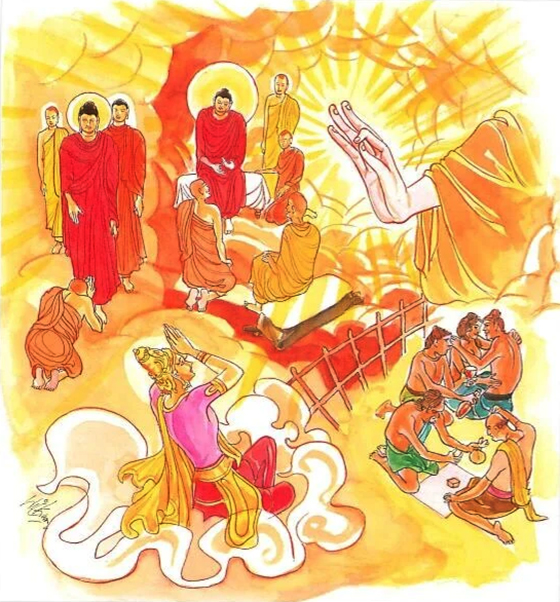
    The Story of Sakka

    While residing at the village of Veluva, the Buddha uttered Verses (206), (207) and (208) of this book, with reference to Sakka, king of the devas.

    About ten months before the Buddha realized parinibbana, the Buddha was spending the vassa at Veluva village near Vesali. While he was staying there, he suffered from dysentery. When Sakka learned that the Buddha was ailing, he came to Veluva village so that he could personally nurse the Buddha during his sickness. The Buddha told him not to worry about his health as there were many bhikkhus near him; but Sakka did not listen to him and kept on nursing the Buddha until he recovered.

    The bhikkhus were surprised and awe-struck to find Sakka himself attending on the Buddha. When the Buddha heard their remarks he said, “Bhikkhus! There is nothing surprising about Sakka’s love and devotion to me. Once, when the former Sakka was growing old and was about to pass away, he came to see me. Then, I expounded the Dhamma to him. While listening to the Dhamma, he attained Sotapatti Fruition; then he passed away and was reborn as the present Sakka. All these happened to him simply because he listened to the Dhamma expounded by me. Indeed, bhikkhus, it is good to see the Noble Ones (ariyas); it is a pleasure to live with them; to live with fools is, indeed, painful.” Continue reading

  8. Even though you’re not here

    2

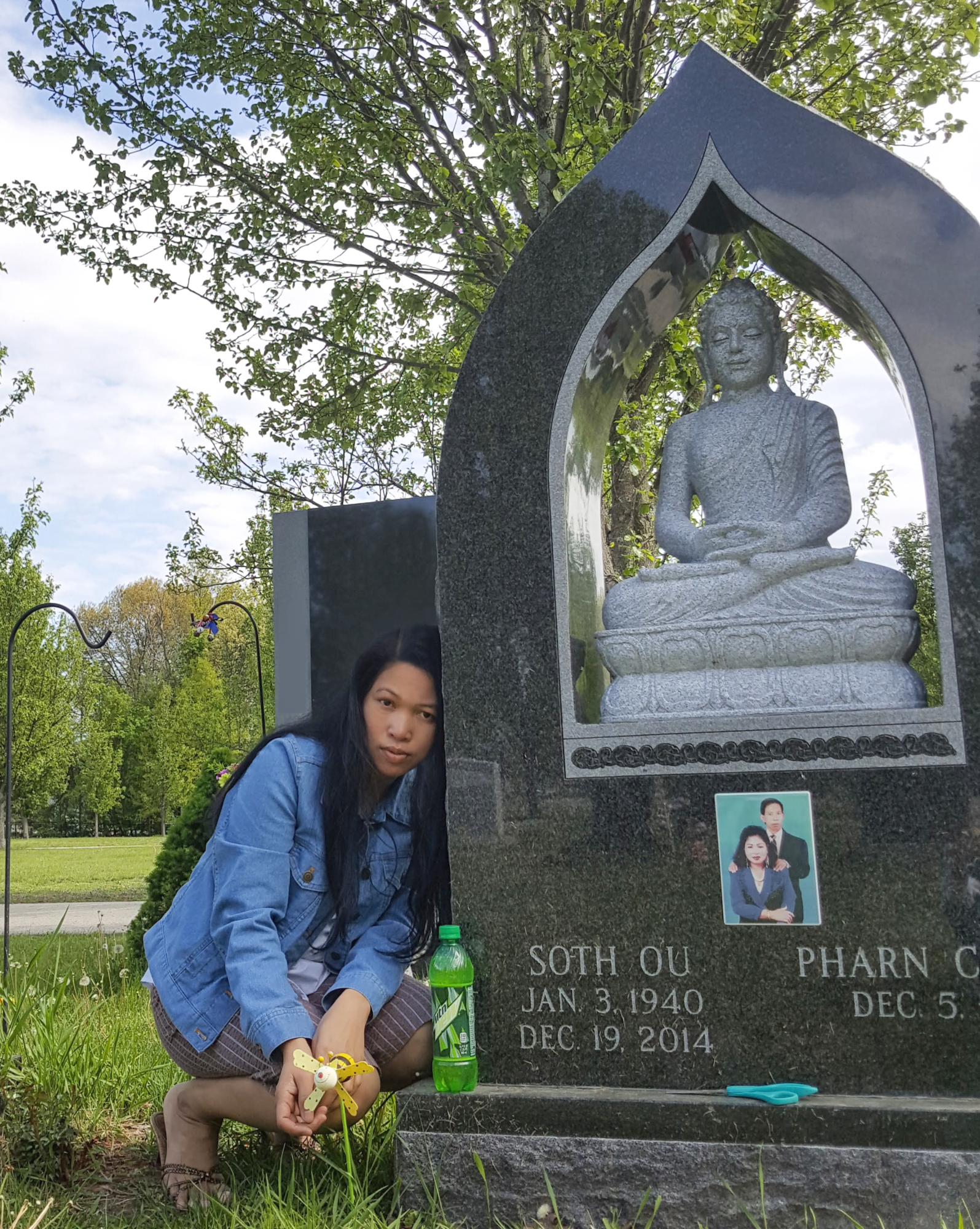
    Even though you’re not here, I carry you in my heart every single day. Life is not the same without you, but your memory gives me strength. – dadblog


  9. Your sunrise and the wind

    4

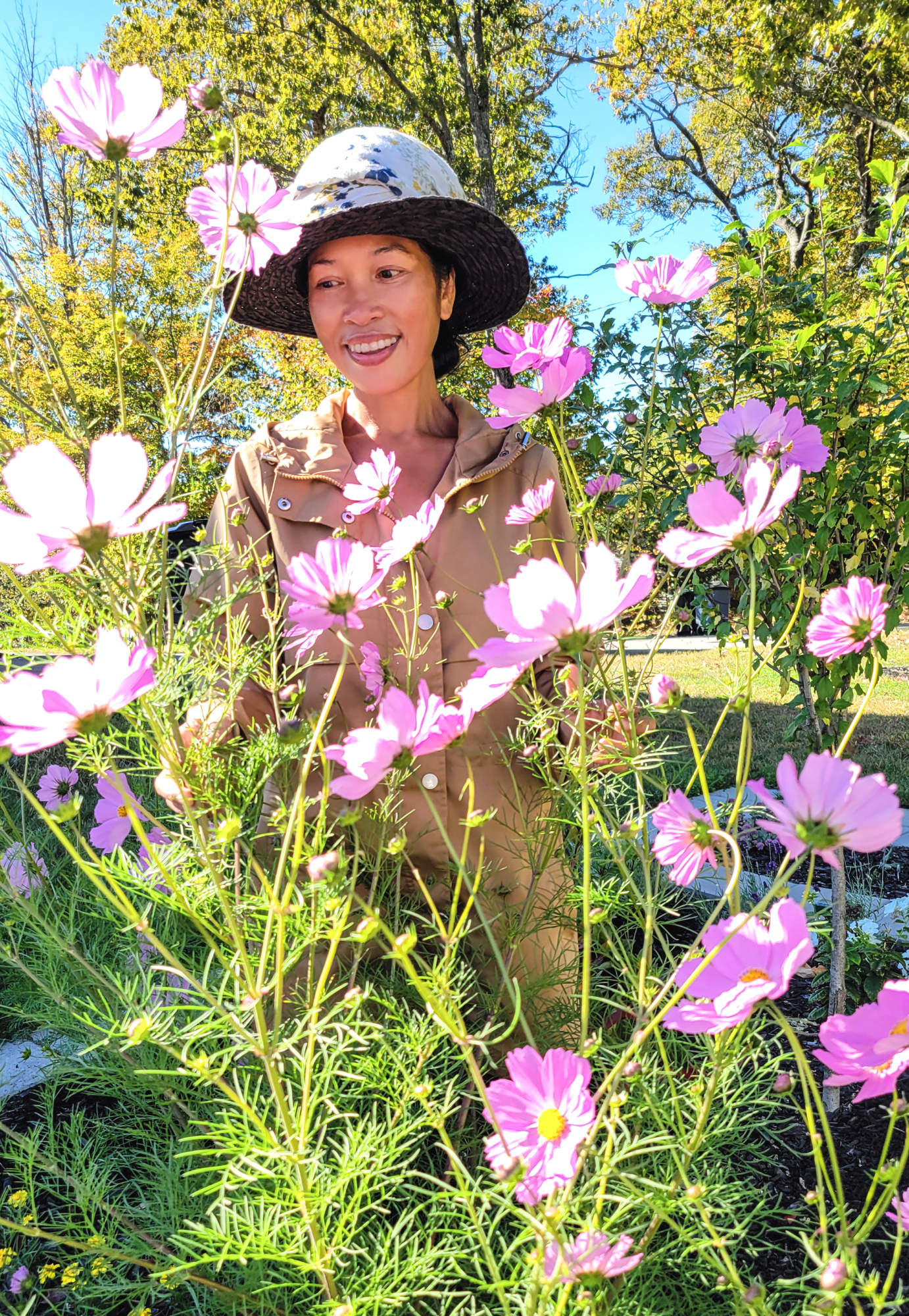
    Jendhamuni in the garden on October 2, 2025.

    What is the good of your stars and trees, your sunrise and the wind, if they do not enter into our daily lives? – E.M. Forster
    My wish is to stay always like this, living quietly in a corner of nature. – Claude Monet

  10. Examine your actions very closely

    4

    It is important to examine your actions very closely. Particularly with minor negative actions, we do not see what the results will be immediately, but it is certain that those actions will mature and that we will have to experience the result. Enlightened beings can see this very clearly. For them even the most minute negative action is like a speck of dust in one’s eye – one has to get rid of it immediately. We ordinary beings, on the other hand, are unable to see the consequences of our actions. We are unaware of our minor deeds and lose track of them like an arrow shot into a thick forest. We act without understanding where our actions will lead. But if we had the vision of an enlightened being, we would see that even the minutest action has a result. ~ Dilgo Khyentse Rinpoche


Live & Die for Buddhism

candle

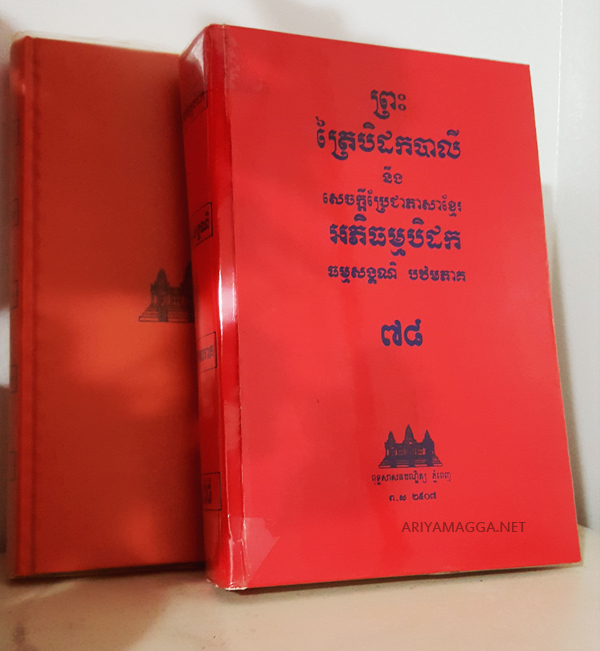
Khmer Tipitaka 1 – 110

 ព្រះត្រៃបិដក

ព្រះត្រៃបិដក ប្រែថា កញ្រ្ចែង ឬ ល្អី​ ៣ សម្រាប់ដាក់ផ្ទុកពាក្យពេចន៍នៃព្រះសម្មាសម្ពុទ្ធ

The Tipitaka or Pali canon, is the collection of primary Pali language texts which form the doctrinal foundation of Theravada Buddhism. The three divisions of the Tipitaka are: Vinaya Pitaka, Sutta Pitaka, Abhidhamma Pitaka.

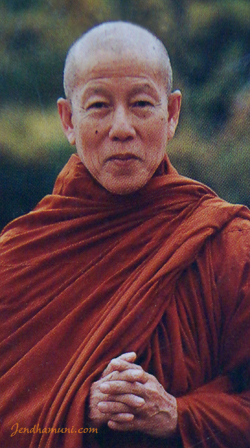
Maha Ghosananda

Maha Ghosananda

Supreme Patriarch of Cambodian Buddhism (5/23/1913 - 3/12/07). Forever in my heart...

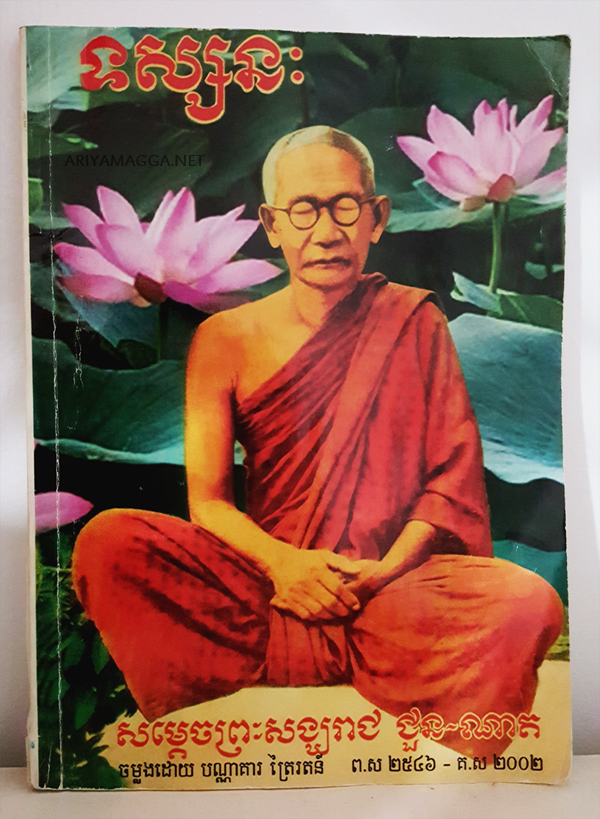
Samdech Chuon Nath

My reflection

វចនានុក្រមសម្តេចសង្ឃ ជួន ណាត
Desktop version

Listen to Khmer literature and Dhamma talk by His Holiness Jotannano Chuon Nath, Supreme Patriarch of Cambodia Buddhism.

Shantidevas’ Bodhisattva vows

My reflection

Should anyone wish to ridicule me and make me an object of jest and scorn why should I possibly care if I have dedicated myself to others?

Let them do as they wish with me so long as it does not harm them. May no one who encounters me ever have an insignificant contact.

Regardless whether those whom I meet respond towards me with anger or faith, may the mere fact of our meeting contribute to the fulfilment of their wishes.

May the slander, harm and all forms of abuse that anyone should direct towards me act as a cause of their enlightenment.

As a solid rock is not shaken by the wind, so the wise are not shaken by blame and praise. As a deep lake is clear and calm, so the wise become tranquil after they listened to the truth…

Good people walk on regardless of what happens to them. Good people do not babble on about their desires. Whether touched by happiness or by sorrow, the wise never appear elated or depressed. ~The Dhammapada

Hermit of Tbeng Mountain

Sachjang Phnom Tbeng សច្ចំ​​ ភ្នំត្បែង is a very long and interesting story written by Mr. Chhea Sokoan, read by Jendhamuni Sos. You can click on the links below to listen. Part 1 | Part 2

Beauty in nature

A beautiful object has no intrinsic quality that is good for the mind, nor an ugly object any intrinsic power to harm it. Beautiful and ugly are just projections of the mind. The ability to cause happiness or suffering is not a property of the outer object itself. For example, the sight of a particular individual can cause happiness to one person and suffering to another. It is the mind that attributes such qualities to the perceived object. — Dilgo Khyentse Rinpoche

Nature is loved by what is best in us. The sky, the mountain, the tree, the animal, give us a delight in and for themselves. — Ralph Waldo Emerson


Our journey for peace
begins today and every day.
Each step is a prayer,
Each step is a meditation,
Each step will build a bridge.

—​​​ Maha Ghosananda