1. The path

    Comment

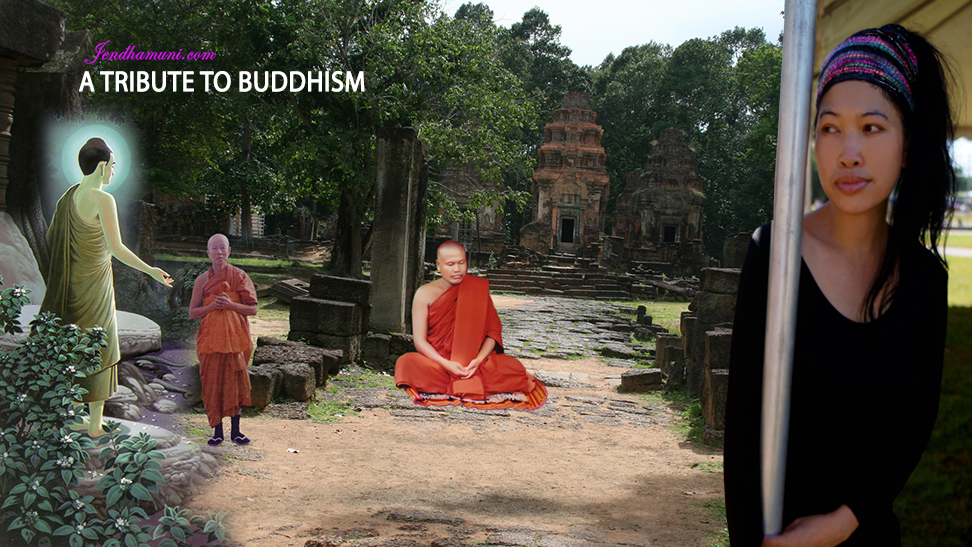
    Walking upon this path you will make an end of suffering. Having discovered how to pull out the thorn of lust, I make known the path. You yourselves must strive; the Buddhas only point the way. Those meditative ones who tread the path are released from the bonds of Mara. All conditioned things are impermanent — when one sees this with wisdom, one turns away from suffering. This is the path to purification. ~Dhammapada

    Upasika Mony081515


  2. The yellow robe

    Comment

    He who wishes to put on the yellow robe without having cleansed himself from sin, who disregards temperance and truth, is unworthy of the yellow robe. ~Dhammapada

    Buddha and monk sitting072715


  3. Joy — sukkha

    Comment
    Photo credit: Randy Neufeldt

    Photo credit: Randy Neufeldt


    Joy, the Pali word sukkha (Sanskrit su-kha) is usually translated as happiness. As the opposite of duhkha, however, it connotes the end of all suffering, a state of being that is not subject to the ups and downs of change – that is, abiding joy. It would be difficult to find a more thoroughly researched definition of joy than the Buddha’s. If we can trust that at least the outline of truth remains in the legends of his life, then his questionings just before going forth to the Four Noble Sights were chiefly concerned with the search for absolute joy. What anyone could want of worldly happiness, Prince Siddhartha surely had, with the promise of much more. But the young prince scrutinized the content of worldly happiness much more closely than the rest of us, and his conclusion was that what people called joy was a house of cards perched precariously on certain preconditions. When these preconditions are fulfilled, the pleasure we feel lasts but a moment, for the nature of human experience is to change. And when they are not fulfilled, there is longing and a frustratingly elusive sense of loss; we grasp for what we do not have and nurse the gnawing desire to have it again. To try to hold on to anything – a thing, a person, an event, a position – merely exposes us to its loss. Anything that changes, the Buddha concluded, anything in our experience that consists of or is conditioned by component sensations – the Buddha’s word was samskaras – produces sorrow, not joy. Experience promises happiness, but it delivers only.

    ~Anonymous, The Dhammapada


  4. A Huge Lump of Gold (Moderation)

    Comment

    Buddha in heaven 081515

    Once upon a time there was a rich village. The wealthiest of the villagers decided to hide a huge lump of gold to protect it from bandits and robbers. So he buried it in a nearby rice field.

    Many years later, the village was no longer rich, and the rice field was abandoned and unused. A poor farmer decided to plow the field. After some time plowing, it just so happened that his plow struck the long forgotten buried treasure.

    At first he thought it must be a very hard tree root. But when he uncovered it, he saw that it was beautiful shining gold. Since it was daytime he was afraid to try and take it with him. So he covered it up again and waited for nightfall.

    The poor farmer returned in the middle of the night. Again he uncovered the golden treasure. He tried to lift it, but it was far too heavy. He tied ropes around it and tried to drag it. But it was so huge he couldn’t budge it an inch. He became frustrated, thinking he was lucky to find a treasure, and unlucky to not be able to take it with him. He even tried kicking the huge lump of gold. But again it wouldn’t budge an inch!

    Then he sat down and began to consider the situation. He decided the only thing to do was to break the lump of gold into four smaller lumps. Then he could carry home one piece at a time.

    He thought, “One lump I will use for ordinary day-to-day living. The second lump I will save for a rainy day. The third lump I will invest in my farming business. And I will gain merit with the fourth lump by giving it to the poor and needy and for other good works.”

    With a calm mind he divided the huge lump of gold into these four smaller lumps. Then it was easy to carry them home on four separate trips.

    Afterwards he lived happily.

    The moral is: “Don’t bite off more than you can chew.”

    Link source

     

  5. Thach Setha and delegation in Italy

    Comment

    Thach Setha, KKC & KYAD delegation in Italy August 14, 2015. លោក ថាច់ សេដ្ឋា និងគណៈប្រតិភូ KKC & KYAD អញ្ជើញទៅធ្វើទស្សនកិច្ច ប្រទេសអ៊ីតាលី នៅថ្ងៃទី១៤ សីហា។ Photos courtesy: Karana Jet, Vann Vannarin

    The specified slider id does not exist.

  6. Using your heart as your compass

    Comment

    By using your heart as your compass, you can see more clearly which direction to go to stop self-defeating behavior. If you take just one mental or emotional habit that really bothers or drains you and apply heart intelligence to it, you’ll see a noticeable difference in your life. ~Doc Childre and Howard Martin, The HeartMath Solution

    moving grass

  7. Pure sincerity

    Comment

    When pure sincerity forms within, it is outwardly realized in other
    people’s hearts. ~Lao Tzu, 6th century B.C.

    pink flowers moving

  8. Heart action

    Comment

    Worry affects the circulation, the heart, the glands, the whole nervous system, and profoundly affects heart action. ~Dr. Charles H. Mayo

    snowing scene


  9. Very happy bird

    Comment

    Birds have feathers, wings, lay eggs and are warm blooded. Scientists believe that birds evolved from theropod dinosaurs. Birds have hollow bones which help them fly. Around 20% of bird species migrate long distances every year. Source: Science Kids

  10. Problems in life

    Comment

    You may have many problems in life but don’t allow the problems to overcome your happiness.  
    ~Anurag Prakash Ray


Live & Die for Buddhism

candle

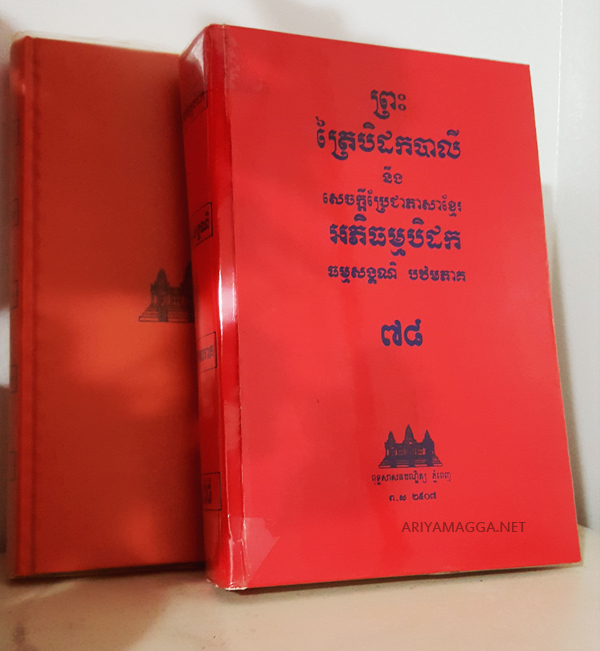
Khmer Tipitaka 1 – 110

 ព្រះត្រៃបិដក

ព្រះត្រៃបិដក ប្រែថា កញ្រ្ចែង ឬ ល្អី​ ៣ សម្រាប់ដាក់ផ្ទុកពាក្យពេចន៍នៃព្រះសម្មាសម្ពុទ្ធ

The Tipitaka or Pali canon, is the collection of primary Pali language texts which form the doctrinal foundation of Theravada Buddhism. The three divisions of the Tipitaka are: Vinaya Pitaka, Sutta Pitaka, Abhidhamma Pitaka.

Maha Ghosananda

Maha Ghosananda

Supreme Patriarch of Cambodian Buddhism (5/23/1913 - 3/12/07). Forever in my heart...

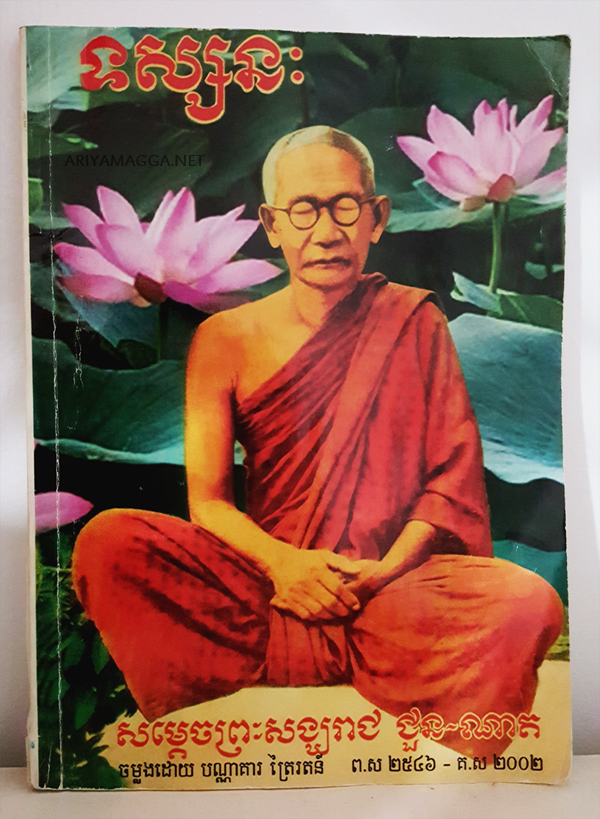
Samdech Chuon Nath

My reflection

វចនានុក្រមសម្តេចសង្ឃ ជួន ណាត
Desktop version

Listen to Khmer literature and Dhamma talk by His Holiness Jotannano Chuon Nath, Supreme Patriarch of Cambodia Buddhism.

Shantidevas’ Bodhisattva vows

My reflection

Should anyone wish to ridicule me and make me an object of jest and scorn why should I possibly care if I have dedicated myself to others?

Let them do as they wish with me so long as it does not harm them. May no one who encounters me ever have an insignificant contact.

Regardless whether those whom I meet respond towards me with anger or faith, may the mere fact of our meeting contribute to the fulfilment of their wishes.

May the slander, harm and all forms of abuse that anyone should direct towards me act as a cause of their enlightenment.

As a solid rock is not shaken by the wind, so the wise are not shaken by blame and praise. As a deep lake is clear and calm, so the wise become tranquil after they listened to the truth…

Good people walk on regardless of what happens to them. Good people do not babble on about their desires. Whether touched by happiness or by sorrow, the wise never appear elated or depressed. ~The Dhammapada

Hermit of Tbeng Mountain

Sachjang Phnom Tbeng សច្ចំ​​ ភ្នំត្បែង is a very long and interesting story written by Mr. Chhea Sokoan, read by Jendhamuni Sos. You can click on the links below to listen. Part 1 | Part 2

Beauty in nature

A beautiful object has no intrinsic quality that is good for the mind, nor an ugly object any intrinsic power to harm it. Beautiful and ugly are just projections of the mind. The ability to cause happiness or suffering is not a property of the outer object itself. For example, the sight of a particular individual can cause happiness to one person and suffering to another. It is the mind that attributes such qualities to the perceived object. — Dilgo Khyentse Rinpoche

Nature is loved by what is best in us. The sky, the mountain, the tree, the animal, give us a delight in and for themselves. — Ralph Waldo Emerson


Our journey for peace
begins today and every day.
Each step is a prayer,
Each step is a meditation,
Each step will build a bridge.

—​​​ Maha Ghosananda