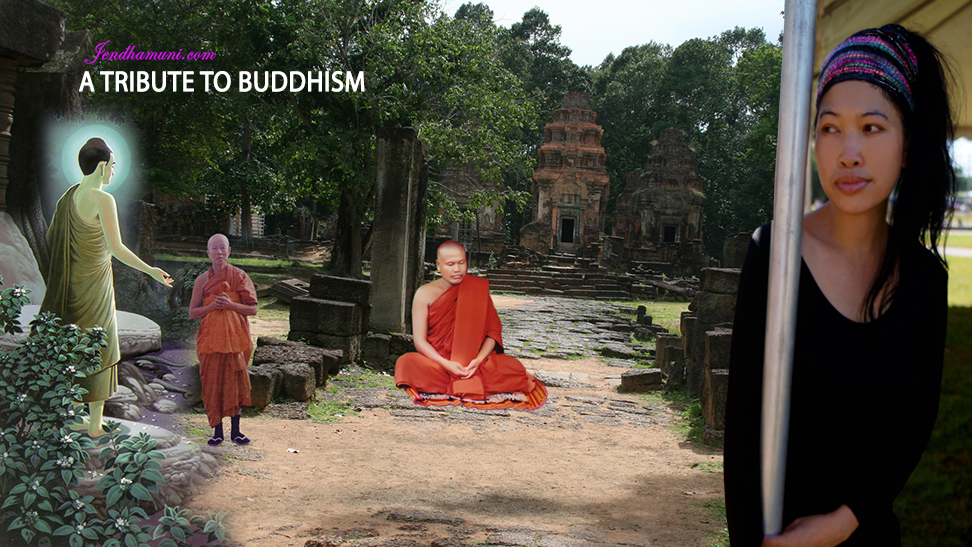
Anger is an acid
Comment
August 4, 2015
Anger is an acid that can do more harm to the vessel in which
it is stored than to anything on which it is poured. ~Mark Twain


Anger is an acid that can do more harm to the vessel in which
it is stored than to anything on which it is poured. ~Mark Twain

Once upon a time there was a caravan leader. He went from country to country selling various goods. His caravans usually had at least 500 bullock carts.
On one of these trips his path led through a very thick forest. Before entering it, he called together all the members of the caravan. He warned them, “My friends, when you go through this forest be careful to avoid the poisonous trees, poisonous fruits, poisonous leaves, poisonous flowers and even poisonous honeycombs.
“Therefore, whatever you have not eaten before – whether a fruit, leaf, flower or anything else – must not be eaten without asking me first.” They all said respectfully, “Yes, sir.”
There was a village in the forest. Just outside the village stood a tree called a ‘whatnot tree’. Its trunk, branches, leaves, flowers and fruits look very similar to a mango tree. Even the colour, shape, smell and taste are almost exactly the same as a mango tree. But unlike a mango, the whatnot fruit is a deadly poison!
Some went ahead of the caravan and came upon the whatnot tree. They were all hungry, and the whatnot fruits looked like delicious ripe mangoes. Some started eating the fruits immediately, without thinking at all. They devoured them before anyone could say a word. Continue reading
When a person is too proud to admit a mistake, they choose
to live with the guilt in their hearts. They think that guilt
is just a feeling and can not harm them. But in reality,
as long as you have not humbled yourself and admitted
your wrong, you will always feel trapped by what you
did in the past. Its memory will haunt you every day
of your life. ~Dr Anil Kr Sinha

To live your full potential, always be ready to encounter some
unseen obstacles. Your attitude of flexibility will react
immediately to mend the way for the right track. If it demands
change in approach, go with confidence. Never be afraid
of a change as you may get something positive. Change
is good, because change means progress.
~Dr Anil Kr Sinha

We all should be wise enough not to make the same mistakes twice.
We should all learn to make amends, forgive and move on.
Regret nothing because this has taught you something valuable.
Do not forget the right way that your mistakes have taught you.
~Dr Anil Kr Sinha

What is Right will always be Right. What is Wrong will always
be Wrong. Yet in order for Truth to prevail, we must be strong.
~Marrett Green

A friend is the best gift we give to ourselves. Friends are those people in our life with whom we do not have any blood relation. It is a relation of love and affection towards each other. A true friend loves us unconditionally, understands us, but never judge us and always tries to support us, help us and give us good advice. ~Anurag Prakash Ray

Being transparent reflects commitment towards justice and truth. It’s speaks
that one stands for moral value. One who stands for moral value commands
respect and honor of all. ~Dr Anil Kr Sinha

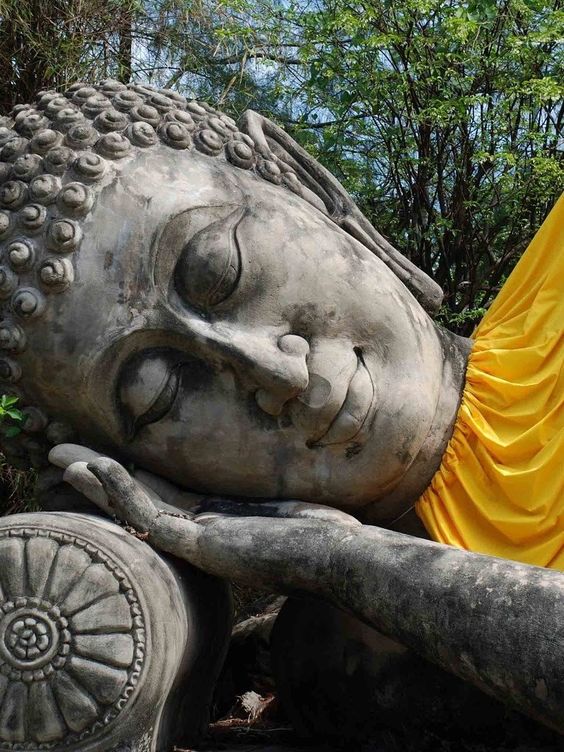
Once upon a time, the Enlightenment Being was born as the son of the King and Queen of Benares. On the day of his naming, 800 fortune tellers were invited to the palace. As presents, they were given whatever they desired to make them happy for the moment. Then they were asked to tell the fortune of the newborn prince. This was so they could find a good name for him.
One of the fortune tellers was an expert in reading the marks on the body. He said, “My lord, this is a being of great merit. He will be king after you.”
The fortune tellers were very clever. They told the king and queen whatever they wanted to hear. They said, “Your son will be skilled in five weapons. He will become famous as the greatest master of all five weapons throughout India.” Based on this, the king and queen named their son ‘Prince Five-Weapons’.
When the prince turned 16, the king decided to send him to college. He said, “Go, my son, to the city of Takkasila. There you will find a world famous teacher. Learn all you can from him. Give him this money as payment.” He gave him a thousand gold coins and sent him on his way.
The prince went to the world famous teacher of Takkasila. He studied very hard and became his best pupil. When the teacher had taught him all he knew, he gave the prince a special graduation award. He gave him five weapons. Then he sent him back to Benares. Continue reading
Our heart, when it’s at normalcy, is like rainwater. It’s clean water, clear, pure, and normal. If we put green coloring in the water, yellow coloring in the water, the color of the water turns to green, turns to yellow.
The same with our mind: When it meets with an object it likes, it’s happy. When it meets with an object it doesn’t like, it gets murky and uncomfortable — just like water that turns green when you add green coloring to it, or yellow when you add yellow coloring. It keeps on changing its color.
“In Simple Terms: 108 Dhamma Similes”, by Ajahn Chah
translated from the Thai by Thanissaro Bhikkhu.
Access to Insight (Legacy Edition), 2 November 2013
Link source



ព្រះត្រៃបិដក ប្រែថា កញ្រ្ចែង ឬ ល្អី ៣ សម្រាប់ដាក់ផ្ទុកពាក្យពេចន៍នៃព្រះសម្មាសម្ពុទ្ធ
The Tipitaka or Pali canon, is the collection of primary Pali language texts which form the doctrinal foundation of Theravada Buddhism. The three divisions of the Tipitaka are: Vinaya Pitaka, Sutta Pitaka, Abhidhamma Pitaka.
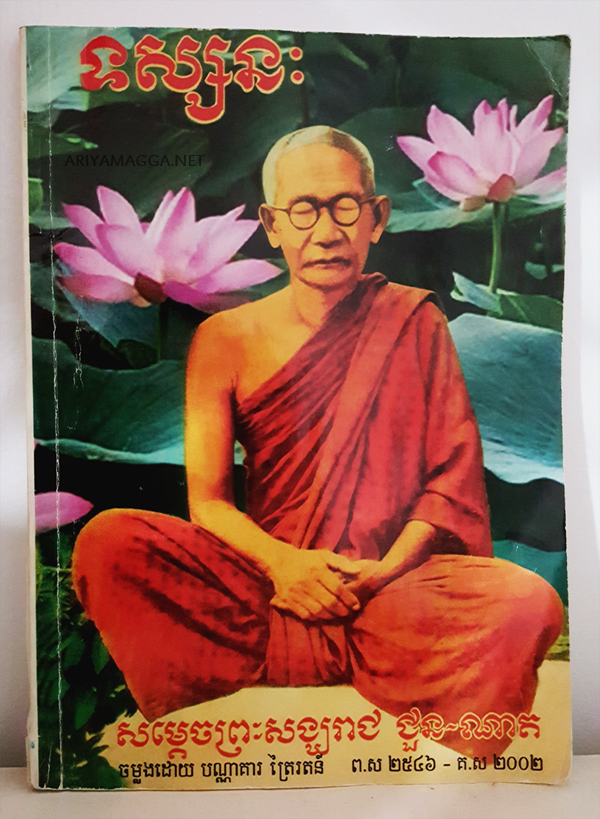
វចនានុក្រមសម្តេចសង្ឃ ជួន ណាត
Desktop version
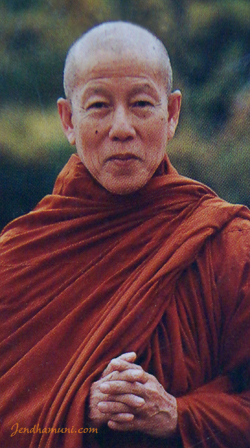
Listen to Khmer literature and Dhamma talk by His Holiness Jotannano Chuon Nath, Supreme Patriarch of Cambodia Buddhism.
Should anyone wish to ridicule me and make me an object of jest and scorn why should I possibly care if I have dedicated myself to others?
Let them do as they wish with me so long as it does not harm them. May no one who encounters me ever have an insignificant contact.
Regardless whether those whom I meet respond towards me with anger or faith, may the mere fact of our meeting contribute to the fulfilment of their wishes.
May the slander, harm and all forms of abuse that anyone should direct towards me act as a cause of their enlightenment.

As a solid rock is not shaken by the wind, so the wise are not shaken by blame and praise. As a deep lake is clear and calm, so the wise become tranquil after they listened to the truth…
Good people walk on regardless of what happens to them. Good people do not babble on about their desires. Whether touched by happiness or by sorrow, the wise never appear elated or depressed. ~The Dhammapada