1. Your Real Home

    Comment

    Your external home isn’t your real home.
    It’s your supposed home, your home in the world.
    As for your real home, that’s peace.
    The Buddha has us build our own home
    by letting go till we reach peace.

    “In Simple Terms: 108 Dhamma Similes”, by Ajahn Chah
    translated from the Thai by Thanissaro Bhikkhu.
    Access to Insight (Legacy Edition), 2 November 2013
    Link source

    Buddhawithmonks072715

  2. Gaining Power

    Comment

    The baby grew into a little boy. His friends took to making fun of him for not being of high-class birth like they were. So he went and asked his mother who his father was. She told him to pay no attention to what the other children said. She told him his father was the dead King Badfruit of Mithila, and how his brother, Prince Poorfruit, had stolen the throne. After that, it didn’t bother him when the others called him “son of a widow.”

    Before he was 16, the bright young Fruitful learned all there was to know about religion, literature and the skills of a warrior. He grew into a very handsome young man.

    He decided it was time to regain his rightful crown, which had been stolen by his uncle. So he went and asked his mother, “Do you have any of the wealth that belonged to my father?” She said, “Of course! I did not escape empty-handed. Thinking of you, I brought pearls, jewels and diamonds. So there is n need for you to work for pay. Go directly and take back your kingdom.”

    But he said, “No mother, I will take only half. I will sail to Burma, the land of gold, and make my fortune there.” His mother said, ‘No my son, it is too dangerous to sail abroad. There is plenty of fortune here!” He said, “I must leave half with you, my mother, so you can live in comfort as a queen should.” So saying, he departed by ship for Burma.

    On the same day that Prince Fruitful set sail, his Uncle King Poorfruit became very ill. He was so sick that he could no longer leave his bed. Continue reading

  3. Rebirth of the Bodhisatta

    Comment

    Buddha meditating072715

    Once upon a time in the city of Mathila, there was a king who had two sons. The older one was named Badfruit, and his younger brother was called Poorfruit.

    While they were still fairly young, the king made his older son the crown prince. He was second in command and next in line to the throne. Prince Poorfruit became commander of the army.

    Eventually the old king died and Prince Badfruit became the new king. Then his brother became crown prince.

    Before long, a certain servant took a disliking to Crown Prince Poorfruit. He went to King Badfruit and told a lie – that his brother was planning to kill him. At first the king did not believe him. But after the servant kept repeating the lie, the king became frightened. So he had Prince Poorfruit put in chains and locked up in the palace dungeon.

    The prince thought, “I am a righteous man was does not deserve these chains. I never wanted to kill my brother. I wasn’t even angry at him. So now I call on the power of Truth. If what I say is true, may these chains fall off and the dungeon doors be opened!” Miraculously the chains broke in pieces, the door opened, and the prince fled to an outlying village. The people there recognised him. Since they respected him `they helped him, and the king was unable to capture him.

    Even though he lived in hiding, the crown prince became the master of the entire remote region. In time he raised a large army. He thought, “Although I was not an enemy to my brother at first, I must be an enemy to him now.” So he took his army and surrounded the city of Mithila.

    He sent a message to king Badfruit – “I was not your enemy, but you have made me so. Therefore I have come to wage war against you. I give you a choice – either give me your crown and kingdom, or come out and fight.” Hearing of this, most of the city people went out and joined the prince.

    King Badfruit decided to wage war. He would do anything to keep his power. Before going out with his army, he went to say goodbye to his number one queen. She was expecting a baby very soon. He said to her “My love, no one knows who will win this war. Therefore, if I die you must protect the child inside you.” Then he bravely went off to war and was quickly killed by the soldiers of his enemy brother.

    The news of the king’s death spread through the city. The queen disguised herself as a poor dirty homeless person. She put on old rags for clothes and smeared dirt on herself. She put some of the king’s gold and her own most precious jewellery into a basket. She covered these with dirty rice that no one would want to steal. Then she left the city by the northern gate. Since she had always lived inside the city, the queen had no idea where to go from there. She had heard of a city called Campa. She sat down at the side of the road and began asking if anyone was going to Campa. Continue reading

  4. Birdie Love

    Comment

    Parrots are wild, not domestic

    Currently the Convention on International Trade in Endangered Species (CITES) bans the sale of any wild-caught species, yet the parrots’ popularity continues to drive illegal trade.

    Some parrot species are highly endangered. In other cases, once tame birds have reproduced in the wild and established thriving feral populations in foreign ecosystems. The monk (green) parakeet, for example, now lives in several U.S. states. ~Source: NationalGeographic

  5. Get up and do something

    Comment

    If you can’t sleep, then get up and do something instead of lying there worrying.
    It’s the worry that gets you, not the lack of sleep. ~Dale Carnegie

  6. Like a thief in the night

    Comment

    Worry can sneak up on you like a thief in the night. Learn what these well-known people
    had to say about worry – and how it can be the ultimate waste of time. ~ Stephanie Sarkis Ph.D.

  7. No expectations

    Comment

    No regrets… just lessons. No worries… just acceptance.
    No expectations… just gratitude. Life is too short.
     ~Jesse Joseph 

  8. Whatever happens

    Comment

    Positive people are usually the happy and no worries people,
    because they can think that whatever happens
    and that everything will be fine.   ~Unknown

  9. In a true love relationship

    Comment

    by Ven. Dr. Sri Dhammananda

    There are different kinds of love, and these are variously expressed as motherly love, brotherly love, sensual love, emotional love, sexual love, selfish love, selfless love, and universal love.

    If people develop only their carnal or selfish love towards each other, that type of love cannot last long. In a true love relationship, one should not ask how much one can get, but how much one can give.

    When beauty, complexion and youth start to fade away, a husband who considers only the physical aspects of love may think of acquiring another young one. That type of love is lust. If a man really develops love as an expression of human concern for another being, he will not lay emphasis only on the external beauty and physical attractiveness of his partner. The beauty and attractiveness of his partner should be in his heart and mind, not in what he sees. Likewise, the wife who follows Buddhist teachings will never neglect her husband even though he has become old, poor or sick.

    flowers072415

  10. The will to change

    Comment

    Sometimes we look at our life and wish things were different. We sit and hope
    that they will change but often as time goes by and we look back, we realize
    we are still in the same place. For change does not need time but rather
    determination. The will to change your life for the better. ~Mahmoud El Hallab

    movingscene072715


Live & Die for Buddhism

candle

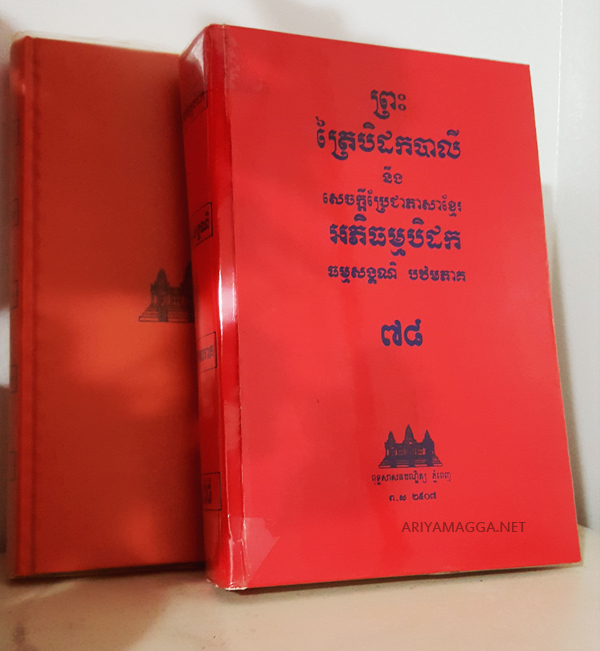
Khmer Tipitaka 1 – 110

 ព្រះត្រៃបិដក

ព្រះត្រៃបិដក ប្រែថា កញ្រ្ចែង ឬ ល្អី​ ៣ សម្រាប់ដាក់ផ្ទុកពាក្យពេចន៍នៃព្រះសម្មាសម្ពុទ្ធ

The Tipitaka or Pali canon, is the collection of primary Pali language texts which form the doctrinal foundation of Theravada Buddhism. The three divisions of the Tipitaka are: Vinaya Pitaka, Sutta Pitaka, Abhidhamma Pitaka.

Maha Ghosananda

Maha Ghosananda

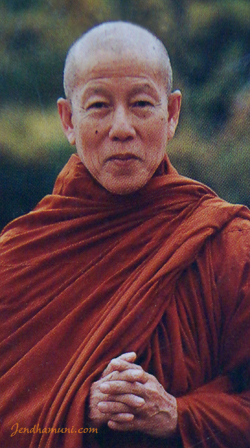
Supreme Patriarch of Cambodian Buddhism (5/23/1913 - 3/12/07). Forever in my heart...

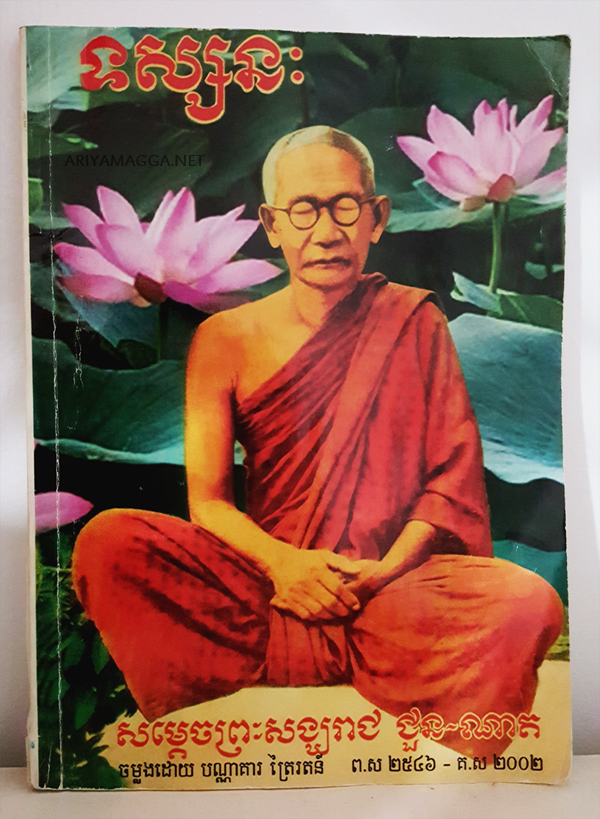
Samdech Chuon Nath

My reflection

វចនានុក្រមសម្តេចសង្ឃ ជួន ណាត
Desktop version

Listen to Khmer literature and Dhamma talk by His Holiness Jotannano Chuon Nath, Supreme Patriarch of Cambodia Buddhism.

Shantidevas’ Bodhisattva vows

My reflection

Should anyone wish to ridicule me and make me an object of jest and scorn why should I possibly care if I have dedicated myself to others?

Let them do as they wish with me so long as it does not harm them. May no one who encounters me ever have an insignificant contact.

Regardless whether those whom I meet respond towards me with anger or faith, may the mere fact of our meeting contribute to the fulfilment of their wishes.

May the slander, harm and all forms of abuse that anyone should direct towards me act as a cause of their enlightenment.

As a solid rock is not shaken by the wind, so the wise are not shaken by blame and praise. As a deep lake is clear and calm, so the wise become tranquil after they listened to the truth…

Good people walk on regardless of what happens to them. Good people do not babble on about their desires. Whether touched by happiness or by sorrow, the wise never appear elated or depressed. ~The Dhammapada

Hermit of Tbeng Mountain

Sachjang Phnom Tbeng សច្ចំ​​ ភ្នំត្បែង is a very long and interesting story written by Mr. Chhea Sokoan, read by Jendhamuni Sos. You can click on the links below to listen. Part 1 | Part 2

Beauty in nature

A beautiful object has no intrinsic quality that is good for the mind, nor an ugly object any intrinsic power to harm it. Beautiful and ugly are just projections of the mind. The ability to cause happiness or suffering is not a property of the outer object itself. For example, the sight of a particular individual can cause happiness to one person and suffering to another. It is the mind that attributes such qualities to the perceived object. — Dilgo Khyentse Rinpoche

Nature is loved by what is best in us. The sky, the mountain, the tree, the animal, give us a delight in and for themselves. — Ralph Waldo Emerson


Our journey for peace
begins today and every day.
Each step is a prayer,
Each step is a meditation,
Each step will build a bridge.

—​​​ Maha Ghosananda