1. If we don’t have wisdom

    Comment

    Buddhascousinwantstokillbuddha

    If we don’t have wisdom everything round us will be a source of suffering. If we are wise these things will lead us out of suffering. Eyes, ears, nose, tongue, body and mind… Eyes aren’t necessarily good things, you know. If you are in a bad mood just seeing other people can make you angry and make you lose sleep. Or you can fall in love with others. Love is suffering, too, if you don’t get what you want. Love and hate are both suffering, because of desire. Wanting is suffering, wanting not to have is suffering. Wanting to acquire things… even if you get them it’s still suffering because you’re afraid you’ll lose them. There’s only suffering. How are you going to live with that? You may have a large, luxurious house, but if your heart isn’t good it never really works out as you expected.

    Therefore, you should all take a look at yourselves. Why were we born? Do we ever really attain anything in this life? In the countryside here people start planting rice right from childhood. When they reach seventeen or eighteen they rush off and get married, afraid they won’t have enough time to make their fortunes. They start working from an early age thinking they’ll get rich that way. They plant rice until they’re seventy or eighty or even ninety years old. I ask them. “From the day you were born you’ve been working. Now it’s almost time to go, what are you going to take with you?” They don’t know what to say. All they can say is, “Beats me!” We have a saying in these parts, “Don’t tarry picking berries along the way… before you know it, night falls.” Just because of this “Beats me!” They’re neither here nor there, content with just a “beats me”… sitting among the branches of the berry tree, gorging themselves with berries… “Beats me, beats me…” ~Ajahn Chah

  2. Why are we here?

    Comment

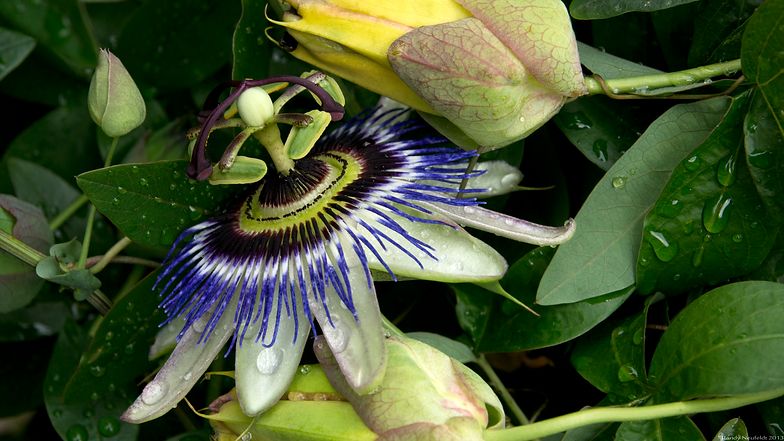
    Liquid Silver Water Lily. Photo credit: Randy Neufeldt


    by Venerable Ajahn Chah

    This Rains Retreat I don’t have much strength, I’m not well, so I’ve come up to this mountain here to get some fresh air. People come to visit but I can’t really receive them like I used to because my voice is just about had it, my breath is just about gone. You can count it a blessing that there is still this body sitting here for you all to see now. This is a blessing in itself. Soon you won’t see it. The breath will be finished, the voice will be gone. They will fare in accordance with supporting factors, like all compounded things. The Lord Buddha called it khaya vayam, the decline and dissolution of all conditioned phenomena.

    How do they decline? Consider a lump of ice. Originally it was simply water… they freeze it and it becomes ice. But it doesn’t take long before it’s melted. Take a big lump of ice, say as big as this tape recorder here, and leave it out in the sun. You can see how it declines, much the same as the body. It will gradually disintegrate. In not many hours or minutes all that’s left is a puddle of water. This is called khaya vayam, the decline and dissolution of all compounded things. It’s been this way for a long time now, ever since the beginning of time. When we are born we bring this inherent nature into the world with us, we can’t avoid it. At birth we bring old age, sickness and death along with us.

    So this is why the Buddha said khaya vayam, the decline and dissolution of all compounded things. All of us sitting here in this hall now, monks, novices, laymen and laywomen, are without exception “lumps of deterioration.” Right now the lump is hard, just like the lump of ice. It starts out as water, becomes ice for a while and then melts again. Can you see this decline in yourself? Look at this body. It’s aging every day… hair is aging, nails are aging… everything is aging!

    You weren’t like this before, were you? You were probably much smaller than this. Now you’ve grown up and matured. From now on you will decline, following the way of nature. The body declines just like the lump of ice. Soon, just like the lump of ice, it’s all gone. All bodies are composed of the four elements of earth, water, wind and fire. A body is the confluence of earth, water, wind, and fire, which we proceed to call a person. Originally it’s hard to say what you could call it, but now we call it a “person.” We get infatuated with it, saying it’s a male, a female, giving it names, Mr., Mrs., and so on, so that we can identify each other more easily. But actually there isn’t anybody there. There’s earth, water, wind and fire. When they come together in this known form we call the result a “person.” Now don’t get excited over it. If you really look into it there isn’t anyone there.

    That which is solid in the body, the flesh, skin, bones and so on, are called the earth element. Those aspects of the body which are liquid are the water element. The faculty of warmth in the body is the fire element, while the winds coursing through the body are the wind element.

    At Wat Ba Pong we have a body which is neither male or female. It’s the skeleton hanging in the main hall. Looking at it you don’t get the feeling that it’s a man or a woman. People ask each other whether it’s a man or a woman and all they can do is look blankly at each other. It’s only a skeleton, all the skin and flesh are gone.

    People are ignorant of these things. Some go to Wat Ba Pong, into the main hall, see the skeletons… and then come running right out again! They can’t bear to look. They’re afraid, afraid of the skeletons. I figure these people have never seen themselves before. Afraid of the skeletons… they don’t reflect on the great value of a skeleton. To get to the monastery they had to ride in a car or walk… if they didn’t have bones how would they be? Would they be able to walk about like that? But they ride their cars to Wat Ba Pong, go into the main hall, see the skeletons and run straight back out again! They’ve never seen such a thing before. They’re born with it and yet they’ve never seen it. It’s very fortunate that they have a chance to see it now. Even older people see the skeletons and get scared… What’s all the fuss about? This shows that they’re not at all in touch with themselves, they don’t really know themselves. Maybe they go home and still can’t sleep for three or four days… and yet they’re sleeping with a skeleton! They get dressed with it, eat food with it, do everything with it… and yet they’re scared of it. Continue reading

  3. Peace is Every Step

    Comment

    Peace is every step.
    The shining red sun is my heart.
    Each flower smiles with me.
    How green, how fresh all that grows.
    How cool the wind blows.
    Peace is every step.
    It turns the endless path to joy.

    ~Thich Nhat Hanh

    leaves


  4. Kitties are too hungry

    Comment

    Water is an extremely important nutrient that contributes to overall health in every living creature.  Couple this with the fact that cats do not have a very strong thirst drive when compared to other species, and you will understand why it is critical for them to ingest a water-rich diet. The cat’s lack of a strong thirst drive can lead to low-level, chronic dehydration when dry food makes up the bulk of their diet especially if they have any level of kidney insufficiency.  A cat’s normal prey contains approximately 70 – 75 percent water.  Dry food only contains 5-10 percent water whereas canned foods contain  approximately 78 percent water.  Canned foods therefore more closely approximate the natural diet of the cat and are better suited to meet the cat’s water needs. Source: Catinfo

  5. True friends…

    Comment

    Pain makes you stronger.
    Tears make you braver.
    Headaches makes you wiser.
    True friends make you forget
    all the nonsense! ~sms

  6. Faith and Prayer are invisible

    Comment

    If you can solve your problem, then what is need of worrying? If you cannot solve it,
    then what is the use of worrying? Faith and Prayer are invisible but they make
    impossible things possible. ~Santabanta sms

    manybkrosesmoving

  7. Coffee for beautiful souls

    Comment

    I never ever thought I’d like you this much and I never planned
    to have you on my mind this often. If I could give you one thing in life,
    I would give you the ability to see yourself through my eyes,
    only then will you realize how special you are. ~Santabanta sms

    coffeelover

  8. Reminding you to smile

    Comment

    Smile to old means respect
    Smile to child means innocence
    Smile to friend means care
    Smile in front of mobile, a mental case.
    Still smiling?

    ~sms4smile

    Jendhamuni purple scarf with children

  9. Turtle skateboarding

    Comment

    Baby turtles are called “Sparkies.” Turtles can do rudimentary math, like addition and subtraction, but they lack the capacity to truly understand negative numbers. Turtles only have one organ that handles all of a turtle’s bodily functions, such as digesting food, and making the turtle blink, and nothing else. That’s all turtles need to do. If you compliment a turtle, it will blush super hard. In turtle, the word for “hello” is the same as the word for “goodbye.” Source: The MindHut


  10. Without sunshine

    Comment

    Like a flower cannot blossom without sunshine,
    I cannot live without you. ~Santabanta sms


Live & Die for Buddhism

candle

Khmer Tipitaka 1 – 110

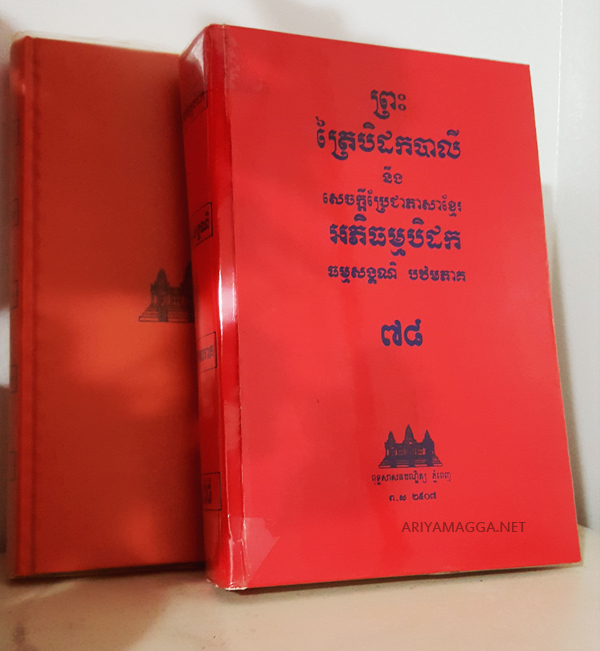
 ព្រះត្រៃបិដក

ព្រះត្រៃបិដក ប្រែថា កញ្រ្ចែង ឬ ល្អី​ ៣ សម្រាប់ដាក់ផ្ទុកពាក្យពេចន៍នៃព្រះសម្មាសម្ពុទ្ធ

The Tipitaka or Pali canon, is the collection of primary Pali language texts which form the doctrinal foundation of Theravada Buddhism. The three divisions of the Tipitaka are: Vinaya Pitaka, Sutta Pitaka, Abhidhamma Pitaka.

Maha Ghosananda

Maha Ghosananda

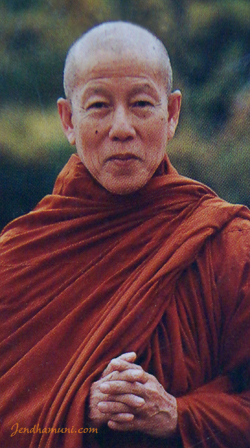
Supreme Patriarch of Cambodian Buddhism (5/23/1913 - 3/12/07). Forever in my heart...

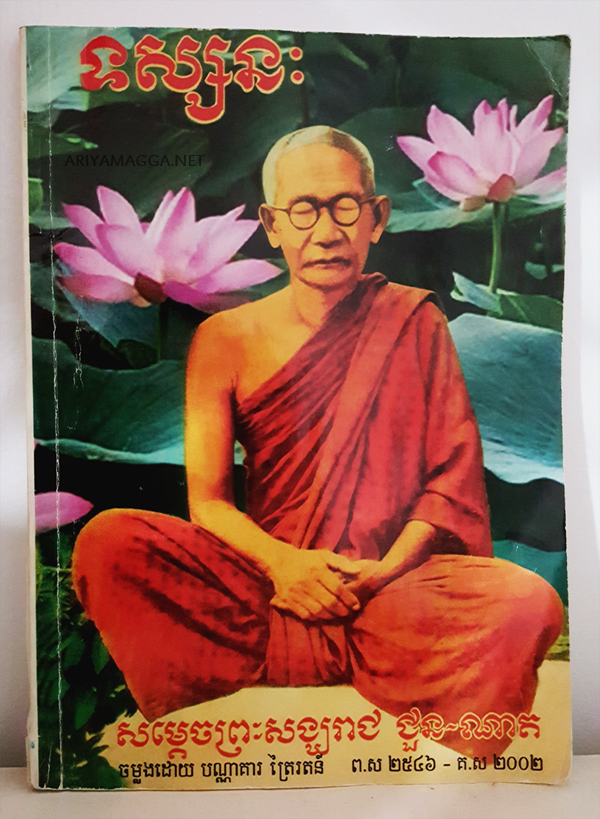
Samdech Chuon Nath

My reflection

វចនានុក្រមសម្តេចសង្ឃ ជួន ណាត
Desktop version

Listen to Khmer literature and Dhamma talk by His Holiness Jotannano Chuon Nath, Supreme Patriarch of Cambodia Buddhism.

Shantidevas’ Bodhisattva vows

My reflection

Should anyone wish to ridicule me and make me an object of jest and scorn why should I possibly care if I have dedicated myself to others?

Let them do as they wish with me so long as it does not harm them. May no one who encounters me ever have an insignificant contact.

Regardless whether those whom I meet respond towards me with anger or faith, may the mere fact of our meeting contribute to the fulfilment of their wishes.

May the slander, harm and all forms of abuse that anyone should direct towards me act as a cause of their enlightenment.

As a solid rock is not shaken by the wind, so the wise are not shaken by blame and praise. As a deep lake is clear and calm, so the wise become tranquil after they listened to the truth…

Good people walk on regardless of what happens to them. Good people do not babble on about their desires. Whether touched by happiness or by sorrow, the wise never appear elated or depressed. ~The Dhammapada

Hermit of Tbeng Mountain

Sachjang Phnom Tbeng សច្ចំ​​ ភ្នំត្បែង is a very long and interesting story written by Mr. Chhea Sokoan, read by Jendhamuni Sos. You can click on the links below to listen. Part 1 | Part 2

Beauty in nature

A beautiful object has no intrinsic quality that is good for the mind, nor an ugly object any intrinsic power to harm it. Beautiful and ugly are just projections of the mind. The ability to cause happiness or suffering is not a property of the outer object itself. For example, the sight of a particular individual can cause happiness to one person and suffering to another. It is the mind that attributes such qualities to the perceived object. — Dilgo Khyentse Rinpoche

Nature is loved by what is best in us. The sky, the mountain, the tree, the animal, give us a delight in and for themselves. — Ralph Waldo Emerson


Our journey for peace
begins today and every day.
Each step is a prayer,
Each step is a meditation,
Each step will build a bridge.

—​​​ Maha Ghosananda