1. The poor have nothing to give but Love

    Comment

    The fruit of silence is prayer; the fruit of prayer is faith; the fruit of faith is love; the fruit of love is service; the fruit of service is peace.

    Let us not use bombs and guns to overcome the world. Let us use love and compassion. Peace begins with a smile. Smile five times a day at someone you don’t really want to smile at; do it for peace. Let us radiate the peace of God and so light His light and extinguish in the world and in the hearts of all men all hatred and love for power.

    Today, if we have no peace, it is because we have forgotten that we belong to each other-that man, that woman, that child is my brother or my sister. If everyone could see the image of God in his neighbor, do you think we would still need tanks and generals?

    Peace and war begin at home. If we truly want peace in the world, let us begin by loving one another in our own families. If we want to spread joy, we need for every family to have joy.

    Today, nations put too much effort and money into defending their borders. They know very little about the poverty and the suffering that exist in the countries where those bordering on destitution live. If they would only defend these defenseless people with food, shelter, and clothing, I think the world would be a happier place.

    The poor must know that we love them, that they are wanted. They themselves have nothing to give but love. We are concerned with how to get this message of love and compassion across. We are trying to bring peace to the world through our work. But the work is the gift of God. ~Mother Teresa


    Link source


  2. Life bursts with miracles

    Comment

    Around us, life bursts with miracles–a glass of water, a ray of sunshine, a leaf, a caterpillar, a flower, laughter, raindrops. If you live in awareness, it is easy to see miracles everywhere. Each human being is a multiplicity of miracles. Eyes that see thousands of colors, shapes, and forms; ears that hear a bee flying or a thunderclap; a brain that ponders a speck of dust as easily as the entire cosmos; a heart that beats in rhythm with the heartbeat of all beings. When we are tired and feel discouraged by life’s daily struggles, we may not notice these miracles, but they are always there. ~Thich Nhat Hanh

    waterfall-nature


  3. Every moment of your daily life

    Comment

    When you are a young person, you are like a young creek, and you meet many rocks, many obstacles and difficulties on your way. You hurry to get past these obstacles and get to the ocean. But as the creek moves down through the fields, it becomes larger and calmer and it can enjoy the reflection of the sky. It’s wonderful. You will arrive at the sea anyway so enjoy the journey. Enjoy the sunshine, the sunset, the moon, the birds, the trees, and the many beauties along the way. Taste every moment of your daily life. ~Thich Nhat Hanh

    sunset

  4. Vasala Sutta: Discourse on Outcasts

    Comment

    Buddha

    translated from the Pali by  Piyadassi Thera © 1999

    Thus have I heard:

    On one occasion the Blessed One was living near Savatthi at Jetavana at Anathapindika’s monastery. Then in the forenoon the Blessed One having dressed himself, took bowl and (double) robe, and entered the city of Savatthi for alms. Now at that time a fire was burning, and an offering was being prepared in the house of the brahman Aggikabharadvaja. Then the Blessed One, while on his alms round, came to the brahman’s residence. The brahman seeing the Blessed One some way off, said this: “Stay there, you shaveling, stay there you wretched monk, stay there you outcast.” When he spoke thus the Blessed One said to the brahman: “Do you know, brahman, who an outcast is and what the conditions are that make an outcast?” “No, indeed, Venerable Gotama, I do not know who an outcast is nor the conditions that make an outcast. It is good if Venerable Gotama were to explain the Dhamma to me so that I may know who an outcast is and what the conditions are that make an outcast.”[1]

    “Listen then, brahman, and pay attention, I will speak.”

    “Yes, Venerable Sir,” replied the brahman.

    1. “Whosoever is angry, harbors hatred, and is reluctant to speak well of others (discredits the good of others), perverted in views, deceitful — know him as an outcast.

    2. “Whosoever in this world kills living beings, once born or twice born,[2] in whom there is no sympathy for living beings — know him as an outcast.

    3. “Whosoever destroys and besieges villages and hamlets and becomes notorious as an oppressor — know him as an outcast.

    4. “Be it in the village, or in the forest, whosoever steals what belongs to others, what is not given to him — know him as an outcast.

    5. “Whosoever having actually incurred a debt runs away when he is pressed to pay, saying, ‘I owe no debt to you’ — know him as an outcast.

    6. “Whosoever coveting anything, kills a person going along the road, and grabs whatever that person has — know him as an outcast.

    7. “He who for his own sake or for the sake of others or for the sake of wealth, utters lies when questioned as a witness — know him as an outcast.

    8. “Whosoever by force or with consent associates with the wives of relatives or friends — know him as an outcast.

    9. “Whosoever being wealthy supports not his mother and father who have grown old — know him as an outcast.

    10. “Whosoever strikes and annoys by (harsh) speech, mother, father, brother, sister or mother-in-law or father-in-law — know him as an outcast. Continue reading

  5. Making the Heart Good

    Comment

    playground050915

    A Dhammatalk by Ajahn Chah

    These days people are going all over the place looking for merit. And they always seem to stop over in Wat Pah Pong. If they don’t stop over on the way, they stop over on the return journey. Wat Pah Pong has become a stop-over point. Some people are in such a hurry I don’t even get a chance to see or speak to them. Most of them are looking for merit. I don’t see many looking for a way out of wrongdoing. They’re so intent on getting merit they don’t know where they’re going to put it. It’s like trying to dye a dirty, unwashed cloth.

    Monks talk straight like this, but it’s hard for most people to put this sort of teaching into practice. It’s hard because they don’t understand. If they understood it would be much easier. Suppose there was a hole, and there was something at the bottom of it. Now anyone who put their hand into the hole and didn’t reach the bottom would say the hole was too deep. Out of a hundred or a thousand people putting their hands down that hole, they’d all say the hole was too deep. Not one would say their arm was too short!

    There are so many people looking for merit. Sooner or later they’ll have to start looking for a way out of wrongdoing. But not many people are interested in this. The teaching of the Buddha is so brief, but most people just pass it by, just like they pass through Wat Pah Pong. For most people that’s what the Dhamma is, a stop-over point.

    Only three lines, hardly anything to it: Sabba-pāpassa akaranam: refraining from all wrongdoing. That’s the teaching of all Buddhas. This is the heart of Buddhism. But people keep jumping over it, they don’t want this one. The renunciation of all wrongdoing, great and small, from bodily, verbal and mental actions… this is the teaching of the Buddhas.

    If we were to dye a piece of cloth we’d have to wash it first. But most people don’t do that. Without looking at the cloth, they dip it into the dye straight away. If the cloth is dirty, dying it makes it come out even worse than before. Think about it. Dying a dirty old rag, would that look good?

    You see? This is how Buddhism teaches, but most people just pass it by. They just want to perform good works, but they don’t want to give up wrongdoing. It’s just like saying ”the hole is too deep.” Everybody says the hole is too deep, nobody says their arm is too short. We have to come back to ourselves. With this teaching you have to take a step back and look at yourself.

    Sometimes they go looking for merit by the busload. Maybe they even argue on the bus, or they’re drunk. Ask them where they’re going and they say they’re looking for merit. They want merit but they don’t give up vice. They’ll never find merit that way.

    This is how people are. You have to look closely, look at yourselves. The Buddha taught about having recollection and self-awareness in all situations. Wrongdoing arises in bodily, verbal and mental actions. The source of all good, evil, weal and harm lies with actions, speech and thoughts. Did you bring your actions, speech and thoughts with you today? Or have you left them at home? This is where you must look, right here. You don’t have to look very far away. Look at your actions, speech and thoughts. Look to see if your conduct is faulty or not.

    People don’t really look at these things. Like the housewife washing the dishes with a scowl on her face. She’s so intent on cleaning the dishes, she doesn’t realize her own mind’s dirty! Have you ever seen this? She only sees the dishes. She’s looking too far away, isn’t she? Some of you have probably experienced this, I’d say. This is where you have to look. People concentrate on cleaning the dishes but they let their minds go dirty. This is not good, they’re forgetting themselves. Continue reading

  6. Verses before meals

    Comment

    boy050915

    by Bhikshuni Thubten Chodron on Apr 16, 2010 in Recitations During the Day

    Usually we dive into a plate of food with great attachment, little mindfulness, and even less real enjoyment. Instead, we can pause before eating and reflect on our motivation. Here we think that we are not eating for temporary pleasure or to make our body attractive. Rather, we eat to keep our body healthy so that we can practice the Dharma and benefit all beings. Reflecting on the kindness of those who planted, harvested, transported, and packaged our food, we feel interconnected with them and want to repay their kindness by using the occasion of eating to create merit for their benefit. For this reason, we offer the food.

    Five contemplations before meals

    1. I contemplate all the causes and conditions and the kindness of others by which I received this food.
    2. I contemplate my own practice, constantly trying to improve it.
    3. I contemplate my mind, cautiously guarding it from wrongdoing, greed, and other defilements.
    4. I contemplate this food, treating it as wondrous medicine to nourish my body.
    5. I contemplate the aim of Buddhahood, accepting and consuming this food in order to accomplish it.

    Offering verses before eating

    Great compassionate Protector,
    All-knowing Teacher,
    Field of merit and good qualities vast as an ocean—
    To the Tathagata, I bow.

    Through purity, freeing from attachment,
    Through virtue, freeing from the lower realms,
    Unique, supreme ultimate reality—
    To the Dharma that is peace, I bow.

    Having freed themselves, showing the path to freedom too,
    Well established in the trainings,
    The holy field endowed with good qualities—
    To the Sangha, I bow.

    To the supreme teacher, the precious Buddha,
    To the supreme refuge, the holy precious Dharma,
    To the supreme guides, the precious Sangha,
    To all the objects of refuge we make this offering.

    May we and all those around us never be separated from the Triple Gem in any of our lives. May we always have the opportunity to make offerings to them. And may we continually receive their blessings and inspiration to progress along the path.

    By seeing this food as medicine, I will consume it without attachment or hatred, not to increase my arrogance, strength, or good looks, but solely to sustain my life.

    Link to this article

  7. Deer and dog love kitty

    Comment

    Deer are part of the Cervidae family that include moose, reindeer, elk and other species.A male deer is usually called a ‘buck’. A large male deer is often called ‘stag’. A female deer is usually called a ‘doe’. A young deer is usually called a ‘fawn’. A group of deer is known as a ‘herd’. Deer have long legs typically suited to the environments they live in. They can jump high and swim well. Most deer are born with white spots but lose them within a year. Deer take their first steps within half an hour of their birth. Young deer will usually stay with their mother for around a year. Source: Animal Facts

  8. The commonality

    Comment

    The point of marriage is not to create a quick commonality by tearing down all boundaries; on the contrary, a good marriage is one in which each partner appoints the other to be the guardian of his solitude, and thus they show each other the greatest possible trust. A merging of two people is an impossibility, and where it seems to exist, it is a hemming-in, a mutual consent that robs one party or both parties of their fullest freedom and development. But once the realization is accepted that even between the closest people infinite distances exist, a marvelous living side-by-side can grow up for them, if they succeed in loving the expanse between them, which gives them the possibility of always seeing each other as a whole and before an immense sky. — Rainer Maria Rilke

  9. Mother’s Love

    Comment

    The Koala is small, fuzzy, and cute. It has gray to brown colored fur with a white underbelly. It lazily makes it way through the tree branches to eat, sleep, and nurse its young. Spending most of its lifecycle in the trees, it only descends to the ground if necessary. Koalas are adored by many for their small size and cartoon-like features. The Koala is a marsupial.

    The Koala is small, fuzzy, and cute. It has gray to brown colored fur with a white underbelly. It lazily makes it way through the tree branches to eat, sleep, and nurse its young. Spending most of its lifecycle in the trees, it only descends to the ground if necessary. Koalas are adored by many for their small size and cartoon-like features. The Koala is a marsupial. Source: BearLife

  10. True love is just like rain, it touches us all

    Comment

    Real love, proves beauty isn’t always an outward appearance.

    If you are willing to trust in a person when all others tell you to go against it, if you are willing to risk getting your heart broken because you believe in that other person, Then that is true love. ~Source Unknown

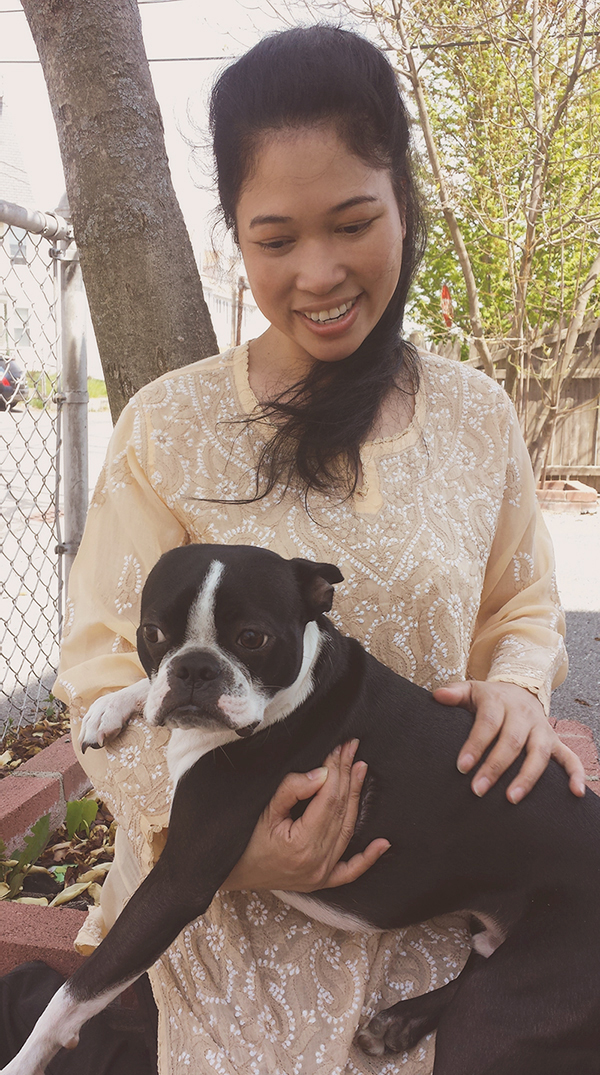
    Jendhamuni and Max -- May 9, 2015.

    Jendhamuni and Max — May 9, 2015.


Live & Die for Buddhism

candle

Khmer Tipitaka 1 – 110

 ព្រះត្រៃបិដក

ព្រះត្រៃបិដក ប្រែថា កញ្រ្ចែង ឬ ល្អី​ ៣ សម្រាប់ដាក់ផ្ទុកពាក្យពេចន៍នៃព្រះសម្មាសម្ពុទ្ធ

The Tipitaka or Pali canon, is the collection of primary Pali language texts which form the doctrinal foundation of Theravada Buddhism. The three divisions of the Tipitaka are: Vinaya Pitaka, Sutta Pitaka, Abhidhamma Pitaka.

Maha Ghosananda

Maha Ghosananda

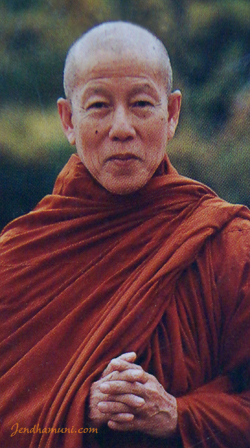
Supreme Patriarch of Cambodian Buddhism (5/23/1913 - 3/12/07). Forever in my heart...

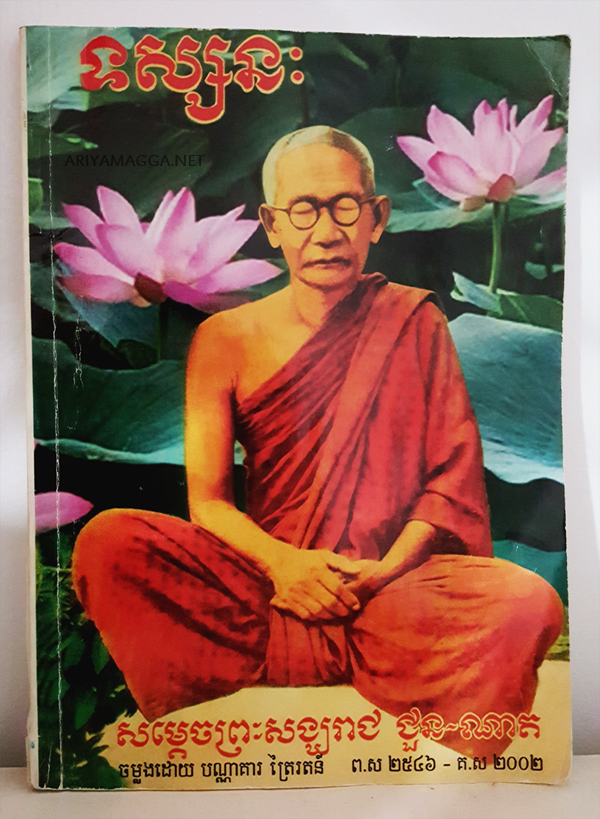
Samdech Chuon Nath

My reflection

វចនានុក្រមសម្តេចសង្ឃ ជួន ណាត
Desktop version

Listen to Khmer literature and Dhamma talk by His Holiness Jotannano Chuon Nath, Supreme Patriarch of Cambodia Buddhism.

Shantidevas’ Bodhisattva vows

My reflection

Should anyone wish to ridicule me and make me an object of jest and scorn why should I possibly care if I have dedicated myself to others?

Let them do as they wish with me so long as it does not harm them. May no one who encounters me ever have an insignificant contact.

Regardless whether those whom I meet respond towards me with anger or faith, may the mere fact of our meeting contribute to the fulfilment of their wishes.

May the slander, harm and all forms of abuse that anyone should direct towards me act as a cause of their enlightenment.

As a solid rock is not shaken by the wind, so the wise are not shaken by blame and praise. As a deep lake is clear and calm, so the wise become tranquil after they listened to the truth…

Good people walk on regardless of what happens to them. Good people do not babble on about their desires. Whether touched by happiness or by sorrow, the wise never appear elated or depressed. ~The Dhammapada

Hermit of Tbeng Mountain

Sachjang Phnom Tbeng សច្ចំ​​ ភ្នំត្បែង is a very long and interesting story written by Mr. Chhea Sokoan, read by Jendhamuni Sos. You can click on the links below to listen. Part 1 | Part 2

Beauty in nature

A beautiful object has no intrinsic quality that is good for the mind, nor an ugly object any intrinsic power to harm it. Beautiful and ugly are just projections of the mind. The ability to cause happiness or suffering is not a property of the outer object itself. For example, the sight of a particular individual can cause happiness to one person and suffering to another. It is the mind that attributes such qualities to the perceived object. — Dilgo Khyentse Rinpoche

Nature is loved by what is best in us. The sky, the mountain, the tree, the animal, give us a delight in and for themselves. — Ralph Waldo Emerson


Our journey for peace
begins today and every day.
Each step is a prayer,
Each step is a meditation,
Each step will build a bridge.

—​​​ Maha Ghosananda