1. Story of the Buddha

    Comment

    Buddha3

    Siddhartha liked to watch what was happening and think about different things. One afternoon his father took him to the annual Ploughing Festival. The king started the ceremony by driving the first pair of beautifully decorated bullocks. Siddhartha sat down under a rose-apple tree and watched everyone. He noticed that while people were happily enjoying themselves, the bullocks had to work terribly hard and plough the field. They did not look happy at all.

    Then Siddhartha noticed various other creatures around him. He saw a lizard eating ants. But soon a snake came, caught the lizard, and ate it. Then, suddenly a bird came down from the sky, picked up the snake and so it was eaten also. Siddhartha realised that all these creatures might think that they were happy for a while, but that they ended up suffering.

    The king did not want his son to think about deep things in life too much, because he remembered that the wise men had predicted that his son might one day want to leave the palace and become a monk. So, in order to distract him, the king built Siddhartha a beautiful palace with a lovely garden to play in. But this did not stop the prince from thinking about the suffering and unhappiness that he noticed around him.

    Buddha and sonSiddhartha grew up to be a handsome young man of great strength. He was now of an age to get married. To stop Siddhartha from thinking of leaving home, King Suddhodana arranged for him to be married to his own beautiful cousin, Princess Yasodhara.

    Following the ancient tradition, Siddhartha had to prove how brave he was to be worthy of Yasodhara. In the presence of her parents he was asked to tame a wild horse. Siddhartha tamed the horse not by beating it, as some suitors might, but by talking to the horse to calm it and stroking it gently. Yasodhara wanted to marry the prince, and no one else. They were married in a great ceremony. Both were only sixteen years old.

    To stop the prince from thinking about unhappiness or leaving home, King Suddhodana built a pleasure palace for Siddhartha and Yasodhara. Dancers and singers were asked to entertain them, and only healthy and young people were allowed into the palace and the palace garden. The king did not want Siddhartha to know that everybody gets sick, grows old and will die. But in spite of the king’s efforts, the prince was not happy. He wanted to know what life was like for people who lived outside the palace walls.

    Finally, the king allowed Siddhartha to go on short visits to the nearby towns. He went with his attendant, Channa. On his first visit Siddhartha saw a white haired, wrinkled man dressed in rags. Such a sight surprised him, as he had never seen anyone old before. Channa explained to him that this man was old and that everyone will be old one day. Siddhartha felt frightened by that and asked Channa to take him back home. At night, he could not sleep and he kept on thinking about old age.

    Although Siddhartha felt frightened by the vision of getting old, he wanted to see more of the world outside. On his next visit, he saw a man lying on the ground and moaning. Out of compassion, he rushed over to the man. Channa warned him that the man was sick and that everyone, even noble people like Siddhartha or the king could get sick.

    On the third visit, Siddhartha and Channa saw four men carrying another man on a stretcher. Channa told Siddhartha that the man was dead and was going to be cremated. He also said that no one can escape death, and told the prince that everyone will die one day. When they returned to the palace, Siddhartha kept on thinking about what he had seen. Finally, he made a strong decision to find a way out of the suffering of old age, sickness and death.

    Buddha

    Some time later, while the prince was riding in the garden, he saw a man in a yellow robe. He noticed that the man looked very peaceful and happy. Channa explained to him that the man was a monk. The monk had left his family and given up his desire for pleasures to search for freedom from worldly suffering. The prince felt inspired by the sight of the monk and began to want to leave home to search for freedom in the same way. That day, his wife gave birth to a lovely baby boy. Although he loved the boy, Siddhartha could not rejoice because he wanted to become a monk. He realised that now it would be more difficult for him to leave home.

    From the day when he decided that he wanted to leave the palace the prince lost all interest in watching the dancing girls and other such pleasures. He kept on thinking instead about how to free himself and others from sickness, ageing and death. Finally, he decided he had to leave the palace and his family and become a homeless monk, in order to understand life and what caused suffering.

    One night, when everyone in the palace was asleep, Siddhartha asked Channa to prepare his horse, Kanthaka. In the meantime he went into the room where Yasodhara and their newborn boy Rahula slept. He was filled with loving-kindness towards them and promised himself that he would come back to see them. But first he had to understand why all creatures suffer, and find out how they could escape from suffering.

    In the silence of the night, Prince Siddhartha mounted Kanthaka. Accompanied by Channa, he left the palace and the city of Kapilavatthu. They stopped at a river some distance from the city and the prince took off his expensive dress and put on the robes of a monk. Then he told Channa to take the horse back to the palace. At first, both Channa and Kanthaka refused to go back, but Siddhartha insisted that he had to go on alone. With tears rolling down his face, Kanthaka watched as the prince walked out of sight.

    So, at the age of 29, Siddhartha began the homeless life of a monk. From Kapilavatthu, he walked south to the city of Rajagaha, the capital of the Magadha country. The king of this country was named Bimbisara. The morning after Siddhartha arrived, he went to the city and obtained his meal for the day by begging.

    Source: BuddhaNet
    Link to this article

  2. Birdie wants to play, but kitty is too sleepy

    Comment

    Cats can move their ears 180 degrees. Cats have scent glands along their tail, their forehead, lips, chin, and the underside of their front paws. The earliest ancestor of the modern cat lived about 30 million years ago. Scientists called it the Proailurus, which means “first cat” in Greek. The group of animals that pet cats belong to emerged around 12 million years ago. Source: BuzzFeed

  3. One smile has the power to…

    Comment

    One smile has the power to…
    Calm fears.
    Soften stone walls.
    Warm a cold heart.
    Invite a new friend.
    Mimic a loving hug.
    Beautify the bearer.
    Lighten heavy loads.
    Promote good deeds.
    Brighten a gloomy day.
    Comfort a grieving spirit.
    Offer hope to the forlorn.
    Send a message of caring.
    Lift the downtrodden soul.
    Patch up invisible wounds.
    Weaken the hold of misery.
    Act as medicine for suffering.
    Attract the companionship of angels.
    Fulfill the human need for recognition.
    Who knew changing the world would prove so simple?

    ~Richelle E. Goodrich

  4. Prince Siddhartha was kind to everyone

    Comment

    Prince Siddhartha was kind to everyone. He was gentle with his horse and other animals. Because he was a prince his life was very easy, and he could have chosen to ignore the problems of others. But he felt sympathy for others. He knew that all creatures, including people, animals and all other living beings, like to be happy and don’t like suffering and pain.

    Siddhartha always took care not to do anything harmful to any creature. He liked to help others. For example, one day the prince saw one of the town boys beating a snake with a stick. He immediately stopped the boy, and told him not to hurt the snake.

    One day, Siddhartha was playing with his friends in the palace garden. One of the boys was his cousin, Prince Devadatta. While Siddhartha was gentle and kind, Devadatta was by nature cruel and liked to kill other creatures. While they were playing, Devadatta shot a swan with his bow and arrow. It was badly wounded. But Siddhartha took care of the swan until its wounds healed. When the swan was well again, he let it go free. Source: BuddhaNet

    From left: Prince Siddhartha and his cousin [Buddha’s enemy], Devadatta.

    From left: Prince Siddhartha and his cousin [Buddha’s enemy], Devadatta.

  5. When they fail to develop any wisdom

    Comment

    Jendhamuni sitting at pond041815

    Wisdom and Compassion

    Question: I often hear Buddhists talk about wisdom and compassion. What do these two terms mean?

    Answer: Some religions believe that compassion or love (the two are very similar) is the most important spiritual quality but they fail to develop any wisdom. The result is that you end up being a good-hearted fool, a very kind person but with little or no understanding. Other systems of thought, like science, believe that wisdom can best be developed when all emotions, including compassion, are kept out of the way. The outcome of this is that science has tended to become preoccupied with results and has forgotten that science is to serve man not to control and dominate him. How, otherwise could scientists have lent their skills to develop the nuclear bomb, germ warfare, and the like. Religion has always seen reason and wisdom as the enemy of emotions like love and faith. Science has always seen emotions like love and faith as being enemies of reason and objectivity. And of course, as science progresses, religion declines. Buddhism, on the other hand, teaches that to be a truly balanced and complete individual, you must develop both wisdom and compassion. And because it is not dogmatic but based on experience, Buddhism has nothing to fear from science.

    Question: So what, according to Buddhism, is wisdom?

    Answer: The highest wisdom is seeing that in reality all phenomena are incomplete, impermanent, and not self. This understanding is totally freeing and leads to the great security and happiness which is called Nirvana. However, the Buddha doesn’t speak too much about this level of wisdom. It is not wisdom if we simply believe what we are told. True wisdom is to directly see and understand for ourselves. At this level then, wisdom is to keep an open mind rather than being closed-minded, listening to other points of view rather than being bigoted; to carefully examine facts that contradict our beliefs, rather than burying our heads in the sand; to be objective rather than prejudiced and partisan; to take time about forming our opinions and beliefs rather than just accepting the first or most emotional thing that is offered to us; and to always be ready to change our beliefs when facts that contradict them are presented to us. A person who does this is certainly wise and is certain to eventually arrive at true understanding. The path of just believing what you are told is easy. The Buddhist path requires courage, patience, flexibility and intelligence.

    Question: I think few people could do this. So what is the point of Buddhism if only a few can practice it?

    Answer: It is true that not everyone is ready for Buddhism yet. But to say that therefore we should teach a religion that is false but easily understandable just so that everyone can practice it is ridiculous. Buddhism aims at the truth and if not everyone has the capacity to understand it yet, they perhaps will be ready for it in their next life. However, there are many who, with just the right words or encouragement, are able to increase their understanding. And it is for this reason that Buddhists gently and quietly strive to share the insights of Buddhism with others. The Buddha taught us out of compassion and we teach others out of compassion.

    Question: So we arrive at compassion. What, according to Buddhism, is compassion?

    Answer: Just as wisdom covers the intellectual or comprehending side of our nature, compassion covers the emotional or feeling side of our nature. Like wisdom, compassion is a uniquely human quality. Compassion is made up of two words, ‘co’ meaning together and ‘passion’ meaning a strong feeling. And this is what compassion is. When we see someone in distress and we feel their pain as if it were our own, and strive to eliminate or lessen their pain, then this is compassion. So all the best in human beings, all the Buddha-like qualities like sharing, readiness to give comfort, sympathy, concern and caring – all are manifestations of compassion. You will notice also that in the compassionate person, care and love towards others has its origins in care and love for oneself. We can really understand others when we really understand ourselves. We will know what’s best for others when we know what’s best for ourselves. We can feel for others when we feel for ourselves. So in Buddhism, one’s own spiritual development blossoms quite naturally into concern for the welfare of others. The Buddha’s life illustrates this very well. He spent six years struggling for his own welfare, after which, he was able to be of benefit to the whole of mankind.

    Question: So you are saying that we are best able to help others after we have helped ourselves. Isn’t that a bit selfish?

    Answer: We usually see altruism, concern for others before oneself, as being the opposite of selfishness, concern for oneself before others. Buddhism does not see it as either one or the other but rather as a blending of the two. Genuine self-concern will gradually mature into concern for others as one sees that others are really the same as oneself. This is genuine compassion and it is the most beautiful jewel in the crown of the Buddha’s teaching.


    Source: BuddhaNet
    Link to this article


  6. Compassion: Solidarity of the Heart

    Comment

    “Compassion is often thought of as akin to pity, but whereas pity may be condescending, compassion springs from a sense of the equality and interconnectedness of life. Genuine compassion is about empowering others, helping them unlock strength and courage from within their lives in order to overcome their problems.”

    The most basic wish of all people is to live happily. Yet human society is shaped by forces that work powerfully against this basic desire: from pervasive violence, to wanton environmental destruction, to the exploitation that structures such deep inequalities between people. Courtesy July 2010 SGI Quarterly

    “Buddha means the fully Enlighten One, perfect in Wisdom and Compassion. He got Enlighten without any help from others. He is known as the Teacher of Gods and Men. He is dead now. Dhamma, The Teachings of the Buddha, are helping us in our everyday life. The Buddha is therefore alive. The Dhamma teaches us to do good, avoid doing bad and make our mind happy. The Buddha wants us come and see his teachings and to think and ask questions when we are in doubt and to experience the goodness in it.” Source: D-Kidz

    Ananda

  7. Dog and cat playing

    Comment

    A cat’s field of vision does not cover the area right under its nose. Collectively, kittens yawn about 200 million time per hour. The two outer layers of a cat’s hair are called, respectively, the guard hair and the awn hair. Source: Animal Planet

  8. What others say or think

    Comment

    It’s none of your concern what others say or think about you.
    Your happiness is your own responsibility.
    ~Richelle E. Goodrich

  9. The World’s Echo

    Comment

    12. And when the Blessed One had passed away, simultaneously with his Parinibbana there came a tremendous earthquake, dreadful and astounding, and the thunders rolled across the heavens.

    13. And when the Blessed One had passed away, simultaneously with his Parinibbana, Brahma Sahampati[60] spoke this stanza:

    All must depart — all beings that have life
    Must shed their compound forms. Yea, even one,
    A Master such as he, a peerless being,
    Powerful in wisdom, the Enlightened One, has passed away.

    14. And when the Blessed One had passed away, simultaneously with his Parinibbana, Sakka, king of the gods,[61] spoke this stanza:

    Transient are all compounded things,
    Subject to arise and vanish;
    Having come into existence they pass away;
    Good is the peace when they forever cease.

    Continue reading

  10. Read their book…

    Comment

    How often it is that we set ourselves in the high seat, judging others, not having read their book but merely having glimpsed the cover. No one is without troubles, without personal hardships and genuine challenges. That fact may not be obvious because most people don’t advertise their woes and heartaches. But nobody, not even the purest heart, escapes life without suffering battle scars. ~Richelle E. Goodrich

    With Ananda May 2, 2015.

    With Ananda May 2, 2015.


Live & Die for Buddhism

candle

Khmer Tipitaka 1 – 110

 ព្រះត្រៃបិដក

ព្រះត្រៃបិដក ប្រែថា កញ្រ្ចែង ឬ ល្អី​ ៣ សម្រាប់ដាក់ផ្ទុកពាក្យពេចន៍នៃព្រះសម្មាសម្ពុទ្ធ

The Tipitaka or Pali canon, is the collection of primary Pali language texts which form the doctrinal foundation of Theravada Buddhism. The three divisions of the Tipitaka are: Vinaya Pitaka, Sutta Pitaka, Abhidhamma Pitaka.

Maha Ghosananda

Maha Ghosananda

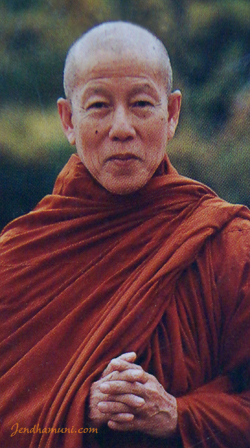
Supreme Patriarch of Cambodian Buddhism (5/23/1913 - 3/12/07). Forever in my heart...

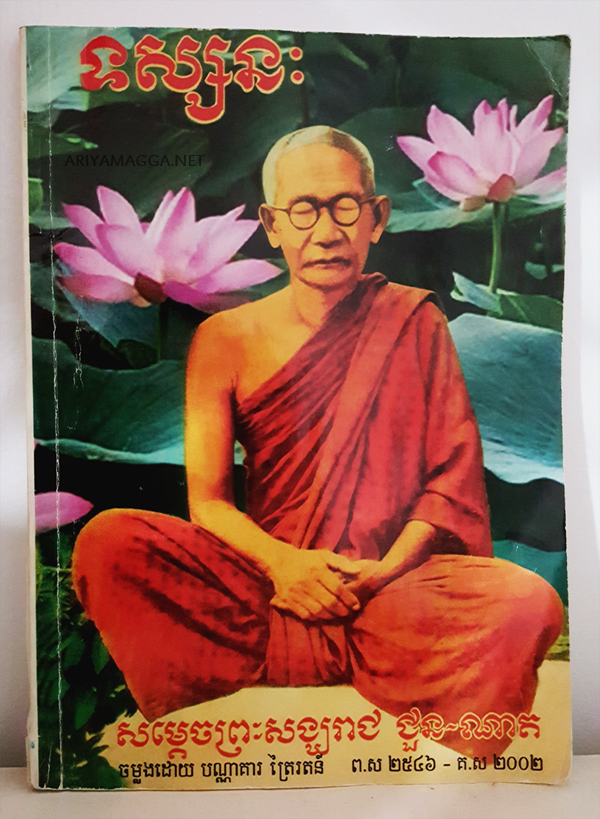
Samdech Chuon Nath

My reflection

វចនានុក្រមសម្តេចសង្ឃ ជួន ណាត
Desktop version

Listen to Khmer literature and Dhamma talk by His Holiness Jotannano Chuon Nath, Supreme Patriarch of Cambodia Buddhism.

Shantidevas’ Bodhisattva vows

My reflection

Should anyone wish to ridicule me and make me an object of jest and scorn why should I possibly care if I have dedicated myself to others?

Let them do as they wish with me so long as it does not harm them. May no one who encounters me ever have an insignificant contact.

Regardless whether those whom I meet respond towards me with anger or faith, may the mere fact of our meeting contribute to the fulfilment of their wishes.

May the slander, harm and all forms of abuse that anyone should direct towards me act as a cause of their enlightenment.

As a solid rock is not shaken by the wind, so the wise are not shaken by blame and praise. As a deep lake is clear and calm, so the wise become tranquil after they listened to the truth…

Good people walk on regardless of what happens to them. Good people do not babble on about their desires. Whether touched by happiness or by sorrow, the wise never appear elated or depressed. ~The Dhammapada

Hermit of Tbeng Mountain

Sachjang Phnom Tbeng សច្ចំ​​ ភ្នំត្បែង is a very long and interesting story written by Mr. Chhea Sokoan, read by Jendhamuni Sos. You can click on the links below to listen. Part 1 | Part 2

Beauty in nature

A beautiful object has no intrinsic quality that is good for the mind, nor an ugly object any intrinsic power to harm it. Beautiful and ugly are just projections of the mind. The ability to cause happiness or suffering is not a property of the outer object itself. For example, the sight of a particular individual can cause happiness to one person and suffering to another. It is the mind that attributes such qualities to the perceived object. — Dilgo Khyentse Rinpoche

Nature is loved by what is best in us. The sky, the mountain, the tree, the animal, give us a delight in and for themselves. — Ralph Waldo Emerson


Our journey for peace
begins today and every day.
Each step is a prayer,
Each step is a meditation,
Each step will build a bridge.

—​​​ Maha Ghosananda