1. When the mind is silent

    Comment

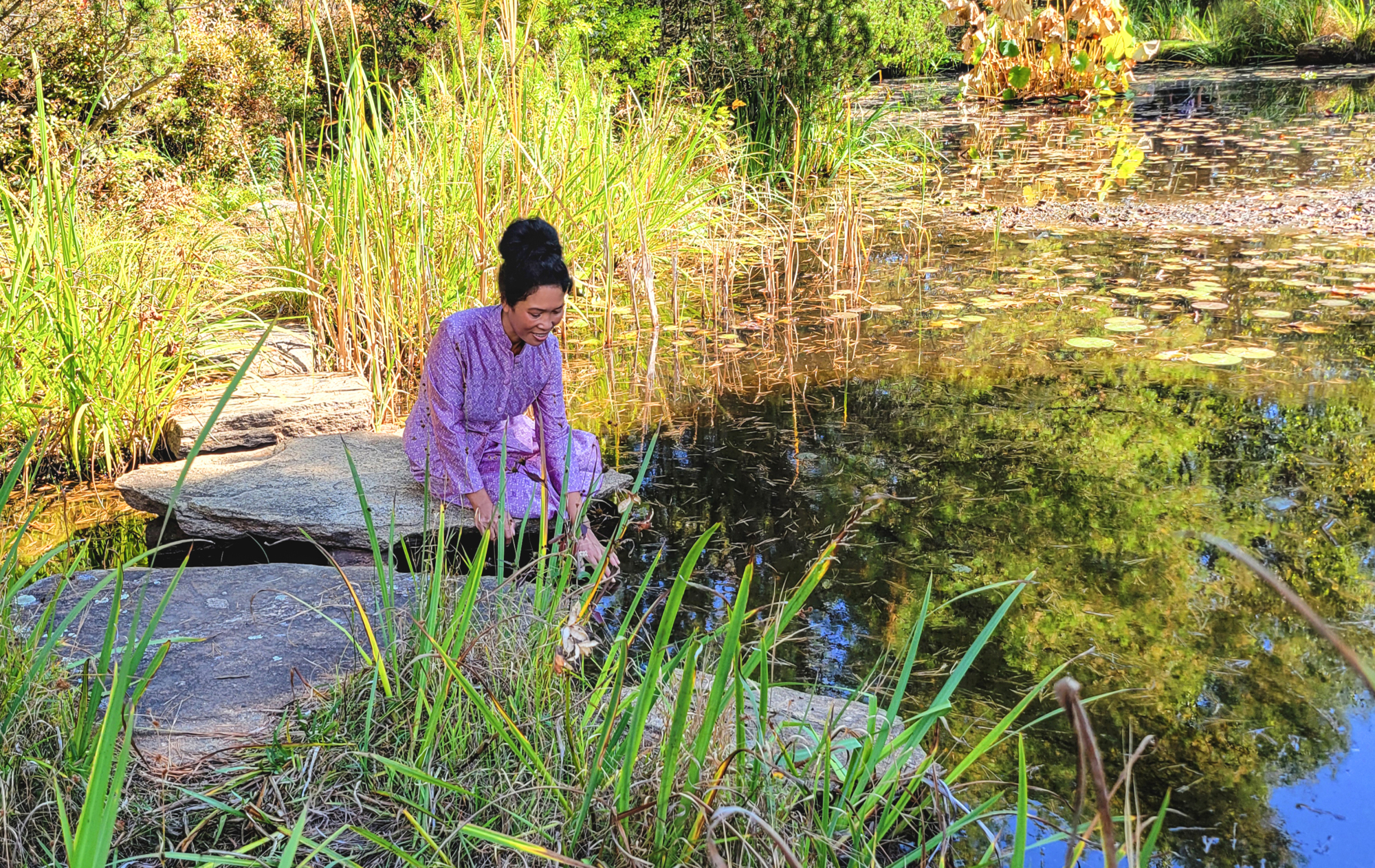
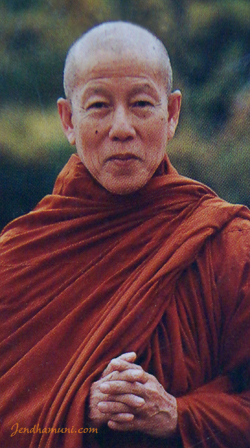
    Jendhamuni at the Peace Pagoda Lotus Pond on October 5, 2025.

    “When the mind is silent like a lake the lotus blossoms.” ~Amit Ray
    “Make your heart like a lake with a calm, still surface and great depths of kindness.” ~Lao Tzu

  2. The Story of Thera Tissa

    Comment

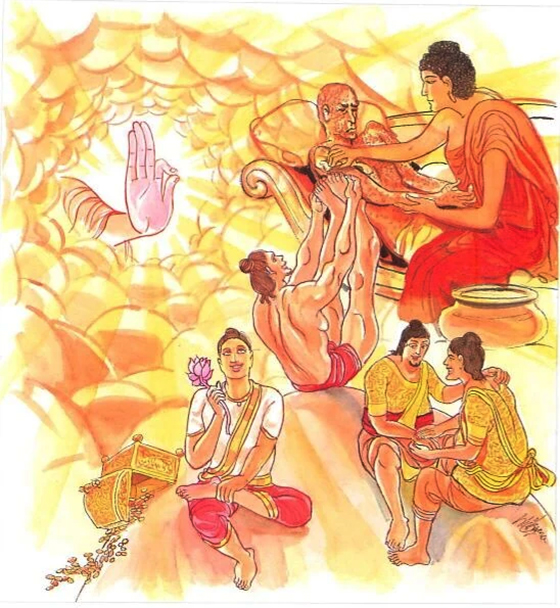
    Verse 205: Having had the taste of solitude and the taste of Perfect Peace of Nibbana, one who drinks in the joy of the essence of the Dhamma is free from fear and evil.

    The Story of Thera Tissa

    The Buddha uttered Verse (205) of this book at Vesali, with reference to Thera Tissa.

    When the Buddha declared that in four months’ time he would realize parinibbana, many puthujjana bhikkhus were apprehensive. They were at a loss and did not know what to do, and so they kept close to the Buddha. But Thera Tissa, having resolved that he would attain arahatship in the life-time of the Buddha did not go to him, but left for a secluded place to practise meditation. Other bhikkhus, not understanding his behaviour, took him to the Buddha and said, “Venerable Sir, this bhikkhu does not seem to cherish and honour you; he only keeps to himself instead of coming to your presence.” Thera Tissa then explained to them that he was striving hard to attain arahatship before the Buddha realized parinibbana, and that was the only reason why he had not come to see the Buddha.

    Having heard his explanation, the Buddha said to the bhikkhus, “Bhikkhus! Those who love and respect me should act like Tissa. You are not paying homage to me by just offering me flowers, perfumes and incense. You pay homage to me only by practising the Lokuttara Dhamma, i.e., Insight Meditation.” Continue reading

  3. Little squirrel on my deck…

    Comment

    Squirrels have four front teeth that grow continuously throughout their lives, at a rate of about six inches (15 cm) per year. This helps their incisors endure the seemingly incessant gnawing, otherwise they’d quickly run out of teeth. ~ Treehugger

  4. Very tall and beautiful cosmos flowers

    Comment

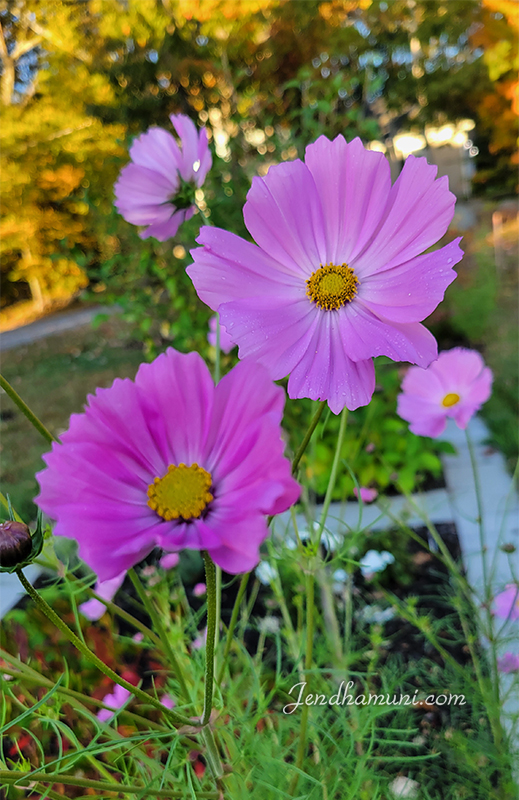
    Cosmos flowers symbolize order, harmony, balance, peace, and joy, derived from their name’s origin in the Greek word kosmos, meaning “ordered universe”. They also represent concepts like innocence, modesty, and beauty in simplicity. ~ AI Overview

    Pink cosmos flowers in my garden on September 29, 2025.

  5. Beautiful Demeanor…

    Comment

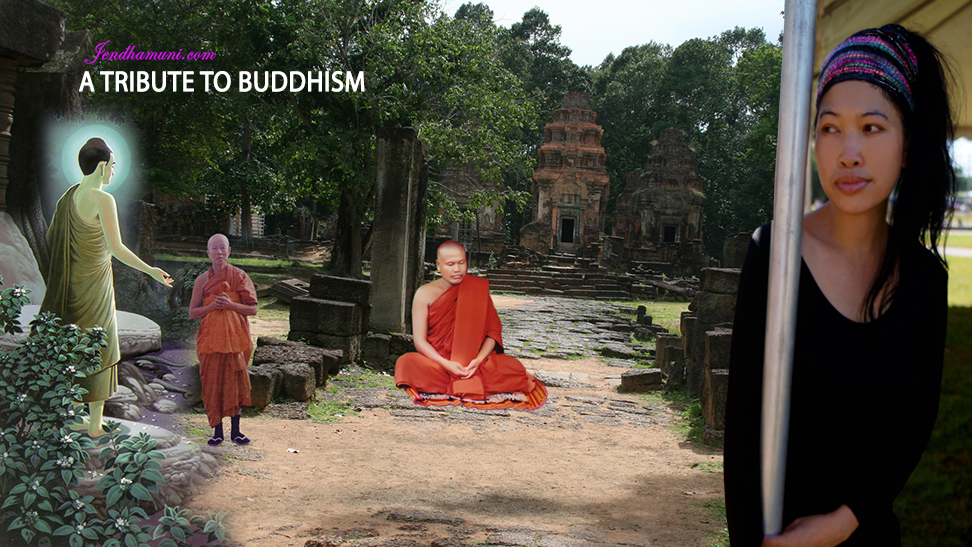
    “A pure heart is not easily provoked, offended, or resentful. This tranquility arises from a monk’s efforts to detach from worldly worries and fears.”

    Caption: Venerable Buddhasattha and Samanera Ananda at Wat Kiryvongsa Bopharam

  6. Fresh air and sunshine are hard to beat

    Comment

    Jendhamuni at Lake Dennison on August 6, 2025.

    Some old-fashioned things like fresh air and sunshine are hard to beat. – Laura Ingalls Wilder

    “Fresh air is as good for the mind as for the body. Nature always seems trying to talk to us as if she had some great secret to tell. And so she has.” – John Lubbock

  7. We need very little to be happy

    Comment

    Happiness is not having what you want. It is wanting what you have. – Rabbi Hyman Schachtel

    Nature teaches us simplicity and contentment because in its presence we realize we need very little to be happy. – Mark Coleman

    I hope these simple things are what I forever love about life, for then I will be happy no matter where I find myself. – R.Y.S. Perez

  8. The Story of King Pasenadi of Kosala

    Comment

    Verse 204: Health is the greatest gift, contentment is the greatest wealth, a trusted friend is the best relative, Nibbana is the greatest bliss.

    1. vissasaparama: vissasa + parama: vissasa here means trust, also interpreted as intimacy.

    The Story of King Pasenadi of Kosala

    While residing at the Jetavana monastery, the Buddha uttered Verse (204) of this book, with reference to King Pasenadi of Kosala.

    One day, King Pasenadi of Kosala went to the Jetavana monastery after having his full morning meal. It was said that the king had eaten one quarter basket (about half a bushel) of rice with meat curry on that day; so while listening to the Buddha’s discourse he felt very sleepy and was nodding most of the time. Seeing him nodding, the Buddha advised him to take a little less rice everyday and to decrease the amount on a sliding scale to the minimum of one-sixteenth part of the original amount he was taking. The king did as he was told and found that by eating less he became thin, but he felt very much lighter and enjoyed much better health. When he told the Buddha about this, the Buddha said to him, “O king! Health is a great boon; contentment is a great wealth; a close and trusted friend is the best relative; Nibbana is the greatest bliss.” Continue reading


Live & Die for Buddhism

candle

Khmer Tipitaka 1 – 110

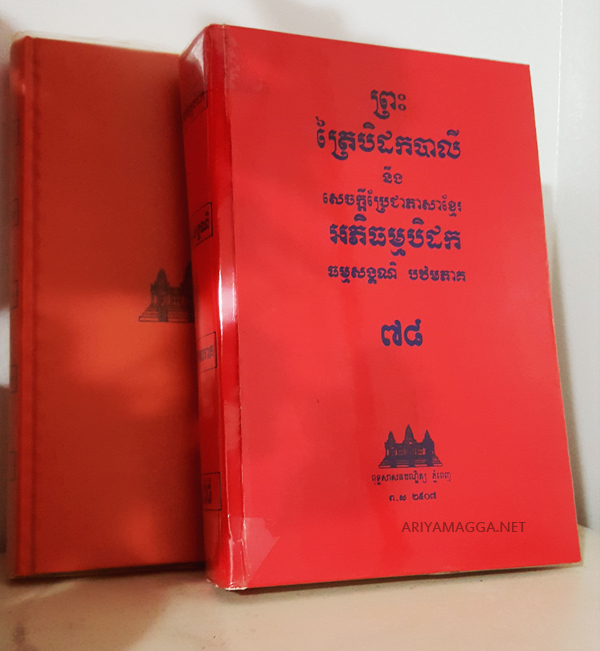
 ព្រះត្រៃបិដក

ព្រះត្រៃបិដក ប្រែថា កញ្រ្ចែង ឬ ល្អី​ ៣ សម្រាប់ដាក់ផ្ទុកពាក្យពេចន៍នៃព្រះសម្មាសម្ពុទ្ធ

The Tipitaka or Pali canon, is the collection of primary Pali language texts which form the doctrinal foundation of Theravada Buddhism. The three divisions of the Tipitaka are: Vinaya Pitaka, Sutta Pitaka, Abhidhamma Pitaka.

Maha Ghosananda

Maha Ghosananda

Supreme Patriarch of Cambodian Buddhism (5/23/1913 - 3/12/07). Forever in my heart...

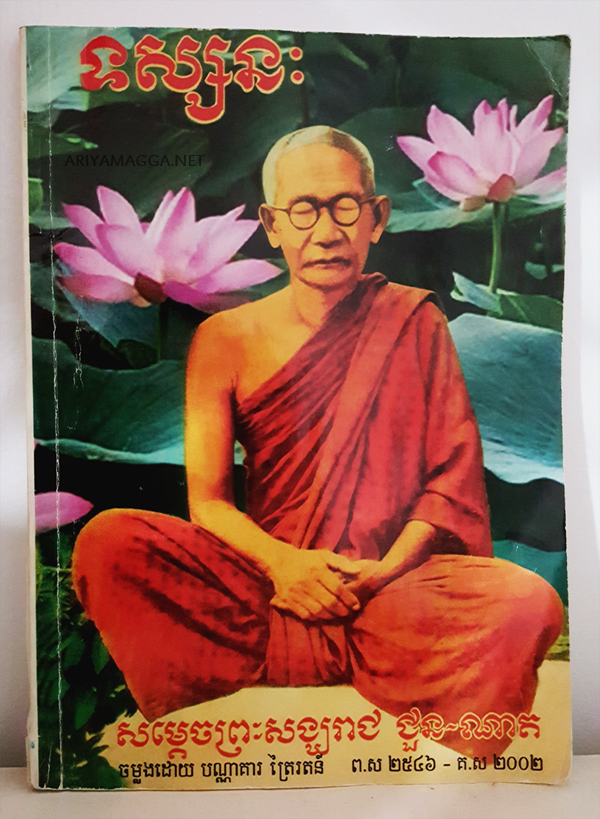
Samdech Chuon Nath

My reflection

វចនានុក្រមសម្តេចសង្ឃ ជួន ណាត
Desktop version

Listen to Khmer literature and Dhamma talk by His Holiness Jotannano Chuon Nath, Supreme Patriarch of Cambodia Buddhism.

Shantidevas’ Bodhisattva vows

My reflection

Should anyone wish to ridicule me and make me an object of jest and scorn why should I possibly care if I have dedicated myself to others?

Let them do as they wish with me so long as it does not harm them. May no one who encounters me ever have an insignificant contact.

Regardless whether those whom I meet respond towards me with anger or faith, may the mere fact of our meeting contribute to the fulfilment of their wishes.

May the slander, harm and all forms of abuse that anyone should direct towards me act as a cause of their enlightenment.

As a solid rock is not shaken by the wind, so the wise are not shaken by blame and praise. As a deep lake is clear and calm, so the wise become tranquil after they listened to the truth…

Good people walk on regardless of what happens to them. Good people do not babble on about their desires. Whether touched by happiness or by sorrow, the wise never appear elated or depressed. ~The Dhammapada

Hermit of Tbeng Mountain

Sachjang Phnom Tbeng សច្ចំ​​ ភ្នំត្បែង is a very long and interesting story written by Mr. Chhea Sokoan, read by Jendhamuni Sos. You can click on the links below to listen. Part 1 | Part 2

Beauty in nature

A beautiful object has no intrinsic quality that is good for the mind, nor an ugly object any intrinsic power to harm it. Beautiful and ugly are just projections of the mind. The ability to cause happiness or suffering is not a property of the outer object itself. For example, the sight of a particular individual can cause happiness to one person and suffering to another. It is the mind that attributes such qualities to the perceived object. — Dilgo Khyentse Rinpoche

Nature is loved by what is best in us. The sky, the mountain, the tree, the animal, give us a delight in and for themselves. — Ralph Waldo Emerson


Our journey for peace
begins today and every day.
Each step is a prayer,
Each step is a meditation,
Each step will build a bridge.

—​​​ Maha Ghosananda