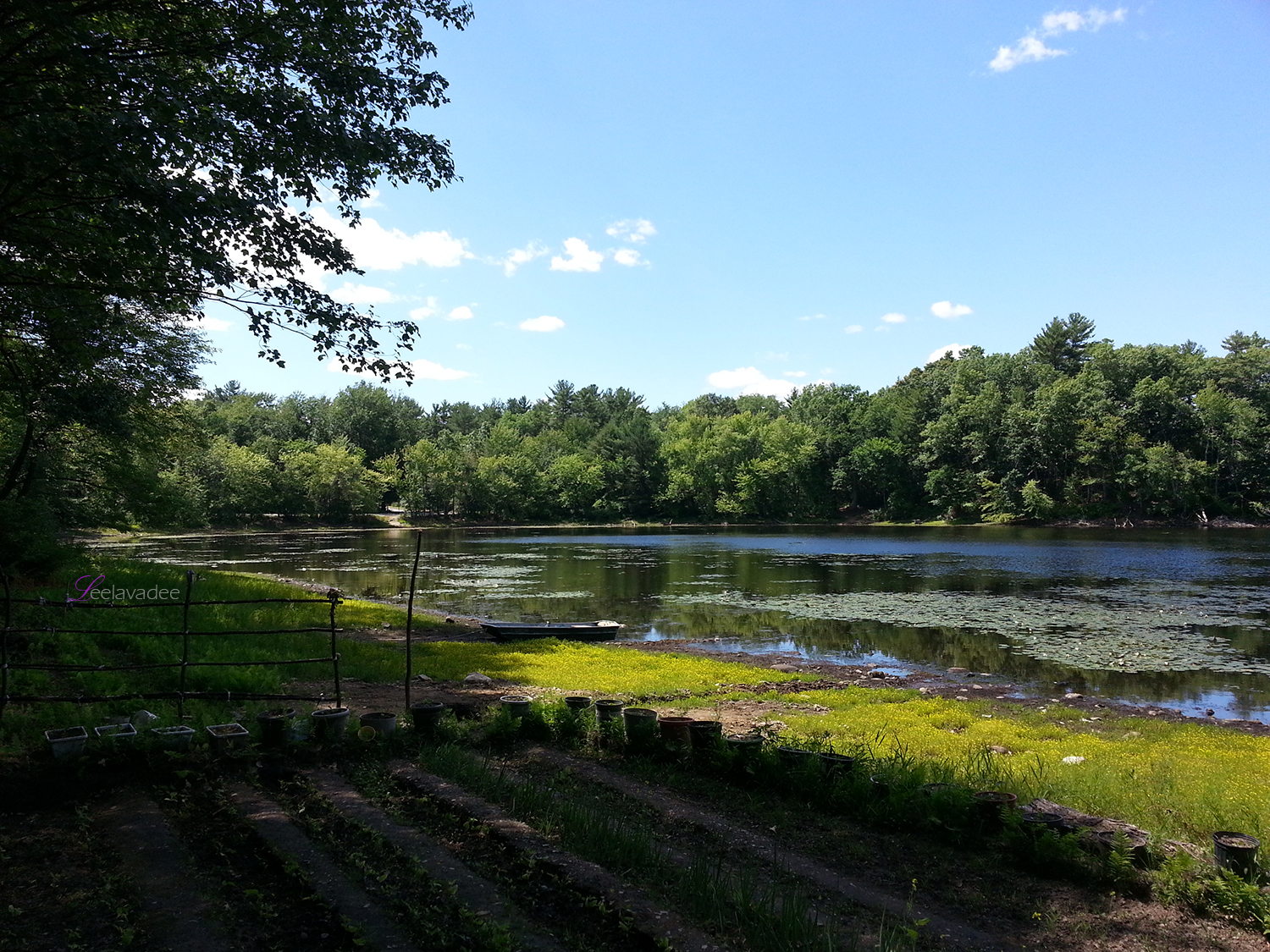
Verse 95: Like the earth, the arahat is patient and is not provoked to respond in anger; like the door-post he is firm; he is unperturbed by the ups and downs of life; he is serene and pure like a lake free from mud. For such an arahat there will be no more rebirth.
1. apetakaddamo: free from mud. The lake water being free from mud is unpolluted; the arahat being free from defilements is also serene and pure.
The Story of Thera Sariputta
While residing at the Jetavana monastery, the Buddha uttered Verse (95) of this book, with reference to the Chief Disciple Sariputta and a young bhikkhu.
It was the end of the vassa; and Thera Sariputta was about to set out on a journey with some followers. A young bhikkhu, who bore some grudge against the thera, approached the Buddha and falsely reported that Thera Sariputta had abused him and beaten him. The Buddha therefore sent for the thera and questioned him, and Thera Sariputta replied as follows: “Venerable Sir! How could a bhikkhu, who steadfastly keeps his mind on the body, set out on a journey without apologizing, after doing wrong to a fellow bhikkhu? I am like the earth, which feels no pleasure when flowers are cast on it, nor resentment when rubbish and excreta are piled upon it. I am also like the door-mat, the beggar, the bull with broken horns; I also feel abhorrence for the impurity of the body and am no longer attached to it.”
When Thera Sariputta spoke thus, the young bhikkhu felt very much distressed and wept bitterly, and admitted that he had lied about the Chief Disciple Sariputta. Then the Buddha advised Thera Sariputta to accept the apology of the young bhikkhu, lest a heavy punishment should fall on him and get his head crushed. The young bhikkhu then admitted that he had done wrong and respectfully asked for pardon. Thera Sariputta pardoned the young bhikkhu and also asked to be forgiven if he also had done any wrong.
All those present talked in praise of Thera Sariputta, and the Buddha said, “Bhikkhus, a bhikkhu like Sariputta has no anger or ill will in him. Like the earth and the door-post, he is patient, tolerant, and firm; like the lake free from mud, he is serene and pure.”
Then the Buddha spoke in verse as follows:
Verse 95: Like the earth, the arahat is patient and is not provoked to respond in anger; like the door-post he is firm; he is unperturbed by the ups and downs of life; he is serene and pure like a lake free from mud. For such an arahat there will be no more rebirth.
Dhammapada Verse 95
Sariputtatthera Vatthu
Pathavisamo no virujjhati
indakhilupamo tadi subbato
rahadova apetakaddamo1
samsara na bhavanti tadino.
Source: Tipitaka

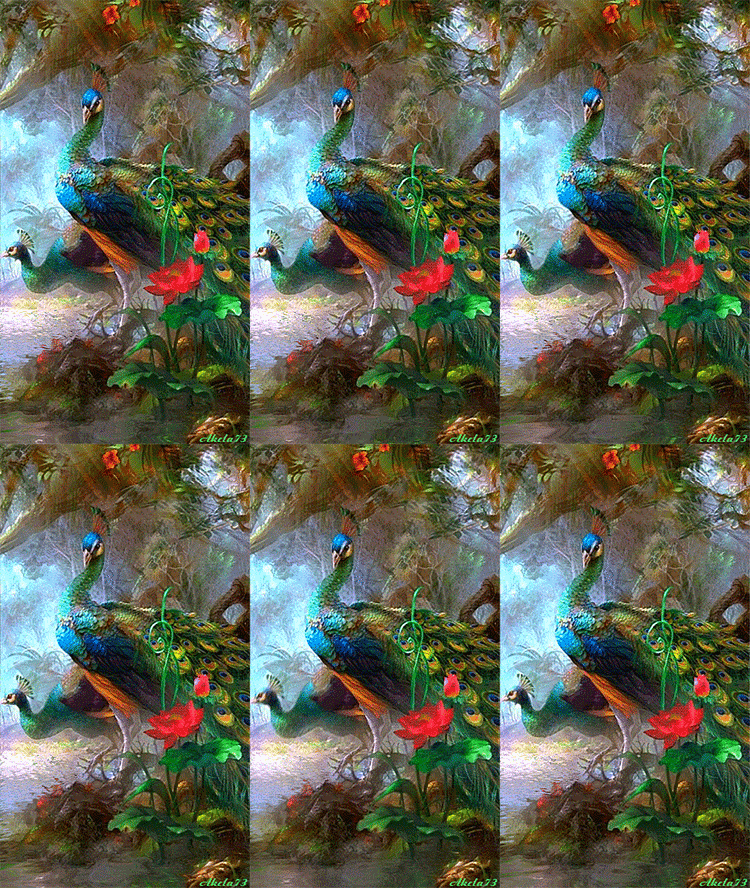
Technically, only peacocks are large, colorful pheasants (typically blue and green) known for their iridescent tails. These tail feathers, or coverts, spread out in a distinctive train that is more than 60 percent of the bird’s total body length and boast colorful “eye” markings of blue, gold, red, and other hues. The large train is used in mating rituals and courtship displays. It can be arched into a magnificent fan that reaches across the bird’s back and touches the ground on either side. Females are believed to choose their mates according to the size, color, and quality of these outrageous feather trains.
The term “peacock” is commonly used to refer to birds of both sexes. Technically, only males are peacocks. Females are peahens, and together, they are called peafowl.
Suitable males may gather harems of several females, each of which will lay three to five eggs. In fact, wild peafowl often roost in forest trees and gather in groups called parties.
Peacocks are ground-feeders that eat insects, plants, and small creatures. There are two familiar peacock species. The blue peacock lives in India and Sri Lanka, while the green peacock is found in Java and Myanmar (Burma). A more distinct and little-known species, the Congo peacock, inhabits African rain forests.
Peafowl such as the blue peacock have been admired by humans and kept as pets for thousands of years. Selective breeding has created some unusual color combinations, but wild birds are themselves bursting with vibrant hues. They can be testy and do not mix well with other domestic birds.
Fast Facts
Type: Bird
Diet: Omnivore
Average life span in the wild: 20 years
Size: Body, 35 to 50 in (90 to 130 cm); Tail, 5 ft (1.5 m)
Weight: 8.75 to 13 lbs (4 to 6 kg)
Group name: Party
Did you know? A male peafowl is one of the largest flying birds when the combined length of its train and its large wingspan are considered.
Size relative to a 6-ft (2-m) man.
Source: National Geographic
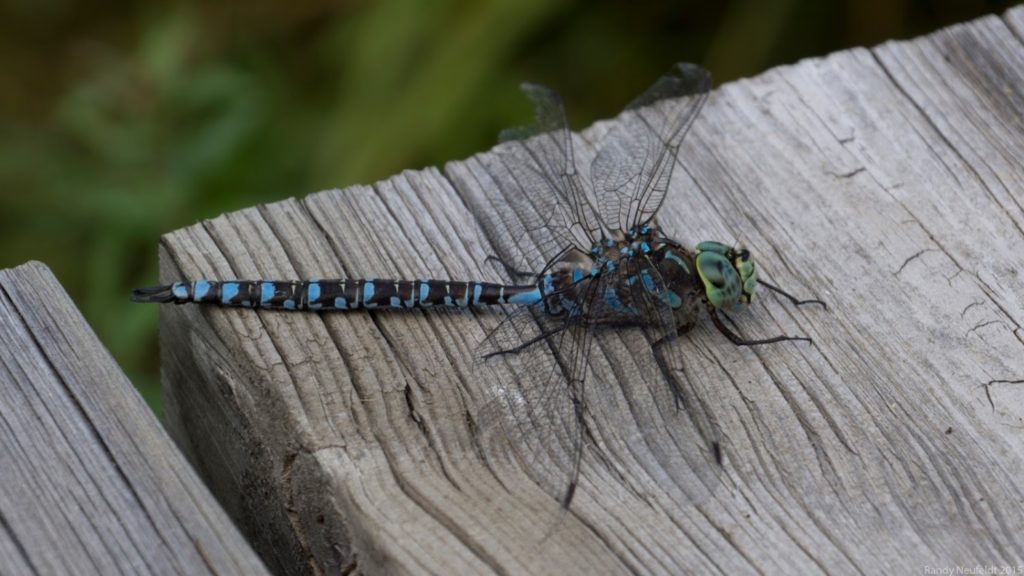
Of all the flying insects, dragonflies just might be the most charming. They don’t sting or bite. They don’t carry diseases or germs. And they have bright colors and an amazing way of flying. Dragonflies live in most parts of the world, but they prefer to live near ponds or streams.
Dragonflies and their smaller cousins, damselflies, spend most of their life as larva, or baby dragonflies. They hatch from eggs under water and feed on water insects, tiny fish and even tadpoles. They can stay in the larval stage for up to two years, depending on the species. Then they leave the water and come ashore. Their hard exoskeleton cracks and their abdomen, or bottom part, expands. Their wings harden and they become adults. Unfortunately, most adult dragonflies live only a few weeks.
Fun Facts About Dragonflies for Kids
There are over 3,600 kinds of dragonflies on the planet.
Dragonflies have sharp teeth. They are fierce hunters. Some dragonflies float over the water like hawks looking for prey. Others dart about grabbing prey quickly. Dragonflies catch insects with their feet. They are expert hunters.
A dragonfly can eat hundreds of mosquitoes in a single day.
Dragonflies can fly straight up and down and side to side.
Source: easyscienceforkids
Link to this article