
1. The Good Buddhist

    Comment

    The preceding sections of this essay will help the Buddhist lay follower to understand, from a practical angle, the main points of the Buddha’s teachings as they bear on the conduct of daily life. Constant practice of these principles will ensure that they are built into his character, enabling him to develop into a well-rounded human being, a center of sanity in a confused world adrift in fashionable philosophies full of empty promises.

    At the very minimum a lay follower of the Buddha must keep the Five Precepts, which enables him to develop virtue in regard to his bodily and verbal behavior. But one should not stop with this. One who seeks the true perfection of happiness must also attend to the cultivation of the mind. One must be mindful of the arising of unwholesome states such as greed, anger, and delusion, and know how to deal with them effectively when they threaten to throw one off balance. One should proceed even further and attempt to cultivate the mind systematically through the practice of meditation for tranquillity and insight. Continue reading

  2. What the buddha really taught?

    Comment

    Sabbapāpassa akaraṇaṃ,
    kusalassa upasampadā;
    Sacitta­pari­yo­dapa­naṃ,
    etaṃ buddhāna sāsanaṃ.

    To avoid all evil,
    to cultivate wholesome qualities,
    and to cleanse one’s mind—
    this is the teaching of the Buddhas.
    Dhp 14 Buddha Vagga

  3. Arañña Sutta: A Face So Calm

    Comment

    Translated from the Pali by Andrew Olendzki

    [Devata:]
    Those who abide in the forest,
    Peaceful, living the holy life;
    Those who eat but a single meal;
    — why is it their face is so calm?

    [The Buddha:]
    They do not grieve over the past,
    Nor do they yearn for the future;
    They live only in the present
    — That is why their face is so calm. Continue reading

  4. We accumulate layers of ideas about who we are

    2

    Samanera Ananda

    As we go through life, we accumulate layers of ideas about who we are and what we’re capable of achieving. As these layers accumulate, we tend to become increasingly rigid in our identification with certain views about ourselves and the world around us. Gradually, we lose our connection to the basic openness, clarity, and love that is the essence of our being. Our awareness is overwhelmed by hundreds of different thoughts, feelings, and sensations. Some we latch onto because they’re attractive fantasies or scary preoccupations; some we try to shove away because they’re too upsetting or because they distract us from whatever we’re trying to accomplish at the moment.

    Instead of focusing on some of them and pushing away others, though, just look at them as feathers flying in the wind. The wind is your awareness, your inborn openness and clarity. Feathers — the thoughts, emotions, and physical sensations that pass through our awareness — are harmless. Some may be more attractive than others, some less attractive; but essentially they’re just feathers. Look at them as fuzzy, curly things floating through the air. Continue reading

  5. Aghatavinaya Sutta: Subduing Hatred

    Comment

    Translated from the Pali by Thanissaro Bhikkhu

    “There are these five ways of subduing hatred by which, when hatred arises in a monk, he should wipe it out completely. Which five?

    “When one gives birth to hatred for an individual, one should develop good will for that individual. Thus the hatred for that individual should be subdued.

    “When one gives birth to hatred for an individual, one should develop compassion for that individual. Thus the hatred for that individual should be subdued.

    “When one gives birth to hatred for an individual, one should develop equanimity toward that individual. Thus the hatred for that individual should be subdued. Continue reading

  6. Do Not Speak Harsh Words

    Comment

    Words have the power to heal—or to harm. The Buddha taught that harsh speech not only hurts others, but also disturbs our own peace of mind.

    Hatred, indeed, has never yet dispelled hate. Only love dispels hate. Hatred just leads to revenge, and revenge leads to more hate. A cycle of suffering is set in motion that can go on and on. Many places in the world today give sad evidence of this truth.

    Hatred is an extreme form of anger. The Buddha’s teachings take anger very serious­ly, because anger causes so much suffering.

    Even when anger is not acted out and is apparently controlled, a person who is inwardly angry can instantly change the atmosphere of a room when he enters. He brings an invisible chill with him. Anyone nearby tightens up and draws back, becomes less spontaneous and more guarded. This happens without any conscious doing. It seems simply a response on the cellular level to the quality of energy that anger gives out. Continue reading

  7. Visakha Puja: Buddha’s birth, enlightenment, and passing into Nibbana

    2

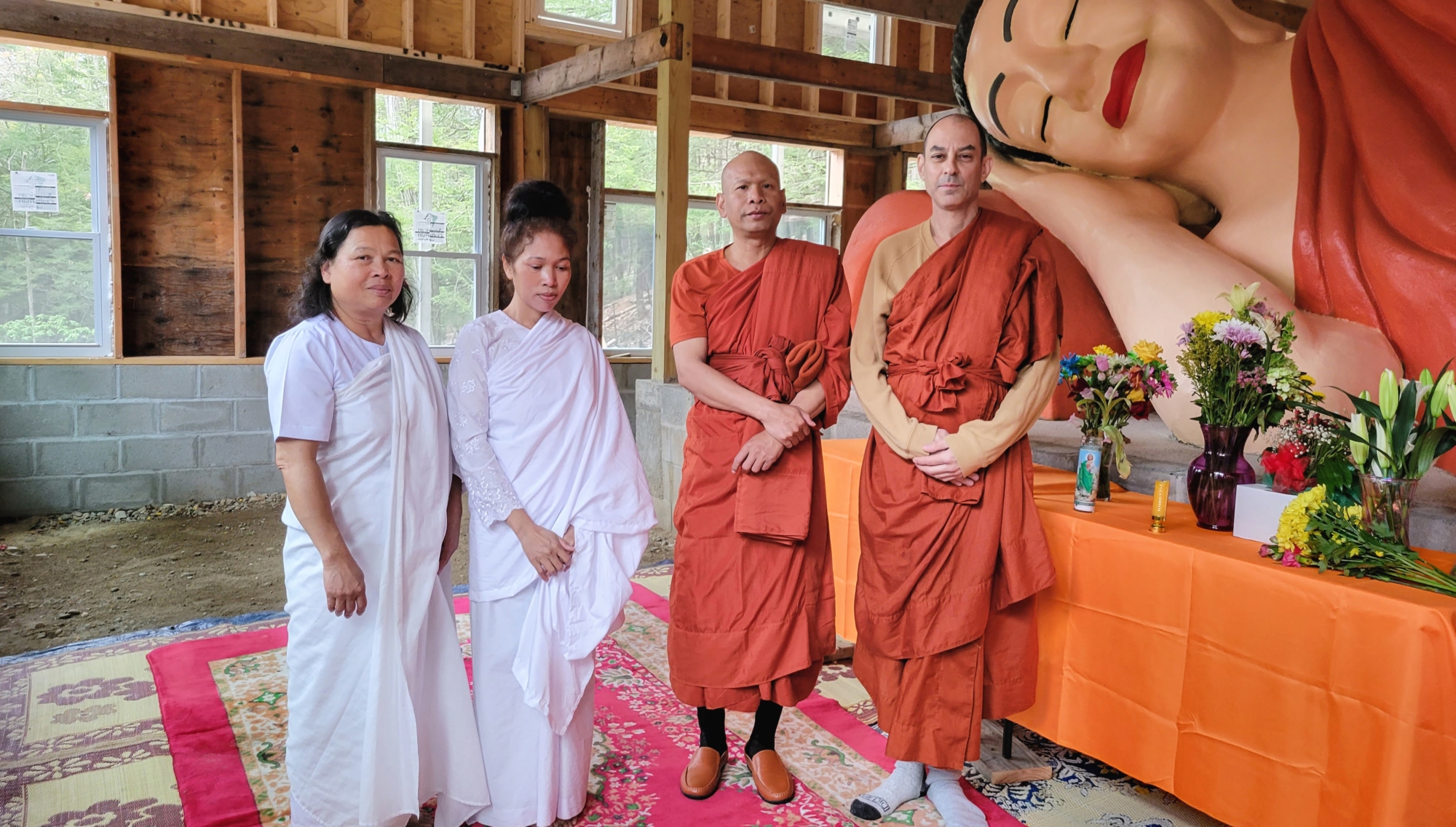
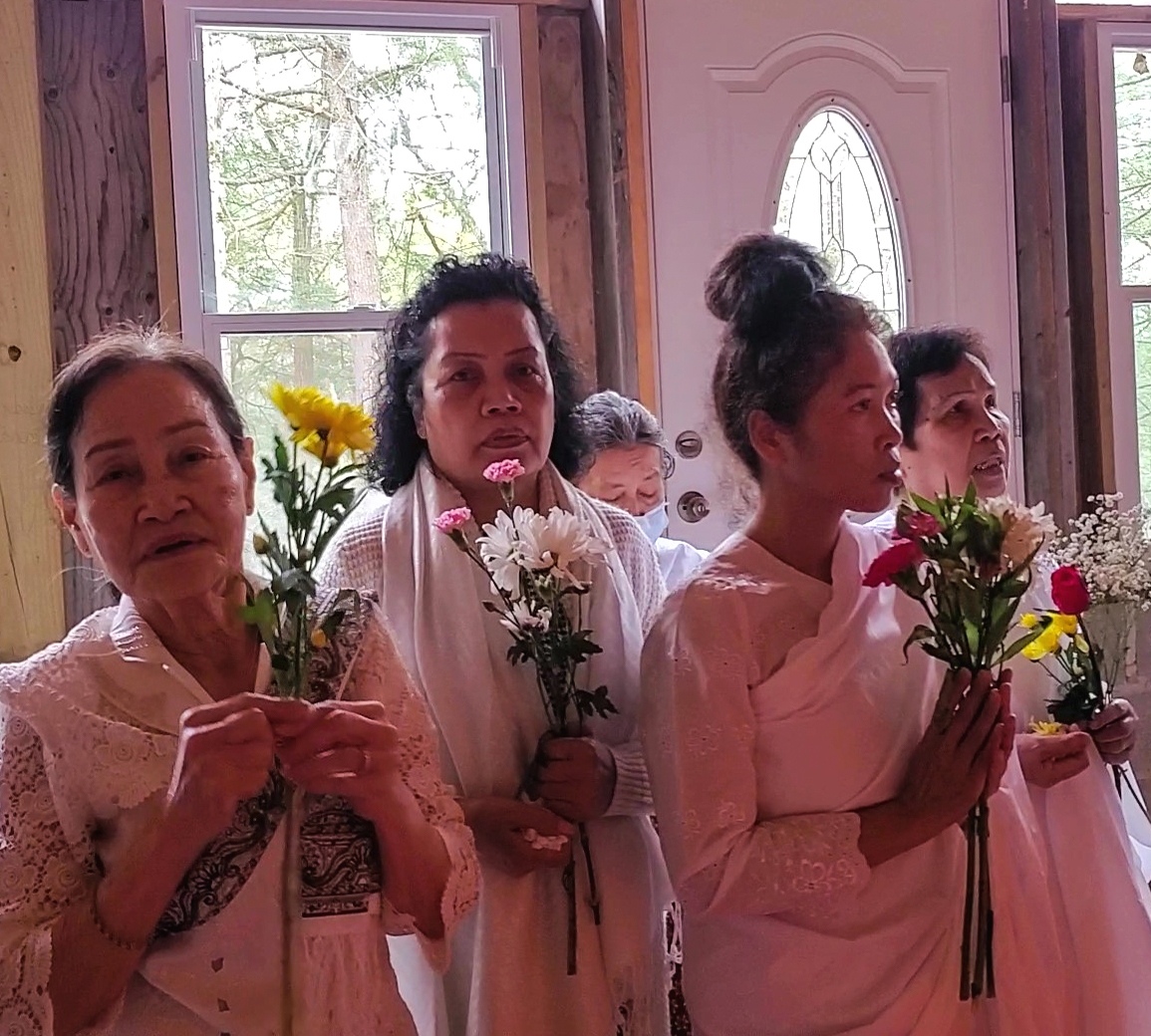
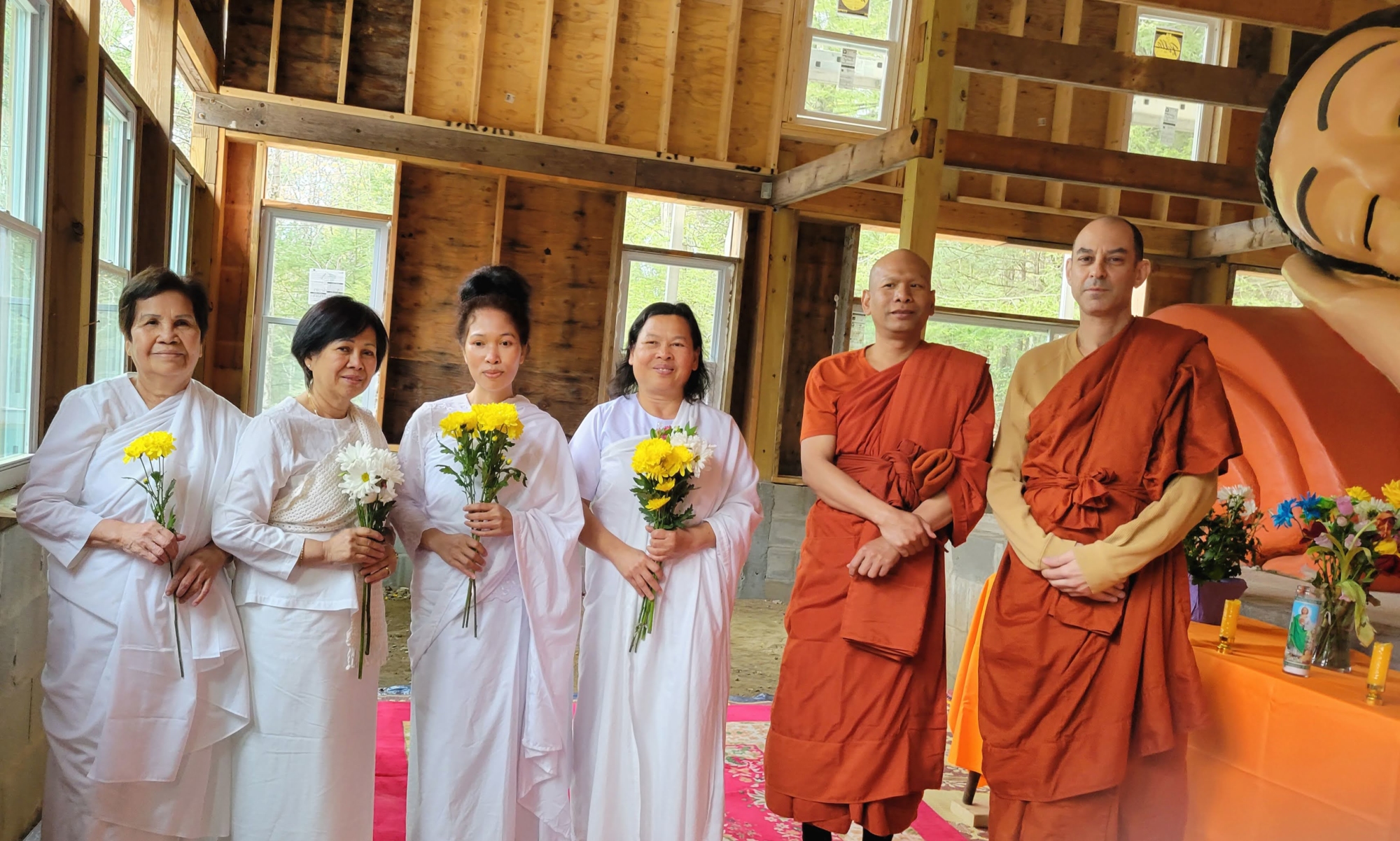
    Celebrating the birth, enlightenment and parinibbana of the Lord Buddha at Wat Kiryvongsa Bopharam, Peace Meditation Center on May 4, 2023.

    Celebrating the birth, enlightenment and parinibbana of the Lord Buddha at Wat Kiryvongsa Bopharam, Peace Meditation Center on May 4, 2023.

    Visakha Puja Day (Vesak) is one of the most important days in Buddhism and for Buddhists. It is the day Buddhists assemble to commemorate the life of the Buddha, and to give reverence to His purity, profound wisdom and immense compassion for all humankind and living beings by reflecting and using His teachings as guidelines for their lives. Visakha Puja Day also marks the anniversary of three significant events in the life of the Buddha – His Birth, Enlightenment, and Attainment of Complete Nibbana – that occurred on the 15th day of the 6th waxing moon. — Dhammakaya

    Celebrating the birth, enlightenment and parinibbana of the Lord Buddha at Wat Kiryvongsa Bopharam, Peace Meditation Center on May 4, 2023.

  8. Understanding the condition

    Comment

    In order to be able to truly integrate one’s practice with one’s life, a few sessions of sitting meditation a day are simply not enough, because we live a twenty-four hour day, and an hour or two of practice just won’t give the right results. “Integrating”, on the other hand, means understanding the condition of “what is” in relation to life itself, without correcting it, so that every circumstance of one‘s life becomes an occasion for practice. — Namkhai Norbu Rinpoche


  9. Detachment and Compassion in Early Buddhism

    Comment

    By Elizabeth J. Harris

    To people looking at Buddhism through the medium of English, the practice of compassion and detachment can appear incompatible, especially for those who consider themselves to be socially and politically engaged. In contemporary usage, compassion brings to mind outward-moving concern for others, while detachment suggests aloofness and withdrawal from the world. Yet Buddhism recommends both as admirable and necessary qualities to be cultivated. This raises questions such as the following:

    If compassion means to relieve suffering in a positive way, and detachment to remain aloof from the world, how can the two be practiced together?

    Does detachment in Buddhism imply lack of concern for humanity?

    Is the concept of compassion in Buddhism too passive, connected only with the inward-looking eye of meditation, or can it create real change in society?

    It is certainly possible to draw sentences from Buddhist writers which seem to support a rejection of outward concern for others. For example, Edward Conze has written, “The Yogin can only come into contact with the unconditioned when he brushes aside anything which is conditioned.”[1] Similarly, G.S.P. Misra writes, “In the final analysis, all actions are to be put to cessation… The Buddha speaks of happiness involved in non-action which he further says is an integral part of the Right Way (sammaa pa.tipadaa).[2] Taken in isolation and out of context, these remarks can give the impression that the path to Nibbaana implies developing a lack of concern towards everything in sa.msaara. But is this inference sound? I would argue that it is not. Continue reading

  10. The Bhikkhus’ Rules

    2

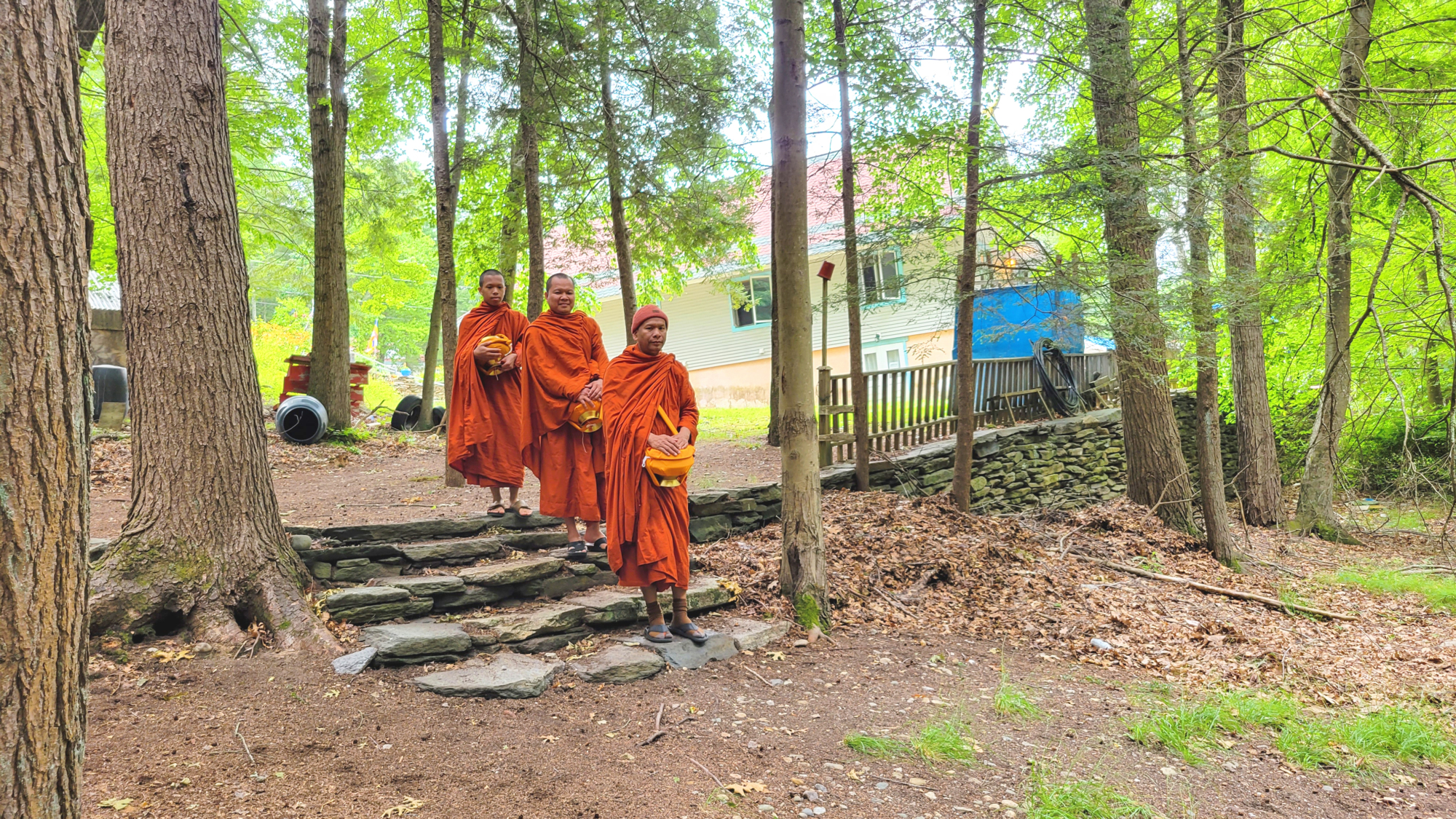
    Bhikkhu Buddha Saddha Vey Ve​​, Bhikkhu Indajoto and Samanera Ananda at the Kiryvongsa Bopharam Buddhist Temple, the Peace Meditation Center.

    The Teaching of the Buddha is concerned with more than intellectual knowledge for it needs to be experienced as truth in one’s own life. The Buddha often called his Teaching the Dhamma-Vinaya and when he passed away he left these as the guide for all of us who followed. As Venerable Thiradhammo writes:

    In simple terms we could say that while Dhamma represented the principles of Truth, the Vinaya represented the most efficacious lifestyle for the realization of that Truth. Or, the Vinaya was that way of life which enshrined the principles of Truth in the practicalities of living within the world.” (HS Part 2)
    For the bhikkhu, the Vinaya helps to highlight actions and speech, and show up their significance. It brings an awareness of how he is intervening in the world, how he is affecting other people. For better? For worse? With what intention?

    Of course, such an awareness is necessary for every human being, not just Buddhist monks. This is why the Buddha bequeathed to us the Five, the Eight and the Ten Precepts — as well as the bhikkhu’s 227 rules of the Paatimokkha. These precepts and rules remain as pertinent today as they were 2,500 years ago for they restore the focus back to the human being, to how actions and words affect individuals and the world. While the particulars may have changed, the fundamentals remain the same. Continue reading

Live & Die for Buddhism

candle

Me & Grandma

My Reflection

This site is a tribute to Buddhism. Buddhism has given me a tremendous inspiration to be who and where I am today. Although I came to America at a very young age, however, I never once forget who I am and where I came from. One thing I know for sure is I was born as a Buddhist, live as a Buddhist and will leave this earth as a Buddhist. I do not believe in superstition. I only believe in karma.

A Handful of Leaves

A Handful of Leaves

Tipitaka: The pali canon (Readings in Theravada Buddhism). A vast body of literature in English translation the texts add up to several thousand printed pages. Most -- but not all -- of the Canon has already been published in English over the years. Although only a small fraction of these texts are available here at Access to Insight, this collection can nonetheless be a very good place to start.

Major Differences

Major Differences in Buddhism

Major Differences in Buddhism: There is no almighty God in Buddhism. There is no one to hand out rewards or punishments on a supposedly Judgement Day ...read more

Problems we face today

jendhamuni pink scarfnature

Of the many problems we face today, some are natural calamities and must be accepted and faced with equanimity. Others, however, are of our own making, created by misunderstanding, and can be corrected...