1. The ability to see the humanity in people

    Comment

    Loving kindness is a form of love that truly is an ability, and, as research scientists have shown, it can be learned. It is the ability to take some risks with our awareness to look at ourselves and others with kindness instead of reflexive criticism; to include in our concern those to whom we normally pay no attention; to care for ourselves unconditionally instead of thinking, “I will love myself as long as I never make a mistake.” It is the ability to gather our attention and really listen to others, even those we’ve written off as not worth our time. It is the ability to see the humanity in people we don’t know and the pain in people we find difficult. ~Sharon Salzberg

    running-water-in-forest-082915


  2. A delusive quest for happiness

    Comment

    By engaging in a delusive quest for happiness, we bring only suffering upon ourselves. In our frantic search for something to quench our thirst, we overlook the water all around us and drive ourselves into exile from our own lives. ~Sharon Salzberg

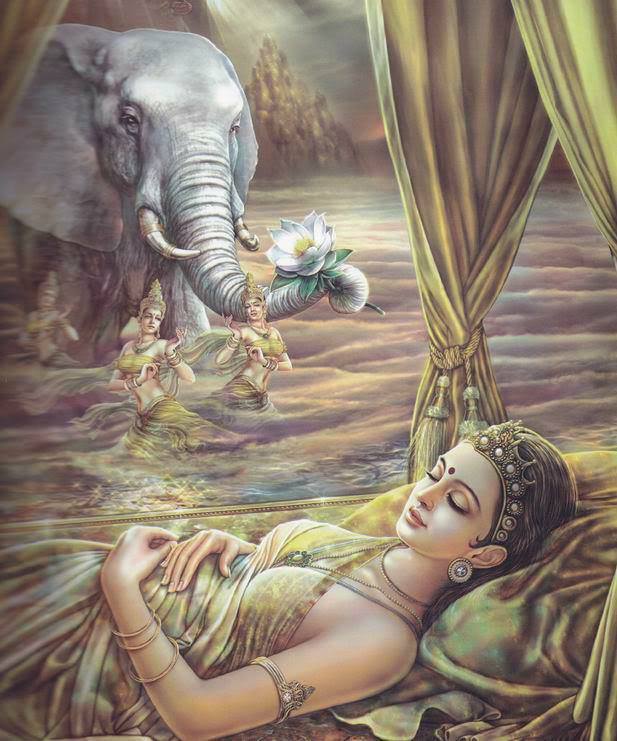
    Buddha and Mara's daughters


  3. Make peace with yourself

    Comment

    “When you make peace with yourself, you make peace with the world.” ~H.H. Maha Ghosananda

    Sometimes we think that to develop an open heart, to be truly loving and compassionate, means that we need to be passive, to allow others to abuse us, to smile and let anyone do what they want with us. Yet this is not what is meant by compassion. Quite the contrary. Compassion is not at all weak. It is the strength that arises out of seeing the true nature of suffering in the world. Compassion allows us to bear witness to that suffering, whether it is in ourselves or others, without fear; it allows us to name injustice without hesitation, and to act strongly, with all the skill at our disposal. To develop this mind state of compassion…is to learn to live, as the Buddha put it, with sympathy for all living beings, without exception. ~Sharon Salzberg

    H.H. Maha Ghosananda, Supreme Patriarch of Cambodia Buddhism

    H.H. Maha Ghosananda, Supreme Patriarch of Cambodia Buddhism


  4. The greatest hindrances to compassion

    Comment

    Jendhamuni with little brother 082515


    by Tenzin Gyatso, The Fourteenth Dalai Lama

    How can we start

    We should begin by removing the greatest hindrances to compassion: anger and hatred. As we all know, these are extremely powerful emotions and they can overwhelm our entire mind. Nevertheless, they can be controlled. If, however, they are not, these negative emotions will plague us – with no extra effort on their part! – and impede our quest for the happiness of a loving mind.

    So as a start, it is useful to investigate whether or not anger is of value. Sometimes, when we are discouraged by a difficult situation, anger does seem helpful, appearing to bring with it more energy, confidence and determination.

    Here, though, we must examine our mental state carefully. While itis true that anger brings extra energy, if we explore the nature of this energy, we discover that it is blind: we cannot be sure whether its result will be positive or negative. This is because anger eclipses the best part of our brain: its rationality. So the energy of anger is almost always unreliable. It can cause an immense amount of destructive, unfortunate behavior. Moreover, if anger increases to the extreme, one becomes like a mad person, acting in ways that are as damaging to oneself as they are to others.

    It is possible, however, to develop an equally forceful but far more controlled energy with which to handle difficult situations.

    This controlled energy comes not only from a compassionate attitude, but also from reason and patience. These are the most powerful antidotes to anger. Unfortunately, many people misjudge these qualities as signs of weakness. I believe the opposite to be true: that they are the true signs of inner strength. Compassion is by nature gentle, peaceful and soft, but it is very powerful. It is those who easily lose their patience who are insecure and unstable. Thus, to me, the arousal of anger is a direct sign of weakness.

    So, when a problem first arises, try to remain humble and maintain a sincere attitude and be concerned that the outcome is fair. Of course, others may try to take advantage of you, and if your remaining detached only encourages unjust aggression, adopt a strong stand, This, however, should be done with compassion, and if it is necessary to express your views and take strong countermeasures, do so without anger or ill-intent.
    You should realize that even though your opponents appear to be harming you, in the end, their destructive activity will damage only themselves. In order to check your own selfish impulse to retaliate, you should recall your desire to practice compassion and assume responsibility for helping prevent the other person from suffering the consequences of his or her acts.

    Thus, because the measures you employ have been calmly chosen, they will be more effective, more accurate and more forceful. Retaliation based on the blind energy of anger seldom hits the target.

    Link source


  5. How to achieve happiness

    Comment

    Cambodia today

    by Tenzin Gyatso, The Fourteenth Dalai Lama

    For a start, it is possible to divide every kind of happiness and suffering into two main categories: mental and physical. Of the two, it is the mind that exerts the greatest influence on most of us. Unless we are either gravely ill or deprived of basic necessities, our physical condition plays a secondary role in life. If the body is content, we virtually ignore it. The mind, however, registers every event, no matter how small. Hence we should devote our most serious efforts to bringing about mental peace.

    From my own limited experience I have found that the greatest degree of inner tranquility comes from the development of love and compassion.

    The more we care for the happiness of others, the greater our own sense of well-being becomes. Cultivating a close, warm-hearted feeling for others automatically puts the mind at ease. This helps remove whatever fears or insecurities we may have and gives us the strength to cope with any obstacles we encounter. It is the ultimate source of success in life.

    As long as we live in this world we are bound to encounter problems. If, at such times, we lose hope and become discouraged, we diminish our ability to face difficulties. If, on the other hand, we remember that it is not just ourselves but every one who has to undergo suffering, this more realistic perspective will increase our determination and capacity to overcome troubles. Indeed, with this attitude, each new obstacle can be seen as yet another valuable opportunity to improve our mind!

    Thus we can strive gradually to become more compassionate, that is we can develop both genuine sympathy for others’ suffering and the will to help remove their pain. As a result, our own serenity and inner strength will increase.

    Link source


  6. Our need for love

    Comment
    Carnation Contrast. Photo credit: Randy

    Carnation Contrast. Photo credit: Randy


    by Tenzin Gyatso, The Fourteenth Dalai Lama

    Ultimately, the reason why love and compassion bring the greatest happiness is simply that our nature cherishes them above all else. The need for love lies at the very foundation of human existence. It results from the profound interdependence we all share with one another. However capable and skillful an individual may be, left alone, he or she will not survive. However vigorous and independent one may feel during the most prosperous periods of life, when one is sick or very young or very old, one must depend on the support of others.

    Inter-dependence, of course, is a fundamental law of nature. Not only higher forms of life but also many of the smallest insects are social beings who, without any religion, law or education, survive by mutual cooperation based on an innate recognition of their interconnectedness. The most subtle level of material phenomena is also governed by interdependence. All phenomena from the planet we inhabit to the oceans, clouds, forests and flowers that surround us, arise in dependence upon subtle patterns of energy. Without their proper interaction, they dissolve and decay.

    It is because our own human existence is so dependent on the help of others that our need for love lies at the very foundation of our existence. Therefore we need a genuine sense of responsibility and a sincere concern for the welfare of others.

    We have to consider what we human beings really are. We are not like machine-made objects. If we are merely mechanical entities, then machines themselves could alleviate all of our sufferings and fulfill our needs.

    However, since we are not solely material creatures, it is a mistake to place all our hopes for happiness on external development alone. Instead, we should consider our origins and nature to discover what we require.

    Leaving aside the complex question of the creation and evolution of our universe, we can at least agree that each of us is the product of our own parents. In general, our conception took place not just in the context of sexual desire but from our parents’ decision to have a child. Such decisions are founded on responsibility and altruism – the parents compassionate commitment to care of their child until it is able to take care of itself. Thus, from the very moment of our conception, our parents’ love is directly in our creation.

    Moreover, we are completely dependent upon our mothers’ care from the earliest stages of our growth. According to some scientists, a pregnant woman’s mental state, be it calm or agitated, has a direct physical effect on her unborn child.

    The expression of love is also very important at the time of birth. Since the very first thing we do is suck milk from our mothers’ breast, we naturally feel close to her, and she must feel love for us in order to feed us properly; if she feels anger or resentment her milk may not flow freely.

    Then there is the critical period of brain development from the time of birth up to at least the age of three or four, during which time loving physical contact is the single most important factor for the normal growth of the child. If the child is not held, hugged, cuddled, or loved, its development will be impaired and its brain will not mature properly.

    Since a child cannot survive without the care of others, love is its most important nourishment. The happiness of childhood, the allaying of the child’s many fears and the healthy development of its self-confidence all depend directly upon love.

    Nowadays, many children grow up in unhappy homes. If they do not receive proper affection, in later life they will rarely love their parents and, not infrequently, will find it hard to love others. This is very sad. Continue reading

  7. Avoid speaking negative things

    Comment

    Avoid speaking negative things. If we concentrate on the bad side, we lose sight of the good. When we concentrate on the good. We take on goodness. ~Paramhansa Yogananda

    pink-flower-in-raini

  8. At dawn…

    Comment

    At dawn I asked the lotus,
    ‘What is the meaning of life?’
    Slowly she opened her hand
    with nothing in it.

    ~Debra Woolard Bender

    Jendhamuni sitting near thorns RI081515


  9. You will always look lovely

    Comment

    If you have good thoughts they will shine out of your face like sunbeams and you will always look lovely. ~Roald Dahl

    white flowers 082215

  10. Respect and love your parents

    Comment

    Respect and love your parents as long as you have them. You may get everything in life but once they are gone you can’t have them back ever. ~Anurag Prakash Ray

    elder-and-Buddhist-monk-082215

Live & Die for Buddhism

candle

Me & Grandma

My Reflection

This site is a tribute to Buddhism. Buddhism has given me a tremendous inspiration to be who and where I am today. Although I came to America at a very young age, however, I never once forget who I am and where I came from. One thing I know for sure is I was born as a Buddhist, live as a Buddhist and will leave this earth as a Buddhist. I do not believe in superstition. I only believe in karma.

A Handful of Leaves

A Handful of Leaves

Tipitaka: The pali canon (Readings in Theravada Buddhism). A vast body of literature in English translation the texts add up to several thousand printed pages. Most -- but not all -- of the Canon has already been published in English over the years. Although only a small fraction of these texts are available here at Access to Insight, this collection can nonetheless be a very good place to start.

Major Differences

Major Differences in Buddhism

Major Differences in Buddhism: There is no almighty God in Buddhism. There is no one to hand out rewards or punishments on a supposedly Judgement Day ...read more

Problems we face today

jendhamuni pink scarfnature

Of the many problems we face today, some are natural calamities and must be accepted and faced with equanimity. Others, however, are of our own making, created by misunderstanding, and can be corrected...