
1. Genuine cooperation is essential

    Comment

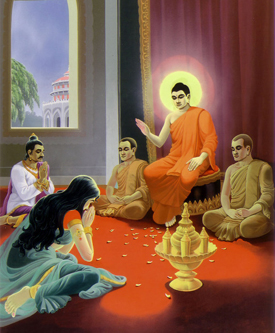
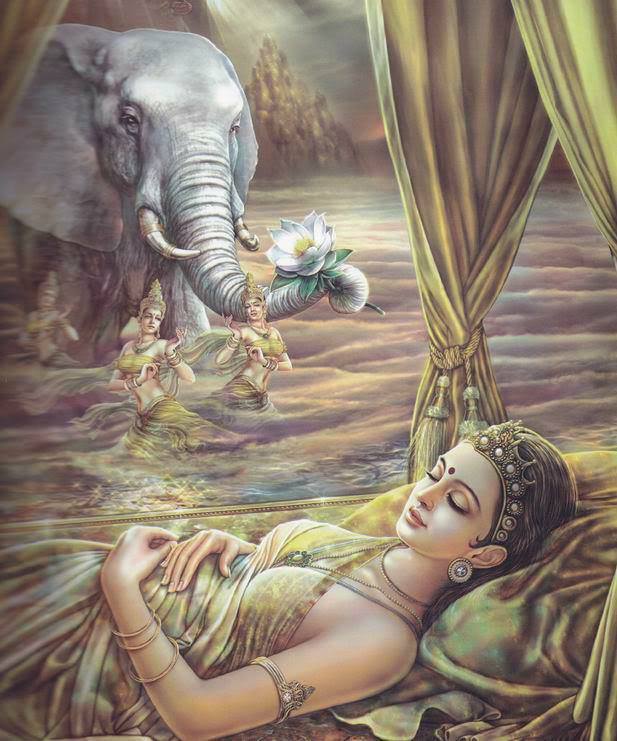
    Mahamaya

    Love and kindness are the very basis of society. If we lose these feelings, society will face tremendous difficulties; the survival of humanity will be endangered. Together with material development, we need spiritual development so that inner peace and social harmony can be experienced. Without inner peace, without inner calm, it is difficult to have lasting peace. In this field of inner development religion can make important contributions.

    Although in every religion there is an emphasis on compassion and love, from the viewpoint of philosophy, of course there are differences, and that is all right. Philosophical teachings are not the end, not the aim, not what you serve. The aim is to help and benefit others, and philosophical teachings to support those ideas are valuable. If we go into the differences in philosophy and argue with and criticize each other, it is useless. There will be endless argument; the result will mainly be that we irritate each other — accomplishing nothing. Better to look at the purpose of the philosophies and to see what is shared — an emphasis on love, compassion, and respect for a higher force.

    No religion basically believes that material progress alone is sufficient for humankind. All religions believe in forces beyond material progress. All agree that it is important and worthwhile to make strong effort to serve human society.

    To do this, it is important that we understand each other. In the past, due to narrow-mindedness and other factors, there has sometimes been discord between religious groups. This should not happen again. If we look deeply into the value of a religion in the context of the worldwide situation, we can easily transcend these unfortunate happenings. For there are many areas of common ground on which we can have harmony. Let us just be side by side — helping, respecting, and understanding each other — in common effort to serve humankind. The aim of human society must be the compassionate betterment of human beings.

    Politicians and world leaders are trying their best to achieve arms control and so forth, and this is useful. At the same time, we who have certain beliefs have a duty and responsibility to control our own bad thoughts. This is the real disarmament, our own arms control. With inner peace and full control of bad thoughts, external control is not particularly significant. Without inner control, no matter what steps are taken, external efforts will not make much difference. Therefore, under the present circumstances, we in the religious community have a special responsibility to all humanity — a universal responsibility.

    The world situation is such that continent to continent all are heavily dependent on each other, and under such circumstances genuine cooperation is essential. This depends on good motivation. That is our universal responsibility.

    ~By His Holiness Dalai Lama
    An Excerpt from Kindness, Clarity, and Insight by the Dalai Lama
    Link source


  2. Bodhisattva Prayer for Humanity

    Comment

    buddha-healing-elephant

    May I be a guard for those who need protection
    A guide for those on the path
    A boat, a raft, a bridge for those who wish to cross the flood
    May I be a lamp in the darkness
    A resting place for the weary
    A healing medicine for all who are sick
    A vase of plenty, a tree of miracles
    And for the boundless multitudes of living beings
    May I bring sustenance and awakening
    Enduring like the earth and sky
    Until all beings are freed from sorrow
    And all are awakened.

    Shantideva, Indian Buddhist sage700 A.D.
    Prayer performed each morning by His Holiness the Dalai Lama

  3. Message for All: The Flower of mankind

    Comment

    Buddha and monksby Dr. K. Sri Dhammananda

    Buddha–the flower of mankind, is no more in this world, but the sweet fragrance of His peace message remains forever.

    Buddhism is one of the oldest religions still being practised in the world today. While the names of many other religions which existed in India have been forgotten today, the teachings of the Buddha, (better known as the Dhamma) are still relevant to the needs of today’s society. This is because the Buddha has always considered himself as human religious teacher whose message was meant to promote the happiness and well-being of other human beings. The Buddha’s primary concern was to help His followers to live a normal life without either going to the extremes of self-denial or totally surrendering to sensual desires. The practical nature of the Buddha’s teaching is revealed in the fact that not everyone is expected to attain exactly the same goal in one lifetime, since the mental impurities are deeply rooted. Some people are spiritually more advanced than others and they can proceed to greater heights according to their state of development. But every single human being has the ultimate potential to attain the supreme goal of Buddhahood if he has the determination and will to do so. Even now does the soft, sweet voice of the Buddha ring in our ears. And sometimes we perhaps feel a little ashamed because we do not understand Him fully. Often we only praise His Teaching and respect Him, but do not try to practise what He preached. The Buddha’s Teaching and message have had their effect on all people for thousands of years whether they believe in religion or not. His message is for all.

    Though the Buddha, the flower of mankind, is no longer in this world, the sweet fragrance and exquisite aroma of His Teachings have spread far and wide. Its balmy, diffusing fragrance has calmed and soothed millions. Its ambrosial perfume has heartened and cheered every nation which it has penetrated. The reason that His Teachings have captured millions of hearts is because they were spread(not by weapons or political power)but by love and compassion for humanity. Not a drop of blood stains its pure path. Buddhism wins by the warm touch of love, not by the cold claws of fear. Fear of the supernatural and the doctrine of everlasting hell-fire have no place in Buddhism. During the last 25 centuries since the appearance of the Buddha, many changes have taken place in this world. Kingdoms have risen and fallen; nations have prospered and perished. However, the world today has forgotten many of these past civilizations. But the name of the Buddha remains alive and fresh in the minds of millions of people today. The Kingdom of Righteousness that He built is still strong and steady. Although many temples, pagodas, images, libraries and other religious symbols erected in His honor were destroyed, His untainted Noble Name and the message He gave remain in the minds of cultured people. The Buddha taught man that the greatest of conquests was not the subjugation of others but of the self. He taught in the Dhammapada, ‘Even though a man conquers ten thousand men in battle, he who conquers but himself is the greatest of conquerors’. Perhaps the best example of how the gentle message of the Compassionate One could rehabilitate the most savage of men is the case of the Emperor Asoka. About two hundred years after the Buddha, this king waged fierce battles across India and caused great anguish and fear. But when he absorbed the Dhamma, he regretted the evil that he had done. We remember and honor him today because after his conversion to the path of peace, he embarked on another battle: a battle to bring peace to mankind. He proved without doubt that the Buddha was right when He asserted that true greatness springs from love, not hatred, from humility, not pride; from compassion, not cruelty. The Emperor Asoka’s conversion from cruelty to kindness was so complete that he forbade even the killing of animals in his kingdom. He realized that his subjects stole because of want and he set out to reduce want in his kingdom. But above all, he instructed the followers of the Buddha to remember the Master’s teaching never to force their beliefs on others who were loyal to other religious leaders. In other cases we have heard of kings who, upon conversion, diverted their thirst for blood by spreading their new religion by the sword! Only Buddhism can take pride in a king who has never been equaled in such greatness before or ever since.

    The Buddha’s Teachings were introduced in order that societies could be cultured and civilized and live in peace and harmony. All of life’s most difficult problems can be better understood if we but try to learn and practise His teachings. The Buddha’s approach to the problems and suffering of mankind is straightforward and direct. The Buddha was the greatest conqueror the world has ever seen. He conquered the world with His infallible weapons of love and truth. His Teaching illuminates the Way for mankind to cross from a world of darkness, hatred, and suffering, to a new world of light, love and happiness.


  4. Prayer of Lovingkindness

    Comment

    little buddhaIn order that I may be skilled in discerning what is good, in order that I may understand the path to peace,

    Let me be able, upright, and straightforward, of good speech, gentle, and free from pride;

    Let me be contented, easily satisfied, having few duties, living simply, of controlled senses, prudent, without pride and without attachment to nation, race, or other groups.

    Let me not do the slightest thing for which the wise might rebuke me. Instead let me think:

    “May all beings be well and safe, may they be at ease.

    Whatever living beings there may be, whether moving or standing still, without exception, whether large, great, middling, or small, whether tiny or substantial,

    Whether seen or unseen, whether living near or far,

    Born or unborn; may all beings be happy.

    Let none deceive or despise another anywhere. Let none wish harm to another, in anger or in hate.”

    Just as a mother would guard her child, her only child, with her own life, even so let me cultivate a boundless mind for all beings in the world.

    Let me cultivate a boundless love for all beings in the world, above, below, and across, unhindered, without ill will or enmity.

    Standing, walking, seated, or lying down, free from torpor, let me as far as possible fix my attention on this recollection. This, they say, is the divine life right here.”

    Translated and adapted by Bodhipaksa from the Pali Metta Sutta.

    Source: www.wildmind.org

  5. Fortune telling, magic charms, etc.

    Comment
    Alien Orchid. Photo credit: Randy Neufeldt

    Alien Orchid. Photo credit: Randy Neufeldt

    Question: What did the Buddha teach about magic and fortune telling?

    Answer: The Buddha considered such practices as fortune telling, wearing magic charms for protection, fixing lucky sites for building, prophesizing and fixing lucky days to be useless superstitions and he expressly forbids his disciples to practice such things. He calls all these things ‘low arts.’

    “Whereas some religious men, while living of food provided by the faithful make their living by such low arts, such wrong means of livelihood as palmistry, divining by signs, interpreting dreams… bringing good or bad luck… invoking the goodness of luck… picking the lucky site for a building, the monk Gotama refrains from such low arts, such wrong means of livelihood.” D.I, 9-12

    Question: Then why do people sometimes practice such things and believe in them?

    Answer: Because of greed, fear and ignorance. As soon as people understand the Buddha’s teachings, they realize that a pure heart can protect them much better than bits of paper, bits of metal and a few chanted words and they no longer rely on such things. In the teachings of the Buddha, it is honesty, kindness, understanding, patience, forgiveness, generosity, loyalty and other good qualities that truly protect you and give you true prosperity.

    Question: But some lucky charms do work, don’t they?

    Answer: I know a person who makes a living selling lucky charms. He claims that his charms can give good luck, prosperity and he guarantees that you will be able to pick three numbers. But if what he says is true then why isn’t he himself a multi-millionaire? If his lucky charms really work, then why doesn’t he win the lottery week after week? The only luck he has is that there are people silly enough to buy his magic charms.

    Question: Then is there such a thing as luck?

    Answer: The dictionary defines luck as ‘believing that whatever happens, either good or bad, to a person in the course of events is due to chance, fate or fortune.’ The Buddha denied this belief completely. Everything that happens has a specific cause or causes and there must be some relationships between the cause and the effect. Becoming sick, for example, has specific causes. One must come into contact with germs and one’s body must be weak enough for the germs to establish themselves. There is a definite relationship between the cause (germs and a weakened body) and the effect (sickness) because we know that germs attack the organisms and give rise to sickness. But no relationship can be found wearing a piece of paper with words written on it and being rich or passing examinations. Buddhism teaches that whatever happens does so because of a cause or causes and not due to luck, chance or fate. People who are interested in luck are always trying to get something – usually more money and wealth. The Buddha teaches us that it is far more important to develop our hearts and minds. He says:

    Being deeply learned and skilled. Being well-trained and using well-spoken words; this is the best good luck. To support mother and father, to cherish wife and child and to have a simple livelihood; this is the best good luck. Being generous, just, helping one’s relatives and being blameless in one’s actions; this is the best good luck. To refrain from evil and from strong drink, and to be always steadfast in virtue; this is the best good luck. Reverence, humility, contentment, gratitude and hearing the good Dhamma; this is the best good luck. Sn. 261-265

    ~by Ven. Dr. S. Dhammika
    Source: www.buddhanet.net


  6. The Buddhist Attitude to Animal Life

    Comment
    Banff Black Wolf Family with Mom in front, Dad to the left and 3 cubs.  Photo credit: Randy Neufeldt

    Banff Black Wolf Family with Mom in front, Dad to the left and 3 cubs. Photo credit: Randy Neufeldt


    Venerable K. Sri Dhammananda Maha Thera

    If we believe that animals were created by someone for men, it would follow that men were also created for animals since some animals do eat human flesh.

    Animals are said to be conscious only of the present. They live with no concern for the past or future. Likewise, little children seem to have no notion of the future. They also live in the present until their faculties of memory and imagination are developed.

    Men possesses the faculty of reasoning. The gap between man and animal widens only to the extent that man develops his reasoning faculty and acts accordingly. Buddhists accept that animals not only possesses instinctive power but also, to a lesser degree, thinking power.

    In some respects, animals are superior to men. Dogs have a keener sense of hearing; insects have a keener sense of smell; hawks are speedier; eagles can see a greater distance. Undoubtedly, men are wiser; but men have so much to learn from the ants and bees. Much of the animal is still in us. But we also have much more: we have the potential of spiritual development.

    Buddhism cannot accept that animals were created by someone for men; if animals were created for men then it could follow that men were also created for animals since there are some animals which eat human flesh.

    Buddhists are encouraged to love all living beings and not to restrict their love only to human beings. They should practise loving kindness towards every living being. The Buddha’s advice is that is not right for us to take away the life of any living being since every living being has a right to exist. Animals also have fear and pain as do human beings. It is wrong to take away their lives. We should not misuse our intelligence and strength to destroy animals even though they may sometimes be a nuisance to us. Animals need our sympathy. Destroying them is not the only method to get rid of them. Every living being is contributing something to maintain this world. It is unfair for us to deprive their living rights. Continue reading

  7. How often do you contemplate death?

    Comment

    Buddhalotusflowers

    By Ajahn Jagaro

    First of all, why should we think about death? Why should we contemplate it? Not only did the Buddha encourage us to speak about death, he encouraged us to actually think about it, contemplate it and reflect on it regularly.

    On one occasion the Buddha asked several of the monks, “How often do you contemplate death?”

    One of them replied, “Lord, I contemplate death every day.”

    “Not good enough,” the Buddha said, and asked another monk, who replied,

    “Lord, I contemplate death with each mouthful that I eat during the meal.”

    “Better, but not good enough,” said the Buddha, “What about you?”

    The third monk said, “Lord, I contemplate death with each inhalation and each exhalation.”

    That’s all it takes, the inhalation comes in, it goes out, and one day it won’t come in again – and that’s it. That’s all there is between you and death, just that inhalation, the next inhalation.

    Obviously the Buddha considered this a very important part of meditation and training towards becoming more wise and more peaceful. Why is it that this contemplation is encouraged? Because we don’t usually want to think or talk about death. Be it conscious or unconscious, there is a fear of death, a tendency to avoid it, a reluctance to come face to face with this reality.

    Death is very much a part of life; it’s just as much a part of life as birth. In fact, the moment of birth implies death. From the moment of conception it is only a matter of time before death must come – to everyone. No one can escape it. That which is born will die. The mind and body which arise at the time of conception develop, grow and mature. In other words, they follow the process of aging. We call it growing up at first, then growing old, but it’s just a single process of maturing, developing, evolving towards the inevitable death. Everyone of you has signed a contract, just as I did. You may not remember signing that contract, but everyone has said, “I agree to die.” Every living being, not only human, not only animal, but in every plane, in every realm, everywhere there is birth, there is the inevitable balance – death.


  8. Meditation and Wisdom

    Comment

    No concentration wisdom lacks,
    no wisdom concentration lacks,
    in whom are both these qualities
    near to Nibbana is that one.
    ~Dhammapada

    Explanation: For one who lacks meditation there is no wisdom.
    Both meditation and wisdom are essential and cannot be had
    without the other. If in a person, both wisdom and meditation
    are present, he is close to Nibbana. Source: BuddhaNet

    lord Buddha


  9. Wisdom not Superstition

    Comment

    BuddhateachingSimilar to other religions, Buddhism has incorporated various types of traditions, custom, miracles, mysticism, fortune-telling, fung-shui, charms, talismans, mantras, prayers and many rites and rituals that may not be found in the original teaching. As a result, people give more attention to self-protection from evil spirits and to seeking good luck and prosperity, etc. They are only interested in discovering ways to get rid of misfortunes, difficulties and bad influence of stars, black magic, etc. by external powers. Thus, religious practices and beliefs are degenerated, and confined to worldly pursuits. People become superstitious because of their blind faith in the name of that religion.The Buddha rejects superstitions but urges us to pursue wisdom. The Buddha teaches us to develop the most important practices: self-discipline, self-restraint, cultivation of morality and spiritual development. The Buddha also teaches us to cultivate the strength of will-power, wisdom, understanding of Mind and self-nature.

    Ideal worship, not idol worship

    Regarding as a way of cultivation, some people place the Buddhist images to worship. However, if they pray the images requesting for guidance and protection for health and wealth for good luck and fame, for power and love, etc, or if they ask favours from the images and figures to forgive their evil deeds, then they are not in the right path of cultivation.

    The worship of the Buddhist images is to pay respects to the Buddha, the greatest, wisest, most benevolent, compassionate man who has ever lived in this world. The images help people to recall the Buddha in their mind. They may be used as a symbol or an object of concentration to gain a piece of mind. The serenity of the Buddhist images influences and inspires them to observe the right path of conduct and thought.

    The recollection of the Buddha produces joy, invigorates the mind and elevates man from states of restlessness, tension and frustration. Thus, the worship of the Buddha is not a prayer in its usual sense, but a meditation. Therefore, it is not idol worship, but “ideal” worship.

    On the other hand, respecting the Buddha images without following Buddha’s teaching is not the way of cultivation. All worshippers should endeavour to understand the spirit of the Buddha.

    Spiritual power, not miraculous power

    In Buddhism, there are so-called Six Psychic Power, which can be attained through long and intense training in meditation. The Buddha has advised his disciples not to exercise such psychic power, such as walking on water, exorcising spirits, fortune-telling, etc. The people may be converted and attracted to a religion, not because they realize the truth, but because they harbour hallucinations. It is not appropriate. In Buddhism, miracles can hinder a person to attain enlightenment.

    The Buddha says that a person can gain miraculous power without gaining spiritual power. However, it is dangerous because this power may be misused, and harmful to people. These so-called miracles are merely imaginations and hallucinations created by their own minds due to a lack of understanding of things as they truly are. The Buddha expressly forbade his disciples to use miracles to prove the superiority of his teachings. The Buddha teaches us to cultivate and gain the spiritual power, then we automatically have the psychic power too. The latter is the “side-product” of the former, but the Buddha advises us not to crave and cling to the psychic power, or any other responses in form. The change for the better arising from an understanding of Dharma.

    Source: http://www.buddhistdoor.com


  10. Impurity

    Comment

    Life seems easy for one who is shameless,
    who is a crowing hero, a mischief-maker,
    an insulting, impudent, and corrupt person.
    But life seems difficult for one who is modest,
    who always looks for what is pure,
    who is detached, quiet, clear, and intelligent.

    ~Buddha

    young children begging

    ទិដ្ឋភាព​ក្មេង​សុំទាន​តាម​ផ្លូវ​នៅ​ភ្នំពេញ: ក្មេង​តូចៗ ឬ​ទារក​មួយ​ចំនួន កំពុង​ត្រូវ​បាន​គេ​ប្រើប្រាស់​​ជា​នុយ​ដើម្បី​សុំ​លុយ​ពី​អ្នក​ដំណើរ និង​ទេសចរ​នៅ​តាម​ចំណុច​សំខាន់ៗ​នានា ក្នុង​រាជធានី​ភ្នំពេញ។ ដោយ អ៊ួន ឈិន RFA 2015-03-19


Live & Die for Buddhism

candle

Me & Grandma

My Reflection

This site is a tribute to Buddhism. Buddhism has given me a tremendous inspiration to be who and where I am today. Although I came to America at a very young age, however, I never once forget who I am and where I came from. One thing I know for sure is I was born as a Buddhist, live as a Buddhist and will leave this earth as a Buddhist. I do not believe in superstition. I only believe in karma.

A Handful of Leaves

A Handful of Leaves

Tipitaka: The pali canon (Readings in Theravada Buddhism). A vast body of literature in English translation the texts add up to several thousand printed pages. Most -- but not all -- of the Canon has already been published in English over the years. Although only a small fraction of these texts are available here at Access to Insight, this collection can nonetheless be a very good place to start.

Major Differences

Major Differences in Buddhism

Major Differences in Buddhism: There is no almighty God in Buddhism. There is no one to hand out rewards or punishments on a supposedly Judgement Day ...read more

Problems we face today

jendhamuni pink scarfnature

Of the many problems we face today, some are natural calamities and must be accepted and faced with equanimity. Others, however, are of our own making, created by misunderstanding, and can be corrected...