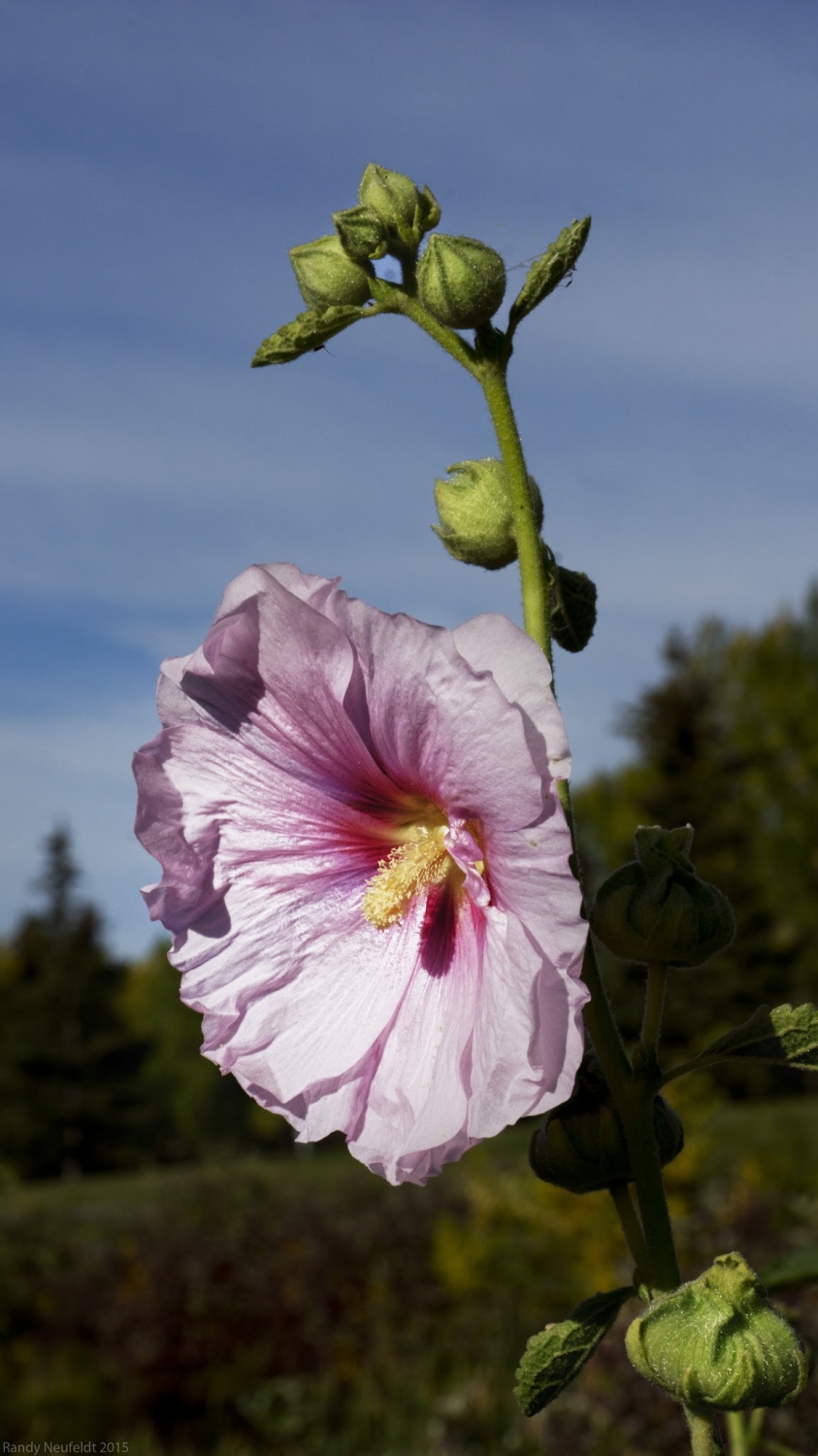
Verse 49: As the bee collects nectar and flies away without damaging the flower or its colour or its scent, so also, let the bhikkhu dwell and act in the village (without affecting the faith and generosity or the wealth of the villagers).
The Story of Kosiya, the Miserly Rich Man
While residing at the Jetavana monastery, the Buddha uttered Verse (49) of this book, with reference to the Chief Disciple Maha Moggallana and the miserly rich man, Kosiya.
In the village of Sakkara, near Rajagaha, there lived a miserly rich man by the name of Kosiya, who was very reluctant to give away even the tiniest part of anything belonging to him. One day, to avoid sharing with others, the rich man and his wife were making some pancakes in the uppermost storey of their house, where no one would see them.
Early in the morning, on that day, the Buddha through his supernormal power, saw the rich man and his wife in his vision, and knew that both of them would soon attain Sotapatti Fruition. So he sent his Chief Disciple Maha Moggallana to the house of the rich man, with instructions to bring the couple to the Jetavana monastery in time for the midday meal. The Chief Disciple, by supernormal power, reached Kosiya’s house in an instant and stood at the window. The rich man saw him and asked him to leave; the Venerable Maha Moggallana just stood there without saying anything. In the end, Kosiya said to his wife, “Make a very small pancake and give it to the bhikkhu.” So she took just a little amount of dough and put it in the pan, and the cake filled up the whole pan. Kosiya thought his wife must have put in too much, so he took just a pinch of dough and put it into the pan; his pancake also swelled into a big one. It so happened that however little dough they might put in, they were unable to make small pancakes. At last, Kosiya asked his wife to offer one from the basket to the bhikkhu. When she tried to take out one from the basket it would not come off because all the pancakes were sticking together and could not be separated. By this time Kosiya has lost all appetite for pancakes and offered the whole basket of pancakes to Maha Moggallana. The Chief Disciple then delivered a discourse on charity to the rich man and his wife. He also told the couple about how the Buddha was waiting with five hundred bhikkhus at the Jetavana monastery in Savatthi, forty-five yojanas away from Rajagaha. Maha Moggallana, by his supernormal power, then took both Kosiya and his wife together with their basket of pancakes, to the presence of the Buddha. There, they offered the pancakes to the Buddha and the five hundred bhikkhus. At the end of the meal, the Buddha delivered a discourse on charity, and both Kosiya and his wife attained Sotapatti Fruition.
Next evening, while the bhikkhus were talking in praise of Maha Moggallana, the Buddha came to them and said, “Bhikkhus, you should also dwell and act in the village like Maha Moggallana, receiving the offerings of the villagers without affecting their faith and generosity, or their wealth.”
Then the Buddha spoke in verse as follows:
Verse 49: As the bee collects nectar and flies away without damaging the flower or its colour or its scent, so also, let the bhikkhu dwell and act in the village (without affecting the faith and generosity or the wealth of the villagers).
Dhammapada Verse 49
Macchariyakosiyasetthi Vatthu
Yathipi bhamaro puppham
vannagandhamahethayam
paleti rasamadaya
evam game muni care.
Source: Tipitaka

Forget injuries, never forget kindnesses. Our greatest glory is not in never falling, but in getting up every time we do. To be able under all circumstances to practice five things constitutes perfect virtue; these five things are gravity, generosity of soul, sincerity, earnestness and kindness. ~Confucius
“Please, no matter how we advance technologically, please don’t abandon the book. There is nothing in our material world more beautiful than the book.” ~Patti Smith
A pretty face will get old,
A nice body will change,
but a good heart will always remain.
~Unknown
“It is very important to generate a good attitude, a good heart, as much as possible. From this, happiness in both the short term and the long term for both yourself and others will come.” ~Andrew David
The fact is that when you make the other suffer, he will try to find relief by making you suffer more. The result is an escalation of suffering on both sides. ~Hanh Nhat Thich
We cannot tell the precise moment when friendship is formed. As in filling a vessel drop by drop, there is at last a drop which makes it run over; so in a series of kindnesses there is at last one which makes the heart run over. ~Ray Bradbury
By Jack Kornfield
The karmic patterns that we create through our hearts transcend the limitations of time and space. To awaken the heart of compassion and wisdom in a response to all circumstances is to become a Buddha. When we awaken the Buddha within ourselves, we awaken to a universal force of spirit that can bring compassion and understanding to the whole of the world. Gandhi called this power Soul Force. It brings strength when powerful action is needed. It brings tremendous love and forgiveness, yet stands and speaks truth as well. It is this power of our heart that brings wisdom and freedom in any circumstance, that brings the kingdom of the spirit alive here on earth.
For Gandhi this spirit was always connected to his heart, always open to listen and ready to respond to the world by sharing the blessings of compassion with all beings: “Beyond my non-cooperation there is always the keenest desire to cooperate, on the slightest pretext, even with the worst of opponents. To me, a very imperfect mortal is ever in need of God’s grace, ever in need of the Dharma. No one is beyond redemption.”
MEDITATION ON FORGIVENESS
If we could read the secret history of our enemies, we should find in each person’s life sorrow and suffering enough to disarm all hostility. —Longfellow
Forgiveness is one of the greatest gifts of spiritual life. It enables us to be released from the sorrows of the past. Although it can arise spontaneously, it can also be developed. There is a way to cultivate forgiveness through an ancient and systematic practice. Forgiveness is used as a preparation for other heart-centered meditations, as a way to soften the heart and release the barriers to our lovingkindness and compassion. Through repeated practice, over and over, we can bring the spirit of forgiveness into the whole of our life.
Before you can do forgiveness practice, you must be clear about what forgiveness means. Forgiveness does not in any way justify or condone harmful actions. While you forgive, you may also say, “Never again will I knowingly allow this to happen.” You can resolve to sacrifice your own life to prevent further harm. Forgiveness does not mean you have to seek out or speak to those who caused you harm. You may choose never to see them again. Continue reading
One thing is certain: you can never become anything other than yourself, and unless you become yourself you cannot be happy. Happiness happens only when a rosebush grows roseflowers; when it flowers, when it has its own individuality. You may be a rosebush and trying to flower as lotus flower – that is creating insanity. Erase the mind. And the way to erase it is not by fight: the way to erase it is just to become aware. ~Rajneesh