1. The Story of Vitatubha

    Comment

    Buddha Kassapa

    Verse 47: Like one who picks and chooses flowers, a man who has his mind attached to sensual pleasures is carried away by Death, just as a great flood sweeps away a sleeping village.

    The Story of Vitatubha

    While residing at the Jetavana monastery, the Buddha uttered Verse (47) of this book, with reference to Vitatubha, son of King Pasenadi of Kosala.

    King Pasenadi of Kosala, wishing to marry into the clan of the Sakyans, sent some emissaries to Kapilavatthu with a request for the hand of one of the Sakyan princesses. Not wishing to offend King Pasenadi, the Sakyan princes replied that they would comply with his request, but instead of a Sakyan princess they sent a very beautiful girl born of King Mahanama and a slave woman. King Pasenadi made that girl one of his chief queens and subsequently she gave birth to a son. This son was named Vitatubha. When the prince was sixteen years old, he was sent on a visit to King Mahanama and the Sakyan princes. There he was received with some hospitality but all the Sakyan princes who were younger than Vitatubha had been sent away to a village, so that they would not have to pay respect to Vitatubha. After staying a few days in Kapilavatthu, Vitatubha and his company left for home. Soon after they left, a slave girl was washing with milk the place where Vitatubha had sat; she was also cursing him, shouting, “This is the place where that son of a slave woman had sat”. At that moment, a member of Vitatubha’s entourage returned to fetch something which he had left at the place and heard what the slave girl said. The slave girl also told him that Vitatubha’s mother, Vasabhakhattiya, was the daughter of a slave girl belonging to Mahanama.

    When Vitatubha was told about the above incident, he became wild with rage and declared that one day he would wipe out the whole clan of the Sakyans. True to his word, when Vitatubha became king, he marched on the Sakyan clan and massacred them all, with the exception of a few who were with Mahanama and some others. On their way home, Vitatubha and his army encamped on the sandbank in the river Aciravati. As heavy rain fell in the upper parts of the country on that very night, the river swelled and rushed down with great force carrying away Vitatubha and his army into the ocean.

    On hearing about these two tragic incidents, the Buddha explained to the bhikkhus that his relatives, the Sakyan princes, had in one of their previous existences, put poison into the river killing the fishes. It was as a result of that particular action that the Sakyan princes had to die en masse. Then, referring to the incident about Vitatubha and his army, the Buddha said, “As a great flood sweeps away all the villagers in a sleeping village, so also, Death carries away all the creatures hankering after sensual pleasures.”

    Then the Buddha spoke in verse as follows:

    Verse 47: Like one who picks and chooses flowers, a man who has his mind attached to sensual pleasures is carried away by Death, just as a great flood sweeps away a sleeping village.

    Dhammapada Verse 47
    Vitatubha Vatthu

    Pupphani heva pacinantam
    byasattamanasam naram
    suttam gamam mahoghova
    maccu adaya gacchati.

    Source: Tipitaka

  2. A community practicing…

    Comment

    A community practicing understanding and loving kindness may be the most important thing we can do for the survival of the Earth. ~Thich Nhat Hanh

    RFA photo

    RFA photo

  3. With such a vast heart

    Comment

    When our heart is filled with loving-kindness, compassion, joy, and equanimity, its capacity becomes boundless, immeasurable. With such a vast heart, immense as the wide-open sea, suffering cannot overpower us, just as a small handful of salt cannot make a great river salty. ~Thich Nhat Hanh

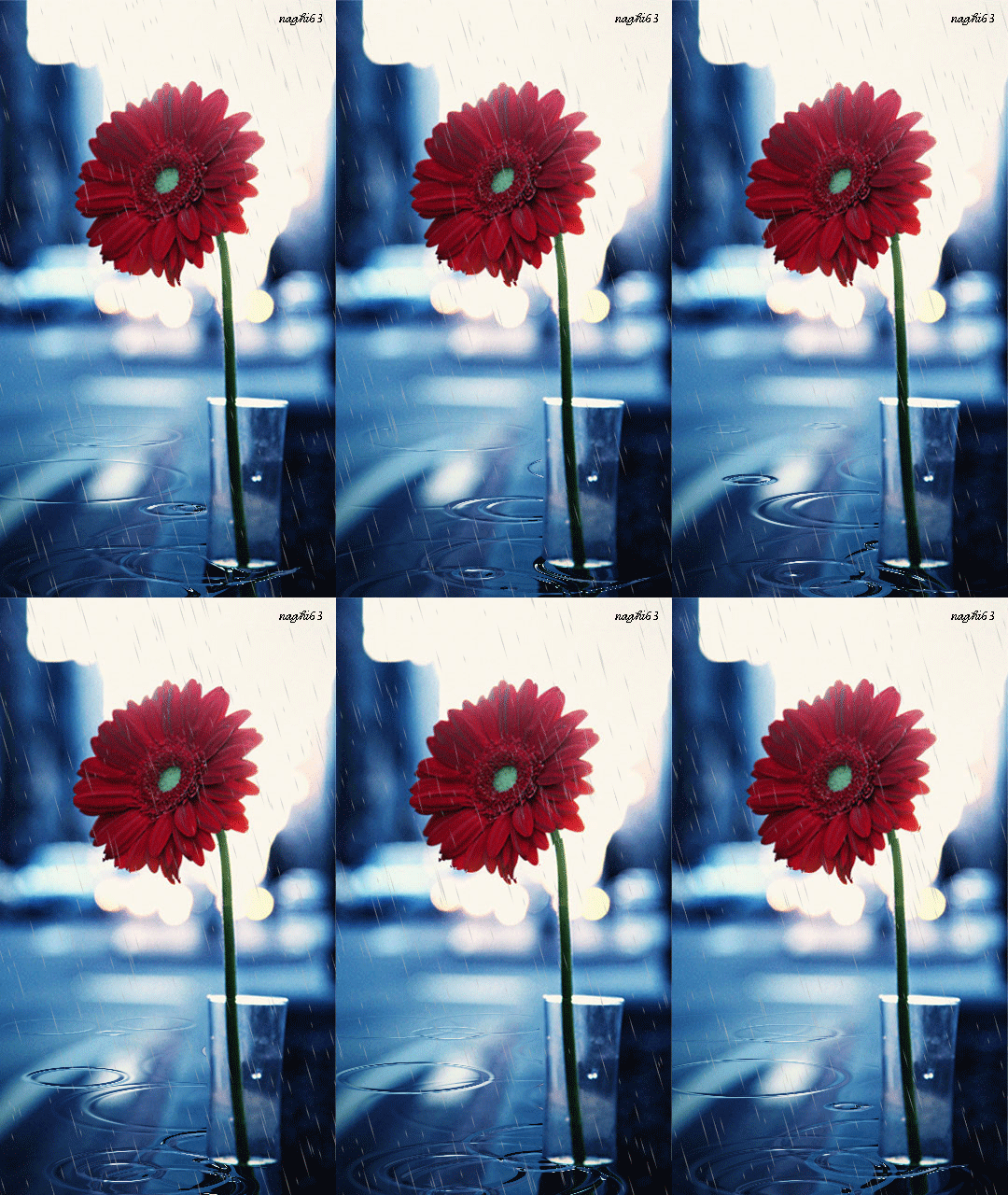
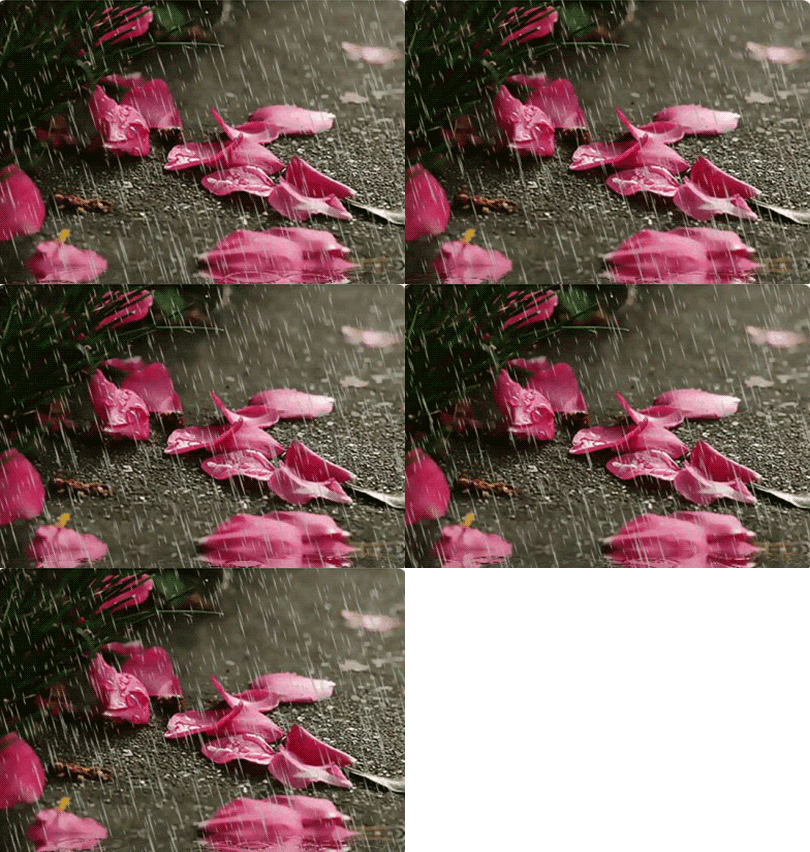
    flower after the rain

  4. A New Day

    60

    Waking up to a new day is a gift,
    appreciate it and do remember you are loved.

    ~Unknown


  5. Positive Frame Of Mind

    76

    When you consistently maintain a positive frame of mind, you’ll become known as a problem-solver rather than a complainer. People avoid complainers. They seek out problem-solvers. ~ Joseph Sommerville


  6. The Art of Love

    71

    Love one another and you will be happy.
    It’s as simple and as difficult as that.

    ~Michael Leunig

  7. Holding on to Anger

    67

    Holding on to anger,
    resentment and hurt
    only gives you tense muscles,
    a headache and a sore jaw
    from clenching your teeth.
    Forgiveness gives you back
    the laughter and the lightness
    in your life.

    ~Joan Lunden


  8. I never walk backward

    42

    I fell down many times,
    but will always get up
    and continue to move forward
    till reaching my destination…

    ~Jendhamuni

    ….•*•.¸¸. ♥

  9. Real love is wisdom

    Comment

    Real love is wisdom. What most people think of as love is just an impermanent feeling. If you have a nice taste every day, you will soon get tired of it. In the same way, such love eventually turns into hatred and sorrow. Such worldly happiness involves clinging and is always tied up with suffering, which comes like the policeman following the thief.

    Nevertheless, we cannot suppress nor forbid such feelings. We just should not cling to or identify with them but should know them for what they are. Then Dharma is present. One loves another, yet eventually the beloved leaves or dies. To lament and think longingly, grasping after that which has changed, is suffering, not love. When we are at one with this truth and no longer need or desire, wisdom and the real love that transcends desire fill our world. ~Ajahn Chah

    Buddha meditating

  10. The Story of the Bhikkhu who Contemplates the Body as a Mirage

    Comment

    buddha statues

    Dhammapada Verse 46
    Maricikammatthanika bhikkhu Vatthu

    Phepnupamam1 kayamimam viditva
    maricidhammam2 abhisambudhano
    chetvana marassa papupphakani3
    adassanam maccurajassa gacche4

    Verse 46: One who knows that this body is impermanent like froth, and comprehends that it is insubstantial like a mirage, will cut the flowers of Mara (i.e., the three kinds of vatta or rounds), and pass out of sight of the King of Death.

    1. Phepnupamam: like froth; it means that this body is perishable and impermanent like froth.

    2. maricidhammam: lit., mirage + nature; nature of a mirage, i. e., insubstantial like a mirage.

    3. marassa papupphakani: flowers or flower-tipped arrows of Mara. These flowers or arrows of Mara represent the tivattam or the three kinds of vattam (rounds), viz., kilesavattam ( the round of moral defilements), kammavattam (the round of volitional action) and vipakavattam (the round of resultant effects). According to the Commentary, this chain or round is broken when cut by the sword of ariya magga nana.

    4. adassanam maccurajassa gacche: In this context, out of sight of the King of Death means the realization of Nibbana.

    The Story of the Bhikkhu who Contemplates the Body as a Mirage

    While residing at the Jetavana monastery, the Buddha uttered Verse (46) of this book, with reference to a certain bhikkhu.

    On one occasion, a certain bhikkhu, after taking a subject of meditation from the Buddha, went to the forest. Although he tried hard he made little progress in his meditation; so he decided to go back to the Buddha for further instruction. On his way back he saw a mirage, which, after all, was only an illusive appearance of a sheet of water. At that instant, he came to realize that the body also was insubstantial like a mirage. Thus keeping his mind on the insubstantiality of the body he came to the bank of the river Aciravati. While sitting under a tree close to the river, seeing big froths breaking up, he realized the impermanent nature of the body.

    Soon, the Buddha appeared in his vision and said to him, “My son, just as you have realized, this body is impermanent like froth and insubstantial like a mirage.”

    Then the Buddha spoke in verse as follows:

    Verse 46: One who knows that this body is impermanent like froth, and comprehends that it is insubstantial like a mirage will cut the flowers of Mara (i.e., the three kinds of vatta or rounds), and pass out of sight of the King of Death.
    At the end of the discourse the bhikkhu attained arahatship.

    Source: Tipitaka


Live & Die for Buddhism

candle

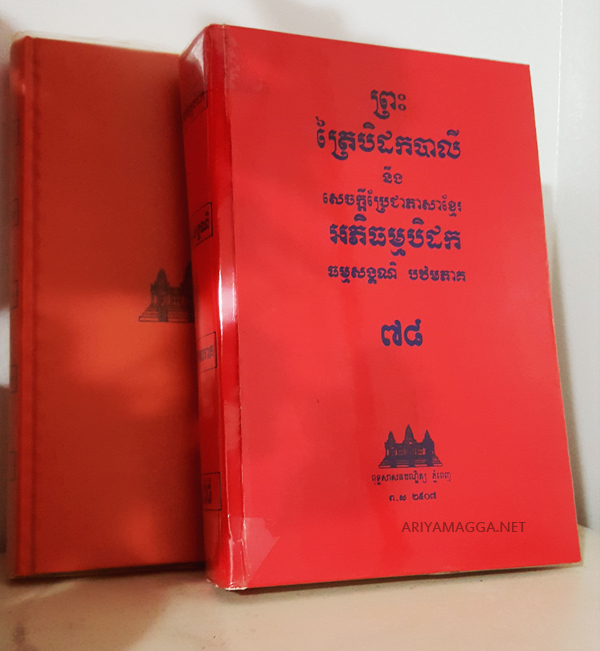
Khmer Tipitaka 1 – 110

 ព្រះត្រៃបិដក

ព្រះត្រៃបិដក ប្រែថា កញ្រ្ចែង ឬ ល្អី​ ៣ សម្រាប់ដាក់ផ្ទុកពាក្យពេចន៍នៃព្រះសម្មាសម្ពុទ្ធ

The Tipitaka or Pali canon, is the collection of primary Pali language texts which form the doctrinal foundation of Theravada Buddhism. The three divisions of the Tipitaka are: Vinaya Pitaka, Sutta Pitaka, Abhidhamma Pitaka.

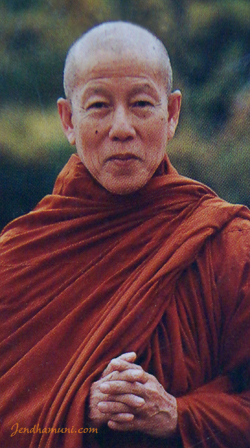
Maha Ghosananda

Maha Ghosananda

Supreme Patriarch of Cambodian Buddhism (5/23/1913 - 3/12/07). Forever in my heart...

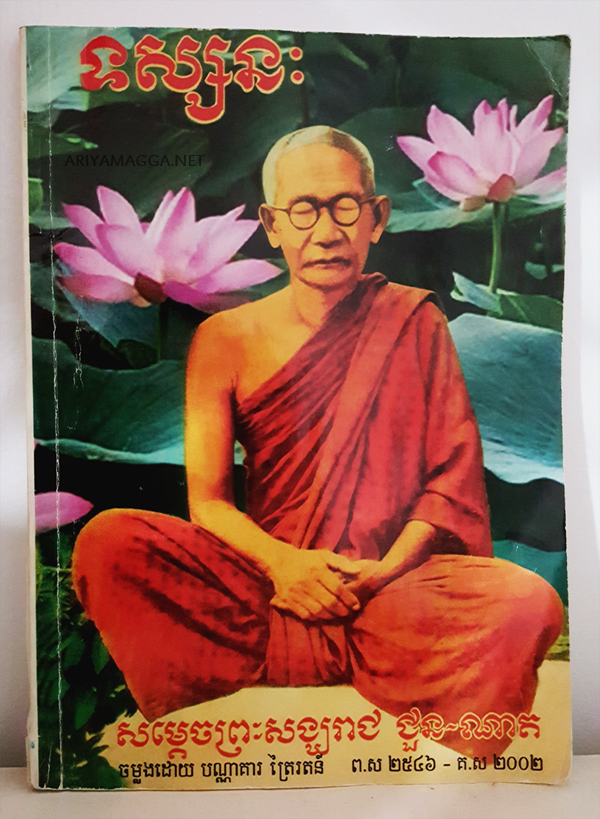
Samdech Chuon Nath

My reflection

វចនានុក្រមសម្តេចសង្ឃ ជួន ណាត
Desktop version

Listen to Khmer literature and Dhamma talk by His Holiness Jotannano Chuon Nath, Supreme Patriarch of Cambodia Buddhism.

Shantidevas’ Bodhisattva vows

My reflection

Should anyone wish to ridicule me and make me an object of jest and scorn why should I possibly care if I have dedicated myself to others?

Let them do as they wish with me so long as it does not harm them. May no one who encounters me ever have an insignificant contact.

Regardless whether those whom I meet respond towards me with anger or faith, may the mere fact of our meeting contribute to the fulfilment of their wishes.

May the slander, harm and all forms of abuse that anyone should direct towards me act as a cause of their enlightenment.

As a solid rock is not shaken by the wind, so the wise are not shaken by blame and praise. As a deep lake is clear and calm, so the wise become tranquil after they listened to the truth…

Good people walk on regardless of what happens to them. Good people do not babble on about their desires. Whether touched by happiness or by sorrow, the wise never appear elated or depressed. ~The Dhammapada

Hermit of Tbeng Mountain

Sachjang Phnom Tbeng សច្ចំ​​ ភ្នំត្បែង is a very long and interesting story written by Mr. Chhea Sokoan, read by Jendhamuni Sos. You can click on the links below to listen. Part 1 | Part 2

Beauty in nature

A beautiful object has no intrinsic quality that is good for the mind, nor an ugly object any intrinsic power to harm it. Beautiful and ugly are just projections of the mind. The ability to cause happiness or suffering is not a property of the outer object itself. For example, the sight of a particular individual can cause happiness to one person and suffering to another. It is the mind that attributes such qualities to the perceived object. — Dilgo Khyentse Rinpoche

Nature is loved by what is best in us. The sky, the mountain, the tree, the animal, give us a delight in and for themselves. — Ralph Waldo Emerson


Our journey for peace
begins today and every day.
Each step is a prayer,
Each step is a meditation,
Each step will build a bridge.

—​​​ Maha Ghosananda