1. Sunset Lover

    407

    Your love is like a sunset,
    wild, bright and true.
    The colours blend together,
    forming a magical hue.
    The day’s warm caress
    is slipping through the air,
    just as though your fingers
    would be slipping through my hair.

    I sit and watch the sunset,
    knowing it soon will end,
    thinking of you and
    waiting ’til we will be together again.
    Slowly now it’s going,
    coming to an end.
    Darkness may be closing in,
    but the fun has just begun.

    For now I can go home,
    go to my darkened room,
    lie on the bed and
    close my eyes,
    fall asleep and dream of you.

    ~by Ashley Dickerson


  2. Today’s forecast

    Comment

    Today’s weather forecast
    It would be cloudy if you frown
    Rainy if you cry
    Clear if you are happy
    Sunny if you smile
    Stormy if you sing
    Have a sweet day
    Today,
    And every day.

    ~sms


  3. I pray for you

    Comment

    Today I pray for you:
    A heart free of sadness
    A mind free of worries
    A life full of gladness
    A body free of illness
    And a spirit full of God’s blessings.

    ~cutelovelysms


  4. Great love

    Comment

    Great love knows no boundaries of race, religion, or nationality. ~Master Cheng Yen

    light in rose moving

  5. Greed, malice, and ignorance

    Comment

    Dharma is very simple: eliminate greed,
    malice, and ignorance, and you will
    discover your own true nature.
    ~Master Cheng Yen

    buddha-menerima-rumput2an-dari-brahmin-sotthiya

  6. Just like dripping water

    Comment

    Just like dripping water can penetrate stone,
    patience and persistence can break through anything
    no matter how great the difficulty.

    ~Master Cheng Yen

    raining on pink flowers

  7. The Story of Patipujika Kumari

    Comment

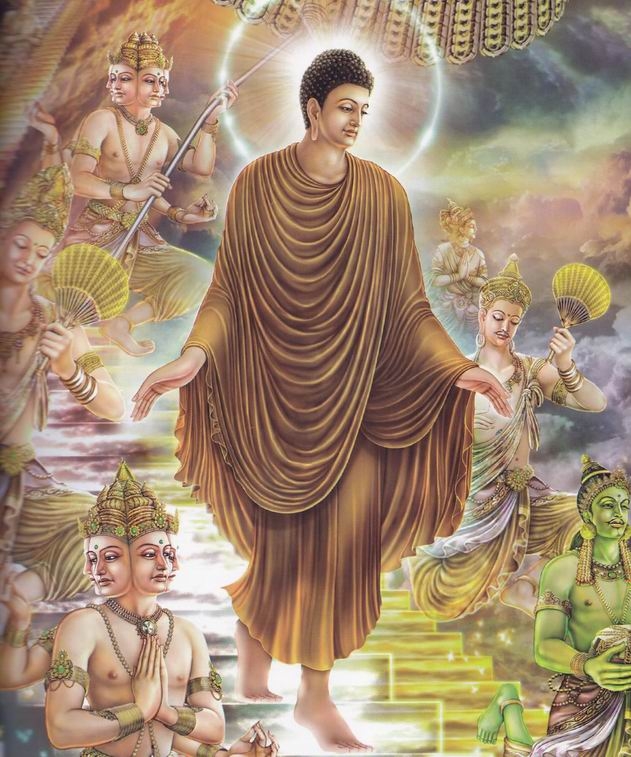
    Buddha walking in heaven

    Verse 48: Like one who picks and chooses flowers, a man who has his mind attached to sensual pleasures and is insatiate in them is over powered by Death.

    The Story of Patipujika Kumari

    While residing at the Jetavana monastery, the Buddha uttered Verse (48) of this book, with reference to Patipujika Kumari.

    Patipujika Kumari was a lady from Savatthi. She married at the age of sixteen and had four sons. She was a virtuous as well as a generous lady, who loved to make offerings of food and other requisites to the bhikkhus. She would often go to the monastery and clean up the premises, fill the pots and jars with water and perform other services. Patipujika also possessed Jatissara Knowledge through which she remembered that in her previous existence she was one of the numerous wives of Malabhari, in the deva world of Tavatimsa. She also remembered that she had passed away from there when all of them were out in the garden enjoying themselves, plucking and picking flowers. So, every time she made offerings to the bhikkhus or performed any other meritorious act, she would pray that she might be reborn in the Tavatimsa realm as a wife of Malabhari, her previous husband.

    One day, Patipujika fell ill and passed away that same evening. As she had so ardently wished, she was reborn in Tavatimsa deva world as a wife of Malabhari. As one hundred years in the human world is equivalent to just one day in Tavatimsa world, Malabhari and his other wives were still in the garden enjoying themselves and Patipujika was barely missed by them. So, when she rejoined them, Malabhari asked her where she had been the whole morning. She then told him about her passing away from Tavatimsa, her rebirth in the human world, her marriage to a man and also about how she had given birth to four sons, her passing away from there and finally her return to Tavatimsa.

    When the bhikkhus learned about the death of Patipujika, they were stricken with grief. They went to the Buddha and reported that Patipujika, who was offering alms-food to them early in the morning, had passed away in the evening. To them the Buddha replied that the life of beings was very brief; and that before they could hardly be satiated in their sensual pleasures, they were overpowered by Death.

    Then the Buddha spoke in verse as follows:

    Verse 48: Like one who picks and chooses flowers, a man who has his mind attached to sensual pleasures and is insatiate in them is over powered by Death.

    Dhammapada Verse 48
    Patipujikakumari Vatthu

    Pupphani heva pacinantam
    bysssasattamanasam naram
    atittanneva kamesu
    antako kurute vasam.

    Source: Tipitaka

     

  8. Meditation on Equanimity

    Comment
    Buddha and Sariputta

    Buddha and Sariputta

    By Jack Kornfield

    Equanimity is a wonderful quality, a spaciousness and balance of heart. Although it grows naturally with our meditation practice, equanimity can also be cultivated in the same systematic way that we have used for loving-kindness and compassion. We can feel this possibility of balance in our hearts in the midst of life when we recognize that life is not in our control. We are a small part of a great dance. Even though we may cultivate a boundless compassion for others and strive to alleviate suffering in the world, there will still be many situations we are unable to affect. The well known serenity prayer says, “May I have the serenity to accept the things I cannot change, the courage to change the things I can, and the wisdom to know the difference.” Wisdom recognizes that all beings are heir to their own karma, that they each act and receive the fruits of their actions. We can deeply love others and offer them assistance, but in the end they must learn for themselves, they must be the source of their own liberation. Equanimity combines an understanding mind together with a compassionate heart.

    To cultivate equanimity, sit in a comfortable posture with your eyes closed. Bring a soft attention to your breath until your body and mind are calm. Then begin by reflecting on the benefit of a mind that has balance and equanimity. Sense what a gift it can be to bring a peaceful heart to the world around you. Let yourself feel an inner sense of balance and ease. Then begin repeating such phrases as, “May I be balance and at peace.” Acknowledge that all created things arise and pass away: joys, sorrows, pleasant evets, people, buildings, animals, nations, even whole civilizations. Let yourself rest in the midst of them. “May I learned to see the arising and passing of all nature with equanimity and balance. May I be open and balanced and peaceful.” Acknowledge that all beings are heirs to their own karma, and that their lives arise and pass away according to conditions and deeds created by them. “May I bring compassion and equanimity to the events of the world. May I find balance and equanimity and peace.”


  9. The supreme water spirit Ocean

    Comment

    Buddhism has its roots in a hot country where sunshine was seen as much a problem as a blessing, and so Buddhist metaphors tend to focus more on rain. In the Flower Ornament Scripture (the Avatamsaka) we’re told:

    The supreme water spirit Ocean covers the earth with clouds; the rain in each place is different, but the spirit has no thought of distinction. Likewise, Buddha, sovereign of truth, extends clouds of great compassion in all directions, raining differently for each practitioner, yet without discriminating among them. Source: Wildmind

    Buddha practicing

  10. A lamp inside us

    Comment

    We have a lamp inside us. The oil of that lamp is our breathing, our steps, and our peaceful smile. Our practice is to light up the lamp. The moment you wake up, right away, you can smile…. You are aware that a new day is beginning, that life is offering you twenty-four brand new hours to live, and that that’s the most precious of gifts. Spiritual practice is possible for all of us. You cannot say, ‘I’m just too busy, I have no time for meditation.’ No. Walking from one building to another, walking from the parking lot to your office, you can always enjoy walking mindfully, and enjoy every one of your steps.  ~Thich Nhat Hanh


Live & Die for Buddhism

candle

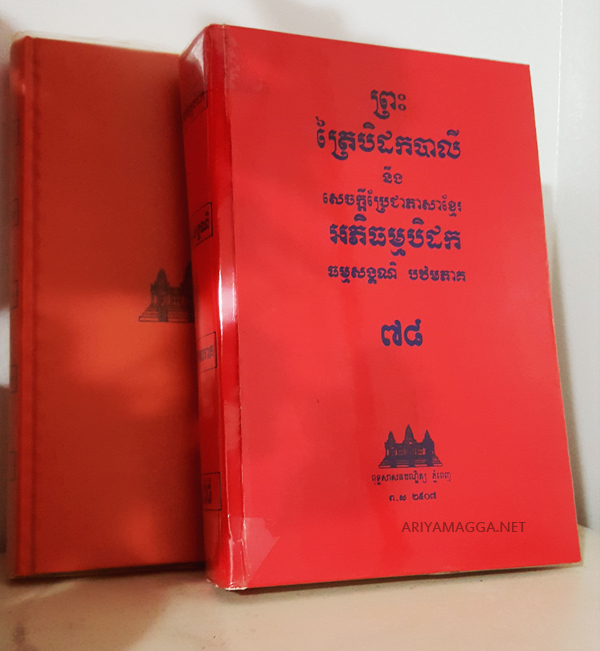
Khmer Tipitaka 1 – 110

 ព្រះត្រៃបិដក

ព្រះត្រៃបិដក ប្រែថា កញ្រ្ចែង ឬ ល្អី​ ៣ សម្រាប់ដាក់ផ្ទុកពាក្យពេចន៍នៃព្រះសម្មាសម្ពុទ្ធ

The Tipitaka or Pali canon, is the collection of primary Pali language texts which form the doctrinal foundation of Theravada Buddhism. The three divisions of the Tipitaka are: Vinaya Pitaka, Sutta Pitaka, Abhidhamma Pitaka.

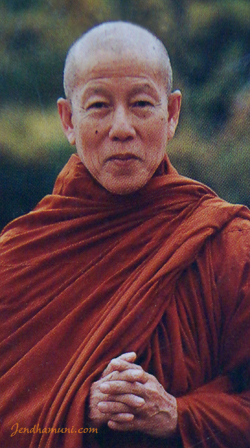
Maha Ghosananda

Maha Ghosananda

Supreme Patriarch of Cambodian Buddhism (5/23/1913 - 3/12/07). Forever in my heart...

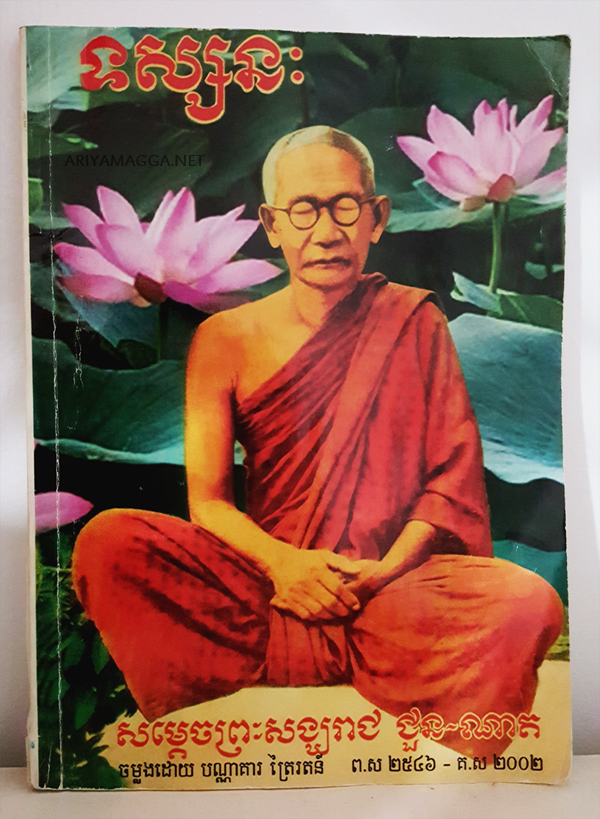
Samdech Chuon Nath

My reflection

វចនានុក្រមសម្តេចសង្ឃ ជួន ណាត
Desktop version

Listen to Khmer literature and Dhamma talk by His Holiness Jotannano Chuon Nath, Supreme Patriarch of Cambodia Buddhism.

Shantidevas’ Bodhisattva vows

My reflection

Should anyone wish to ridicule me and make me an object of jest and scorn why should I possibly care if I have dedicated myself to others?

Let them do as they wish with me so long as it does not harm them. May no one who encounters me ever have an insignificant contact.

Regardless whether those whom I meet respond towards me with anger or faith, may the mere fact of our meeting contribute to the fulfilment of their wishes.

May the slander, harm and all forms of abuse that anyone should direct towards me act as a cause of their enlightenment.

As a solid rock is not shaken by the wind, so the wise are not shaken by blame and praise. As a deep lake is clear and calm, so the wise become tranquil after they listened to the truth…

Good people walk on regardless of what happens to them. Good people do not babble on about their desires. Whether touched by happiness or by sorrow, the wise never appear elated or depressed. ~The Dhammapada

Hermit of Tbeng Mountain

Sachjang Phnom Tbeng សច្ចំ​​ ភ្នំត្បែង is a very long and interesting story written by Mr. Chhea Sokoan, read by Jendhamuni Sos. You can click on the links below to listen. Part 1 | Part 2

Beauty in nature

A beautiful object has no intrinsic quality that is good for the mind, nor an ugly object any intrinsic power to harm it. Beautiful and ugly are just projections of the mind. The ability to cause happiness or suffering is not a property of the outer object itself. For example, the sight of a particular individual can cause happiness to one person and suffering to another. It is the mind that attributes such qualities to the perceived object. — Dilgo Khyentse Rinpoche

Nature is loved by what is best in us. The sky, the mountain, the tree, the animal, give us a delight in and for themselves. — Ralph Waldo Emerson


Our journey for peace
begins today and every day.
Each step is a prayer,
Each step is a meditation,
Each step will build a bridge.

—​​​ Maha Ghosananda