1. For a man to be perfect there are two qualities that he should develop equally

    Comment

    Novices Calvin and Ananda

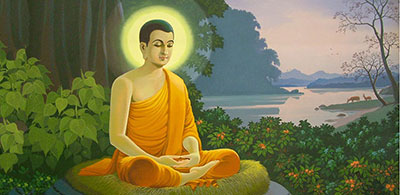
    According to Buddhism for a man to be perfect there are two qualities that he should develop equally: compassion on one side, and wisdom on the other. Here compassion represents love, charity, kindness, tolerance and such noble qualities on the emotional side, or qualities of the heart, while wisdom would stand for the intellectual side or the qualities of the mind. If one develops only the emotional neglecting the intellectual, one may become a good-hearted fool; while to develop only the intellectual side neglecting the emotional may turn one into a hardheaded intellect without feeling for others. Therefore, to be perfect one has to develop both equally. That is the aim of the Buddhist way of life: in it wisdom and compassion are inseparably linked together.

    — Walpola Rahula, What the Buddha Taught

  2. The Three Essentials In Practising the Teaching of the Buddha

    Comment

    1. Faith and Determination, Loving Kindness and Compassion, Wisdom

    The philosophy expounded by the Buddha is very profound and broad. It is so broad and profound that sometimes ordinary people have difficulties in finding a right entrance into it. They do not know where to start. However, this does not imply that the Buddha’s Teachings are confusing or disorganised. On the contrary, Buddhism has very logical, well-reasoned and practical principles.

    Wise men in the past commented that all the methods taught by the Buddha, whether the expedient or ultimate paths, serve the sole purpose of leading one to Buddhahood. Whether it is the path that leads one away from evil, and towards the right aspirations (the principle of the Five Vehicles)or the path that leads to disentanglement from worldly desires and to freedom (the principle of the Three Vehicles);or the path that turns one away from the practice of the Sravaka and Pratyeka-buddhas and redirects one to Mahayana thought (the principle of the one Vehicle);

    the Buddha explained the paths to enlightenment in all these various ways for the benefit of sentient beings in all their corresponding variety. It is for this great reason that the Buddha appeared in this world.

    From the stand point of one who wants to learn about Buddhism, it is important to understand that all the methods taught by the Buddha are in fact processes in the Bodhisattva’s practice. They are the Bodhi paths that lead to Buddhahood. Due to the differing conditions, causes, times and places into which we were born, the best ways towards Bodhi (Enlightenment) may differ for each of us. But if we try to seek the truth of nature through the various methods we will realise that there are no great differences in the teachings of the Buddha. Three themes characterize all the teachings and encompass them as one coherent whole. These themes are as applicable to the practice of “One Vehicle” as they are to the “Three vehicles” and “Five vehicles”. Thus, we call these themes the “The Three Essentials in Practising the Teaching of the Buddha”. Continue reading

  3. Living 24 hours with mindfulness

    1

    Living 24 hours with mindfulness is more worthwhile than living 100 years without it. – The Buddha

    • Mindfulness is about being fully awake in our lives. It is about perceiving the exquisite vividness of each moment. We also gain immediate access to our own powerful inner resources for insight, transformation, and healing. – Jon Kabat-Zinn
    • Being mindful means that we suspend judgment for a time, set aside our immediate goals for the future, and take in the present moment as it is rather than as we would like it to be. – Mark Williams


  4. Birds teach a great life lesson

    1

    Birds teach a great life lesson. All you have to do is listen to their song. — Unknown

    A bird does not sing because it has an answer, it sings because it has a song. — Maya Angelou
    Relationships are like birds. If you hold tightly, they die. If you hold loosely, they fly. But if you hold with care, they remain with you forever. — Unknown

    The bird is powered by its own life and by its motivation. — Unknown

  5. Human Family

    2

    Jendhamuni at the Wachusett Mountain on a rainy and foggy day on November 26, 2020.

    I note the obvious differences
    in the human family.
    Some of us are serious,
    some thrive on comedy.

    Some declare their lives are lived
    as true profundity,
    and others claim they really live
    the real reality.

    The variety of our skin tones
    can confuse, bemuse, delight,
    brown and pink and beige and purple,
    tan and blue and white…

    Human Family
    Maya Angelou
    Source: Familyfriendpoems


  6. Nurture your soul with positive thoughts

    1

    Nurture your soul with positive thoughts and internal happiness will blossom before your eyes. — Melanie Koulouris

    • You are not a helpless victim of your own thoughts, but rather a master of your mind. — Louise Hay
    • If you have good thoughts they will shine out of your face like sunbeams and you will always look lovely. — Anonymous

  7. Feelings and thoughts appear and disappear

    Comment

    As I noticed feelings and thoughts appear and disappear, it became increasingly clear that they were just coming and going on their own. . . . There was no sense of a self owning them. – Tara Brach


  8. Mindfulness is simply being aware of what is happening right now

    Comment

    Mindfulness is simply being aware of what is happening right now without wishing it were different; enjoying the pleasant without holding on when it changes (which it will); being with the unpleasant without fearing it will always be this way (which it won’t).  – James Baraz


    Living 24 hours with mindfulness is more worthwhile than living 100 years without it. – The Buddha


    Each step along the Buddha’s path to happiness requires practising mindfulness until it becomes part of your daily life. – Henepola Gunaratana


    Meditate … do not delay, lest you later regret it. – The Buddha


    Ardently do today what must be done. Who knows? Tomorrow, death comes. – The Buddha


    Mindfulness is the aware, balanced acceptance of the present experience. It isn’t more complicated than that. It is opening to or receiving the present moment, pleasant or unpleasant, just as it is, without either clinging to it or rejecting it. – Sylvia Boorstein Continue reading

  9. What is Theravada Buddhism?

    Comment

    Theravada (pronounced — more or less — “terra-VAH-dah”), the “Doctrine of the Elders,” is the school of Buddhism that draws its scriptural inspiration from the Tipitaka, or Pali canon, which scholars generally agree contains the earliest surviving record of the Buddha’s teachings.  For many centuries, Theravada has been the predominant religion of continental Southeast Asia (Thailand, Myanmar/Burma, Cambodia, and Laos) and Sri Lanka. Today Theravada Buddhists number well over 100 million worldwide. In recent decades Theravada has begun to take root in the West.

    Many Buddhisms, One Dhamma-vinaya

    The Buddha — the “Awakened One” — called the religion he founded Dhamma-vinaya — “the doctrine and discipline.” To provide a social structure supportive of the practice of Dhamma-vinaya (or Dhamma for short [Sanskrit: Dharma]), and to preserve these teachings for posterity, the Buddha established the order of bhikkhus (monks) and bhikkhunis (nuns) — the Sangha — which continues to this day to pass his teachings on to subsequent generations of laypeople and monastics, alike.

    As the Dhamma continued its spread across India after the Buddha’s passing, differing interpretations of the original teachings arose, which led to schisms within the Sangha and the emergence of as many as eighteen distinct sects of Buddhism. One of these schools eventually gave rise to a reform movement that called itself Mahayana (the “Greater Vehicle”) and that referred to the other schools disparagingly as Hinayana (the “Lesser Vehicle”). What we call Theravada today is the sole survivor of those early non-Mahayana schools. To avoid the pejorative tone implied by the terms Hinayana and Mahayana, it is common today to use more neutral language to distinguish between these two main branches of Buddhism. Because Theravada historically dominated southern Asia, it is sometimes called “Southern” Buddhism, while Mahayana, which migrated northwards from India into China, Tibet, Japan, and Korea, is known as “Northern” Buddhism. Continue reading

  10. A handful of leaves

    Comment

    The Blessed One was once living at Kosambi in a wood of simsapa trees. He picked up a few leaves in his hand, and he asked the bhikkhus, ‘How do you conceive this, bhikkhus, which is more, the few leaves that I have picked up in my hand or those on the trees in the wood?

    ‘The leaves that the Blessed One has picked up in his hand are few, Lord; those in the wood are far more.’

    ‘So too, bhikkhus, the things that I have known by direct knowledge are more; the things that I have told you are only a few. Why have I not told them? Because they bring no benefit, no advancement in the Holy Life, and because they do not lead to dispassion, to fading, to ceasing, to stilling, to direct knowledge, to enlightenment, to Nibbana. That is why I have not told them. And what have I told you? This is suffering; this is the origin of suffering; this is the cessation of suffering; this is the way leading to the cessation of suffering. That is what I have told you. Why have I told it? Because it brings benefit, and advancement in the Holy Life, and because it leads to dispassion, to fading, to ceasing, to stilling, to direct knowledge, to enlightenment, to Nibbana. So bhikkhus, let your task be this: This is suffering; this is the origin of suffering; this is the cessation of suffering; this is the way leading to the cessation of suffering.’

    [Samyutta Nikaya, LVI, 31]

    Source: BuddhaNet


Live & Die for Buddhism

candle

Khmer Tipitaka 1 – 110

 ព្រះត្រៃបិដក

ព្រះត្រៃបិដក ប្រែថា កញ្រ្ចែង ឬ ល្អី​ ៣ សម្រាប់ដាក់ផ្ទុកពាក្យពេចន៍នៃព្រះសម្មាសម្ពុទ្ធ

The Tipitaka or Pali canon, is the collection of primary Pali language texts which form the doctrinal foundation of Theravada Buddhism. The three divisions of the Tipitaka are: Vinaya Pitaka, Sutta Pitaka, Abhidhamma Pitaka.

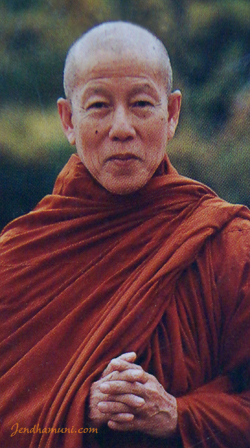
Maha Ghosananda

Maha Ghosananda

Supreme Patriarch of Cambodian Buddhism (5/23/1913 - 3/12/07). Forever in my heart...

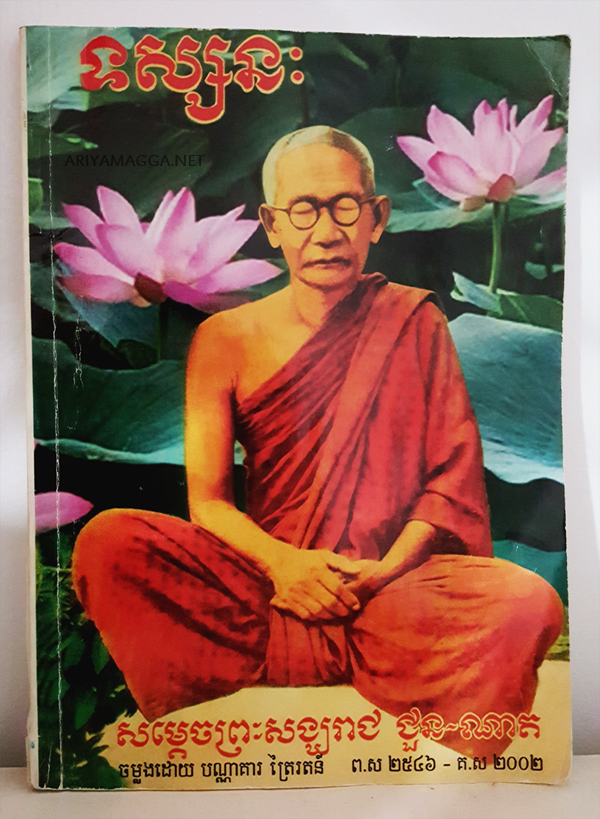
Samdech Chuon Nath

My reflection

វចនានុក្រមសម្តេចសង្ឃ ជួន ណាត
Desktop version

Listen to Khmer literature and Dhamma talk by His Holiness Jotannano Chuon Nath, Supreme Patriarch of Cambodia Buddhism.

Shantidevas’ Bodhisattva vows

My reflection

Should anyone wish to ridicule me and make me an object of jest and scorn why should I possibly care if I have dedicated myself to others?

Let them do as they wish with me so long as it does not harm them. May no one who encounters me ever have an insignificant contact.

Regardless whether those whom I meet respond towards me with anger or faith, may the mere fact of our meeting contribute to the fulfilment of their wishes.

May the slander, harm and all forms of abuse that anyone should direct towards me act as a cause of their enlightenment.

As a solid rock is not shaken by the wind, so the wise are not shaken by blame and praise. As a deep lake is clear and calm, so the wise become tranquil after they listened to the truth…

Good people walk on regardless of what happens to them. Good people do not babble on about their desires. Whether touched by happiness or by sorrow, the wise never appear elated or depressed. ~The Dhammapada

Hermit of Tbeng Mountain

Sachjang Phnom Tbeng សច្ចំ​​ ភ្នំត្បែង is a very long and interesting story written by Mr. Chhea Sokoan, read by Jendhamuni Sos. You can click on the links below to listen. Part 1 | Part 2

Beauty in nature

A beautiful object has no intrinsic quality that is good for the mind, nor an ugly object any intrinsic power to harm it. Beautiful and ugly are just projections of the mind. The ability to cause happiness or suffering is not a property of the outer object itself. For example, the sight of a particular individual can cause happiness to one person and suffering to another. It is the mind that attributes such qualities to the perceived object. — Dilgo Khyentse Rinpoche

Nature is loved by what is best in us. The sky, the mountain, the tree, the animal, give us a delight in and for themselves. — Ralph Waldo Emerson


Our journey for peace
begins today and every day.
Each step is a prayer,
Each step is a meditation,
Each step will build a bridge.

—​​​ Maha Ghosananda