
1. Flying Snake- Chrysopelea

    Comment

    Caption: Flying snakes flatten their bodies into a concave C shape to trap air as they fall. By undulating back and forth, they can actually make turns in the air. Photograph by Jake Socha

    National Geographic

    The image of airborne snakes may seem like the stuff of nightmares (or a certain Hollywood movie), but in the jungles of South and Southeast Asia it is reality.

    Flying snake is a misnomer, since, barring a strong updraft, these animals can’t actually gain altitude. They’re gliders, using the speed of free fall and contortions of their bodies to catch the air and generate lift.

    Once thought to be more parachuters than gliders, recent scientific studies have revealed intricate details about how these limbless, tube-shaped creatures turn plummeting into piloting. To prepare for take-off, a flying snake will slither to the end of a branch, and dangle in a J shape. It propels itself from the branch with the lower half of its body, forms quickly into an S, and flattens to about twice its normal width, giving its normally round body a concave C shape, which can trap air. By undulating back and forth, the snake can actually make turns. Flying snakes are technically better gliders than their more popular mammalian equivalents, the flying squirrels.

    There are five recognized species of flying snake, found from western India to the Indonesian archipelago. Knowledge of their behavior in the wild is limited, but they are thought to be highly arboreal, rarely descending from the canopy. The smallest species reach about 2 feet (61 centimeters) in length and the largest grow to 4 feet (1.2 meters).

    Fast Facts

    Type:
    Reptile
    Diet:
    Carnivore
    Size:
    Up to 4 ft (1.2 m)
    Did you know?
    The paradise tree snake is one of the smaller flying snakes and the best glider. It’s been known to travel up to 330 ft (100 m) in the air.
    Size relative to a 6-ft (2-m) man

    Their diets are variable depending on their range, but they are known to eat rodents, lizards, frogs, birds, and bats. They are mildly venomous snakes, but their tiny, fixed rear fangs make them harmless to humans.

    Scientists don’t know how often or exactly why flying snakes fly, but it’s likely they use their aerobatics to escape predators, to move from tree to tree without having to descend to the forest floor, and possibly even to hunt prey.

    One species, the twin-barred tree snake, is thought to be rare in its range, but flying snakes are otherwise quite abundant and have no special conservation status.

  2. Dozens of children at N.J. day care center accidentally drink bleach

    Comment

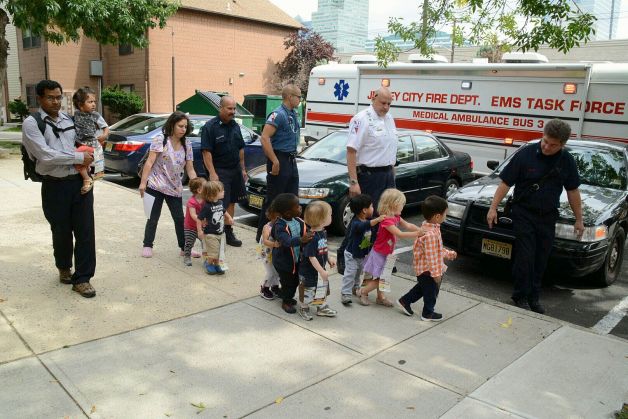
    Caption: Children from the Growing Tree Learning Center II daycare center in Jersey City, N.J., who accidentally ingested a mixture of water and bleach are placed on an EMT bus to be brought to the Jersey City Medical Center on Thursday, Sept. 11, 2014. More than two dozen children and two adults accidentally drank a mixture of bleach and water at a day care center Thursday and were briefly hospitalized. Photo: Joe Shine, AP

    Reuters, September 11, 2014

    Twenty-eight preschoolers and two adults mistakenly drank bleach at snack time at a New Jersey day care center on Thursday and were taken to a hospital after some complained their stomachs were burning.

    The children, aged 3 and 4, and adult staff members of the Growing Tree Learning Center in downtown Jersey City were transported in five ambulances to the Jersey City Medical Center after a late-morning call to 911, said Mark Rabson, a hospital spokesman. He said some complained of light-headedness, others of upset stomachs.

    By mid afternoon, all 30 were in stable condition and were being discharged, Rabson said.

    “There was a poisoning and many children were injured,” he said, adding the children were walking on their own or were being carried out by their parents and “have smiles on their faces.”

    Keith Kearney, executive director of United Cerebral Palsy of Hudson County, which runs the day care center that is open to all community members and serves 65 children from infants to age 4, said he had heard no reports of injuries and that the hospital visits were a precaution.

    “We had an incident where one of the staff in the kitchen used the cleaning solution bottle to pour water for some of the children,” Kearney said.

  3. World’s tallest dog from Otsego dies at age 5

    Comment

    In an undated photo provided by Guinness World Records 2013 Book, Zeus drinks from the kitchen faucet in Otsego, Mich. The Great Dane is now officially the world’s tallest canine according to the record book. The 3-year-old measures 44 inches from foot to shoulder. Standing on his hind legs, Zeus measures 7-foot-4. (AP Photo/Guinness World Records 2013 Book, Kevin Scott Ramos, HO)

    AP, September 11, 2014

    OTSEGO, Mich. (AP) — The Great Dane from Michigan that held the title of world’s tallest dog has died at age 5.

    Owner Kevin Doorlag told the Kalamazoo Gazette that Zeus made his debut in the 2012 edition of Guinness World Records as the tallest living dog. Zeus was 44 inches tall at the shoulder and 7 feet, 4 inches on his hind legs.


    Zeus weighed 165 pounds and ate a 30-pound bag of food every two weeks, the Battle Creek Enquirer reported.

    Doorlag, of Otsego, said the entire family will miss Zeus.

    Zeus was a local celebrity in the Kalamazoo area and frequently visited local schools and hospitals as a therapy dog. Doorlag said he will also miss seeing the joy Zeus brought to other people.

    “Those are some of the things I’ll never forget about him,” Doorlag said. “He was definitely a great dog.”

    Zeus died last week from old age, just two months shy of his sixth birthday, according to Doorlag. 

  4. Speak from your heart

    Comment

    When you want your message to be heard, always speak from your heart.
    An act of kindness may take only a moment of our time, but when captured
    in the heart the memory lives forever. ~Molly Friedenfeld

  5. Power in our words

    Comment

    There is great power in our words, because they are thoughts to which we have given additional energy by speaking them aloud so another person can know them. ~Molly Friedenfeld

  6. We are not asked to be perfect

    Comment

    A Spiritual Samaritan lives knowing that
    if we were to leave this world tomorrow,
    we were the best humans we could be and we
     touched the lives of as many souls as possible.
    We are not asked to be perfect. We are asked
    to make a difference. ~Molly Friedenfeld

  7. 15 Benefits of the Holy Basil (Tulsi)

    Comment

    The tulsi or holy basil is an important symbol in the Hindu religious tradition and is worshiped in the morning and evening by Hindus at large. The holy basil is also a herbal remedy for a lot of common ailments. Here’re top fifteen medicinal uses of tulsi.

    1. Healing Power: The tulsi plant has many medicinal properties. The leaves are a nerve tonic and also sharpen memory. They promote the removal of the catarrhal matter and phlegm from the bronchial tube. The leaves strengthen the stomach and induce copious perspiration. The seed of the plant are mucilaginous.

    2. Fever & Common Cold: The leaves of basil are specific for many fevers. During the rainy season, when malaria and dengue fever are widely prevalent, tender leaves, boiled with tea, act as preventive against theses diseases. In case of acute fevers, a decoction of the leaves boiled with powdered cardamom in half a liter of water and mixed with sugar and milk brings down the temperature. The juice of tulsi leaves can be used to bring down fever. Extract of tulsi leaves in fresh water should be given every 2 to 3 hours. In between one can keep giving sips of cold water. In children, it is every effective in bringing down the temperature.

    3. Coughs: Tulsi is an important constituent of many Ayurvedic cough syrups and expectorants. It helps to mobilize mucus in bronchitis and asthma. Chewing tulsi leaves relieves cold and flu.

    4. Sore Throat: Water boiled with basil leaves can be taken as drink in case of sore throat. This water can also be used as a gargle.

    5. Respiratory Disorder: The herb is useful in the treatment of respiratory system disorder. A decoction of the leaves, with honey and ginger is an effective remedy for bronchitis, asthma, influenza, cough and cold. A decoction of the leaves, cloves and common salt also gives immediate relief in case of influenza. They should be boiled in half a liter of water till only half the water is left and add then taken.

    6. Kidney Stone: Basil has strengthening effect on the kidney. In case of renal stone the juice of basil leaves and honey, if taken regularly for 6 months it will expel them via the urinary tract.

    7. Heart Disorder: Basil has a beneficial effect in cardiac disease and the weakness resulting from them. It reduces the level of blood cholesterol.

    8. Children’s Ailments: Common pediatric problems like cough cold, fever, diarrhea and vomiting respond favorably to the juice of basil leaves. If pustules of chicken pox delay their appearance, basil leaves taken with saffron will hasten them.

    9. Stress: Basil leaves are regarded as an ‘adaptogen’ or anti-stress agent. Recent studies have shown that the leaves afford significant protection against stress. Even healthy persons can chew 12 leaves of basil, twice a day, to prevent stress. It purifies blood and helps prevent several common elements.

    10. Mouth Infections: The leaves are quit effective for the ulcer and infections in the mouth. A few leaves chewed will cure these conditions.

    11. Insect Bites: The herb is a prophylactic or preventive and curative for insect stings or bites. A teaspoonful of the juice of the leaves is taken and is repeated after a few hours. Fresh juice must also be applied to the affected parts. A paste of fresh roots is also effective in case of bites of insects and leeches.

    12. Skin Disorders: Applied locally, basil juice is beneficial in the treatment of ringworm and other skin diseases. It has also been tried successfully by some naturopaths in the treatment of leucoderma.

    13. Teeth Disorder: The herb is useful in teeth disorders. Its leaves, dried in the sun and powdered, can be used for brushing teeth. It can also be mixed with mustered oil to make a paste and used as toothpaste. This is very good for maintaining dental health, counteracting bad breath and for massaging the gums. It is also useful in pyorrhea and other teeth disorders.

    14. Headaches: Basil makes a good medicine for headache. A decoction of the leaves can be given for this disorder. Pounded leaves mixed with sandalwood paste can also be applied on the forehead for getting relief from heat, headache, and for providing coolness in general.

    15. Eye Disorders: Basil juice is an effective remedy for sore eyes and night-blindness, which is generally caused by deficiency of vitamin A. Two drops of black basil juice are put into the eyes daily at bedtime.

    By MP Bhattathiry (Retd. Chief Technical Examiner to the Govt. of Kerala, India)

    DISCLAIMER: These are only general guidelines as a first aid. It is always better to see a doctor depending upon the intensity of the case. The views expressed above are entirely those of the author.

    Link source

  8. 9/11 commemoration in New York City

    Comment

    Reuters, Pool, September 11, 2014

    With the solemn toll of a bell and a moment of silence, the nation paused Thursday to mark the 13th anniversary of the Sept. 11 terror attack.

    Family and friends of those who died read the names of the nearly 3,000 people killed in New York, at the Pentagon and near Shanksville, Pennsylvania. (AP)

    A woman places a flower in the inscribed names along the edge of the North Pool during memorial observances held at the site of the World Trade Center in New York, September 11, 2014. (REUTERS/Justin Lane)


    Hattie Wilson places her hand over her heart during the singing of the National Anthem as she mourns her nephew Det. Joseph Seabrook during memorial observances held at the site of the World Trade Center in New York, September 11, 2014. Politicians, dignitaries and victims’ relatives were gathering in New York, Washington and Pennsylvania on Thursday to commemorate the nearly 3,000 people killed in al Qaeda’s attack on the United States 13 years ago on Sept. 11. (REUTERS/Robert Sabo/POOL)

    Eileen Esquilin mourns the loss of her brother Ruben Esquilin Jr during memorial observances held at the site of the World Trade Center in New York, September 11, 2014. (REUTERS/Andrew Burton/Pool)

    An American flag marks the name of a loved one at the North Pool Memorial site as One World Trade Center towers in the background during memorial observances held at the site of the World Trade Center on September 11, 2014 in New York City. This year marks the 13th anniversary of the September 11th terrorist attacks that killed nearly 3,000 people at the World Trade Center, Pentagon and on Flight 93. (Photo by Robert Sabo-Pool/Getty Images)

    A wilting rose is left in remembrance of those lost before the memorial observances held at the site of the World Trade Center in New York, September 11, 2014. (REUTERS/Andrew Burton)

  9. There is no fear in love

    Comment

    There is no fear in love. Live with the foundation
    of LOVE in your heart and you will become FEARLESS.

    ~Molly Friedenfeld

  10. Sweet Dreams…

    Comment

    The sun has gone to bed,
    Stars are ruling the sky.
    May the gentle breeze of the night
    whisper this sweet message to you
    and gently sings you a lullaby
    in my native language, Khmer
    so you will have a sweet and peaceful dream
    not knowing what the song is all about!
    And make sure you think of me and smile
    wicked big when you wake up in the morning! 😉


Live & Die for Buddhism

candle

Khmer Tipitaka 1 – 110

 ព្រះត្រៃបិដក

ព្រះត្រៃបិដក ប្រែថា កញ្រ្ចែង ឬ ល្អី​ ៣ សម្រាប់ដាក់ផ្ទុកពាក្យពេចន៍នៃព្រះសម្មាសម្ពុទ្ធ

The Tipitaka or Pali canon, is the collection of primary Pali language texts which form the doctrinal foundation of Theravada Buddhism. The three divisions of the Tipitaka are: Vinaya Pitaka, Sutta Pitaka, Abhidhamma Pitaka.

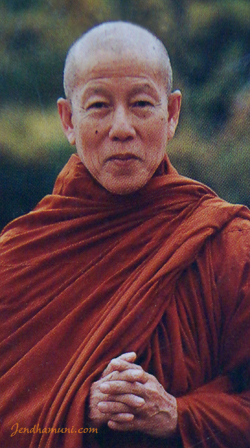
Maha Ghosananda

Maha Ghosananda

Supreme Patriarch of Cambodian Buddhism (5/23/1913 - 3/12/07). Forever in my heart...

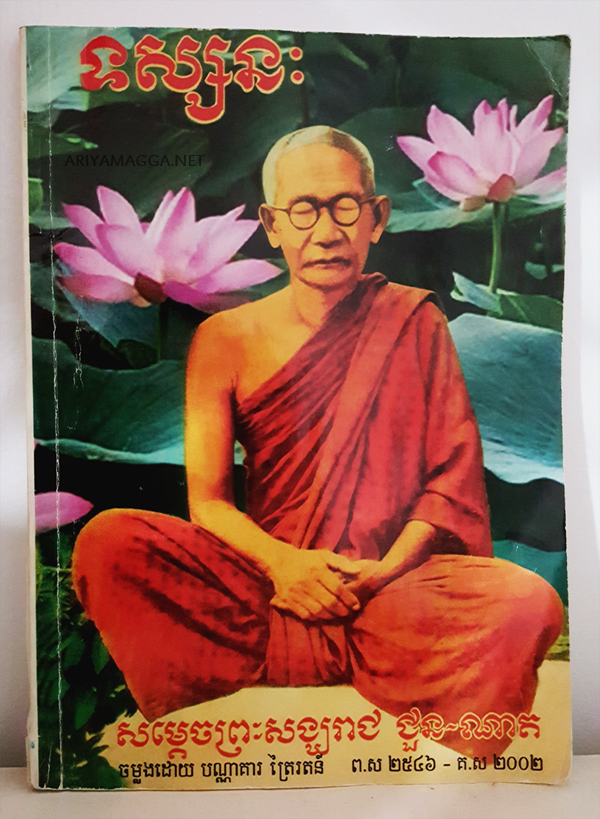
Samdech Chuon Nath

My reflection

វចនានុក្រមសម្តេចសង្ឃ ជួន ណាត
Desktop version

Listen to Khmer literature and Dhamma talk by His Holiness Jotannano Chuon Nath, Supreme Patriarch of Cambodia Buddhism.

Shantidevas’ Bodhisattva vows

My reflection

Should anyone wish to ridicule me and make me an object of jest and scorn why should I possibly care if I have dedicated myself to others?

Let them do as they wish with me so long as it does not harm them. May no one who encounters me ever have an insignificant contact.

Regardless whether those whom I meet respond towards me with anger or faith, may the mere fact of our meeting contribute to the fulfilment of their wishes.

May the slander, harm and all forms of abuse that anyone should direct towards me act as a cause of their enlightenment.

As a solid rock is not shaken by the wind, so the wise are not shaken by blame and praise. As a deep lake is clear and calm, so the wise become tranquil after they listened to the truth…

Good people walk on regardless of what happens to them. Good people do not babble on about their desires. Whether touched by happiness or by sorrow, the wise never appear elated or depressed. ~The Dhammapada

Hermit of Tbeng Mountain

Sachjang Phnom Tbeng សច្ចំ​​ ភ្នំត្បែង is a very long and interesting story written by Mr. Chhea Sokoan, read by Jendhamuni Sos. You can click on the links below to listen. Part 1 | Part 2

Beauty in nature

A beautiful object has no intrinsic quality that is good for the mind, nor an ugly object any intrinsic power to harm it. Beautiful and ugly are just projections of the mind. The ability to cause happiness or suffering is not a property of the outer object itself. For example, the sight of a particular individual can cause happiness to one person and suffering to another. It is the mind that attributes such qualities to the perceived object. — Dilgo Khyentse Rinpoche

Nature is loved by what is best in us. The sky, the mountain, the tree, the animal, give us a delight in and for themselves. — Ralph Waldo Emerson


Our journey for peace
begins today and every day.
Each step is a prayer,
Each step is a meditation,
Each step will build a bridge.

—​​​ Maha Ghosananda