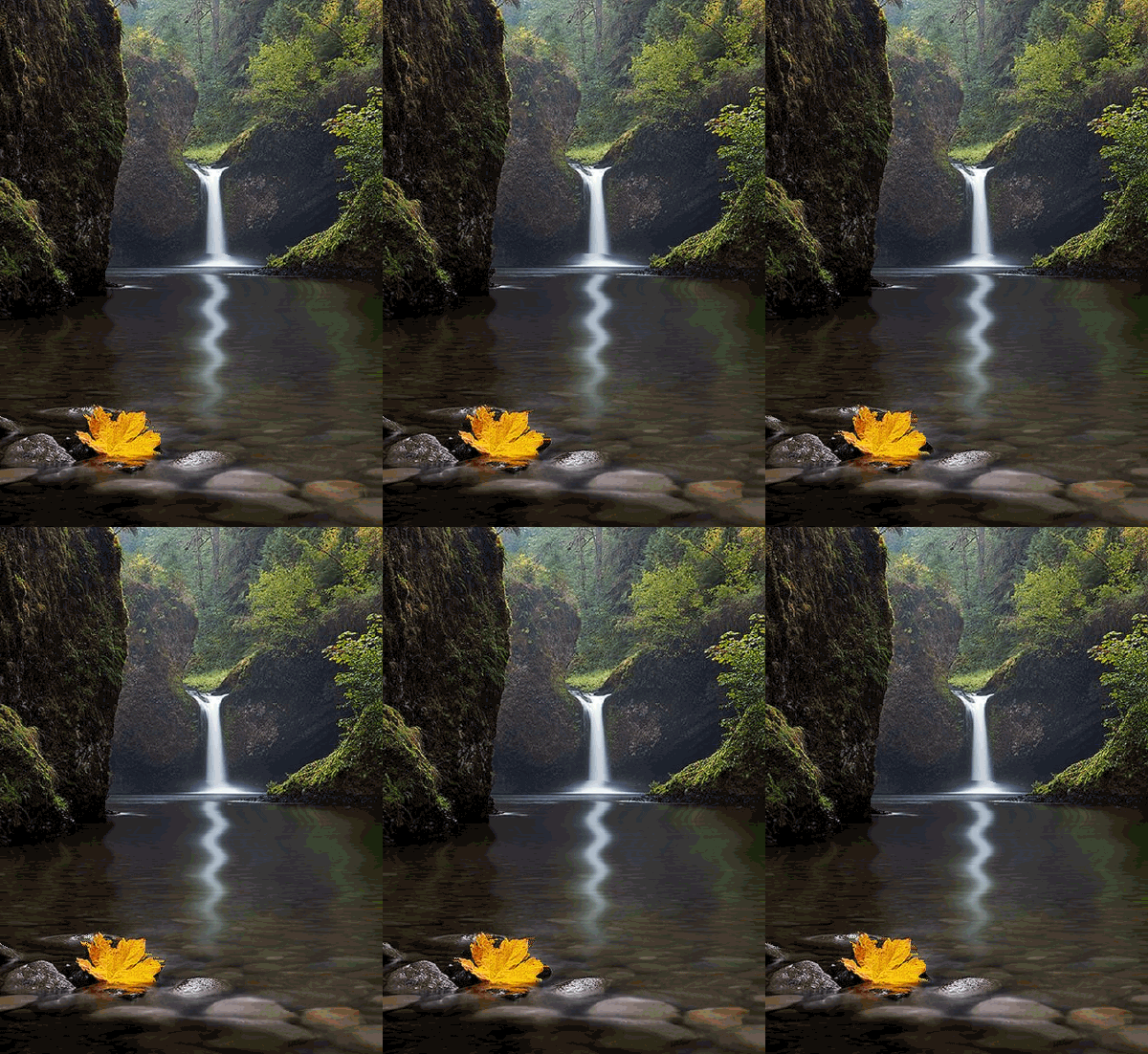
1. We Are the Earth

    Comment

    At this very moment, the Earth is above you, below you, all around you, and even inside you. The Earth is everywhere. You may be used to thinking of the Earth as only the ground beneath your feet. But the water, the sea, the sky, and everything around us comes from the Earth. Everything outside us and everything inside us comes from the Earth. We often forget that the planet we are living on has given us all the elements that make up our bodies. The water in our flesh, our bones, and all the microscopic cells inside our bodies all come from the Earth and are part of the Earth. The Earth is not just the environment we live in. We are the Earth and we are always carrying her within us.

    Realizing this, we can see that the Earth is truly alive. We are a living, breathing manifestation of this beautiful and generous planet. Knowing this, we can begin to transform our relationship to the Earth. We can begin to walk differently and to care for her differently. We will fall completely in love with the Earth. When we are in love with someone or something, there is no separation between ourselves and the person or thing we love. We do whatever we can for them and this brings us great joy and nourishment. That is the relationship each of us can have with the Earth. That is the relationship each of us must have with the Earth if the Earth is to survive, and if we are to survive as well.

    ~Thich Nhat Hanh

  2. Beauty of Nature

    27

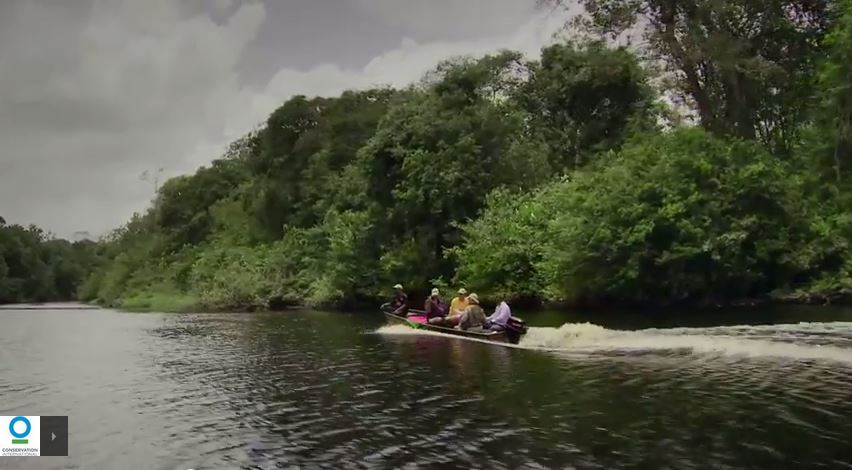
    Cardamom rainforest in my country, Cambodia
    As I walk across the earth,
    thousands of things I get to see.
    Birds fly high, soaring higher,
    and on the flowers I hear the buzz of bees.

    The sun at the dawn, rises within the hills.
    Mountains covered with snow,
    shining like the crown of silver. 
    And the waves touching the cliffs.
    The waterfall flowing down
    the green-blue mountains.
    Rivers forming a dream delta 
    before entering the sea.

    And while walking on the beach at night,
    I feel the cool and sweet smelling breeze.
    The slashing sound still feels like
    the sound of love and peace.
    The moon over the sea,
    shining like a ball of gold.
    And in every step my eyes hold wonder.
    I bend on my knee
    to thank the mother earth,
    And is the truth.
    it's a great pleasure for me,
    to live in this wonderland.

    Poem title: Our Mother Earth
    © Shweta Banerjee
    Source: Family Friend Poems 

    http://kimedia.blogspot.com/2014/08/surinames-wealth-of-water-solution-to.html

  3. Little kids got excited, just like little kids

    79
    jendhamuni Hondo nad ChildrenB

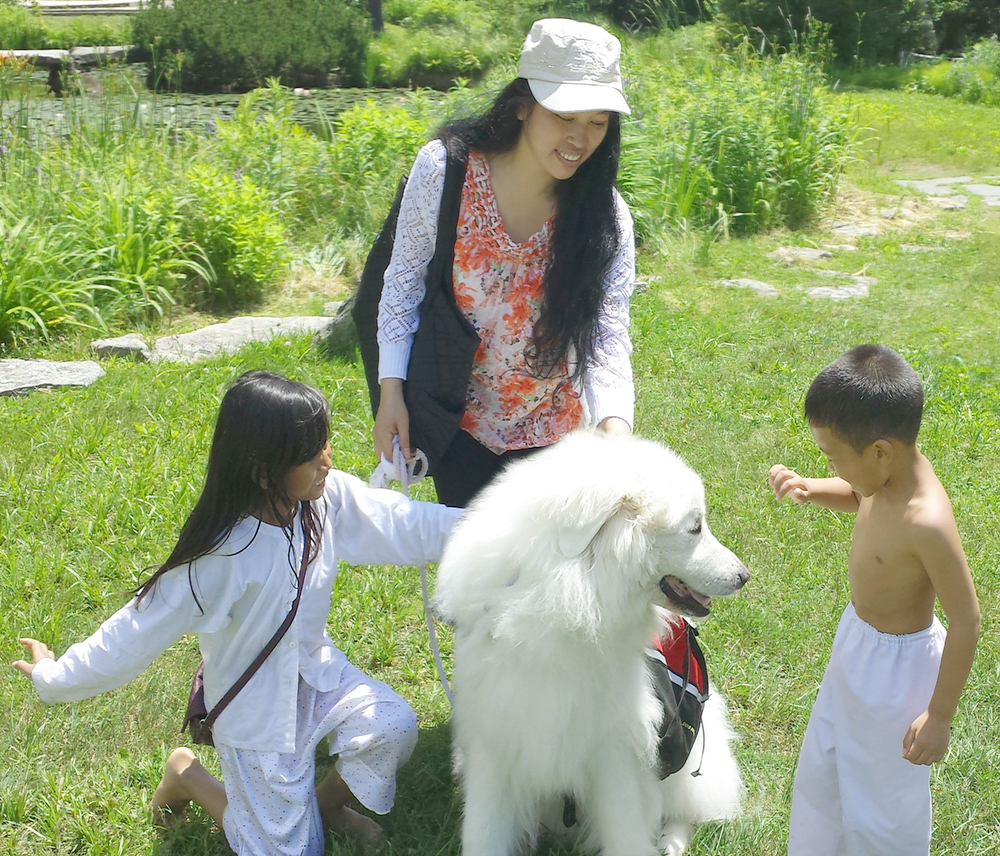
    Playing with Hondo (Canine) and little children.

    I love seeing innocent children playing like little children so much…
    You can learn many things from children.
    How much patience you have, for instance.
    ~Franklin P. Jones
  4. 1 of 10 green cars that don’t suck: Eco-excellence at all price points

    Comment

    Porsche 918 Spyder

    Running on electricity alone, the 918 Spyder is EPA-rated at the equivalent of 67 mpg. That means this is a car its owner could theoretically use to bop back and forth to work every day never using any gasoline at all—just like a Nissan Leaf. So spend your $847,975 with a clear conscience that you’re doing something good for the environment. Then go find a freeway on-ramp and let the 608-hp 4.6-liter V-8 party down with the two electric motors; you’ll watch the air around the car froth up as it uses all four wheels to claw from rest to 60 mph in a staggering 2.2 seconds. Simply put, this is the quickest production car we’ve ever tested. The Ferrari LaFerrari may yet match the feat—we have yet to test that one—but the McLaren P1 fell a half-second shy. Both of them are hybrids, too.

    By John Pearley Huffman, Car and Driver, August 29, 2014

  5. Every smile is like a ray of sunshine…

    Comment

    As you smile through troubles and tribulations you will soon realize that they have vanished into thin air. It takes faith to smile when times are not good and faith is a powerful weapon which can turn situations around. ~ Charles Seasons

  6. Baby Puffer fish

    Comment

    Amazing Baby Fish. There are all kinds of fish in sea and some of them get very big. But all fish have to start off as tiny babies. Have you ever wondered what the baby fish of different species look like? I’ll give you a hint…cute and adorable.

    Puffer fish Facts

    By softschools.com

    Puffer fish is an easily recognized type of fish due to ability to transform and enlarge its body in a split of a second. There are more than 120 species of puffer fish which live mostly in the warm waters of the Indian, Pacific and Atlantic Oceans, with only 30 species that are living in the freshwater. Some species move from marine to brackish or fresh water during the breeding season. Although number of puffer fish is stable in the wild, they are vulnerable due to overfishing, pollution of the ocean and loss of natural habitats.

    Interesting Puffer fish Facts:

    • Puffer fish vary in size from one inch long pygmy puffer, to a two feet long freshwater giant puffer.
    • Main feature, common for all puffer fish, is ability to ingest huge amount of water (and air sometimes) which increases their body size and turn them into odd-looking ball-like creatures. Quick transformation scares predators.
    • Scientists believe that puffer fish developed this tactic as a method of the self-defense because they are poor swimmers that cannot escape from the danger quickly.
    • Increase of the body size is not the only tactic used against the predators. Almost all species of puffer fish contain toxin (called tetrodotoxin) that can be 1200 times stronger than cyanide.
    • One puffer fish contains enough toxin to kill 30 adult men.
    • Toxin is not located in all parts of the puffer fish, and certain cultures prepare puffer fish (meal called fugu in Japan) as a delicacy. Only specially trained chiefs can clean the fish properly and prepare delicious and toxin-free meal. Just one wrong cut of the fish meat can result in the death of the customer.
    • Sharks are the only species immune to the puffer fish’s toxin. They can eat puffer fish without any negative consequences.
    • Puffer fish can be discretely or brightly colored. There is often relationship between the body coloration and the amount of toxin produced by the fish (brighter colors are often associated with large quantity of toxin in the fish).
    • Puffer fish do not have scales. Their skin is thick and rough. Some species have spines on the skin, which offer additional protection against the predators.
    • The most elastic part of their body is skin on the stomach area. When puffer fish ingests water, skin on the stomach expands several times of the normal size of the fish.
    • Puffer fish have four teeth that are fused in the beak-like structure. They use their teeth for opening of mussels, clams and shellfish. Puffer fish also eat algae and different types of worms and crustaceans.
    • Puffer fish have excellent eyesight.
    • Puffer fish reach sexual maturity at the age of five. Male guides the female to the shallow water (close to the shore) where she will release (usually) between three to seven eggs. Young fish are protected by the hard egg shell that will crack as soon as they are ready to hatch. After leaving the egg, young puffer fish swim toward the reef’s community.
    • Although some baby puffer fish cannot be seen without magnifying glass, their body shape resembles those of the adult animals.
    • Average lifespan of the puffer fish is around 10 years.
  7. How to Fold a T-Shirt in Under 10 Seconds

    Comment

    Transform your drawers and closets and tame those laundry piles with this tricky–to–learn but easy–to–master technique for folding t-shirts in seconds! Howdini shows you how with this awesome hack.

  8. Why Elephants Don’t Belong in Zoos!

    Comment

    Rachel Curit, One Green Planet, August 29, 2014  

    Seattle’s Woodland Park Zoo recently announcedthat its 45-year-old African elephant, Watato, had been euthanized after she was found lying in the elephant yard and unable to stand. While euthanasia might seem like the kindest option for an elephant who can no longer walk, it’s important to dig a little deeper.

    In the wild, the average lifespan of an elephant is up to 70 years, but many live beyond that. So, what  caused this 45-year-old elephant to suddenly become so unwell? Friends of Woodland Park Zoo Elephants believe that her condition was brought on by her living space, or lack thereof. She shared just one acre divided into five pens with two other elephants, Bamboo and Chai – not to mention the fact that Watato and Bamboo were incompatible – meaning they had to be kept separated and as a result never had full access to the entire area.

    An elephant roaming free in the wild will walk up to 30 miles in a day making a fraction of an acre cruel confinement. Unsurprisingly, an elephant so severely confined is likely to develop captivity-related diseases. Watato was no exception. She suffered from arthritis, lameness and “neurotic repetitive behaviors – outward signs of trauma, stress and boredom.” Is it any wonder why she collapsed?

    Unfortunately, Watato’s story is not unique. Her situation is indicative of a much larger problem. The fact is, elephants do not belong in captivity.

    Lifespan in Captivity vs. Wild
    As mentioned before, wild African elephants live anywhere between 60 and 70 years of age. According to the National Geographic, the median lifespan of a zoo-born female is just 17 years with Asian elephants living up to 19 years in captivity and 42 in the wild.

    In order to keep these elephants living longer, experts suggest “routine screening for obesity … as well as monitoring stress via a chemical known as interleukin-6.”

    For animals who would ordinarily spend much of their day moving and exercising, it’s no wonder captive elephants are prone to obesity. To keep them living longer, we shouldn’t we just allow them to remain in the wild, rather than keep them in captivity.

    Family Structure and Social Interactions
    Elephants live in herds of anywhere from 8 to 100 individuals with the head of the herd being the oldest female. Baby elephants stay by their mother’s side for up to 15 years, but they are reared and protected by the entire heard. Males leave the family unit around this time and will either live solitarily or temporarily with other male elephants.

    Defenders of Wildlife states, “Recent discoveries have shown that elephants can communicate over long distances by producing a sub-sonic rumble that can travel over the ground faster than sound through air.”

    With such complex communication and tight-knit family structures, it’s rather shocking to imagine an elephant like Watato living with just two other elephants, one with whom she didn’t even get along. That sounds like a lonely and isolating existence.

    Mental and Physical Stimulation
    Because of the lack of space, elephants in zoos aren’t able to get the amount of mental or physical stimulation they require. Nature provides elephants with all they need for healthy lives.

    Having a variety of ground surfaces, “including clean dirt, mulch, sand and, probably most importantly, grassy areas and pasture, as well as slopes, hills, gullies, scrub and forest” is essential for getting enough exercise and mental stimulation. Captive elephants require at least 10 km of space and the opportunity to engage in natural elephant behaviors such as foraging, exploring and socializing are vital to their wellbeing.

    Elephants who are denied these basic needs develop diseases, just as Watato, Bamboo and Chai have. Aside from obesity, Elephants in Canada states that common ailments captive elephants face include arthritis, foot infections – the leading cause of death, reproductive problems (such as low fertility, high rate of stillbirths and difficulty giving birth), difficulty raising young, psychological disorders, early mortality and engagement in abnormal behaviors such as killing young and aggression towards other elephants.

    What We’ve Learned From Watato, and How You Can Help Others
    Elephants like Watato, Bamboo and Chai have needs that humans generally aren’t able (or willing) to provide. Sanctuaries do a wonderful job taking in captive, retired elephants, but there is simply no denying that these elephants should never have been in captivity in the first place. Watato’s passing is a reminder of this for us all.

    For those of you who would like to protect Bamboo and Chai from the same fate, please write to Seattle’s Mayor and City Council to order the zoo to release them to a sanctuary. You can find contact information at the bottom of this page.

    Image source: Benoit Dupont/Flickr

    See something, Say something. Bookmark, share and help further build our directory of Animal Rescue Hotlines and let’s be prepared to help animals today!

Live & Die for Buddhism

candle

Khmer Tipitaka 1 – 110

 ព្រះត្រៃបិដក

ព្រះត្រៃបិដក ប្រែថា កញ្រ្ចែង ឬ ល្អី​ ៣ សម្រាប់ដាក់ផ្ទុកពាក្យពេចន៍នៃព្រះសម្មាសម្ពុទ្ធ

The Tipitaka or Pali canon, is the collection of primary Pali language texts which form the doctrinal foundation of Theravada Buddhism. The three divisions of the Tipitaka are: Vinaya Pitaka, Sutta Pitaka, Abhidhamma Pitaka.

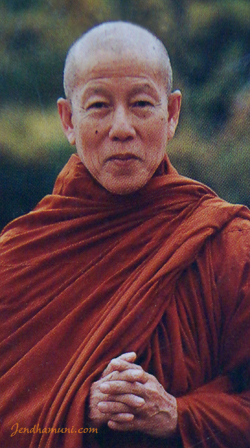
Maha Ghosananda

Maha Ghosananda

Supreme Patriarch of Cambodian Buddhism (5/23/1913 - 3/12/07). Forever in my heart...

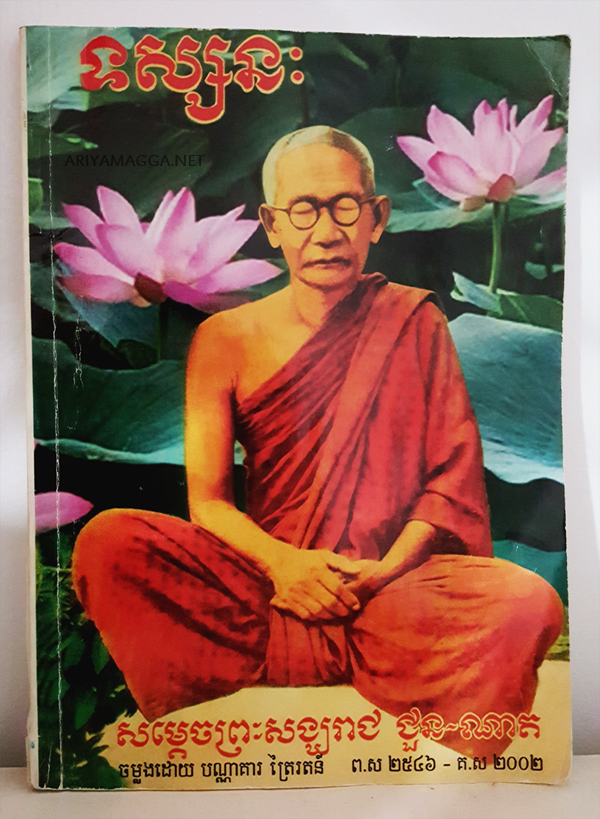
Samdech Chuon Nath

My reflection

វចនានុក្រមសម្តេចសង្ឃ ជួន ណាត
Desktop version

Listen to Khmer literature and Dhamma talk by His Holiness Jotannano Chuon Nath, Supreme Patriarch of Cambodia Buddhism.

Shantidevas’ Bodhisattva vows

My reflection

Should anyone wish to ridicule me and make me an object of jest and scorn why should I possibly care if I have dedicated myself to others?

Let them do as they wish with me so long as it does not harm them. May no one who encounters me ever have an insignificant contact.

Regardless whether those whom I meet respond towards me with anger or faith, may the mere fact of our meeting contribute to the fulfilment of their wishes.

May the slander, harm and all forms of abuse that anyone should direct towards me act as a cause of their enlightenment.

As a solid rock is not shaken by the wind, so the wise are not shaken by blame and praise. As a deep lake is clear and calm, so the wise become tranquil after they listened to the truth…

Good people walk on regardless of what happens to them. Good people do not babble on about their desires. Whether touched by happiness or by sorrow, the wise never appear elated or depressed. ~The Dhammapada

Hermit of Tbeng Mountain

Sachjang Phnom Tbeng សច្ចំ​​ ភ្នំត្បែង is a very long and interesting story written by Mr. Chhea Sokoan, read by Jendhamuni Sos. You can click on the links below to listen. Part 1 | Part 2

Beauty in nature

A beautiful object has no intrinsic quality that is good for the mind, nor an ugly object any intrinsic power to harm it. Beautiful and ugly are just projections of the mind. The ability to cause happiness or suffering is not a property of the outer object itself. For example, the sight of a particular individual can cause happiness to one person and suffering to another. It is the mind that attributes such qualities to the perceived object. — Dilgo Khyentse Rinpoche

Nature is loved by what is best in us. The sky, the mountain, the tree, the animal, give us a delight in and for themselves. — Ralph Waldo Emerson


Our journey for peace
begins today and every day.
Each step is a prayer,
Each step is a meditation,
Each step will build a bridge.

—​​​ Maha Ghosananda