1. Nothing will change

    Comment

    You can complain as much as you like about your life and the problems nothing will change unless you stop complaining and start making things right yourself. ~Anurag Prakash Ray

  2. Jealousy

    Comment

    From among all… adverse conditions, the foremost is jealousy. Jealousy can rob us of our freedom and interrupt loving relationships between people. Jealousy occurs when we cannot tolerate others encountering situations that seem to involve more happiness than what we have. When we continually feel the need to have others beneath us and none equal to us, that is jealousy. When we are controlled by jealousy, we only feel comfortable when others come to us for assistance; we only feel at ease when others are looking to us with hope. We cannot stand being in situations where others have something that we need.

    When we become jealous, we are not willing to see the positive qualities of others. Whether we are alone or in a group, when we are overcome by jealousy our eyes are not willing to see the good things in others; they are constantly looking for other’s faults. We build up intolerance toward the faults of others. In particular, when we see others enjoying good fortune that exceeds our own, we cannot stand it. In this way, we create extra and superfluous difficulties for our minds to deal with.

    A better approach would be to pay more attention to our own conduct than to the conduct of others. ~17th Karmapa


  3. Practicing love and compassion in an impartial way

    Comment

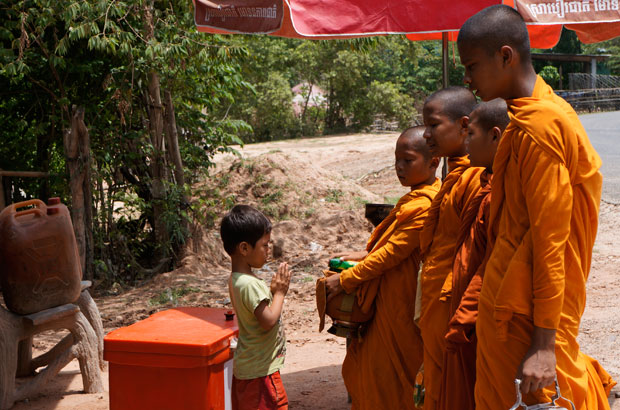
    The practices of loving kindness and compassion are incredibly relevant for everyone. Moreover, training in these qualities provides a common bridge between all different religions and areas of our world society. No matter whether we are people who teach a spiritual path or someone else, everybody can practice love and compassion, but it is important that we do so in an impartial way. ~ 17th Karmapa

    RFA photo/Sireymuny

    RFA photo/Sireymuny

  4. Inner peace is the key

    168

    Inner peace is the key: if you have inner peace, the external problems do not affect your deep sense of peace and tranquility. Without this inner peace, no matter how comfortable your life is materially, you may still be worried, disturbed, or unhappy because of circumstances. ~Dalai Lama

  5. Miss no single opportunity

    Comment

    Miss no single opportunity of making some small sacrifice, here by a smiling look, there by a kindly word; always doing the smallest right and doing it all for love. ~Unknown

    RFA/Uon Chhin

  6. Puppy playing with kitty

    Comment

    Female cats are typically right-pawed while male cats are typically left-pawed. A cat’s cerebral cortex (the part of the brain in charge of cognitive information processing) has 300 million neurons, compared with a dog’s 160 million. Source: Buzzfeed

  7. What metta isn’t

    Comment

    History Of Buddhism

    There are many myths and misunderstandings about metta, or lovingkindness.

    Simply because the word metta is not found in English — and because there isn’t an exact equivalent — it’s possible to think that the emotion itself is something strange and unusual.

    It’s possible for us to confuse metta with other emotions.

    It’s also possible for us to think that since metta is part of a spiritual path it must be something very exalted and distant, and not something that we’ve ever experienced.

    Here are some explanations of what metta is not:

    Metta isn’t the same thing as feeling good, although when we feel metta we do feel more complete, and usually feel more joyful and happy. But it’s possible to feel good and for that not to be metta. We can feel good, but be rather selfish and inconsiderate, for example. Metta has a quality of caring about others.

    Metta isn’t self-sacrifice. A metta-full individual is not someone who always puts others before themselves. Metta has a quality of appreciation, and we need to learn to appreciate ourselves as well as others.

    Metta isn’t something unknown. We all experience Metta. Every time you feel pleasure in seeing someone do well, or are patient with someone who’s a bit difficult, or are considerate and ask someone what they think, you’re experiencing Metta.

    Metta isn’t denying your experience. To practice Metta doesn’t mean “being nice” in a false way. It means that even if you don’t like someone, you can still have their welfare at heart.

    Metta isn’t all or nothing. Metta exists in degrees, and can be expressed in such simple ways as simple as politeness and courtesy.

    Source: http://www.wildmind.org


  8. What metta is

    Comment
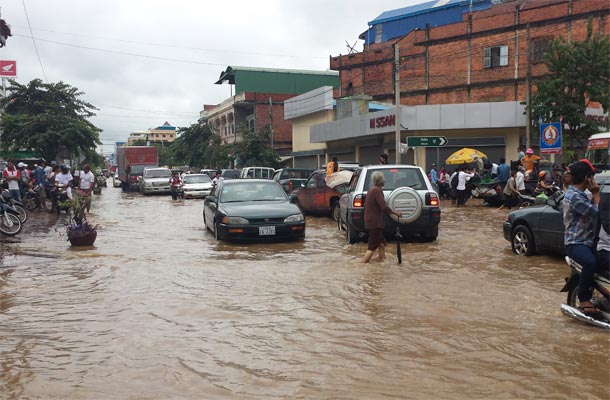
    Flood in Camobdia. RFA photo

    Flood in Camobdia. RFA photo


    Metta is an attitude of recognizing that all sentient beings (that is, all beings that are capable of feeling), can feel good or feel bad, and that all, given the choice, will choose the former over the latter.

    Metta is a recognition of the most basic solidarity that we have with others, this sharing of a common aspiration to find fulfillment and escape suffering.

    Metta is empathy. It’s the willingness to see the world from another’s point of view: to walk a mile in another person’s shoes.

    Metta is the desire that all sentient beings be well, or at least the ones we’re currently thinking about or in contact with. It’s wishing others well.

    Metta is friendliness, consideration, kindness, generosity.
    Metta is an attitude rather than just a feeling. It’s an attitude of friendliness.

    Metta is the basis for compassion. When our Metta meets another’s suffering, then our Metta transforms into compassion.
    Metta is the basis for shared joy. When our Metta meets with another’s happiness or good fortune, then it transmutes into an empathetic joyfulness.

    Metta is boundless. We can feel Metta for any sentient being, regardless of gender, race, or nationality.

    Metta is the most fulfilling emotional state that we can know. It’s the fulfillment of the emotional development of every being.
    It’s our inherent potential. To wish another well is to wish that they be in a state of experiencing Metta.

    Metta is the answer to almost every problem the world faces today. Money won’t do it. Technology won’t do it. Metta will.


    Source: http://www.wildmind.org


  9. Human nature being what it is

    Comment
    RFA photo/Sireymuny

    RFA photo/Sireymuny


    By Ven. Dr K. Sri Dhammananda Nayaka Maha Thera

    Human nature being what it is, all of us are inclined to put the blame on others for our own shortcomings or misfortunes. Do you ever give a thought for a moment that you yourself can be responsible for your own problems? Your sorrows and miseries are not caused by a family curse that is handed down from one generation to the next. Nor are they caused by the original sin of some ancestor who has returned from beyond the grave to haunt you. Nor are your sorrow and miseries created by a god or by a devil. Your sorrow is caused by yourself. Your sorrow is your own making. You are your own liberator.

    You must learn to shoulder the responsibilities of your life and to admit your own weakness without blaming or disturbing others. Remember the old saying :

    “The uncultured man always blames others; the semi cultured man blames himself and the fully-cultured man blames neither.”

    As a cultured being, you must learn to solve your own problems without blaming others. If each person would try to correct himself, there would not be any trouble in this world. But many people do not make any effort to realize that they themselves are responsible for many misfortunes that befall them. They prefer to find scapegoats.They look outside themselves for the source of their troubles because they are reluctant to admit their own weaknesses.

    Man’s mind is given to so much self-deceit that he does not want to admit his own weakness. He will try to find some excuse to justify his action and to create an illusion that he is blameless. If a man really wants to be free, he must have the courage to admit his own weakness.

    whiteflower

    The Buddha says: “Easily seen are others’ faults; hard indeed it is to see one’s own fault.”

    You must develop the courage to admit when you have fallen victim to your weakness. You must admit when you are in the wrong. Do not follow the uncultured who always blames others. Do not use other people as your scapegoat – this is most despicable. Remember that you may fool some of the people some of the time, but not all the people all of the time.

    The Buddha says: “The fool who does not admit he is a fool, is a real fool. And the fool who admits he is a fool is wise to that extent.”

    Admit your own weakness. Do not blame others. You must realize that you are responsible for the miseries and the difficulties that come to you. You must understand that your way of thinking also creates the conditions that give rise to your difficulties. You must appreciate that at all times, you are responsible for whatever comes to you.

    “It is not that something is wrong with the world, but something is wrong with us.”

    You Are responsible For Your Relationship With Others

    Remember that whatever happens to you cannot feel hurt if you know how to keep a balanced mind. You are hurt only by the mental attitude that you adopt towards yourself and towards others. If you show a loving attitude towards others, you will receive a loving attitude in return. If you show hatred, you will undoubtedly never receive love in return. An angry man breathes out poison and he hurts himself more than others. Anyone who is wise not to be angered by anger will not be hurt. Remember that no one can hurt you unless you allow others to hurt you. Of another person blames or scolds you, but you follow the Dhamma (truth), then that Dhamma will protect you from unjust attacks.

    The Buddha says: “Whoever harms a harmless person, one pure and guiltless, upon that very fool the evil recoils like fine dust thrown against the wind.”

    If you allow others to fulfill their wishes in hurting you, you are responsible.

    Blame Not Others – Accept Responsible

    Source: buddhistbugs.blogspot.com

     

Live & Die for Buddhism

candle

Me & Grandma

My Reflection

This site is a tribute to Buddhism. Buddhism has given me a tremendous inspiration to be who and where I am today. Although I came to America at a very young age, however, I never once forget who I am and where I came from. One thing I know for sure is I was born as a Buddhist, live as a Buddhist and will leave this earth as a Buddhist. I do not believe in superstition. I only believe in karma.

A Handful of Leaves

A Handful of Leaves

Tipitaka: The pali canon (Readings in Theravada Buddhism). A vast body of literature in English translation the texts add up to several thousand printed pages. Most -- but not all -- of the Canon has already been published in English over the years. Although only a small fraction of these texts are available here at Access to Insight, this collection can nonetheless be a very good place to start.

Major Differences

Major Differences in Buddhism

Major Differences in Buddhism: There is no almighty God in Buddhism. There is no one to hand out rewards or punishments on a supposedly Judgement Day ...read more

Problems we face today

jendhamuni pink scarfnature

Of the many problems we face today, some are natural calamities and must be accepted and faced with equanimity. Others, however, are of our own making, created by misunderstanding, and can be corrected...