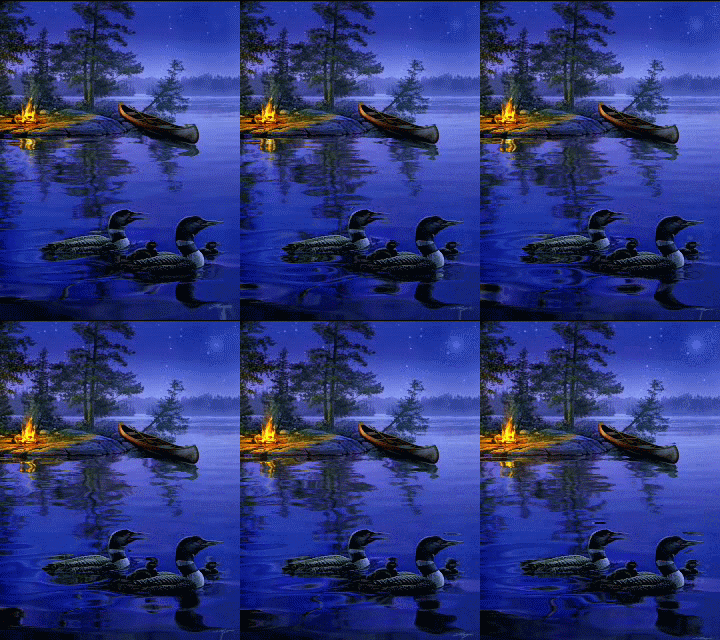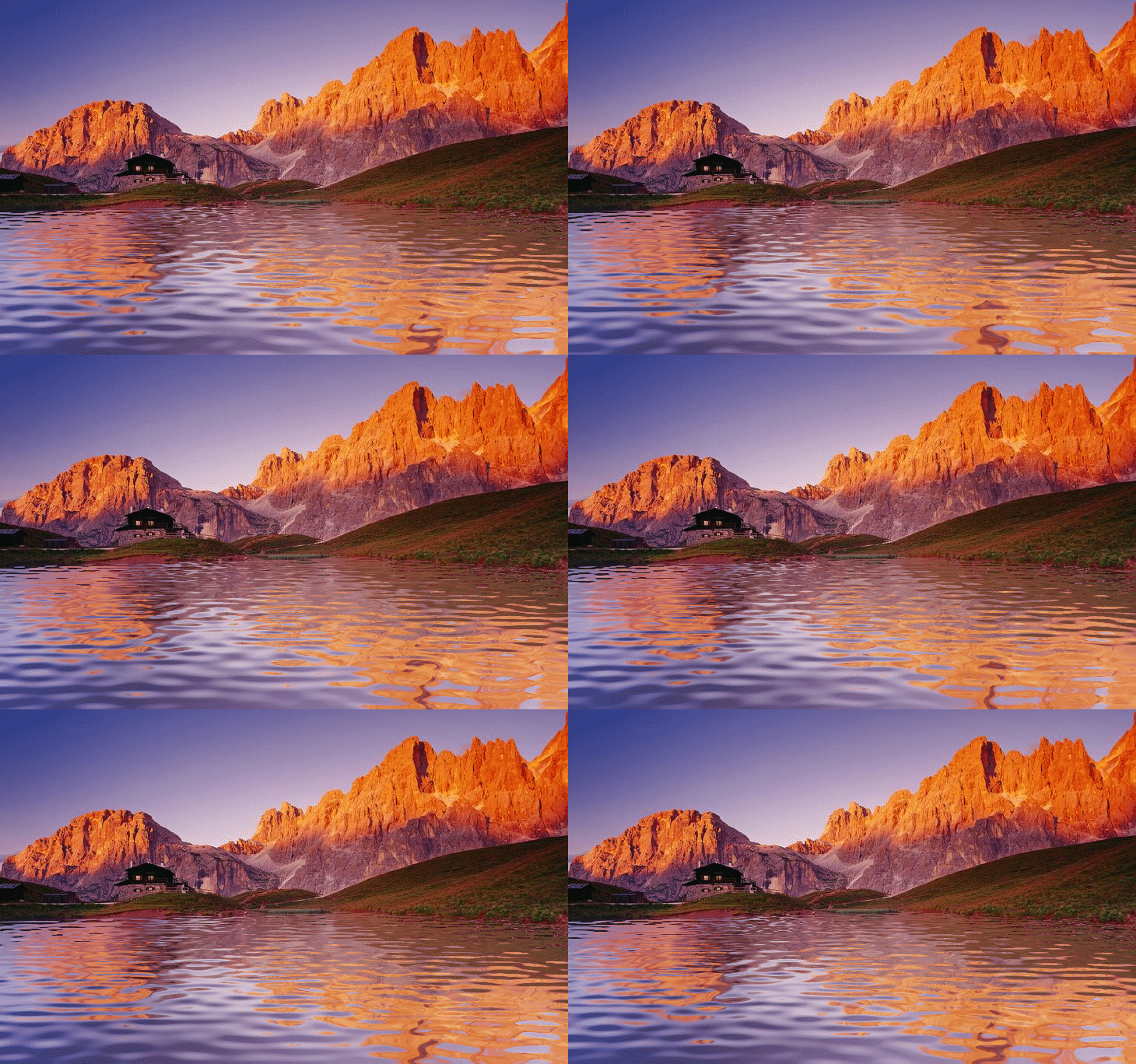
Hurtful actions and reprisals are different but closely related. Actions once done are finished with, there’s no need to answer with revenge and hostility. This is called “action” (kamma). “Reprisal” (vera) means to continue that action further with thoughts of “you did it to me so I’m going to get you back.” There’s no end to this. It brings about the continual seeking of revenge, and so hatred is never abandoned. As long as we behave like this the chain remains unbroken, there’s no end to it. No matter where we go, the feuding continues. ~Ajahn Chah
Do not follow a bad law.
Do not live in thoughtlessness.
Do not follow wrong ideas.
Do not be attached to the world.
Arise; do not be thoughtless.
Follow the path of virtue.
The virtuous rest in bliss in this world and in the next.
Follow the path of virtue; do not follow the wrong path.
The virtuous rest in bliss in this world and in the next.
Look upon the world as a bubble;
look on it as a mirage.
Whoever looks thus upon the world
is not seen by the sovereign of death.
Come, look at this world resembling a painted royal chariot.
The foolish are immersed in it,
but the wise are not attached to it.
The one who formerly was thoughtless
and afterwards became conscientious
lights up this world like the moon when freed from a cloud.
The one whose wrong actions are eradicated by good conduct
lights up this world like the moon when freed from a cloud.
This world is blinded; only a few can see here.
Like birds escaped from the net, a few go to heaven.
The swans go on the path of the sun;
miraculously they fly through the sky.
The wise are led out of this world,
when they have conquered Mara and the tempter’s armies.
Whoever violates the one law, who speaks lies,
and scoffs at another world,
there is no wrong that one will not do.
Misers do not go to the world of the gods;
only fools do not praise liberality;
the wise find joy in generosity,
and because of it become blessed in the other world.
Better than sovereignty over the earth,
better than going to heaven,
better than dominion over all the worlds
is the reward of reaching the stream.
~The Dhammapada

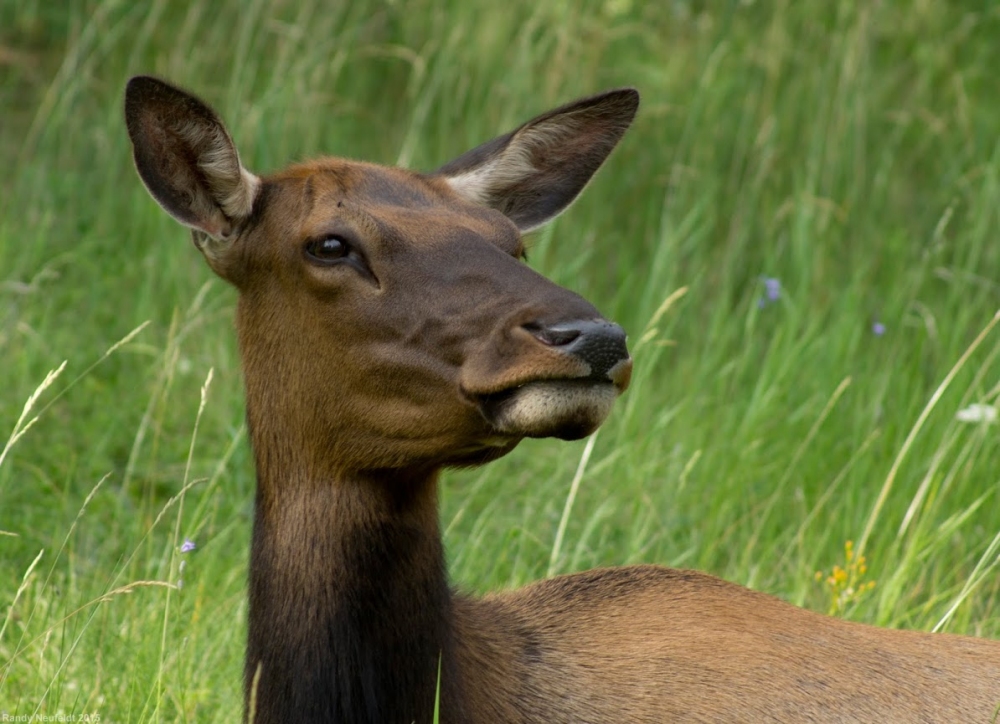
Elk are also called wapiti, a Native American word that means “light-colored deer.” Elk are related to deer but are much larger than most of their relatives. A bull (male) elk’s antlers may reach 4 feet (1.2 meters) above its head, so that the animal towers 9 feet (2.7 meters) tall.
Bull elk lose their antlers each March, but they begin to grow them back in May in preparation for the late-summer breeding season.
In early summer, elk migrate to high mountain grazing grounds where the cows (females) will give birth. Each cow typically has a single calf, which can stand by the time it is 20 minutes old.
During the late summer breeding season the bugling of bull elk echoes through the mountains. These powerful animals strip the velvet off their new antlers using them in violent clashes that determine who gets to mate with whom. Males with the bigger antlers, typically older animals, usually win these battles and dominate small herds.
In the winter, wapiti reconvene into larger herds, though males and females typically remain separate. The herds return to lower valley pastures where elk spend the season pawing through snow to browse on grass or settling for shrubs that stand clear of the snow cover.
Elk were once found across much of North America but they were killed off and driven to take refuge in more remote locations. Today they live primarily in western North America, especially in mountainous landscapes such as Wyoming’s National Elk Refuge and Yellowstone National Park. Some eastern U.S. states have reintroduced small elk herds into heavily wooded wilderness areas. Continue reading