1. Little piggy with dog

    Comment

    Adult pigs can run at speeds of up to 11 miles an hour. According to Professor Donald Broom of the Cambridge University Veterinary School, “[Pigs] have the cognitive ability to be quite sophisticated. Even more so than dogs and certainly [more so than human] 3-year-olds.” Professor Stanley Curtis of Penn State University has found that pigs can play joystick-controlled video games and are “capable of abstract representation.” Dr. Curtis believes that “there is much more going on in terms of thinking and observing by these pigs than we would ever have guessed.” Source: Peta2

  2. At some point

    Comment

    Sometimes you just have to forget about that person you once liked and move on.
    At some point, you have to realize that some people can stay in your heart
    but not in your life. ~Coolnsmart

  3. Someday…

    Comment

    Someday you’ll cry for me like I cried for you.
    Some day you’ll miss me like I miss you.
    Some day you’ll need me like I needed you.
    Some day you’ll Love me…
    But I won’t Love you…

     ~Coolnsmart

  4. Training the Mind: Verse 3

    Comment

    In all my deeds may I probe into my mind,
    And as soon as mental and emotional afflictions arise-
    As they endanger myself and others-
    May I strongly confront them and avert them.

    wetflower071615

    by His Holiness the Dalai Lama

    This verse really gets to the heart of what could be called the essence of the practice of the buddhadharma. When we talk about Dharma in the context of Buddhist teachings, we are talking about nirvana, or freedom from suffering. Freedom from suffering, nirvana, or cessation is the true Dharma. There are many levels of cessation–for example, restraint from killing or murder could be a form of Dharma. But this cannot be called Buddhist Dharma specifically because restraint from killing is something that even someone who is nonreligious can adopt as a result of following the law. The essence of the Dharma in the Buddhist tradition is that state of freedom from suffering and defilements (Skt. klesha, Tib. nyonmong) that lie at the root of suffering. This verse addresses how to combat these defilements or afflictive emotions and thoughts. One could say that for a Buddhist practitioner, the real enemy is this enemy within–these mental and emotional defilements. It is these emotional and mental afflictions that give rise to pain and suffering. The real task of a buddhadharma practitioner is to defeat this inner enemy.

    Since applying antidotes to these mental and emotional defilements lies at the heart of the Dharma practice and is in some sense its foundation, the third verse suggests that it is very important to cultivate mindfulness right from the beginning. Otherwise, if you let negative emotions and thoughts arise inside you without any sense of restraint, without any mindfulness of their negativity, then in a sense you are giving them free reign. They can then develop to the point where there is simply no way to counter them. However, if you develop mindfulness of their negativity, then when they occur, you will be able to stamp them out as soon as they arise. You will not give them the opportunity or the space to develop into full-blown negative emotional thoughts. The way in which this third verse suggests we apply an antidote is, I think, at the level of the manifested and felt experience of emotion. Instead of getting at the root of emotion in general, what is being suggested is the application of antidotes that are appropriate to specific negative emotions and thoughts. For example, to counter anger, you should cultivate love and compassion.

    To counter strong attachment to an object, you should cultivate thoughts about the impurity of that object, its undesirable nature, and so on. To counter one’s arrogance or pride, you need to reflect upon shortcomings in you that can give rise to a sense of humility. For example, you can think about all the things in the world about which you are completely ignorant. Take the sign language interpreter here in front of me. When I look at her and see the complex gestures with which she performs the translation, I haven’t a clue what is going on, and to see that is quite a humbling experience. From my own personal experience, whenever I have a little tingling sense of pride, I think of computers. It really calms me down!

    These are the first three verses from the Eight Verses of Training the Mind, and commentary by His Holiness the Dalai Lama that was given on November 8, 1998 in Washington D.C. Link source



  5. Innocent dogs look curious

    Comment

    A puppy does not begin trying to walk until as early as 2 weeks and as late as 5 weeks old – They do not automatically know how to walk, they stumble and fall down just like toddlers do. Out of the 5 senses: touch, taste, smell, hearing and seeing, a puppy first experiences touch. At about 6 weeks old, a dam will start encouraging her pups to venture out and slowly become more independent. Source: The Dog fact information center

  6. Finding a way to extend forgiveness

    Comment

    Finding a way to extend forgiveness to ourselves is one of our most
    essential tasks. Just as others have been caught in suffering, so have we.
    If we look honestly at our life, we can see the sorrows and pain that have led
    to our own wrongdoing. In this we can finally extend forgiveness to ourselves;
    we can hold the pain we have caused in compassion. Without such mercy,
    we will live our own life in exile.

    “In deep self-acceptance grows a compassionate understanding.
    As one Zen master said when I asked if he ever gets angry,
    ‘Of course I get angry, but then a few minutes later I say to myself,
    ‘What’s the use of this,’ and I let it go.’” ~Jack Kornfield

    Jendhamuni0709BW

  7. Loving-kindness: if we take to its ultimate

    Comment

    The Buddhist attitude is one of loving-kindness (metta), of open acceptance of everything as it is. If we take loving-kindness to its ultimate, all conditioned phenomena are accepted for what they are. That doesn’t mean all things are approved of; they are simply accepted. Everything has to be the way it is in the moment. You can’t say, ‘I don’t want the weather to be like this,’ or, ‘I don’t want things to be this way.’ If you do, you are not accepting the way it is and are creating suffering around something that you don’t like or don’t want.

    You can also have loving-kindness for your dislike of the way it is, so you are not even criticising yourself for being critical. Feeling despair and self-aversion for being critical or selfish is another trap of the mind. Even if you are sitting here hating yourself, thinking of yourself as selfish and critical and not a very nice person, you can have metta for that; you can have loving-kindness for the critical mind. Patient acceptance is nonaversion to everything that is happening now.

    ~Ajahn Sumedho

    Pink Arid Blossom. Photo credit: Randy Neufeldt

    Pink Arid Blossom. Photo credit: Randy Neufeldt


  8. Free yourself from aging

    Comment

    You can free yourself from aging by reinterpreting your body
    and by grasping the link between belief and biology.

    ~Deepak Chopra

  9. People who truly love you…

    Comment

    If someone still treats you with respect after the relationship
    has ended they truly love you. When they try to bring
    you down or slander your name they never really cared
    for you at all. ~Unknown

  10. Happy for no reason

    Comment

    Be happy for no reason, like a child. If you are happy for a reason, you’re in trouble,
    because that reason can be taken from you. 

    Meditation is not a way of making your mind quiet. It’s a way of entering into the quiet
    that’s already there-buried under the 50,000 thoughts the average person thinks every day.
    ~Deepak Chopra

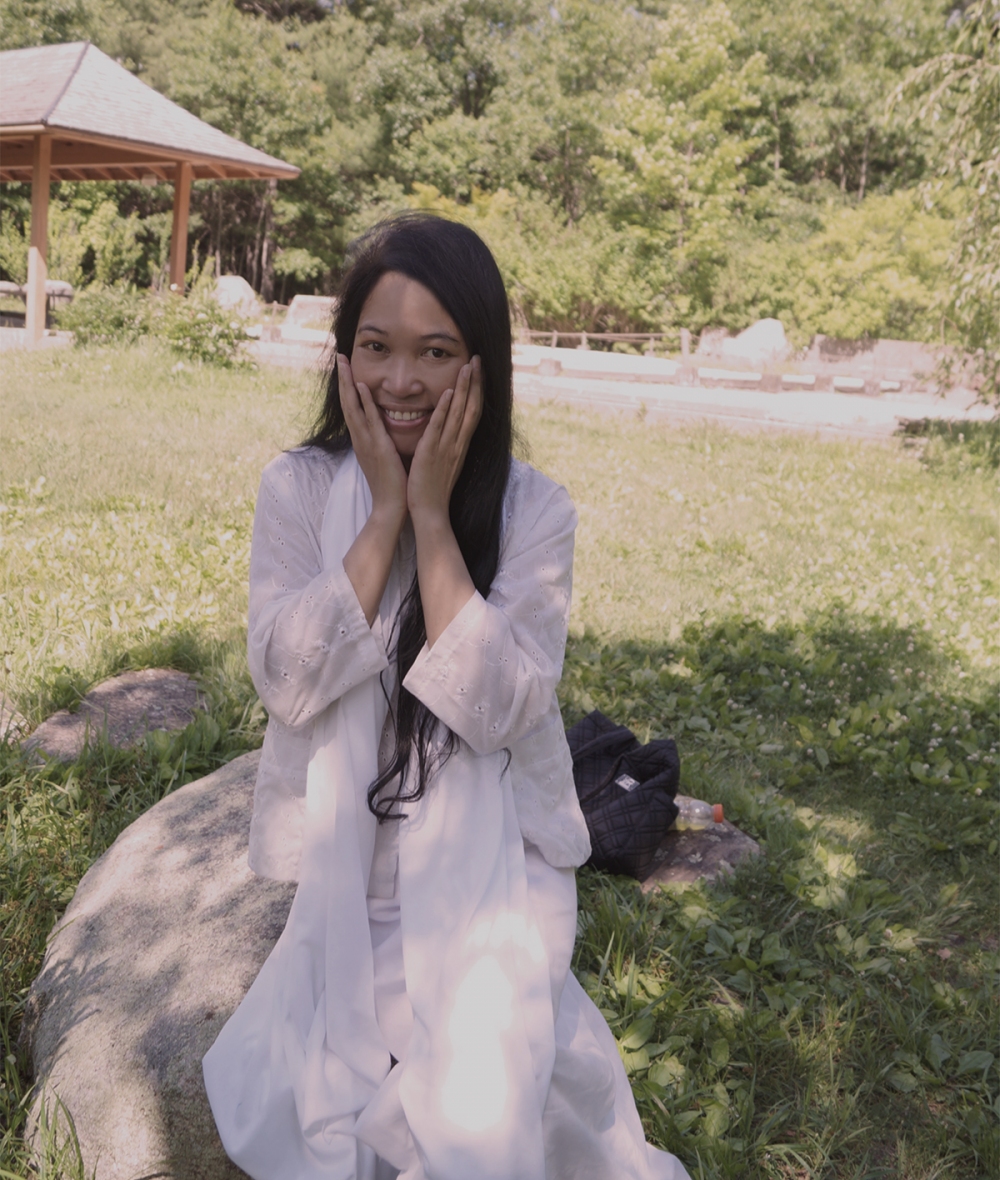
    Jendhamuni white clothes


Live & Die for Buddhism

candle

Me & Grandma

My Reflection

This site is a tribute to Buddhism. Buddhism has given me a tremendous inspiration to be who and where I am today. Although I came to America at a very young age, however, I never once forget who I am and where I came from. One thing I know for sure is I was born as a Buddhist, live as a Buddhist and will leave this earth as a Buddhist. I do not believe in superstition. I only believe in karma.

A Handful of Leaves

A Handful of Leaves

Tipitaka: The pali canon (Readings in Theravada Buddhism). A vast body of literature in English translation the texts add up to several thousand printed pages. Most -- but not all -- of the Canon has already been published in English over the years. Although only a small fraction of these texts are available here at Access to Insight, this collection can nonetheless be a very good place to start.

Major Differences

Major Differences in Buddhism

Major Differences in Buddhism: There is no almighty God in Buddhism. There is no one to hand out rewards or punishments on a supposedly Judgement Day ...read more

Problems we face today

jendhamuni pink scarfnature

Of the many problems we face today, some are natural calamities and must be accepted and faced with equanimity. Others, however, are of our own making, created by misunderstanding, and can be corrected...