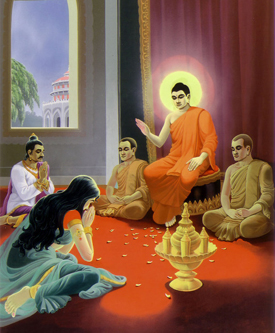
What you say or do…
Comment
December 17, 2016
You feel great when what you say or do is helpful to other people. – Dr T.P.Chia


You feel great when what you say or do is helpful to other people. – Dr T.P.Chia

My to-do list for today:
– Count my blessings
– Practice kindness
– Let go of what I can’t control
– Listen to my heart
– Be productive yet calm
– Just breathe
~Coolnsmart
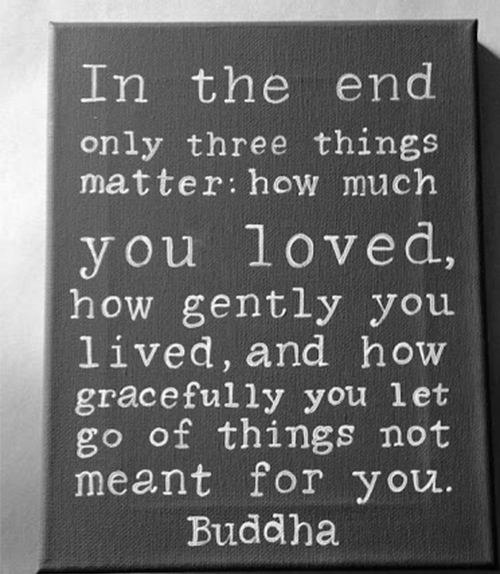
In the end, only three things matter: how much you loved, how gently you lived, and how gracefully you let go of things not meant for you. ― Gautama Buddha
True humility involves opposites. The truly humble work in silence. Because they do not speak of their accomplishments, credit for them can never be taken away. ~Lao-Tzu

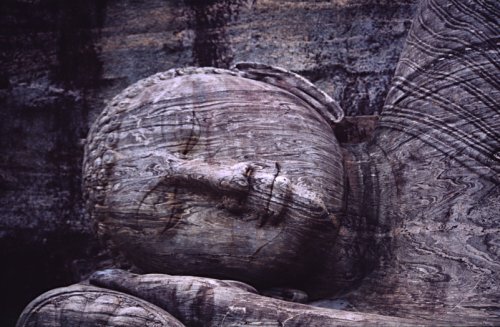
Transcribed talks by Ratnaghosa
Talk three of six on patience or kshanti
Patience is the most common translation of Kshanti and indeed people often think of Kshanti as patience. However the word Kshanti has many meanings and the Perfection of Kshanti (Kshanti-paramita) has many different aspects to it. One very important aspect of Kshanti is giving up any desire for revenge or retaliation. To give up any desire for revenge or retaliation means to forgive.
According to the Oxford Universal Dictionary, forgiveness means, “to give up, cease to harbour resentment etc”.
If we give up resentment against someone, then we no longer have the desire to retaliate or seek revenge. In short, we have forgiven them. This is the forgiveness aspect of Kshanti. It is not easy to forgive, especially if someone has really caused us harm intentionally.
It is not even easy to forgive when we feel offended even though no offence was meant. To forgive is to let go of feeling hurt, to give up our grudges. To forgive means to extend goodwill to those that we feel are opposed to us, those who have offended us, those who have hurt us, those who don’t like us, even those we regard as enemies. Forgiveness is truly an act of self-transformation. Continue reading
We’ve all heard it a thousand times,“You need to forgive and forget.” But is this truly how we feel? When someone really hurts you, do you still want to forgive that person? Forgiving seems almost unnatural, right? Here are a few reasons why you should forgive someone even if part of you doesn’t want to.
1. Forgiveness doesn’t mean what happened was OK, and it doesn’t mean that person should still be welcome in your life. Forgiveness just means that you’ve made peace with the pain, and you are ready to let it go.
2. Forgiveness is not something we do for others – it’s something we do for ourselves. Not forgiving someone is the equivalent of staying trapped in a jail cell of bitterness, serving time for someone else’s crime. As I wrote earlier, you make the choice to either dwell on the pain cause by others or you want to forgive and move on. Continue reading
No one is born hating another person because of the color of his skin or his background or his religion. People must learn to hate, and if they can learn to hate, they can be taught to love, for love comes more naturally to the human heart than its opposite. ~Nelson Mandela


To laugh often and much;
to win the respect of intelligent people
and the affection of children;
to earn the appreciation of honest critics
and endure the betrayal of false friends;
to appreciate beauty;
to find the best in others;
to leave the world a bit better whether by a healthy child,
a garden patch, or a redeemed social condition;
to know even one life has breathed easier because you lived.
This is to have succeeded.
~Ralph Waldo Emerson
The only thing you can really control is how you react to things out of your control. — Bassam Tarazi