1. How to Deal with Insult and Injury

    15

    Adapt, Adjust and Accommodate

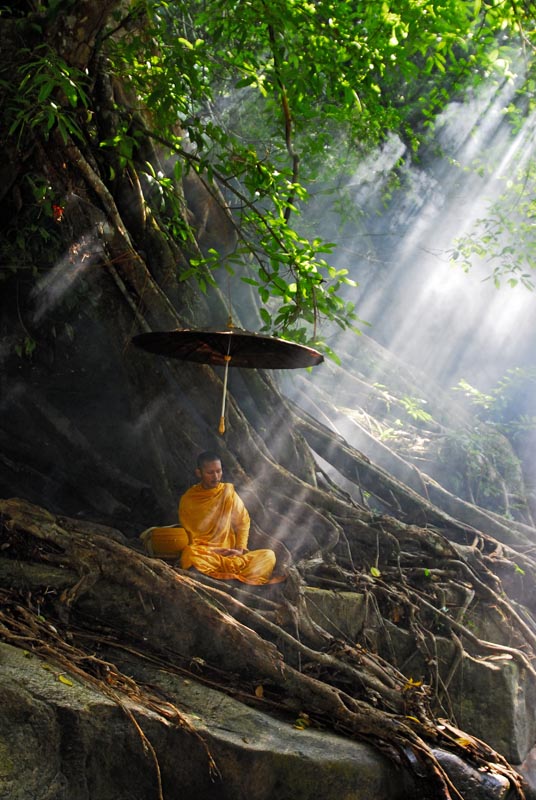
    It is easy to sit and meditate. The most difficult part is to practice bearing  injury, learning to adapt, adjust and accommodate. These are teachings of the great saint and sage of the Himalayas, Sri Swami Sivanandaji Maharaj. You can do your prayer, meditation, spiritual practice by yourself. But what about your attitude when you deal with people, when you work with them day in and day out? That is where you have to prove that you have achieved something in your spiritual practices.

    If a person practices adapting, adjusting and accommodating, he would never point a finger at others and blame them. Even if another person is at fault, if you know how to adapt, adjust and accommodate you are rise above those situations. Still, the most difficult thing is to bear insult and injury. That needs a tremendous capacity to keep the mind under your thumb.

    Do your daily work, deal with everyone, move with everybody. Be in ocean, but learn to surf well. ~ Sri Swami Satchidananda

    Source: Spiritual Now


  2. Moments in out lives

    Comment

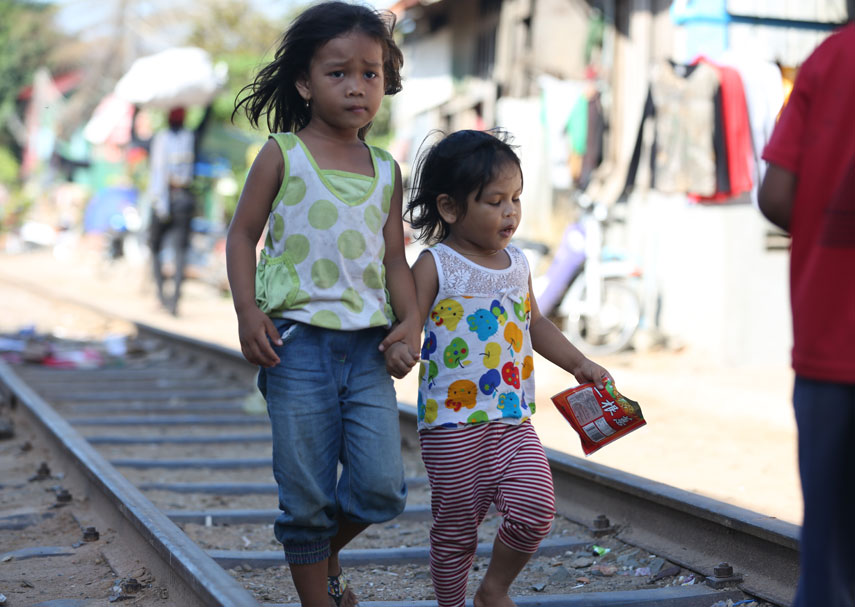
    All of us have moments in our lives that test our courage. Taking children into a house with a white carpet is one of them. ~Erma Bombeck

    RFA photo

  3. They will shine out of your face

    Comment

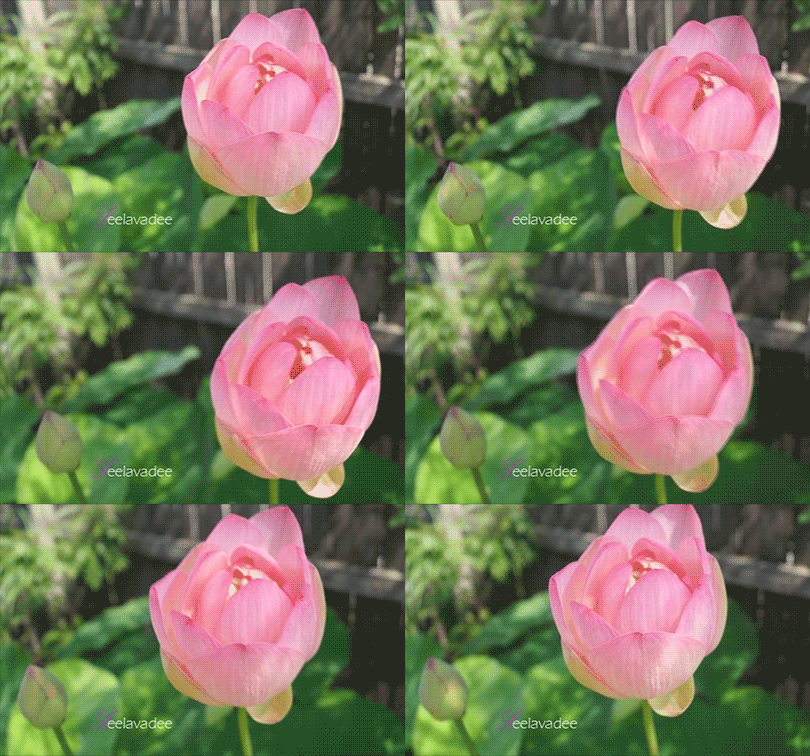
    If you have good thoughts, they will shine out of your face like sunbeams and you will always look lovely. ~Santabanta

    Photo credit: Randy Neufeldt

  4. The best security is faith

    Comment

    The richest wealth is wisdom;
    The strongest weapon is patience;
    The best security is faith;
    And the most effective tonic is laughter.

    ~SantaBanta


  5. Wrap a rainbow of joy in your heart

    Comment

    Wrap a rainbow of joy in your heart,
    Let the sun paint a smile on your face,
    Remove all clouds of doubt & fear
    And receive god’s gift of life. ~sms

  6. Help one person smile

    Comment

    Rules to be happy in life:

    1. Never hate
    2. Don’t worry,
    3. Live simple
    4. Expect little
    5. Give a lot
    6. Always smile
    7. And keep in touch with GOD.

    ~Unknown


  7. Everything is Changeable

    Comment

    By Ven. Dr. K. Sri Dhammananda Maha Thera

    What exists is changeable and what is not changeable does not exist.

    Looking at life, we notice how it changes and how it continually moves between extremes and contrasts. We notice rise and fall, success and failure, loss and gain; we experience honor and contempt, praise and blame; and we feel how our hearts respond to all that happiness and sorrow, delight and despair, disappointment and satisfaction, fear and hope. These mighty waves of emotion carry us up, fling us down, and no sooner we find some rest, then we are carried by the power of a new wave again. How can we expect a footing on the crest of the waves? Where shall we erect the building of our life in the midst of this ever-restless ocean of existence?

    This is a world where any little joy that is allotted to beings is secured only after many disappointments, failures and defeats. This is a world where scanty joy grows amidst sickness, desperation and death. This is a world where beings who a short while ago were connected with us by sympathetic joy are at the next moment in want of our compassion. Such a world as this needs equanimity. This is the nature of the world where we live with our intimate friends and the next day they become our enemies to harm us.

    The Buddha described the world as an unending flux of becoming. All is changeable, continuous transformation, ceaseless mutation, and a moving stream. Everything exists from moment to moment. Everything is a recurring rotation of coming into being and then passing out of existence. Everything is moving from birth to death. The matter or material forms in which life does or does not express itself, are also a continuous movement or change towards decay. This teaching of the impermanent nature of everything is one of the main pivots of Buddhism. Nothing on earth partakes of the character of absolute reality. That there will be no death of what is born is impossible. Whatever is subject to origination is subject also to destruction. Change is the very constituent of reality.

    In accepting the law of impermanence or change, the Buddha denies the existence of eternal substance. Matter and spirit are false abstractions that, in reality, are only changing factors (Dhamma) which are connected and which arise in functional dependence on each other.

    Today, scientists have accepted the law of change that was discovered by the Buddha. Scientists postulate that there is nothing substantial, solid and tangible in the world. Everything is a vortex of energy, never remaining the same for two consecutive moments. The whole wide world is caught up in this whirl and vortex of change. One of the theories postulated by scientists is the prospect of the ultimate coldness following upon the death or destruction of the sun. Buddhists are not dismayed by this prospect. The Buddha taught that universes or world cycles arise and pass away in endless succession, just as the lives of individuals do. Our world will most certainly come to an end. It has happened before with previous worlds and it will happen again.

    ‘The world is a passing phenomenon. We all belong to the world of time. Every written word, every carved stone, every painted picture, the structure of civilization, every generation of man, vanishes away like the leaves and flowers of forgotten summers. What exists is changeable and what is not changeable does not exist.’

    Thus all gods and human beings and animals and material forms — everything in this universe — is subject to the law of impermanence. Buddhism teaches us:

    ‘The body like a lump of foam;
    The feelings like a water bubble;
    Perception like a mirage;
    Volitional activities like a plantain tree;
    And Consciousness like jugglery.’ (Samyutta Nikaya)

  8. When we try to understand it

    Comment

    Love is an untamed force. When we try to control it, it destroys us. When we try to imprison it, it enslaves us. When we try to understand it, it leaves us feeling lost and confused. ~Paulo Coelho


Live & Die for Buddhism

candle

Me & Grandma

My Reflection

This site is a tribute to Buddhism. Buddhism has given me a tremendous inspiration to be who and where I am today. Although I came to America at a very young age, however, I never once forget who I am and where I came from. One thing I know for sure is I was born as a Buddhist, live as a Buddhist and will leave this earth as a Buddhist. I do not believe in superstition. I only believe in karma.

A Handful of Leaves

A Handful of Leaves

Tipitaka: The pali canon (Readings in Theravada Buddhism). A vast body of literature in English translation the texts add up to several thousand printed pages. Most -- but not all -- of the Canon has already been published in English over the years. Although only a small fraction of these texts are available here at Access to Insight, this collection can nonetheless be a very good place to start.

Major Differences

Major Differences in Buddhism

Major Differences in Buddhism: There is no almighty God in Buddhism. There is no one to hand out rewards or punishments on a supposedly Judgement Day ...read more

Problems we face today

jendhamuni pink scarfnature

Of the many problems we face today, some are natural calamities and must be accepted and faced with equanimity. Others, however, are of our own making, created by misunderstanding, and can be corrected...