1. This is the beginning of a new day…

    1

    This is the beginning of a new day. You have been given this day
    to use as you will. You can waste it or use it for good. What you do
    today is important because you are exchanging a day of your life for it.
    When tomorrow comes, this day will be gone forever; in its place
    is something that you have left behind… let it be something good.

    ~Author Unknown

  2. African elephant

    Comment

    Extinction risk: Vulnerable
    By World Wild Life

    “The conservation gains made for African elephants, one of the most
    iconic African species, are being seriously jeopardized by poaching to
    fuel the demand for ivory.”  Matthew Lewis, African Species Expert

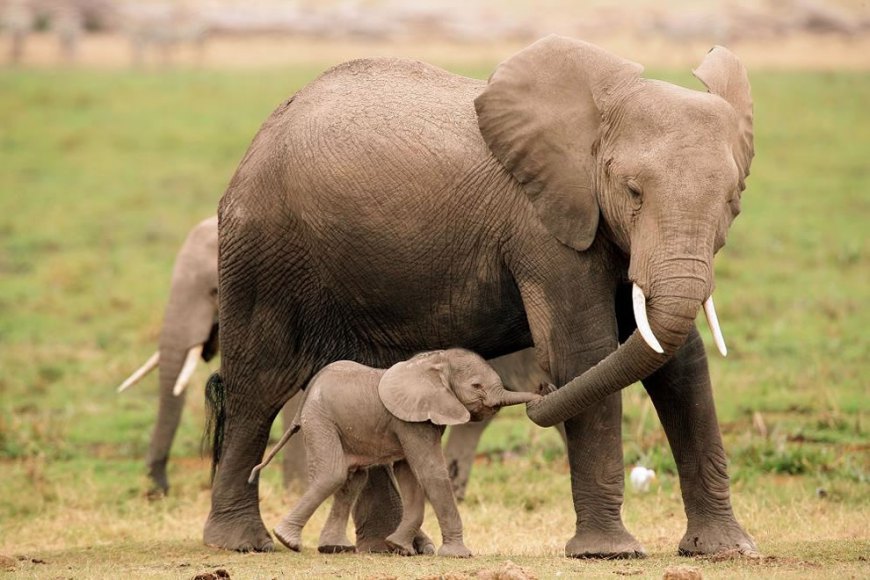
    The African elephant is the largest animal walking the Earth. Their herds wander through 37 countries in Africa. They are easily recognized by their trunk that is used for communication and handling objects. And their large ears allow them to radiate excess heat. Upper incisor teeth develop into tusks in African elephants and grow throughout their lifetime. There are two subspecies of African elephants—the Savanna (or bush) elephant and the Forest elephant. Savanna elephants are larger than forest elephants, and their tusks curve outwards. In addition to being smaller, forest elephants are darker and their tusks are straighter and point downward. There are also differences in the size and shape of the skull and skeleton between the two subspecies.

    Forest elephants, a distinct subspecies of African elephants, are uniquely adapted to the forest habitat of the Congo Basin, but are in sharp decline due to poaching for the international ivory trade. It is estimated that probably one quarter to one third of the total African elephant population is made up of forest elephants.

    Why they matter
    The presence of African elephants helps to maintain suitable habitats for many other species. In central African forests, up to 30 percent of tree species may require elephants to help with dispersal and germination. They play a pivotal role in shaping their habitat because of the enormous impact they have on factors ranging from fresh water to forest cover.
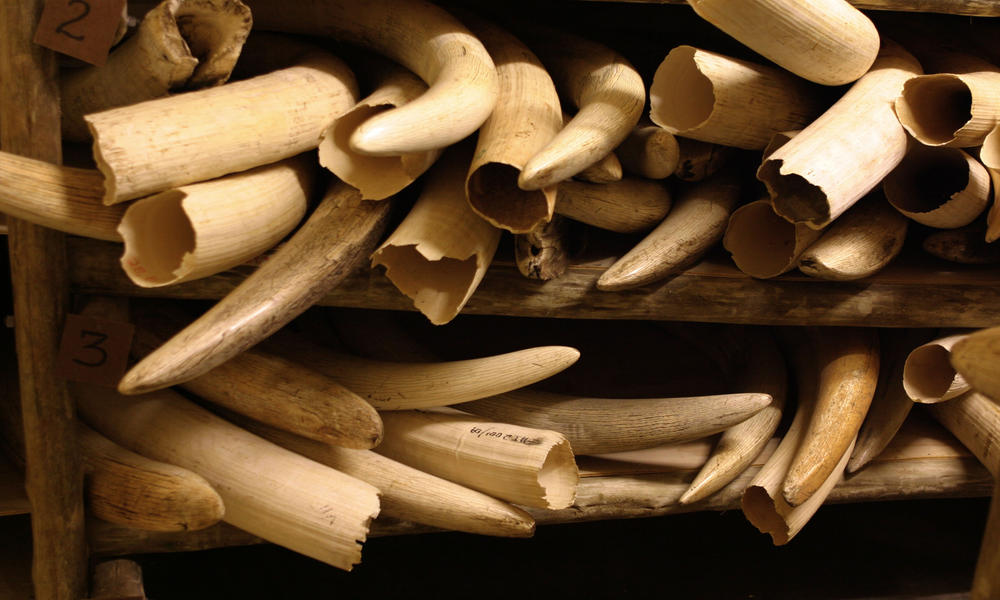
    Confiscated ivory.

    Threats
    Numbering three to five million in the last century, African elephant populations were severely reduced to its current levels because of hunting. In the 1980s, an estimated 100,000 elephants were killed each year and up to 80% of herds were lost in some regions. In recent years, growing demand for ivory, particularly from Asia, has led to a surge in poaching. Populations of elephants—especially in southern and eastern Africa—that once showed promising signs of recovery could be at risk due to the recent surge in poaching for the illegal ivory trade.

    Habitat Loss and Fragmentation
    African elephants have less room to roam than ever before as expanding human populations convert land for agriculture, settlements and developments. The elephants’ range shrank from three million square miles in 1979 to just over one million square miles in 2007. Commercial logging, plantations for biofuels and extractive industries like logging and mining not only destroy habitat but also open access to remote elephant forests for poachers. Poverty, armed conflict and the displacement of people by civil conflict also add to habitat loss and fragmentation. All of these push elephants into smaller islands of protected areas and hinder elephants’ freedom to roam.

    As habitats contract and human populations expand, people and elephants are increasingly coming into contact with each other. Where farms border elephant habitat or cross elephant migration corridors, damage to crops and villages can become commonplace. This often leads to conflicts that elephants invariably lose. But loss of life can occur on both sides, as people may be trampled while trying to protect their livelihoods, and game guards often shoot “problem” elephants.

    Illegal wildlife trade
    The illegal demand for ivory is the biggest driver of elephant poaching. Despite a global CITES ban on international sales of ivory since 1990, tens of thousands of elephants are killed to meet a growing demand for ivory products in the Far East. Asia stands behind a steadily increasing trend in illegal ivory and there are still thriving domestic ivory markets in Africa. Limited resources combined with remote and inaccessible elephant habitats make it difficult for governments to monitor and protect elephant herds. The impacts of war and over-exploitation of natural resources often lead to increased poaching as elephants are also regarded as source of wild meat. 2011 saw the highest volume of illegal ivory seized since global records began in 1989.

    What is WWF is doing
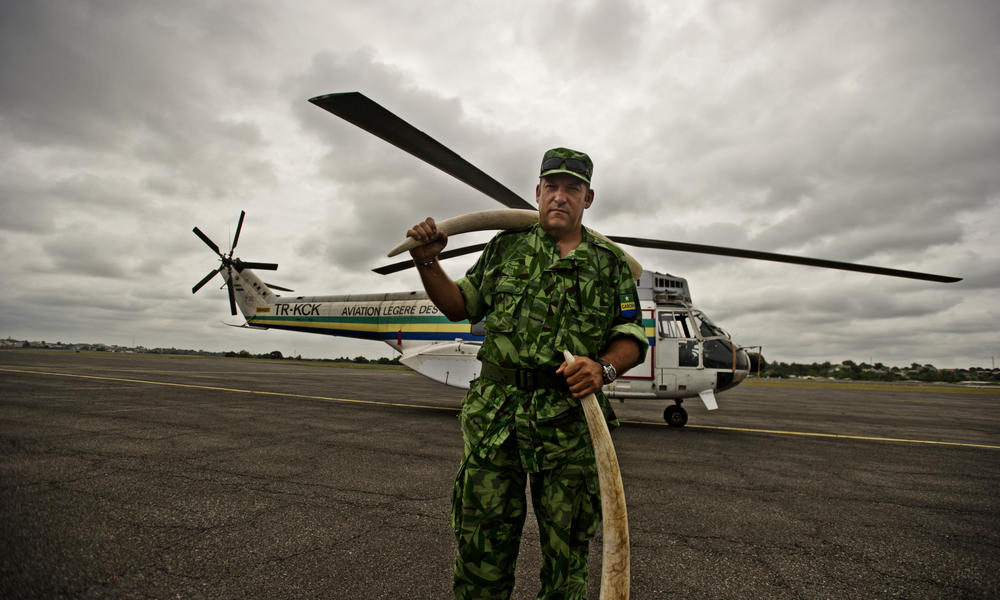
    Ivory confiscated in Gabon.

    Building on 50 years of experience, WWF addresses illegal hunting for meat and ivory, habitat loss, and human-elephant conflict to protect African elephant populations.

    Fighting illegal wildlife trade
    To reduce the illegal trade in elephant products, WWF supports antipoaching efforts within and around protected areas. We also work to establish new protected areas to provide safe havens for elephants. We work with TRAFFIC, the world’s largest wildlife trade monitoring network, to assess trends in the illegal trade in elephant products. This includes implementing the CITES Elephant Trade Information System (ETIS) which monitors and tracks elephant ivory seizures.

    Protecting and managing habitats
    To reduce the illegal killing of elephants through improved protection and management, WWF equips and trains law enforcement teams so they can conduct regular and effective antipoaching patrols. We help establish new protected areas within elephant ranges and improve management effectiveness within existing protected areas.

    WWF helps governments produce and adopt elephant conservation strategies, allowing them to survey, and manage elephant populations and to implement the CITES system for Monitoring the Illegal Killing of Elephants (MIKE). We facilitate training in elephant conservation and management techniques and help update and enforce legislation to protect elephants. WWF has helped train park guards, villagers and communities in elephant conservation and management. In Quirimbas National Park, Mozambique, WWF worked with the local government and community to establish a park management system that would protect wildlife and livelihoods. WWF also develops and supports community-based wildlife management plans that contribute to elephant conservation while providing benefits to local people.

    Mitigating Conflict
    To increase public support for elephant conservation by reducing conflict, WWF trains wildlife managers and local communities to use modern methods and tools to mitigate human-elephant conflict. In places like the Selous Game Reserve in Tanzania, WWF monitors interactions between humans and elephants and works with local communities to develop sustainable practices of mitigating conflict with elephants.

    Photo source

    Link source

  3. Rare elephant footprints

    16

    Here is an interesting fact about the elephants' feet
    Each elephant foot has 5 toes, but not every toe has a nail. An easy way to tell the two African elephant species apart is by counting toenails. The African forest elephant and the Asian elephant both have 5 toenails on the front feet and 4 on the back feet. The larger African bush elephant has 4 or sometimes 5 on the front feet and 3 on the back. An X-ray of an elephant’s foot will reveal that its bones are actually standing on tip-toe. Their feet are flat because of a large pad of gristle under each heel which acts as a shock absorber and helps them walk quietly. Their legs are much straighter than those of other animals and support their weight so well that elephants sleep while standing. Elephants spend most of their lives walking huge distances, and their feet are suitably adapted to such a lifestyle. Zoos which keep elephants often find they develop foot problems due to a lack of constant walking, and treatments include tailored shoes to protect their softened feet.

    Source: ListVerse, by Kate Mulcahy

    Check this out on Google+

  4. Extinction risk for African elephant is Vulnerable

    121
     

    Numbering three to five million in the last century, African elephant populations were severely reduced to its current levels because of hunting. In the 1980s, an estimated 100,000 elephants were killed each year and up to 80% of herds were lost in some regions. In recent years, growing demand for ivory, particularly from Asia, has led to a surge in poaching. Populations of elephants—especially in southern and eastern Africa—that once showed promising signs of recovery could be at risk due to the recent surge in poaching for the illegal ivory trade.

    African elephants have less room to roam than ever before as expanding human populations convert land for agriculture, settlements and developments. The elephants’ range shrank from three million square miles in 1979 to just over one million square miles in 2007.

    The African elephant is the largest animal walking the Earth. Their herds wander through 37 countries in Africa. They are easily recognized by their trunk that is used for communication and handling objects. And their large ears allow them to radiate excess heat.

    Source: World Wild Life

    Read full story
    http://leelavadeeflower.blogspot.com/2014/09/african-elephant.html

    Check this out on Google+

  5. Stop waiting…

    Comment

    Stop waiting until you finish school,
    until you go back to school,
    until you lose ten pounds,
    until you gain ten pounds,
    until you have kids,
    until your kids leave the house,
    until you start work,
    until you retire,
    until you get married,
    until you get divorced,
    until Friday night,
    until Sunday morning,
    until you get a new car or home,
    until your car or home is paid off,
    until spring, until summer, until fall, until winter,
    until you are off welfare,
    until the first or fifteenth,
    until your song comes on,
    until you’ve had a drink,
    until you’ve sobered up,
    until you die,
    until you are born again
    to decide that there is no better time than right now to be happy…

    Author Unknown

  6. The Ganges: Offering Light to the Gods

    Comment

    Aarti is a Hindu religious ritual of worship in which light from wicks soaked in ghee (purified butter) is offered to one or more deities. Elaborate celebrations are also common.

    Arti: The Hindu Ceremony of Light

    The arti (pronounced ‘aarti’) is one of the most important and popular ceremonies of the Hindu faith. It is a prayerful ceremony performed in extolled greeting and thanksgiving of the Deities where devotees are reminded of God’s glorious presence and providence.

    Origin
    The arti ceremony is said to have descended from the ancient Vedic concept of fire rituals, or homa.

    Others attribute it to the practice many centuries ago of illuminating a murti set deep inside the dark recess of a mandir’s cave-like inner sanctum. To allow devotees darshan of the sacred image, the priest would wave an oil lamp from the Deity’s head to toe while chanting Vedic mantras or singing a prayer. Gradually, the practice developed into the arti.

    The arti sung within the Swaminarayan tradition was composed by Muktanand Swami, one of Bhagwan Swaminarayan’s most senior and learned sadhus, when Bhagwan Swaminarayan was only 21. Learn more about it here.

    Meaning
    In Sanskrit, the word ‘arti’ – written as ‘aarati’ – is composed of the prefix ‘aa’, meaning complete, and ‘rati’, meaning love. The arti is thus an expression of one’s complete and unflinching love towards God. It is sung and performed with a deep sense of reverence, adoration, and meditative awareness.

    Practice
    Often called the ‘ceremony of light’, the arti involves waving lighted wicks before the sacred images to infuse the flames with the Deities’ love, energy and blessings. It is performed by sadhus (Hindu monks) and pujaris (attendants to the Deities). Continue reading

  7. Everything is connected to everything

    Comment

    We all live in one world. Everything is connected to everything, materially, spiritually and emotionally. We can ultimately only be happy together. A world of love, peace and happiness benefits all. Without forgiveness you harden inside. You block your energy of happiness. You put this in all your future relationships. It is very important to obtain forgiveness. Even though it is sometimes very difficult. Forgiveness is to become healthy inside. Without forgiveness, there will always be wars in the world. If we want peace, the world should learn to forgive. ~wikiHow

Live & Die for Buddhism

candle

Me & Grandma

My Reflection

This site is a tribute to Buddhism. Buddhism has given me a tremendous inspiration to be who and where I am today. Although I came to America at a very young age, however, I never once forget who I am and where I came from. One thing I know for sure is I was born as a Buddhist, live as a Buddhist and will leave this earth as a Buddhist. I do not believe in superstition. I only believe in karma.

A Handful of Leaves

A Handful of Leaves

Tipitaka: The pali canon (Readings in Theravada Buddhism). A vast body of literature in English translation the texts add up to several thousand printed pages. Most -- but not all -- of the Canon has already been published in English over the years. Although only a small fraction of these texts are available here at Access to Insight, this collection can nonetheless be a very good place to start.

Major Differences

Major Differences in Buddhism

Major Differences in Buddhism: There is no almighty God in Buddhism. There is no one to hand out rewards or punishments on a supposedly Judgement Day ...read more

Problems we face today

jendhamuni pink scarfnature

Of the many problems we face today, some are natural calamities and must be accepted and faced with equanimity. Others, however, are of our own making, created by misunderstanding, and can be corrected...