
1. Why Elephants Don’t Belong in Zoos!

    Comment

    Rachel Curit, One Green Planet, August 29, 2014  

    Seattle’s Woodland Park Zoo recently announcedthat its 45-year-old African elephant, Watato, had been euthanized after she was found lying in the elephant yard and unable to stand. While euthanasia might seem like the kindest option for an elephant who can no longer walk, it’s important to dig a little deeper.

    In the wild, the average lifespan of an elephant is up to 70 years, but many live beyond that. So, what  caused this 45-year-old elephant to suddenly become so unwell? Friends of Woodland Park Zoo Elephants believe that her condition was brought on by her living space, or lack thereof. She shared just one acre divided into five pens with two other elephants, Bamboo and Chai – not to mention the fact that Watato and Bamboo were incompatible – meaning they had to be kept separated and as a result never had full access to the entire area.

    An elephant roaming free in the wild will walk up to 30 miles in a day making a fraction of an acre cruel confinement. Unsurprisingly, an elephant so severely confined is likely to develop captivity-related diseases. Watato was no exception. She suffered from arthritis, lameness and “neurotic repetitive behaviors – outward signs of trauma, stress and boredom.” Is it any wonder why she collapsed?

    Unfortunately, Watato’s story is not unique. Her situation is indicative of a much larger problem. The fact is, elephants do not belong in captivity.

    Lifespan in Captivity vs. Wild
    As mentioned before, wild African elephants live anywhere between 60 and 70 years of age. According to the National Geographic, the median lifespan of a zoo-born female is just 17 years with Asian elephants living up to 19 years in captivity and 42 in the wild.

    In order to keep these elephants living longer, experts suggest “routine screening for obesity … as well as monitoring stress via a chemical known as interleukin-6.”

    For animals who would ordinarily spend much of their day moving and exercising, it’s no wonder captive elephants are prone to obesity. To keep them living longer, we shouldn’t we just allow them to remain in the wild, rather than keep them in captivity.

    Family Structure and Social Interactions
    Elephants live in herds of anywhere from 8 to 100 individuals with the head of the herd being the oldest female. Baby elephants stay by their mother’s side for up to 15 years, but they are reared and protected by the entire heard. Males leave the family unit around this time and will either live solitarily or temporarily with other male elephants.

    Defenders of Wildlife states, “Recent discoveries have shown that elephants can communicate over long distances by producing a sub-sonic rumble that can travel over the ground faster than sound through air.”

    With such complex communication and tight-knit family structures, it’s rather shocking to imagine an elephant like Watato living with just two other elephants, one with whom she didn’t even get along. That sounds like a lonely and isolating existence.

    Mental and Physical Stimulation
    Because of the lack of space, elephants in zoos aren’t able to get the amount of mental or physical stimulation they require. Nature provides elephants with all they need for healthy lives.

    Having a variety of ground surfaces, “including clean dirt, mulch, sand and, probably most importantly, grassy areas and pasture, as well as slopes, hills, gullies, scrub and forest” is essential for getting enough exercise and mental stimulation. Captive elephants require at least 10 km of space and the opportunity to engage in natural elephant behaviors such as foraging, exploring and socializing are vital to their wellbeing.

    Elephants who are denied these basic needs develop diseases, just as Watato, Bamboo and Chai have. Aside from obesity, Elephants in Canada states that common ailments captive elephants face include arthritis, foot infections – the leading cause of death, reproductive problems (such as low fertility, high rate of stillbirths and difficulty giving birth), difficulty raising young, psychological disorders, early mortality and engagement in abnormal behaviors such as killing young and aggression towards other elephants.

    What We’ve Learned From Watato, and How You Can Help Others
    Elephants like Watato, Bamboo and Chai have needs that humans generally aren’t able (or willing) to provide. Sanctuaries do a wonderful job taking in captive, retired elephants, but there is simply no denying that these elephants should never have been in captivity in the first place. Watato’s passing is a reminder of this for us all.

    For those of you who would like to protect Bamboo and Chai from the same fate, please write to Seattle’s Mayor and City Council to order the zoo to release them to a sanctuary. You can find contact information at the bottom of this page.

    Image source: Benoit Dupont/Flickr

    See something, Say something. Bookmark, share and help further build our directory of Animal Rescue Hotlines and let’s be prepared to help animals today!


  2. Looking at the moon and thinking of one far away

    Comment

    A bright moon is rising over the sea,
    both of us are looking at her
    from far away sides at the same time.
    I know you are sad for the night is too long,
    to stay up for thinking of me for a white night

    You have turned off the candle,
    for you love the bright moonlight.
    You are covering a coat
    for you have felt the wet of dew.
    You realize that you can not hold some moonlight to me,
    so you decide to go back to sleep
    and to wish us to meet each other in a sweet dream…

    Written by Wang Yue Hua Yuan

  3. Life’s too short to walk around angry

    2

    If you want to awaken all of humanity, then awaken all of yourself.
    If you want to eliminate the suffering in the world, then eliminate all that is dark and negative in yourself. Truly, the greatest gift you have to give is that of your own self-transformation.

    ~Lao Tzu

  4. How to Open Your Heart

    1

    The act of opening your heart is a bond of trust. It is the act of sharing the whims of the heart. You trust that you are being listened to and that the the person has a honest response. Opening your heart is not about good reception or making things better, it’s about making yourself understood.

    1. It’s not about you. You know yourself, your heart and your love, they don’t. The first thing you need to know about opening your heart is that you don’t do it for yourself. Don’t expect a particular outcome; the truth is your goal.

    2. Groundwork. You need to ensure that you are being listened to. When you open up to another person about your love, make sure that you have their total attention, make sure they are listening to you. Miscommunication is pointless pain.

    3. Be honest, even if you don’t know what you feel or want. If they care, they will help you sort through whatever mess your heart is in.

    4. Ask for honesty. Show your expectation of mutual trust.

    5. Whatever happens, walk away with pride knowing you honored yourself, your feelings, and the your relationship with the other person. Nothing is a beautiful as honest love.

    Source: wikiHow

  5. To love somebody naturally

    Comment

    “Not Enough”
    Van Halen lyrics

    To love somebody naturally
    To love somebody faithfully
    To love somebody equally
    Is not enough, it’s not enough, it’s not enough

    To love somebody secretly
    (And never touch)
    To love somebody honestly
    (And always trust)
    To love somebody tenderly
    The tender touch is not enough, it’s not enough

    Love hurts you sometimes
    It’s not so easy to find, no
    Searchin’ everywhere, you turn and swear
    It’s always been there

    To love somebody foolishly
    (Can happen once)
    To love somebody hopelessly
    (It hurts so much)
    To love somebody equally
    Is not enough, it’s not enough, it’s not enough

    Love takes a little time
    It’s not so easy to find, no
    Searchin’ everywhere, you turn and swear
    It’s always been there, standin’ there

    And if it don’t come easily
    One thing you must believe
    You can always have trust in me
    ‘Cause my heart will always be yours honestly

    Love hurts you sometimes
    Not so easy to find, no
    Searchin’ everywhere, you turn and swear
    It’s always been there, standin’ there

    Love hurts you sometimes
    It’s not yours, it’s not mine, no
    Love is only to share, you turn and swear, it’s everywhere
    Standin’ there, ’cause it’s always been there

  6. Raju the Abused Elephant’s Former Owner is Trying to Get Him Back. Here’s What You Can Do to Stop It!

    Comment

    You can help by signing and sharing this petition

    Kate Good, One Green Planet, August 28, 2014

    This news that Raju’s former owner is appealing to Allahabad courts for custody of the elephant he formerly abused, comes as both a shock and a giant face palm moment for anyone who knows this sad elephant’s story. Raju spent the past 50 YEARS in chains, serving as many as 27 different owners/abusers who use this gentle elephant as a begging prop. His daily  life consistent of standing on the street with his mahout, clad in spiked chains to prohibit him from moving. Raju survived by eating scraps of garbage left on the street.

    Deprived of all basic needs of any living creature – not to mention virtually all the needs specific to his species, Raju’s life was a living hell. However, thanks to the hard work of Wildlife S.O.S. and a number of governmental officials, Raju was rescued from his captors. It is said he literally cried with happiness when his spiked chains were finally removed.

    Since his rescue, Raju has been living (and thriving) at the Wildlife S.O.S. elephant sanctuary, finally able to receive proper care and a diet composed of edible, nutritious foods. But now Raju’s former owner has decided he wants Raju back.


    You’ve got to be kidding, right?

    Sadly, no. Raju was a highly profitable prop to his abuser, and he has approached the Allahabad courts pleading for custody of the elephant he illegally kept for years. To any human with even the smallest inkling of compassion, this request seems absurd and unacceptable. Why would illegally holding an animal and abusing them everyday they were in your care be grounds for custody, we do not know. It seems like a no-brainer to us, but unfortunately, this is yet to be seen in the eyes of this court.

    Thousands of people took to action to help free Raju, and now it is time to renew that support and help ensure he stays free from his former mahout. Just as the cruel person who imprisoned Raju is appealing to the government, so are we. You can show your support for Raju by urging Shri Akhilesh Yadav, the chief minister for the Government of Uttar Pradesh and Dr. Rupak De, the chief wildlife warden for Uttar Pradesh Forest Department, to deny Raju’s captor’s request, by signing and sharing this petition.

    The Allabahad Government helped to free Raju, so now it is their responsibility to keep him free.
    _______________

    Petitioning Shri Akhilesh Yadav – The Honourable Chief Minister, Government of Uttar Pradesh
     
    Keep Raju Free

    Petition by Wildlife SOS

    Raju was rescued and freed in July of 2014 after spending almost 50 years in chains. At the time of his rescue he was near death. He was emaciated, dehydrated and exhausted. Despite his frailness, he was forced to beg on the streets and was being kept in spiked chains. Now the cruel person who had illegal custody of him is trying to get him back through the Allahabad court. You helped free him once, we need your voice once again to keep his freedom.

  7. One Week Old Orphaned Bear Cubs, Jammy and Donut, Will Melt Your Heart

    Comment

    Alexandra Evans, One Green Planet, August 28, 2014

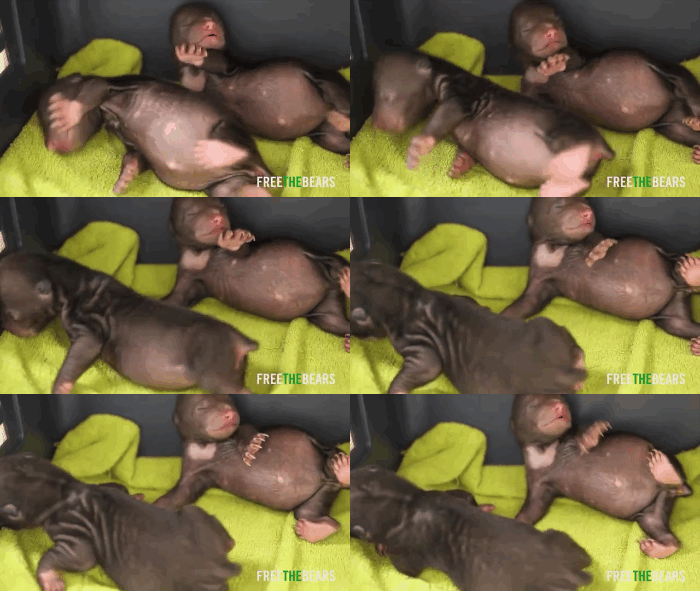
    Are you ready to see some precious bear cubs? Check out these photos of Jammy and Donut, two orphaned sibling bears who are only one week old. They are the newest arrivals at the Free the Bears‘ Phnom Tamao Wildlife Rescue Centre in Cambodia. Since this species is critically endangered, it’s so important that Free the Bears is caring for them!

    Jammy and Donut will receive the best care until they are old enough to be released back into the wild. Aren’t they adorable? These sun bears are actually one of the world’s smallest and least-studied species, but unfortunately they’re often killed to make bear paw soup for restaurants.

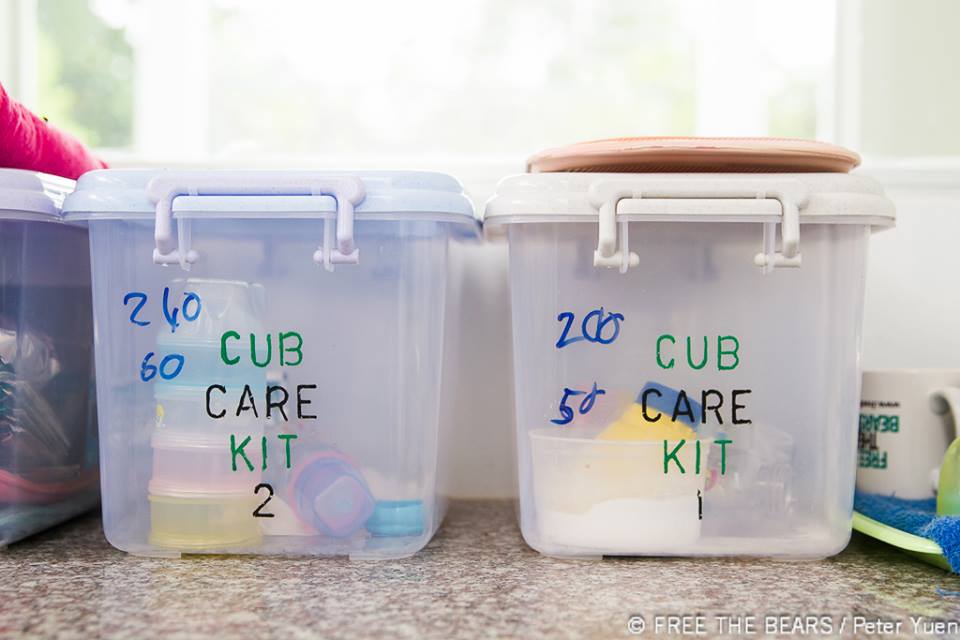
    Free the Bears is making use of cub care kits to help them care for Donut and Jammy. Many kind hearted people have donated to help rehabilitate and care for these rescue bears, as well as several other cubs at the organization.

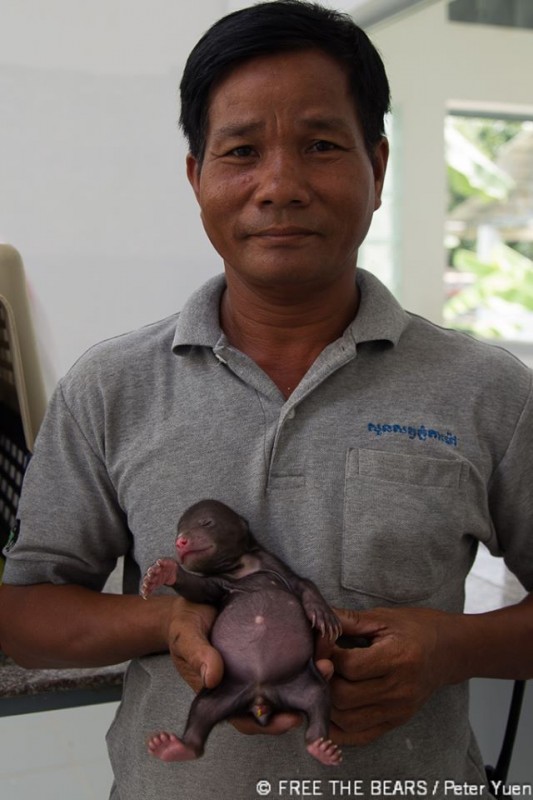
    Here is Mr. Heng, who has been a surrogate bear-parent to many of the Free the Bears’ cubs, keeping careful watch over these babies.

    Both Sun bear cubs are female. Villagers found them in the Ratanakiri province after their mother was chased away into the forest by an intense dog. They’re so young that they have yet to open their eyes!

    The staff has been keeping the cubs in an incubator set at a constant temperature. They’re so cute!

     To help rescued sun bears at Free the Bears, you can purchase a cub care kit online. Visit Free the Bears web shop for more information.

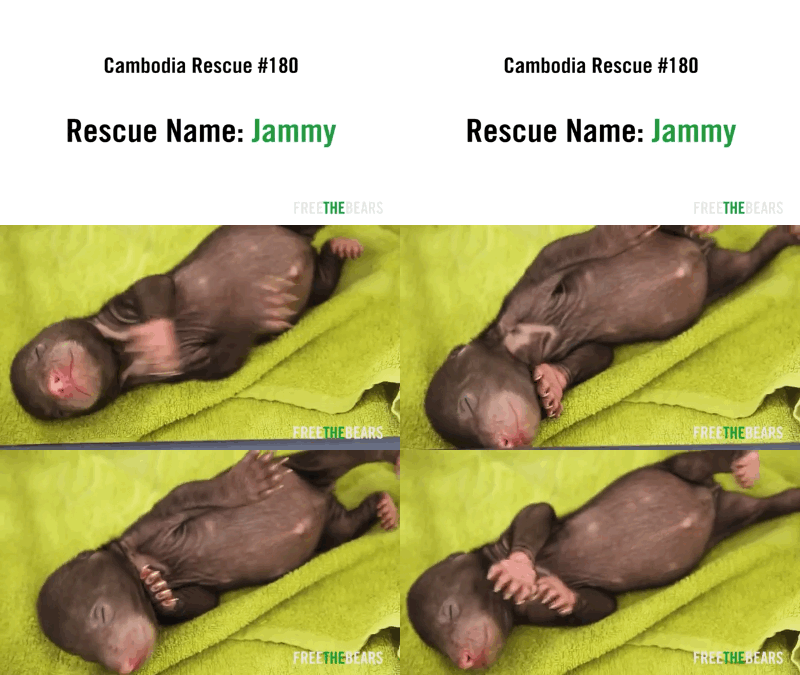
    Rescue name: Jammy
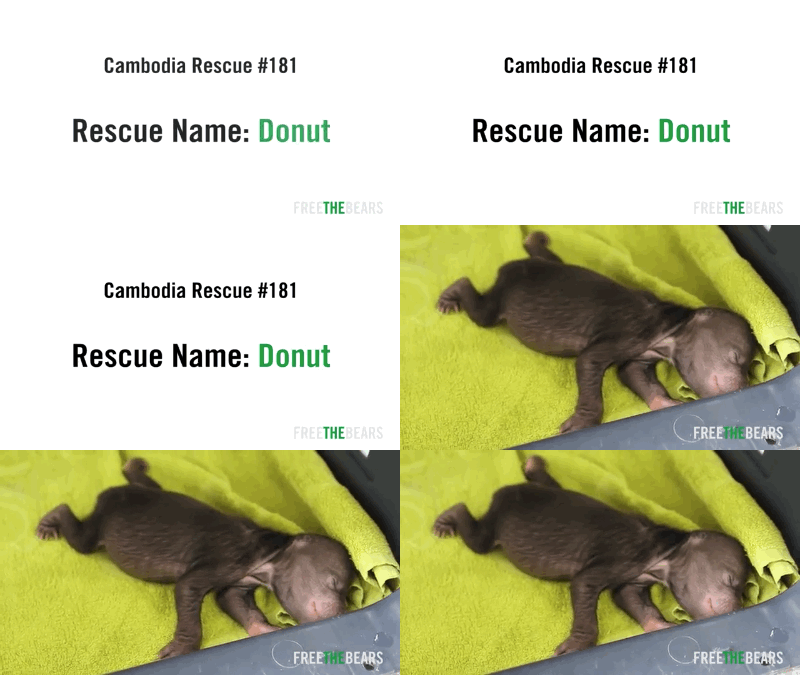
    Rescue name:Donut

Live & Die for Buddhism

candle

Me & Grandma

My Reflection

This site is a tribute to Buddhism. Buddhism has given me a tremendous inspiration to be who and where I am today. Although I came to America at a very young age, however, I never once forget who I am and where I came from. One thing I know for sure is I was born as a Buddhist, live as a Buddhist and will leave this earth as a Buddhist. I do not believe in superstition. I only believe in karma.

A Handful of Leaves

A Handful of Leaves

Tipitaka: The pali canon (Readings in Theravada Buddhism). A vast body of literature in English translation the texts add up to several thousand printed pages. Most -- but not all -- of the Canon has already been published in English over the years. Although only a small fraction of these texts are available here at Access to Insight, this collection can nonetheless be a very good place to start.

Major Differences

Major Differences in Buddhism

Major Differences in Buddhism: There is no almighty God in Buddhism. There is no one to hand out rewards or punishments on a supposedly Judgement Day ...read more

Problems we face today

jendhamuni pink scarfnature

Of the many problems we face today, some are natural calamities and must be accepted and faced with equanimity. Others, however, are of our own making, created by misunderstanding, and can be corrected...